You walk into a crime scene. You see blood on the carpet. It looks like someone had a bad night. But here is the thing that keeps defense attorneys up at night and makes prosecutors nervous: how do you know whose blood it is? You don’t guess. You compare. And to compare properly, you need something called control samples. These aren't just extra bits of evidence; they are the baseline against which every other piece of physical evidence is measured. Without them, your "match" is just a coincidence waiting to be debunked.
If you’re new to evidence handling, this might sound obvious. But in practice, skipping control samples-or collecting them poorly-is one of the most common reasons cases fall apart before they even hit trial. Think of it this way: if you find a fingerprint on a glass, that’s your question mark. The suspect’s inked print from the booking station? That’s your answer key. If you forget the answer key, you can’t grade the test.
What Exactly Is a Control Sample?
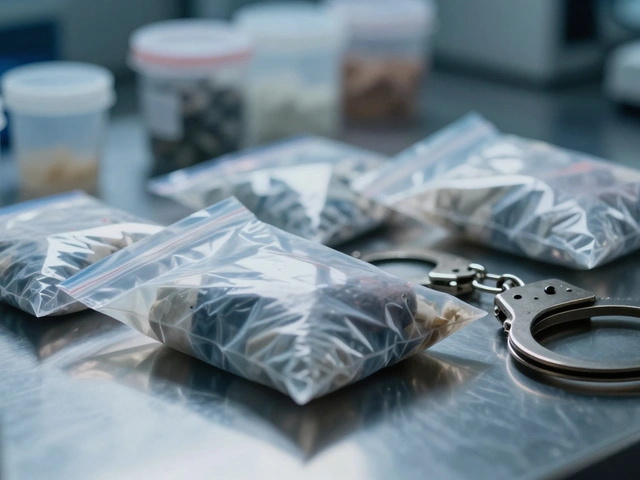
A control sample is physical evidence collected from a known source for comparison purposes. In forensic science, we generally split these into two main types: reference samples and elimination samples. Understanding the difference saves you headaches later.
Reference samples come from the person or object you suspect contributed to the crime scene evidence. If you arrest John Doe, his DNA swab is a reference sample. If you seize a specific brand of paint from his garage, that’s a reference sample too. You are establishing what "John Doe's stuff" looks like under the microscope.
Elimination samples are trickier but equally vital. These come from people who were legitimately present at the scene but shouldn’t be considered suspects. Think family members living in a house where a burglary occurred, or first responders who touched the door handle. If you don’t collect their prints or DNA, you might exclude your actual suspect because the lab finds "mixed profiles" everywhere. Elimination samples clear the noise so the signal comes through.
| Feature | Reference Sample | Elimination Sample |
|---|---|---|
| Source | Suspect or known origin | Innocent bystanders, residents, responders |
| Purpose | To establish identity/match | To rule out non-suspects |
| Legal Basis | Consent, warrant, or court order | Voluntary consent (usually) |
| Risk if Missing | No match possible | False exclusion of suspect |
Why Skipping Controls Ruins Cases
Imagine you find a fiber on a victim’s jacket. It matches the carpet in the suspect’s living room. Great, right? Not necessarily. What if the victim visited the suspect’s house last week for dinner? Or what if the suspect bought the same generic carpet from Home Depot as the victim? Without proper controls-like fibers from the victim’s own home environment-you can’t prove transfer happened during the alleged crime versus an innocent prior contact.
Labs rely on statistical probability. A single hair might not mean much. But a hair with a unique root structure, compared against a control from the suspect’s head, changes the math dramatically. If you skip the control, the analyst has to say, "This is consistent with human hair," which is basically useless in court. They need to say, "This is consistent with the suspect’s hair and inconsistent with random population frequencies." You provide the data for that second sentence by collecting the control.
The Golden Rules of Collection
Collecting controls isn’t rocket science, but it requires discipline. Here is how to do it right without contaminating everything.
- Timing matters. Collect controls as soon as possible after the incident. For DNA, degradation happens fast. For volatile substances like gasoline residues, evaporation starts immediately. If you wait three days to swab a suspect’s mouth, you might miss trace elements that were there on day one.
- Match the matrix. If you are looking for soil at a crime scene, collect soil from the suspect’s shoes, not just a general bag from their backyard. Context is everything. A handful of dirt from the driveway doesn’t help if the crime happened in a forest. Get the dirt from where they walked.
- Document the chain of custody. Every control sample needs its own log entry. Who collected it? When? Where exactly? If you grab a toothbrush from a bathroom counter, write down which drawer it came from. Vague notes lead to vague testimony.
- Avoid cross-contamination. Use fresh gloves for each person you swab. Seriously. I’ve seen investigators use the same pair of nitrile gloves to swab a suspect, then touch a door handle, then swab a witness. Now the witness’s DNA has the suspect’s sweat on it. Change gloves between every single interaction.
DNA vs. Fingerprints: Different Needs
Not all controls are created equal. Your approach depends heavily on the type of evidence you’re chasing.
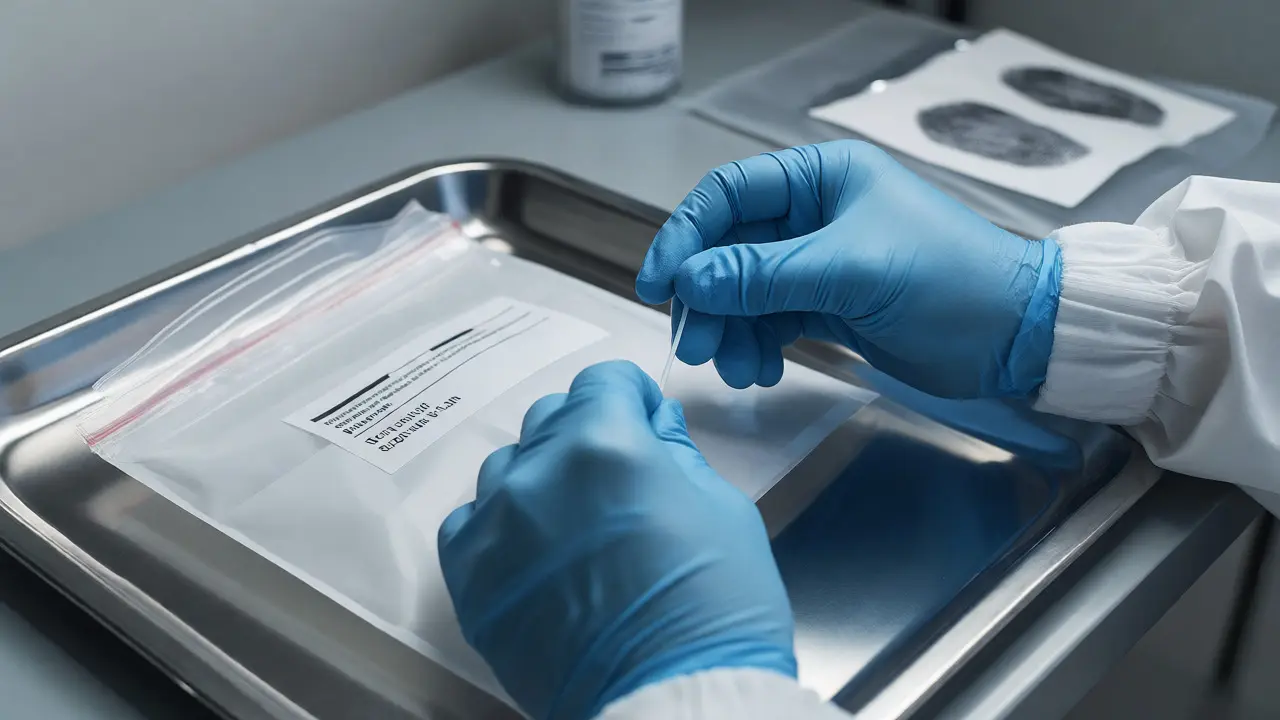
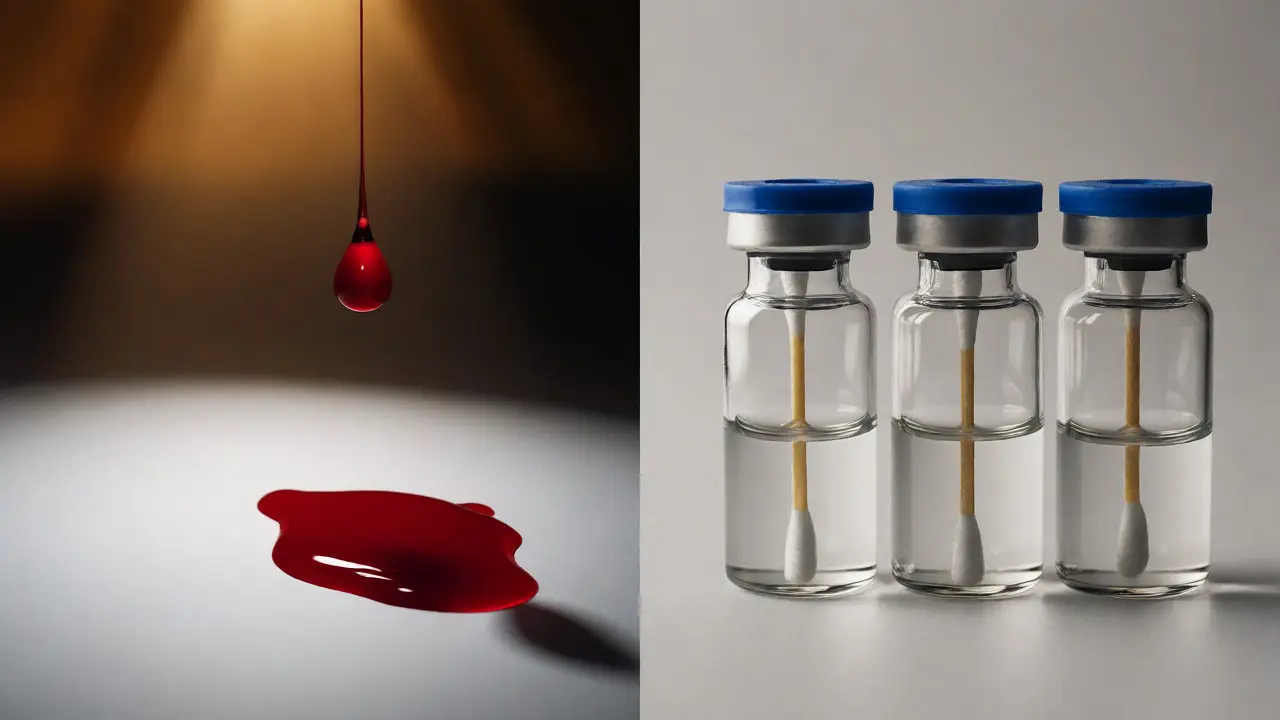
For DNA analysis, you typically need buccal (cheek) swabs. These are easy to get. You rub a sterile swab inside the cheek for about 30 seconds. Do both cheeks. Air dry them completely before packaging. If you package them wet, bacteria grow, and the DNA degrades. Never put a wet swab in a plastic bag. Always use paper envelopes for biological controls.
For fingerprints, you need ten-print cards. This is standard procedure during booking. However, sometimes you need partial prints from fingers that didn’t roll well. If the suspect has damaged fingertips from manual labor, note that. A smudged control print is better than no control print, but you must explain why it’s poor quality in your report.
For trace evidence like glass or paint, you need larger quantities. A single shard of glass might not have enough elemental composition data to distinguish it from another window. Collect multiple fragments if available. If you only have one tiny chip, tell the lab upfront so they don’t waste time trying to run tests that require more mass.
Common Pitfalls to Avoid
I’ve reviewed hundreds of case files, and the same mistakes pop up again and again. Here are the big ones:
- Assuming consent is implied. Just because someone was at the scene doesn’t mean they gave you permission to take their DNA. Unless you have a warrant or explicit written consent, you can’t force a swab. If they refuse, document the refusal. Don’t sneak a sample from their coffee cup unless you’re prepared to fight for admissibility.
- Ignoring environmental controls. Sometimes you need to prove background levels. If you find arsenic in soil, is it from poison or natural geology? Collect soil from nearby areas untouched by humans. These "blank" controls help labs determine if a substance is anomalous.
- Mixing up labels. Label containers before you open them. Once you start collecting, your hands are dirty, your mind is racing, and you’re tired. Pre-labeling prevents the classic "which tube is which?" panic at the end of a shift.
Handling Special Scenarios
Some situations require extra care. Let’s look at two common ones.
Bloodstain Pattern Analysis: You need controls from everyone who bled at the scene. If the victim and the suspect both bled, you need swabs from both. If a third party got cut helping out, you need their swab too. Otherwise, the pattern becomes a jumbled mess of overlapping profiles that no algorithm can cleanly separate.
Digital Evidence: Yes, digital devices need controls too. If you’re analyzing file timestamps, you need a control device with a known correct clock setting. If you’re checking for deleted files, you might need a clean image of the drive state before processing. While less intuitive, verifying the integrity of your software tools with known test datasets is a form of control sampling in the cyber world.
Final Thoughts on Quality
Control samples are the unsung heroes of forensic credibility. They don’t make headlines. No one writes a dramatic courtroom monologue about a properly labeled envelope of cheek cells. But without them, the drama falls flat. Judges trust evidence that has been rigorously compared. Juries believe conclusions that are backed by clear, documented baselines.
Next time you’re on scene, pause before you pack up. Ask yourself: "Do I have a known source for everything I’m claiming?" If the answer is no, go back and get it. It takes five minutes now to save months of litigation later. Keep your gloves fresh, your labels clear, and your chain of custody tight. That’s how you build a case that holds water.
What is the difference between a control sample and a questioned sample?
A questioned sample is evidence found at the scene with an unknown origin (e.g., blood on the floor). A control sample is evidence from a known source (e.g., the suspect's blood) used for comparison. The lab compares the questioned sample to the control to determine if they share characteristics.
Can I use household items as control samples?
Yes, but with caution. Items like toothbrushes, combs, or hats can serve as reference sources for DNA or hair if direct swabs aren't possible. However, you must document that the item was exclusively used by the individual. Shared items introduce mixed profiles, making interpretation difficult.
How long should I air-dry DNA swabs?
Generally, 15 to 30 minutes depending on humidity. The swab must be completely dry to prevent bacterial growth and mold, which degrade DNA. Never place wet swabs in sealed plastic bags; always use breathable paper envelopes until fully dried.
Do I need elimination samples for every person at the scene?
Ideally, yes, for anyone who had reasonable access to the area where evidence was found. First responders, family members, and pets (if relevant) should provide samples. Failing to eliminate these individuals can lead to false positives or inconclusive results due to background contamination.
What happens if I forget to collect a control sample?
The evidence may become unusable for identification purposes. For example, without a suspect's DNA reference, a blood stain can only be typed (A, B, O), which lacks specificity. In court, the lack of a control often leads to objections regarding the reliability of the match, potentially excluding the evidence entirely.