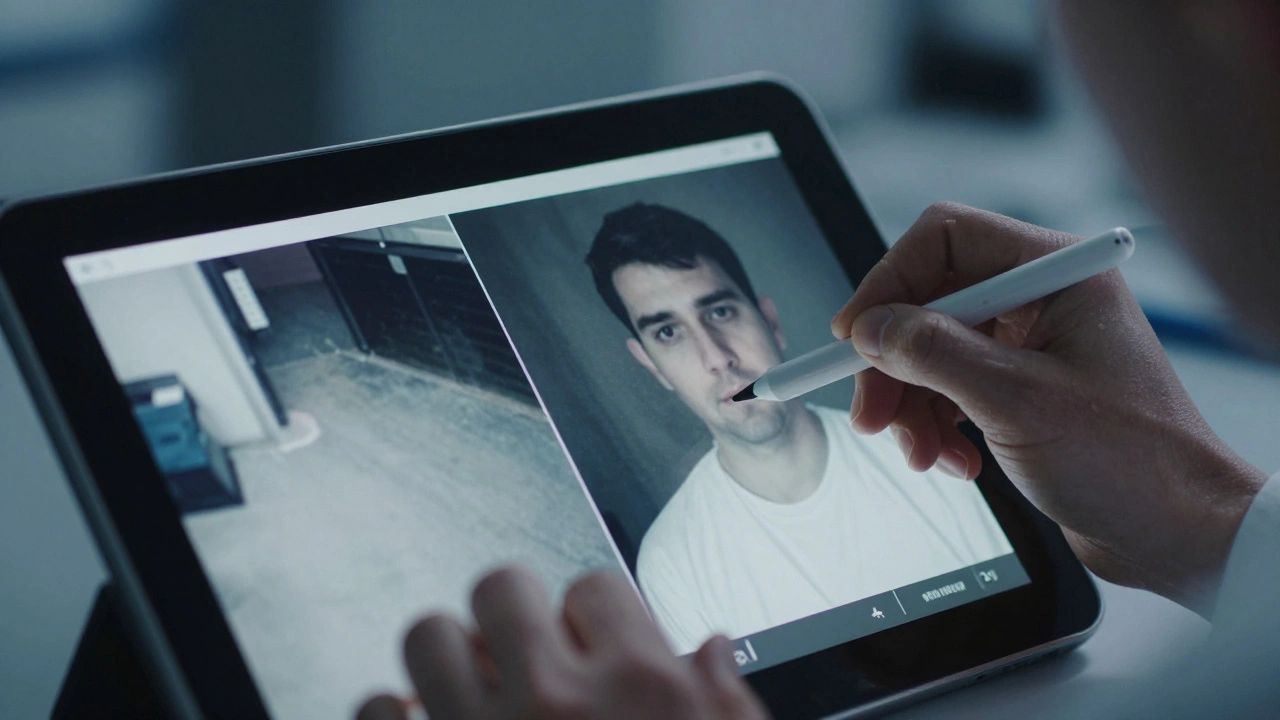
Have you ever wondered why a blurry security camera image suddenly looks crystal clear in a courtroom drama? It’s not magic. It’s forensic photo enhancement, a process that sits right at the dangerous intersection of technology and law. But here is the catch: if you tweak an image too much, it stops being evidence and starts being fabrication. The line between making an image clearer and altering the truth is razor-thin, and crossing it can get evidence thrown out-or worse, land investigators in serious legal trouble.
In this guide, we break down exactly where that line is drawn. We look at the specific rules, standards, and tests that determine whether your enhanced image will hold up in court or get tossed by the judge.
The Core Rule: Enhancement vs. Alteration
To understand the legal limits, you first have to understand the technical difference between two words that often get mixed up: enhancement and alteration. In the forensic world, these are not synonyms. They are opposites.
Image enhancement is defined by the ASTM E2825-21 standard guide for forensic digital image processing. This standard, maintained by the American Society for Testing and Materials (ASTM), categorizes legitimate work into three buckets: improving visual appearance, correcting degradation, and reducing file size. When you adjust brightness, contrast, or sharpness across an entire image to reveal details that were already there but hidden by poor lighting or noise, you are enhancing. You are revealing existing information.
Image alteration, on the other hand, involves adding, removing, or substantially changing content. If you clone-stamp out a license plate number because it’s hard to read, or paint over a background object to focus attention elsewhere, you have altered the image. Legally, this is fatal. An altered image is no longer a "true record" of the scene; it is a new creation. Courts view this as misleading and prejudicial under Federal Rule of Evidence 403, which allows judges to exclude evidence if its unfair prejudice outweighs its probative value.
The key test is simple: Did you create new information, or did you just make old information easier to see? If you created new information, you’ve broken the chain of integrity.
Legal Standards for Admissibility
Just because you followed the technical steps doesn’t mean the judge will accept the image. For forensic enhancements to be admitted as evidence, they must survive rigorous legal scrutiny. Two main frameworks govern this:
- The Best Evidence Rule: Under Federal Rules of Evidence 1001(4), 1002, and 1003, an enhanced image is considered an admissible duplicate only if it accurately reflects the original source material. Crucially, the original unaltered file must also be presented in evidence so the jury can compare the two.
- The Daubert Standard: Established in Daubert v. Merrell Dow Pharmaceuticals, this test determines if expert testimony is based on reliable scientific methodology. Judges ask: Has the technique been tested? What is the known error rate? Has it been peer-reviewed? Is it generally accepted in the scientific community?
If your enhancement method relies on proprietary AI algorithms that haven’t been peer-reviewed or validated against known error rates, a defense attorney can easily argue it fails the Daubert test. The Maine Supreme Court set a precedent in 1999 stating that enhanced images are admissible only if they are "fair and accurate depictions" that "more readily reveal, but remain true to, the recorded events." This means the enhancement must clarify reality, not reinterpret it.
Documentation: Your Best Defense
You can do everything perfectly, but if you don’t write it down, you’re vulnerable. The Office of Justice Programs’ National Criminal Justice Reference Service (OJP/NCJRS) emphasizes that accurate documentation is non-negotiable. It satisfies the legal requirement for authentication.
When a forensic analyst takes the stand, they aren’t just showing a picture. They are explaining a process. A Court of Appeals precedent noted that authentication is established when the analyst describes each step taken in detail, even if they didn’t save intermediate files. However, best practices go further. You should document:
- Chain of Custody: Who handled the original file? When? How was it stored?
- Methodology Transparency: Which software did you use? (e.g., Adobe Photoshop, specialized forensic tools like Amped FIVE). What specific parameters were adjusted?
- Uniformity: Were adjustments applied to the whole image or just selected portions? Applying changes globally is safer legally than selectively editing areas, as selective editing raises suspicions of manipulation.
- Before-and-After Comparisons: Always present the enhanced image alongside the original. This proves you didn’t add content that wasn’t there.
This documentation creates a paper trail that proves your work was objective and reproducible. If another qualified expert could follow your steps and get the same result, your evidence stands stronger.

Detecting Illegal Alterations
Defense teams and opposing experts have powerful tools to detect if you crossed the line from enhancement to alteration. Knowing these methods helps you avoid accidental pitfalls.
| Technique | What It Checks | Why It Matters |
|---|---|---|
| EXIF Metadata Analysis | Timestamps, GPS data, camera model, editing history. | Shows if the file was opened in editing software after capture. |
| Error Level Analysis (ELA) | Compression inconsistencies across the image. | Edited areas often have different compression patterns than the rest of the photo. |
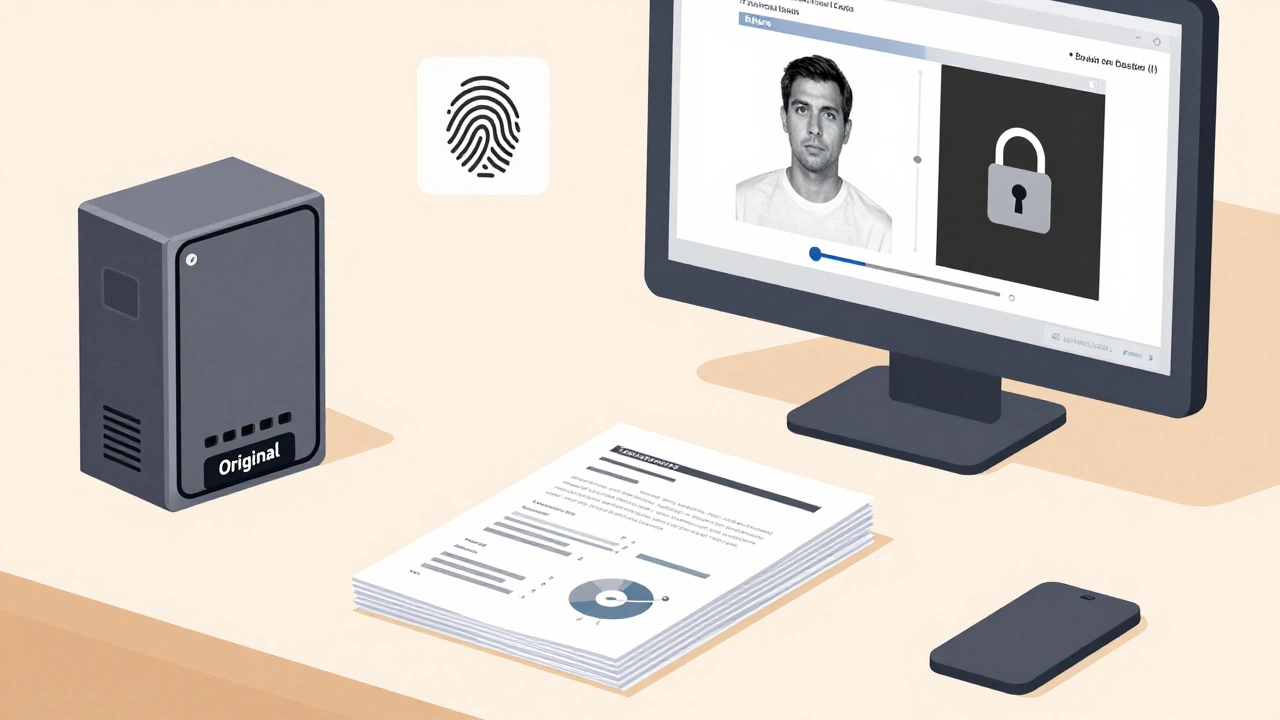
| Hash Verification | Cryptographic digital fingerprints. | Confirms if the file has been modified since the original hash was created. |
| Noise Pattern Analysis (PRNU) | Photo Response Non-Uniformity (unique sensor noise). | Every camera has a unique "fingerprint." Mismatched noise indicates tampering. |
If your enhancement introduces artifacts that trigger these detection methods-such as uneven compression levels or mismatched sensor noise-you risk having your credibility destroyed on cross-examination. Always work on copies of the original file and preserve the master file in a write-once format (like WORM storage) to ensure its integrity.
The AI Wildcard
Artificial Intelligence is changing the game, but it’s also creating legal gray areas. Recent studies, including those cited in the NIH/PMC article "The Current State of Forensic Imaging," highlight that AI-enhanced images face higher scrutiny. Traditional enhancement uses deterministic algorithms (you know exactly what the computer does). AI uses probabilistic models (it guesses what *should* be there based on training data).
This "guessing" mechanism is problematic for the Daubert standard. If an AI fills in a blurred face with features it thinks are likely, is that enhancement or fabrication? Currently, courts are hesitant. Until specific guidelines for AI-generated forensic imagery are established, using AI for critical evidentiary enhancements is risky. Stick to traditional, transparent methods for now unless you have robust validation data proving the AI’s reliability and lack of hallucination.
Consequences of Crossing the Line
Let’s be clear about the stakes. Submitting altered images isn’t just a procedural error; it’s a serious offense. Crux Intel notes that manipulated images can lead to:
- Inadmissible Evidence: The case collapses if the key visual evidence is excluded.
- Obstruction of Justice Charges: Knowingly submitting false evidence is a crime.
- Perjury: If you testify that an altered image is authentic, you are lying under oath.
- Wrongful Accusations: Bad evidence leads to bad outcomes, harming innocent people and undermining public trust in the justice system.
The goal of forensic imaging is truth, not aesthetics. Every click you make must serve the purpose of clarification, never persuasion.
Best Practices Checklist
To ensure your forensic photo enhancement holds up in court, follow this checklist before submitting any evidence:
- Preserve the Original: Never overwrite the source file. Work on a copy.
- Apply Global Adjustments: Adjust brightness, contrast, and color balance across the entire image, not just specific regions.
- Document Everything: Record software versions, settings, and timestamps for every step.
- Validate Against Standards: Ensure your methods align with ASTM E2825-21 guidelines.
- Avoid AI for Critical Details: Do not use generative AI to fill in missing details like faces or license plates.
- Prepare for Cross-Examination: Be ready to explain every single adjustment and justify why it was necessary for clarity.
By sticking to these principles, you protect not just your evidence, but your professional reputation and the integrity of the judicial process.
Is it legal to enhance photos for court evidence?
Yes, it is legal, provided the enhancement strictly improves visibility without altering the underlying content. The image must remain a "fair and accurate depiction" of the original source material, adhering to standards like ASTM E2825-21 and surviving Daubert challenges regarding scientific validity.
What is the difference between enhancement and alteration?
Enhancement reveals existing details by adjusting global properties like brightness or contrast. Alteration adds, removes, or changes content, such as cloning objects or painting over areas. Alteration renders evidence inadmissible and may constitute obstruction of justice.
Can AI-enhanced images be used as evidence?
Currently, AI-enhanced images face significant legal hurdles. Because AI can "hallucinate" or invent details not present in the original, it often fails the Daubert standard for reliability and reproducibility. Courts prefer traditional, transparent enhancement methods until specific AI validation protocols are established.
What happens if I submit an altered photo as evidence?
Submitting an altered photo can result in the evidence being excluded, charges of obstruction of justice, perjury if testified to falsely, and severe damage to professional credibility. It can also derail investigations and lead to wrongful accusations.
How do courts detect photo manipulation?
Courts rely on forensic analysis techniques such as Error Level Analysis (ELA) to find compression inconsistencies, EXIF metadata review to check editing history, Hash Verification to confirm file integrity, and Noise Pattern Analysis (PRNU) to identify unique camera sensor signatures that indicate tampering.
Do I need to keep the original file if I enhance it?
Yes. Under the Best Evidence Rule (Federal Rules of Evidence 1001-1003), the original unaltered source material must be preserved and typically presented alongside the enhanced version to allow for comparison and verification of authenticity.