You’ve probably heard of fingerprints. They’re the star of every crime drama, the go-to evidence for identifying suspects. But here’s a fact that surprises most people: your palms and soles have more unique ridge patterns than your fingertips combined. Yet, they are often overlooked in standard ID processes. Why? Because collecting them is harder, and comparing them requires a different skill set.
If you’re a law enforcement officer, a forensic analyst, or just someone fascinated by how we identify humans, understanding palmar and plantar prints is crucial. These aren't just "big fingerprints." They are distinct entities with their own collection protocols, comparison standards, and evidentiary value. This guide breaks down exactly how to capture these prints properly and what makes them comparable-or not-to other friction ridge evidence.
Why Palmar and Plantar Prints Matter
Most people assume fingerprinting covers everything. It doesn’t. Standard ten-print cards only capture the tips of the fingers. They miss the entire surface of the palm and the sole of the foot. Palmar prints refer to the friction ridge impressions found on the palmar surface of the hand, while plantar prints refer to those on the plantar surface of the foot. Both contain complex ridge details-loops, whorls, arches, and minutiae-that can uniquely identify an individual.
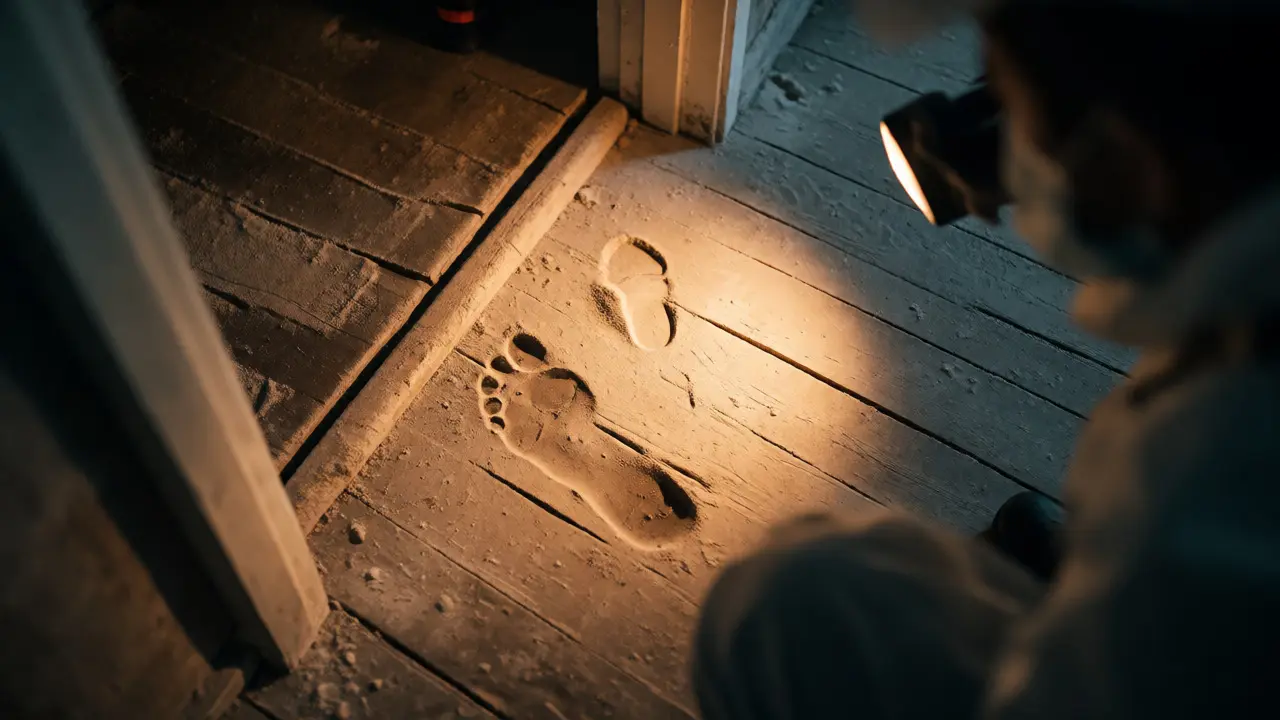
Consider a burglary scene. A suspect might wear gloves on their hands but walk barefoot across a dusty floor. Or perhaps they touched a doorframe with the heel of their hand, leaving a partial palm print. In both cases, traditional finger rolling won’t help. You need specific techniques for palms and soles. The FBI’s Next Generation Identification (NGI) system now includes a Palm Print System (PPS), acknowledging that this data is vital for cold case investigations and mass disaster victim identification.
The Anatomy of Friction Ridges
To collect good prints, you need to know what you’re looking for. Friction ridges are raised lines of skin that run parallel to each other. They exist to improve grip and touch sensitivity. On the palm, these ridges form into three main areas:
- Hypothenar area: The fleshy part near the pinky finger.
- Thenar area: The fleshy part near the thumb.
- Digital pads: The areas at the base of the fingers.
Plantar surfaces are even more varied. The sole has a heel pad, ball of the foot, and toe pads. Unlike fingers, which are relatively uniform in size, feet vary drastically based on shoe wear, gait, and health conditions like diabetes. This variability means plantar prints are less standardized than fingerprints. There is no single "standard" way to roll a foot like there is for a finger.
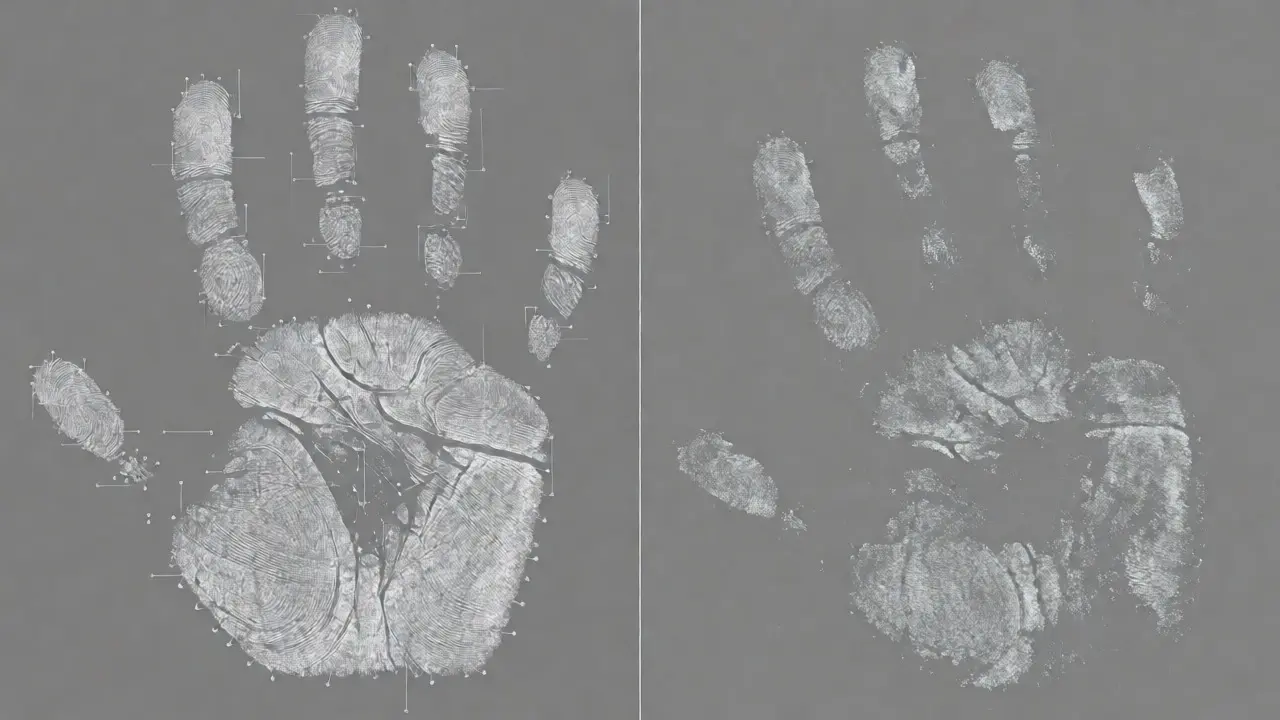
When analyzing these prints, examiners look for minutiae-specific points where ridges end, split, or join. While fingers typically offer 100-150 minutiae per print, a full palm can offer over 300. More data means higher confidence in identification, provided the print quality is high enough.
Collection Methods: Getting It Right
Collecting palmar and plantar prints falls into two buckets: live-scan (inkless digital) and inked (traditional). Each has pros and cons depending on the setting.
Live-Scan Technology
Modern stations use optical or capacitive sensors. For palms, the subject places their hand flat on the scanner. For feet, they step onto a specialized plate. The advantage? Speed and cleanliness. No ink mess, and the image is instantly digitized for database searching. However, live-scans struggle with dry skin or heavy calluses, common on feet. If the sensor can’t pick up the ridges because of dead skin, you get a blurry blob instead of a usable print.
Inked Collection Techniques
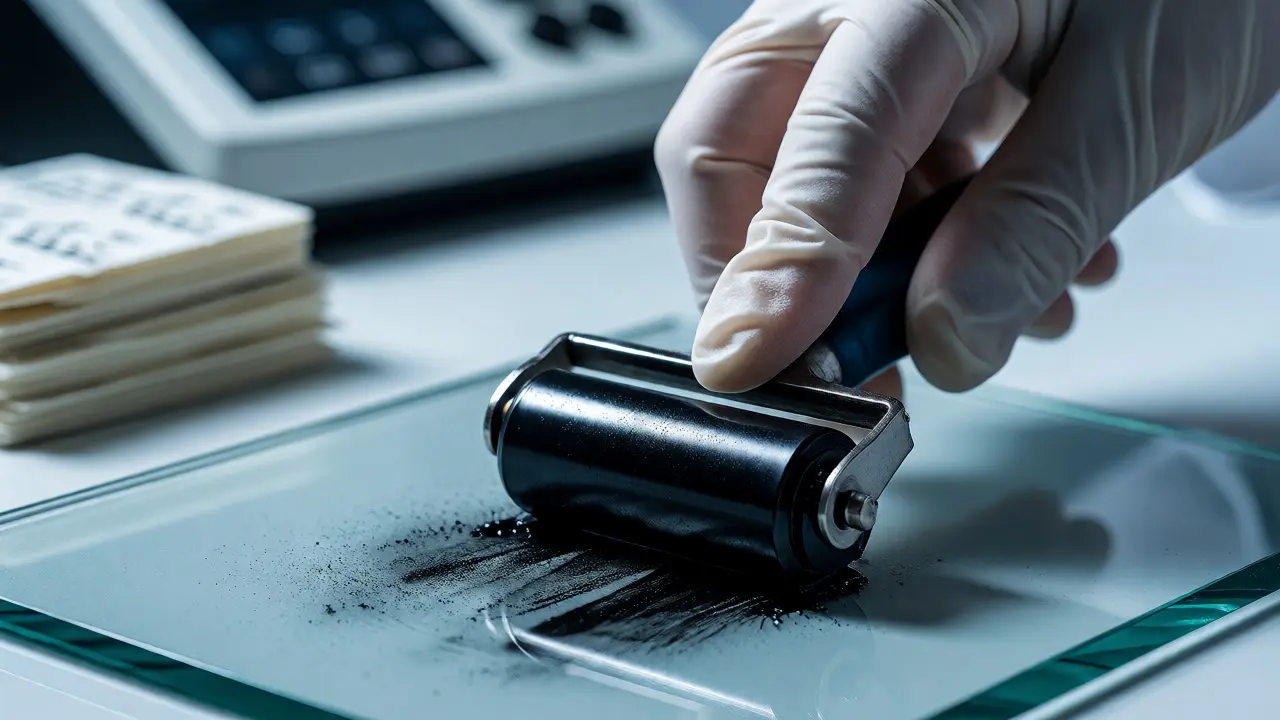
Despite tech advances, ink remains the gold standard for quality control, especially for training and difficult cases. Here’s how it works for palms and soles:
- Preparation: Clean the surface thoroughly. Any dirt or oil will blur the ridges.
- Inking: Apply a thin, even layer of black forensic ink to a roller or glass plate.
- Rolling vs. Flat: Unlike fingers, you don’t always roll palms. Often, you press the whole palm flat against a card. For feet, you might press the ball and heel separately if the sole is too wide for one impression.
- Pressure Control: Too much pressure smears the ridges; too little leaves gaps. Practice makes perfect here.
A critical tip for plantar collection: ask the subject to shift weight evenly. If they lean on one side, the print distorts. Distortion is the enemy of comparison.
Comparison Standards and Challenges
Once you have the print, how do you compare it? This is where things get tricky. Fingerprints have decades of established databases and automated matching algorithms. Palmar and plantar prints lag behind.
First, there’s the issue of size variation. A palm print left on a window might be distorted because the person pressed hard with their heel of the hand. An examiner must account for this distortion manually. Automated systems often fail with partial or distorted palm prints, requiring human expertise.
Second, reference samples are rare. Most arrestees provide ten-print cards (fingers only). Without a known palm or foot print from the suspect, you can’t make a positive ID. This creates a bottleneck. Investigators must actively seek out these additional prints during booking or interviews.
| Feature | Fingerprints | Palmar Prints | Plantar Prints |
|---|---|---|---|
| Primary Use Case | Standard ID, criminal records | Cold cases, latent lifts from large surfaces | Barefoot evidence, footwear analysis |
| Database Availability | Extensive (AFIS/NGI) | Limited (PPS within NGI) | Very Limited / Research Phase |
| Ridge Density | High | Moderate | Low (due to sweat pores and wear) |
| Collection Difficulty | Easy | Moderate | Hard (anatomical variation) |
Legal Admissibility and Expert Testimony
Will a judge let a palm print into court? Generally, yes. Courts accept friction ridge analysis as scientifically valid under the Daubert or Frye standards, provided the examiner is qualified. However, the scrutiny is higher for non-standard prints. If you’re testifying about a partial plantar print, expect questions about error rates. Studies show that experienced examiners have low false-positive rates, but novice analysts struggle with partials.
Documentation is key. When you lift a latent palm print from a crime scene, photograph it before lifting. Note the substrate (glass, wood, metal). Then, document the enhancement method used (powder, cyanoacrylate fuming, chemical dye). Chain of custody must be impeccable. One break in the chain, and the print becomes worthless.
Common Pitfalls to Avoid
Even seasoned professionals make mistakes with these prints. Here are the big ones:
- Ignoring Substrate Texture: Trying to lift a print from rough concrete with standard tape usually fails. Use gel lifters or electrostatic devices for textured surfaces.
- Overlooking Partial Prints: A small section of a palm can still match if the minutiae are clear. Don’t discard a print just because it’s incomplete.
- Poor Lighting During Capture: Shadows hide ridge details. Always use oblique lighting when photographing latent prints.
- Assuming Symmetry: Left and right palms are mirror images, but not identical. Never assume a left palm print matches a right hand without verification.
Another trap is contamination. If multiple people touch a surface, overlapping prints become impossible to separate. This is why scene preservation matters. Restrict access immediately.
The Future of Friction Ridge Analysis
Technology is catching up. New 3D scanning tools can capture depth information from footprints, helping distinguish between true barefoot prints and shoe impressions. AI algorithms are being trained to recognize palm patterns with greater accuracy, reducing the reliance on manual comparison. As databases grow, the utility of palmar and plantar prints will skyrocket. What is currently a niche specialty may soon become a standard requirement in all criminal bookings.
Are palm prints as reliable as fingerprints?
Yes, palm prints are equally unique to an individual. However, they are often larger and can suffer from more distortion due to skin elasticity and pressure. Reliability depends heavily on the quality of the latent print and the experience of the examiner. With clear ridge detail, a palm print can provide a definitive identification.
How do I collect a footprint if the person is wearing shoes?
If the person is wearing shoes, you cannot collect a plantar print directly. You would collect a shoe impression instead. To get a plantar print, the subject must remove their socks and shoes. Ensure the floor is clean and dry before they step onto the collection card or scanner.
Can elderly people provide good palm prints?
Elderly individuals often have smoother skin and fewer sweat pores, which can make ridge details fainter. Additionally, age-related skin changes may reduce ridge clarity. Examiners may need to use stronger contrast agents or digital enhancement software to visualize the minutiae effectively.
What is the difference between a latent and a patent print?
A patent print is visible to the naked eye, such as a bloody handprint on a wall. A latent print is invisible or barely visible, formed by sweat and oils, and requires processing (like powder or chemicals) to see. Both can be collected and compared, but latent prints require more technical handling.
Do children’s palm prints change as they grow?
The pattern types (loops, whorls) remain stable throughout life, but the size increases as the child grows. The ridge count stays the same relative to the pattern structure. Therefore, a child’s palm print can be matched to an adult print if scaled correctly, though age-related skin texture changes can complicate comparison.