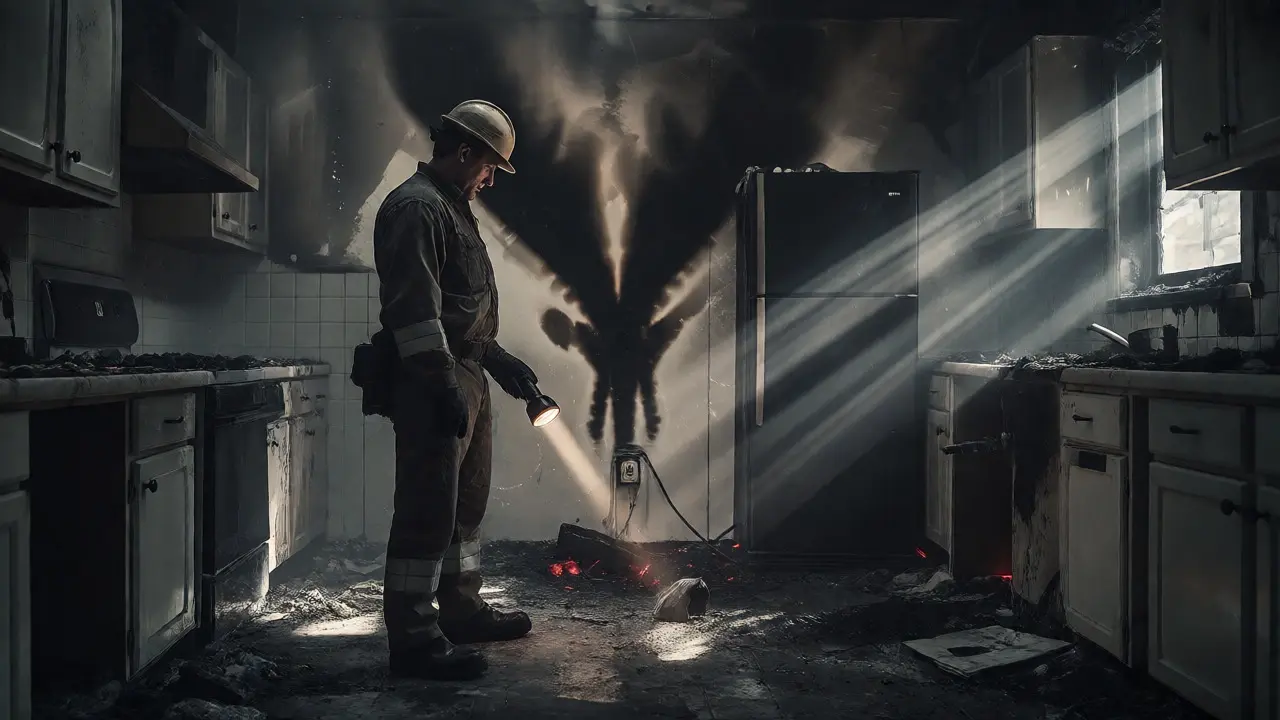
You walk into a burned-out kitchen. The walls are blackened, the floor is charred, and there’s a distinct V-pattern on the back wall. Your gut tells you it was an electrical fault in the outlet behind the fridge. But here is the problem: your gut isn’t evidence. It’s a hypothesis. And if you stop there, you’re likely heading toward an unsupported conclusion that could crumble under cross-examination or peer review.
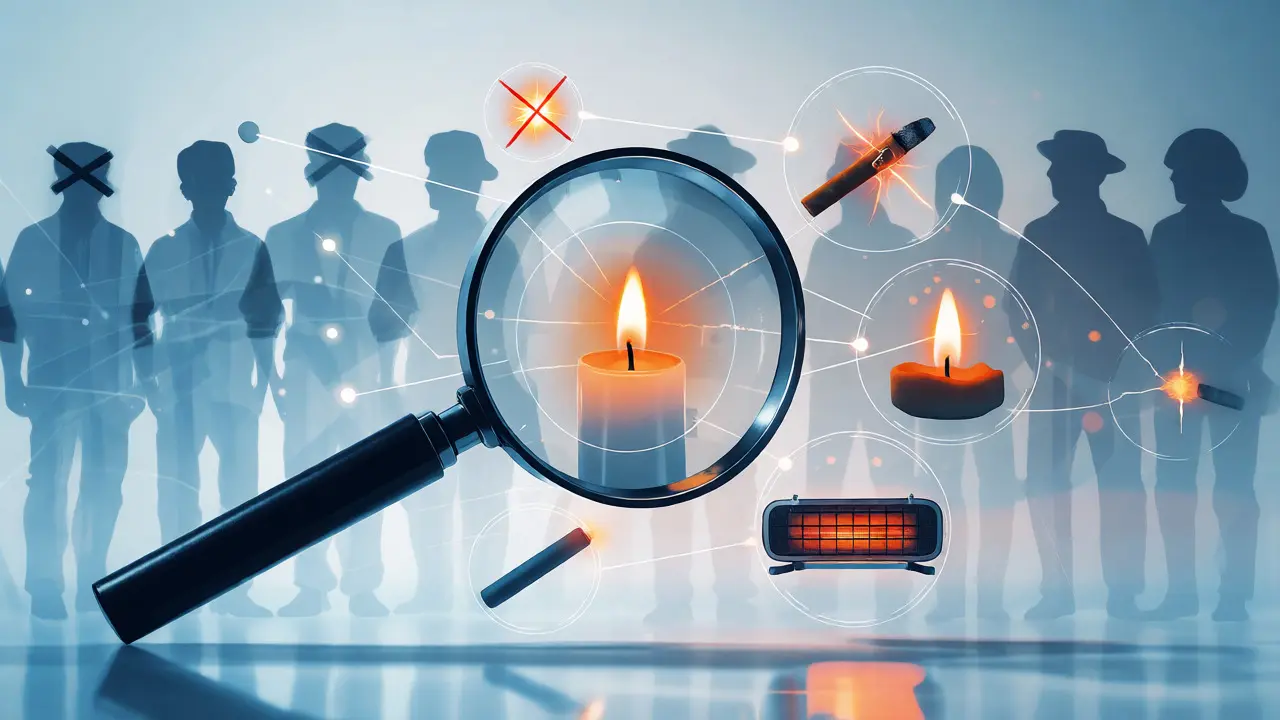
This is where the concept of the Negative Corpus becomes your best friend. In simple terms, a negative corpus is the collection of all possible causes that you have ruled out. It’s not just about finding what started the fire; it’s about proving what didn’t start it. If you can’t list every other plausible ignition source and explain why each one failed to ignite this specific fire, your final conclusion is shaky at best.
Why "It Looks Like" Is Not Enough
Fire investigators often fall into the trap of confirmation bias. You see a melted wire, and you assume electricity caused the fire. But did you check if the wire melted because of the fire itself? Or did you check for a candle left burning nearby? Did you consider that the occupant might have been smoking?
The Scientific Method as applied to fire investigation, specifically outlined in NFPA 921, demands more than observation. It demands exclusion. You must systematically eliminate hypotheses until only one remains. This process relies heavily on building a robust negative corpus. Without it, you are essentially guessing with extra steps.
Think of it like solving a murder mystery. You don’t convict the butler just because he was in the room. You have to prove the maid couldn’t have done it, the chef wasn’t in the kitchen, and the dog didn’t knock over the vase. In fire scenes, the "suspects" are heat sources, fuels, and oxygen sources. If you leave any of them unexamined, your case has holes.
Building Your Negative Corpus Step-by-Step
Creating a negative corpus isn’t magic. It’s a checklist-driven discipline. Here is how you actually do it in the field:
- List All Potential Ignition Sources: Before you decide anything, write down every single thing that could possibly create enough heat to ignite the fuel present. This includes open flames (candles, lighters), hot surfaces (stoves, heaters), electrical devices, chemical reactions, and even spontaneous combustion.
- Analyze Fuel Availability: For each potential source, ask: Was there fuel nearby? If you suspect an electrical short in the bedroom, but the nearest combustible material was three feet away on a non-flammable tile floor, that hypothesis weakens significantly.
- Check Physical Evidence: Look for indicators that support or refute each hypothesis. If you suspect a cigarette, do you find ash patterns consistent with a dropped cigarette? If you suspect a space heater, is there melt damage on the heater itself indicating it was running when the fire started?
- Consider Human Behavior: Talk to occupants. Were they smoking? Did they leave candles burning? Did they plug in a new appliance? Human actions provide context that physical evidence alone might miss.
- Document Exclusions: This is the critical step most people skip. Write down *why* you rejected each alternative hypothesis. "Rejected space heater because it was unplugged and cold to the touch upon arrival." That statement belongs in your report.
The Role of NFPA 921 in Defining Standards
If you aren’t following NFPA 921, you’re fighting uphill battles in court. This standard, titled "Guide for Fire and Explosion Investigations," explicitly requires the application of the scientific method. It states that investigators must develop hypotheses based on facts and then test those hypotheses against the physical evidence.
A key part of this testing is the elimination of alternatives. The standard doesn’t just say "find the cause." It implies that you must demonstrate why other causes are impossible or highly improbable. A report that says "Electrical origin suspected" without addressing gas leaks, cooking accidents, or arson is incomplete. Courts increasingly reject expert testimony that fails to address the negative corpus. They want to know you considered the alternatives before landing on your conclusion.
| Hypothesis | Evidence Supporting It | Evidence Ruling It Out (Negative Corpus Entry) |
|---|---|---|
| Electrical Fault | Melted wiring, arc beads | Breaker was off; no power to circuit; melting pattern inconsistent with arcing |
| Cooking Accident | Grease stain, proximity to stove | Stove knobs were in 'off' position; grease was old/cold; no pot on burner |
| Smoking Material | Ash found on carpet | Ash located in area protected from fire flow; no burn hole in underlying padding |
| Arson/Accelerant | Rapid flame spread, pour patterns | No accelerant detected in lab; charring depth uniform; no multiple points of origin |
Pitfalls That Destroy Credibility
Even experienced investigators slip up. One common error is "tunnel vision." You latch onto the first plausible explanation and ignore contradictory data. Maybe you see a broken lamp cord and assume electrical failure, ignoring the fact that the lamp was unplugged. Another mistake is relying too heavily on "expert intuition" without documenting the reasoning. If you can’t articulate why you ruled out a hypothesis, you didn’t really rule it out-you just ignored it.
Also, beware of assuming exclusivity. Just because you find evidence of a space heater doesn’t mean it caused the fire. Heaters are common in homes. Finding one near a fire scene is normal. You need specific evidence linking that heater to the ignition event, such as thermal damage to its casing or internal components showing it was operating during the fire.
Practical Example: The Bedroom Fire
Let’s look at a real-world scenario. A fire starts in a bedroom. The deepest charring is around a nightstand. On the nightstand, there’s a phone charger plugged into a wall outlet. The initial thought: Electrical fire from the charger.
To build a negative corpus, you investigate further:
- Alternative 1: Smoking. You interview the occupant. They say they smoke outside. You inspect the bed linens. No burn holes typical of cigarettes. You rule this out due to lack of physical evidence and witness statement.
- Alternative 2: Candle. You search for wax residue. None found. You check trash cans. No matches or wick remnants. You rule this out due to absence of associated materials.
- Alternative 3: Space Heater. There is a small electric heater in the corner. It is intact. Its switch is off. It shows no signs of overheating or melting. You rule this out because it wasn’t operating.
- Alternative 4: Arson. You take samples from the point of origin. Lab results show no accelerants. The fire progression is consistent with natural growth. You rule this out due to negative lab results and fire dynamics analysis.
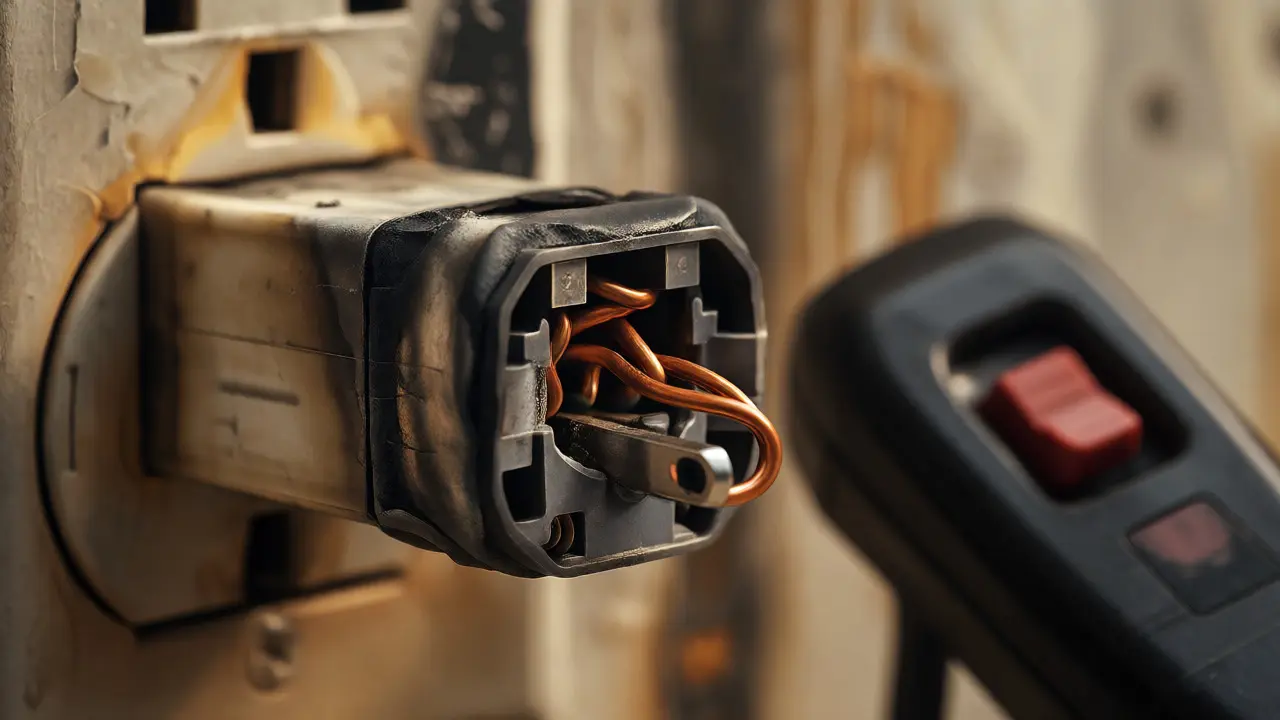
Now, you return to the charger. The outlet plate is discolored. The charger brick is melted internally. The phone cable is fused. With all other options eliminated and positive evidence pointing to the charger, your conclusion holds water. This structured approach protects you from criticism.
Tools and Techniques for Rigorous Analysis
Using technology helps, but it doesn’t replace logic. Thermal imaging cameras can help identify hidden hot spots, but they don’t tell you the cause. Gas chromatography-mass spectrometry (GC-MS) can detect accelerants, but a negative result doesn’t rule out arson-it might just mean the accelerant evaporated. Always interpret tests within the context of the scene.
Documentation is your shield. Take photos of every item you consider and exclude. Note their condition. If you move an object to inspect it, photograph its original position. If you turn off a breaker to test a circuit, document who turned it off and when. These details strengthen your negative corpus entries.
Conclusion: Confidence Through Elimination
Determining fire cause is rarely about finding a smoking gun. It’s about removing every other possibility until only one remains. By rigorously building your negative corpus, you transform your opinion into a defensible conclusion. You show the jury, the insurer, and your peers that you didn’t just guess. You investigated.
So next time you stand in a burned structure, resist the urge to jump to conclusions. Ask yourself: Have I ruled out everything else? Can I prove it? If the answer is yes, you’re doing good work. If not, keep digging.
What exactly is a negative corpus in fire investigation?
A negative corpus is the comprehensive list of all alternative causes that an investigator has considered and systematically ruled out based on physical evidence, witness statements, and laboratory results. It serves as proof that the final conclusion is the only remaining viable option.
Why is NFPA 921 important for fire cause determination?
NFPA 921 provides the standard guide for applying the scientific method to fire investigations. It mandates that investigators develop hypotheses and test them against physical evidence, requiring the elimination of alternative hypotheses to reach a reliable conclusion.
Can a fire be accidental if I haven't found the exact ignition source?
Yes, but your confidence level will be lower. If you cannot identify the specific ignition source, you may classify the cause as "undetermined" or assign a probability range. However, you must still document what you ruled out to justify why you couldn't pinpoint the source.
How does confirmation bias affect fire investigations?
Confirmation bias leads investigators to seek information that supports their initial hunch while ignoring contradictory evidence. Building a negative corpus counteracts this by forcing the investigator to actively look for reasons why their primary hypothesis might be wrong.
What happens if I fail to document my negative corpus?
If you don't document the alternatives you ruled out, your conclusion appears arbitrary. Opposing experts can easily suggest other causes you didn't mention, undermining your credibility and potentially leading to your testimony being excluded or dismissed in legal proceedings.