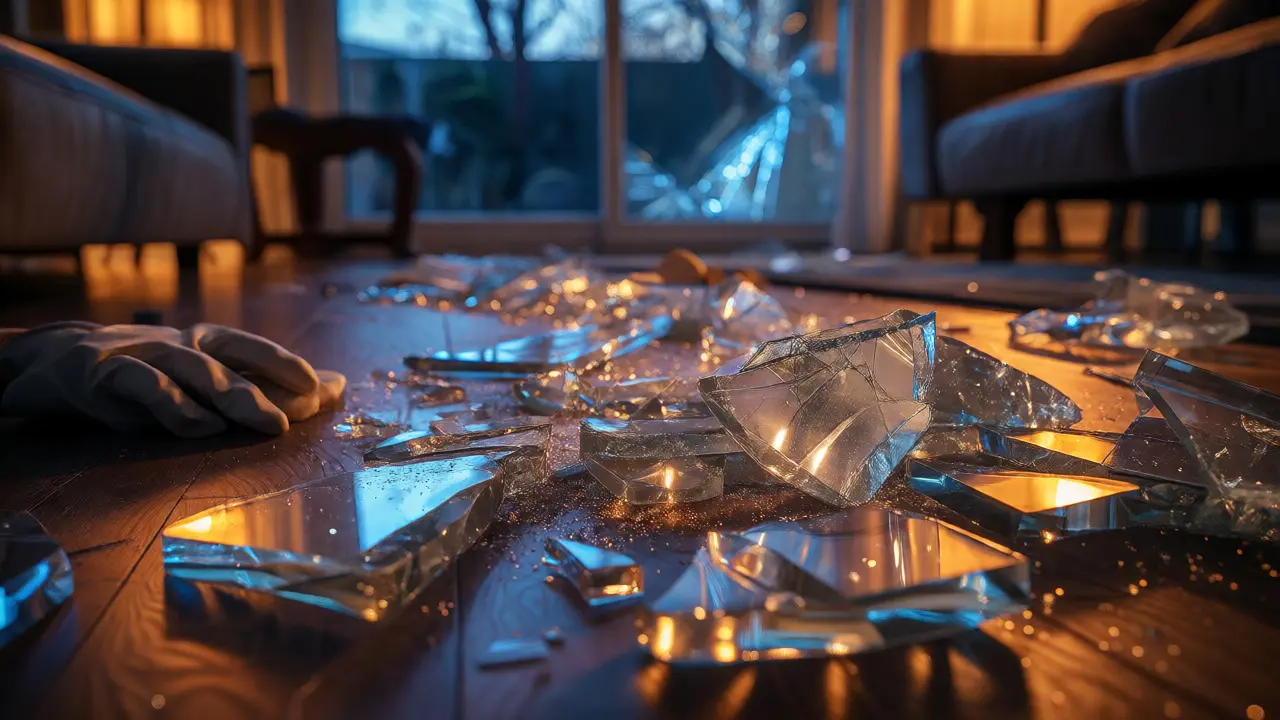
You’re standing in a living room. Broken window pane on the floor. Shards of glass everywhere. The suspect has glass fragments in his shoe treads. The victim’s jacket has tiny slivers caught in the weave. How do you know if those pieces actually came from that specific window? You don’t just look at them. You measure how light bends through them.
This is where Refractive Index (RI) comes in. It’s the single most powerful tool in a forensic chemist’s kit for linking glass fragments to a source. But it’s not magic. It’s physics, applied with extreme precision. If you get the temperature wrong by two degrees, your conclusion might be garbage. Let’s break down exactly how this works, why it matters, and how to avoid the traps that catch even experienced analysts.
Why Refractive Index Beats Visual Inspection
Think about a standard soda bottle. Now think about a car windshield. Both are glass. To the naked eye, they might look similar if they’re both clear. But chemically? They’re different beasts. Soda bottles are usually made from soda-lime silica glass. Windshields are often laminated or tempered, using different chemical formulations to handle stress and impact.
Refractive Index is a dimensionless number that describes how fast light travels through a material compared to its speed in a vacuum. For air, the RI is roughly 1.0003. For water, it’s 1.33. For common window glass, it hovers around 1.51 to 1.52. This number isn’t arbitrary. It’s dictated by the density and composition of the glass. Because manufacturers use specific recipes for specific products, the RI becomes a unique fingerprint.
Here’s the kicker: visual characteristics like color, thickness, or curvature can be misleading. Two different windows can look identical. But their RIs will differ if they were manufactured in different batches, or even if they came from different sides of the same factory line. By measuring RI, you strip away the subjective guesswork. You get a hard number.
The Physics Behind the Measurement
To understand how we measure RI, you need to understand Snell’s Law. When light passes from one medium to another-say, from oil into a glass fragment-it changes speed. This change causes the light ray to bend, or refract. The angle at which it bends depends on the difference in refractive indices between the two media.
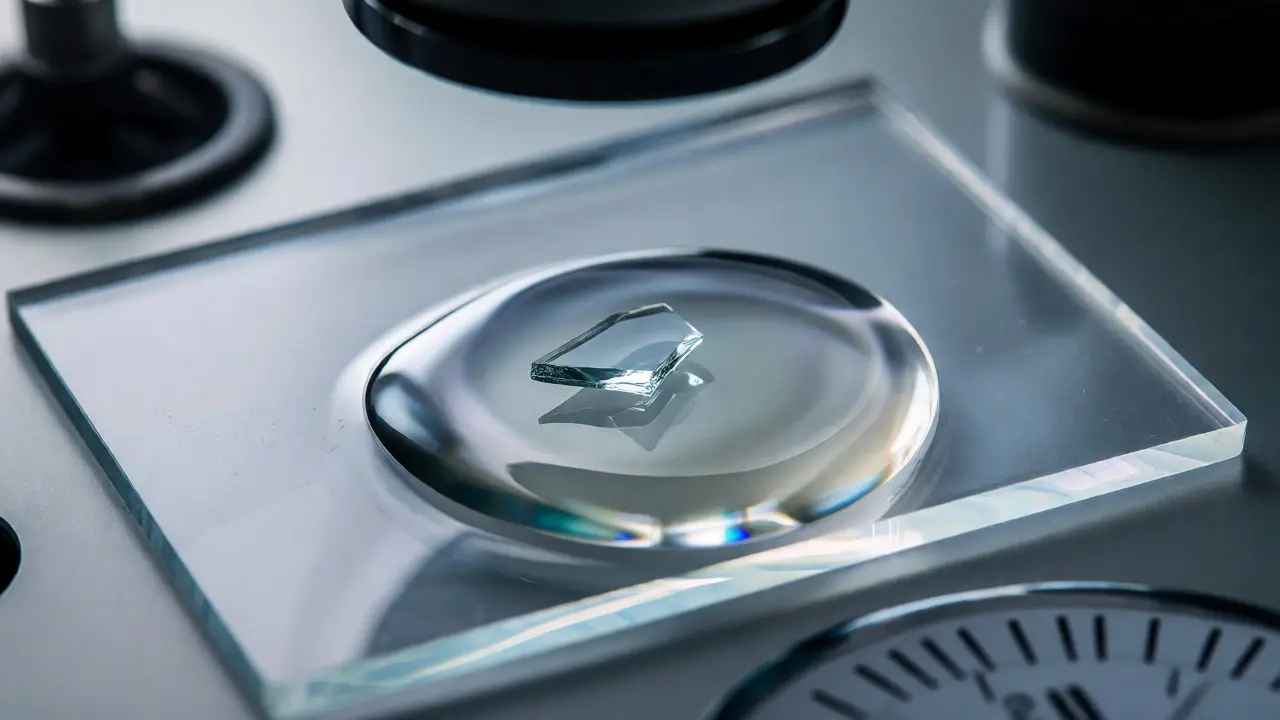
Forensic labs rarely measure absolute RI directly because it’s tricky with solid solids. Instead, they use the Immersion Method. This involves submerging a tiny glass fragment in a liquid whose RI can be precisely adjusted, usually a mixture of silicone oils or specialized fluids like Cargille liquids.
You heat the liquid and the glass together. Why heat? Because RI is temperature-dependent. Most glass materials have a negative temperature coefficient for RI. That means as temperature goes up, RI goes down. In the immersion method, you adjust the temperature until the glass fragment "disappears" against the background liquid. When the RI of the liquid matches the RI of the glass, there is no refraction at the boundary. No bending means no visible edges. You’ve found the match point.
The GRIM Method: Industry Standard
You’ll hear forensic scientists talk about GRIM, which stands for Glass Refractive Index Measurement. It’s the gold standard protocol developed by the FBI and adopted worldwide. Before GRIM, analysts used manual hot-stage microscopy, which was slow and prone to human error. GRIM automates much of the process but relies on the same physical principles.
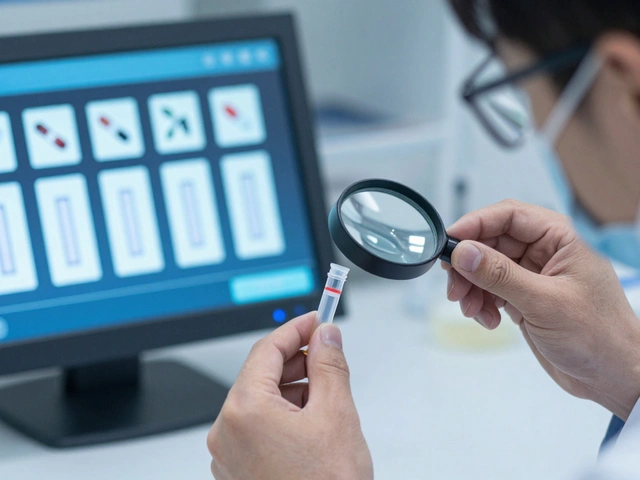
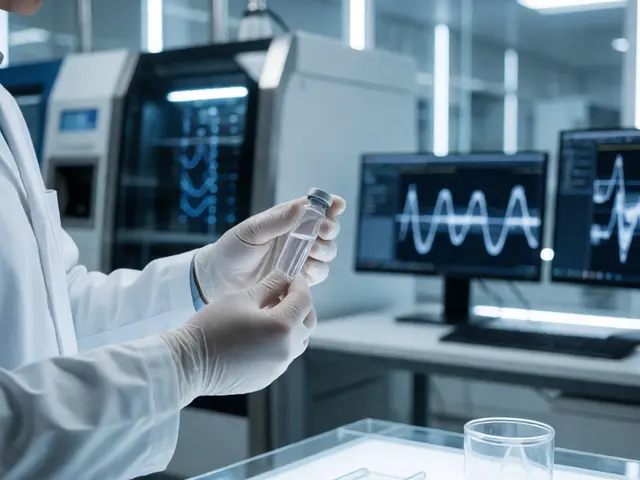
In a GRIM setup, you place the glass fragment on a microscope stage equipped with a heating element and a thermoelectric controller. You add a drop of high-RI liquid. As you slowly raise the temperature, you watch the fragment under polarized light. Polarization helps highlight the edges of the glass when the RI mismatch is small but present. Once the edges vanish, you record the temperature. Then you calculate the RI of the glass at a standard reference temperature, usually 25°C, using a calibration curve for that specific liquid.
| Glass Type | Approximate RI (at 25°C) | Common Use |
|---|---|---|
| Soda-Lime Silica | 1.51 - 1.52 | Windows, Bottles, Jars |
| Borosilicate | 1.47 - 1.48 | Laboratory Glassware, Pyrex |
| Lead Crystal | 1.54 - 1.60+ | Decorative Items, Lenses |
| Tempered Safety Glass | 1.51 - 1.52 | Car Side/Rear Windows |
| Laminated Safety Glass | 1.51 - 1.52 | Windshields (with PVB interlayer) |
Collection and Preparation Pitfalls
The best measurement in the world is useless if your sample is contaminated. Imagine you find a shard on a suspect’s carpet. It looks like window glass. But if that shard has been sitting in a puddle of rainwater mixed with detergent, the surface might be etched. Etching changes how light interacts with the surface, potentially skewing your results if you’re not careful.
Always collect multiple fragments. One piece might be an outlier due to manufacturing defects or surface contamination. You want to establish a range. If all five fragments from the suspect’s clothing yield an RI of 1.518 ± 0.001, and the broken window yields 1.518 ± 0.001, that’s a strong link. If one fragment reads 1.530, you investigate why. Is it a different type of glass? Is it contaminated?
Preparation matters too. You need clean, dry fragments. Dust and fibers can mimic glass edges under the microscope. Analysts often use ultrasonic cleaning baths to remove debris without damaging the delicate shards. And size matters. While modern instruments can analyze fragments as small as 100 microns, larger pieces provide more reliable data. If you only have dust-sized particles, your confidence interval widens significantly.
Interpreting the Results: Match vs. Non-Match
So, you have your numbers. The suspect’s glass is 1.519. The crime scene glass is 1.519. Did he break the window? Not necessarily. Here’s why: millions of windows are made with soda-lime silica glass. Their RIs cluster tightly around 1.51-1.52. An RI match proves consistency, not uniqueness.
Forensic reports should reflect this nuance. A good report won’t say "The glass matches." It will say, "The refractive index of the questioned glass is consistent with the known glass." This distinction is crucial in court. Jurors often misunderstand "match" to mean "identical origin." But in forensics, especially with glass, we deal in probabilities and exclusions.
What if the RIs don’t overlap? Say the suspect’s glass is 1.519 and the window is 1.525. That’s a significant difference. Given the tight manufacturing tolerances, it’s highly unlikely these pieces came from the same source. This allows you to exclude the suspect’s glass as the source of the crime scene fragment. Exclusion is often more powerful than inclusion.

Limitations and Modern Challenges
Refractive Index isn’t foolproof. Modern architectural glass is becoming more complex. Low-E (low-emissivity) coatings, tints, and multi-pane units introduce variables. A coated window might have a bulk glass RI of 1.51, but the coating adds interference effects that confuse optical measurements. Analysts must identify and account for these coatings, sometimes removing them mechanically before measurement.
Another challenge is recycling. Recycled glass batches can vary slightly in composition depending on the source waste stream. This introduces natural variability within what should be a uniform product category. A rigorous lab maintains extensive databases of RI values for different manufacturers and years to contextualize these variations.
Finally, consider the environment. Temperature control is non-negotiable. A fluctuation of 0.1°C can shift the apparent RI enough to create false negatives. Labs use calibrated thermometers and controlled environments. If you’re reviewing a case file, check the lab’s quality control records. Were daily calibrations performed? Was the instrument verified with standards?
Practical Checklist for Investigators
- Collect Adequately: Gather at least 5-10 representative fragments from both the scene and the suspect/item.
- Avoid Contamination: Wear gloves. Use clean tools. Don’t touch the fracture surfaces.
- Document Context: Note the location of each fragment relative to the break. Directionality of breaks can also provide clues, though RI is primary.
- Preserve Integrity: Store fragments in paper envelopes, not plastic bags, to prevent static cling and moisture buildup.
- Request Specific Analysis: Ask for GRIM analysis specifically, not just general glass comparison.
Can refractive index distinguish between different brands of window glass?
Sometimes, but not always. Major manufacturers maintain strict quality control, so their glass often falls into narrow RI ranges. However, many brands use similar raw materials, leading to overlapping RI values. RI alone cannot definitively identify a brand, but it can exclude sources that fall outside the expected range for a specific manufacturer's typical output.
How does temperature affect glass refractive index measurements?
Temperature has a direct inverse relationship with refractive index for most glass types. As temperature increases, the density of the glass decreases slightly, causing light to travel faster and the RI to drop. This is why forensic labs use precise heating stages and convert all measurements to a standard reference temperature, typically 25°C, to ensure comparability across different tests.
Is a refractive index match proof that two glass pieces came from the same source?
No, it is not absolute proof. It indicates consistency. Because millions of glass items share similar chemical compositions and thus similar RIs, a match only proves that the fragments could have come from the same source. It does not prove they did. Additional evidence, such as physical fit (jigsaw matching) or elemental composition analysis, is needed to strengthen the association.
What happens if the glass fragment is too small for GRIM analysis?
If fragments are extremely small (e.g., less than 50 microns), traditional immersion methods may be difficult. In such cases, labs might use laser microprobe mass spectrometry (LAMMA) or scanning electron microscopy with energy-dispersive X-ray spectroscopy (SEM-EDX) to analyze elemental composition instead of optical properties. However, GRIM remains preferred for its simplicity and cost-effectiveness when sufficient material is available.
Does the color of the glass affect its refractive index?
Yes, colorants added to glass to create tints (like iron oxide for green glass or cobalt for blue) alter the chemical composition, which in turn changes the refractive index. Tinted glass generally has a higher RI than clear soda-lime glass. Therefore, comparing tinted glass to clear glass requires accounting for this compositional difference; a direct RI comparison between fundamentally different colored glasses may be invalid without correction factors.