You walk into the morgue expecting answers. The body is on the table, the family is waiting outside, and the police want a name for the killer or a reason for the accident. But sometimes, after hours of cutting, weighing organs, and staring under microscopes, the pathologist puts down the scalpel and writes two words in the report: Undetermined. It’s frustrating, it’s confusing, and for many people, it feels like a failure. But in forensic pathology, an undetermined finding isn’t always a mistake-it’s often the most honest answer science can give.
Why does this happen? How can a person die without leaving a trace? And what happens to the case file when the cause remains a mystery? Let’s break down the reality behind those obscure autopsy cases where the cause of death refuses to reveal itself.
The Myth of the Perfect Autopsy
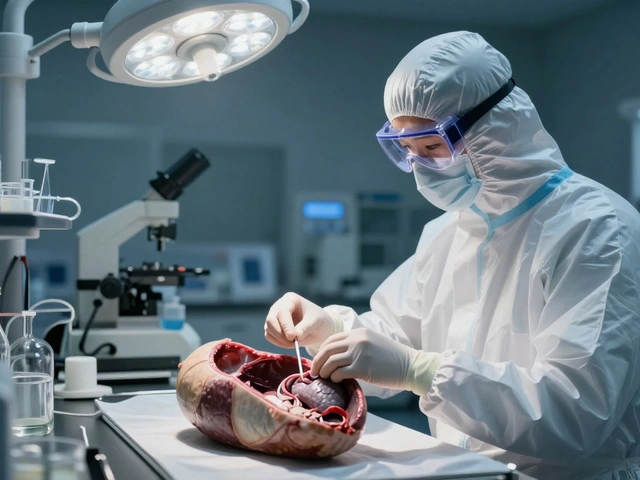
Hollywood has done us a disservice. On TV shows like Cold Case Files or Dexter, every dead body tells its story clearly. A bullet fragment here, a trace of poison there, a bruise that matches a specific fist. In real life, the human body is messy, resilient, and occasionally secretive. An autopsy is a gross anatomical examination combined with microscopic analysis and toxicology screens. It looks for structural damage-things you can see or measure. But not all deaths leave structural damage.
Forensic Pathology is the branch of medicine that deals with determining cause and manner of death through post-mortem examination. Unlike clinical doctors who treat living patients, forensic pathologists work with the deceased. Their tools are scales, scalpels, and mass spectrometers. If the mechanism of death was functional rather than structural, the standard autopsy toolkit might come up empty.
Think about it this way: if you drop a smartphone and the screen shatters, you know why it broke. Impact caused physical damage. But if the phone just stops turning on because the battery died or the software crashed, looking at the outside tells you nothing. You need deeper diagnostics. Sometimes, the human body is like that second phone. The heart stopped beating, but no artery burst, no brain bled, and no toxin spiked high enough to register as lethal. This is where the term "negative autopsy" enters the conversation.
What Does "Undetermined" Actually Mean?
When a Medical Examiner (ME) or Coroner signs off on a death certificate, they have several options for the "Cause of Death." They might list myocardial infarction, blunt force trauma, or hanging. But when they write "Undetermined," it doesn’t mean they didn’t do their job. It means the evidence collected-autopsy, histology, toxicology, scene investigation-did not point to a single, definitive cause.
This classification is distinct from other categories:
- Natural: Disease processes (heart attack, cancer, infection).
- Accident: Unintentional injury (car crash, fall).
- Suicide: Intentional self-inflicted injury.
- Homicide: Injury inflicted by another person.
- Undetermined: Insufficient information to classify the above.
An undetermined finding often implies that while the manner of death might be guessed (e.g., likely accidental), the specific physiological event that killed the person cannot be proven. Or, more commonly, both the cause and the manner remain unclear. This status protects the integrity of the legal process. It prevents investigators from forcing a narrative onto ambiguous facts.
The Silent Killers: Functional Deaths
The biggest hurdle in these obscure cases is distinguishing between structural and functional causes of death. Structural causes leave visible scars. Functional causes disrupt how the body works without breaking it.
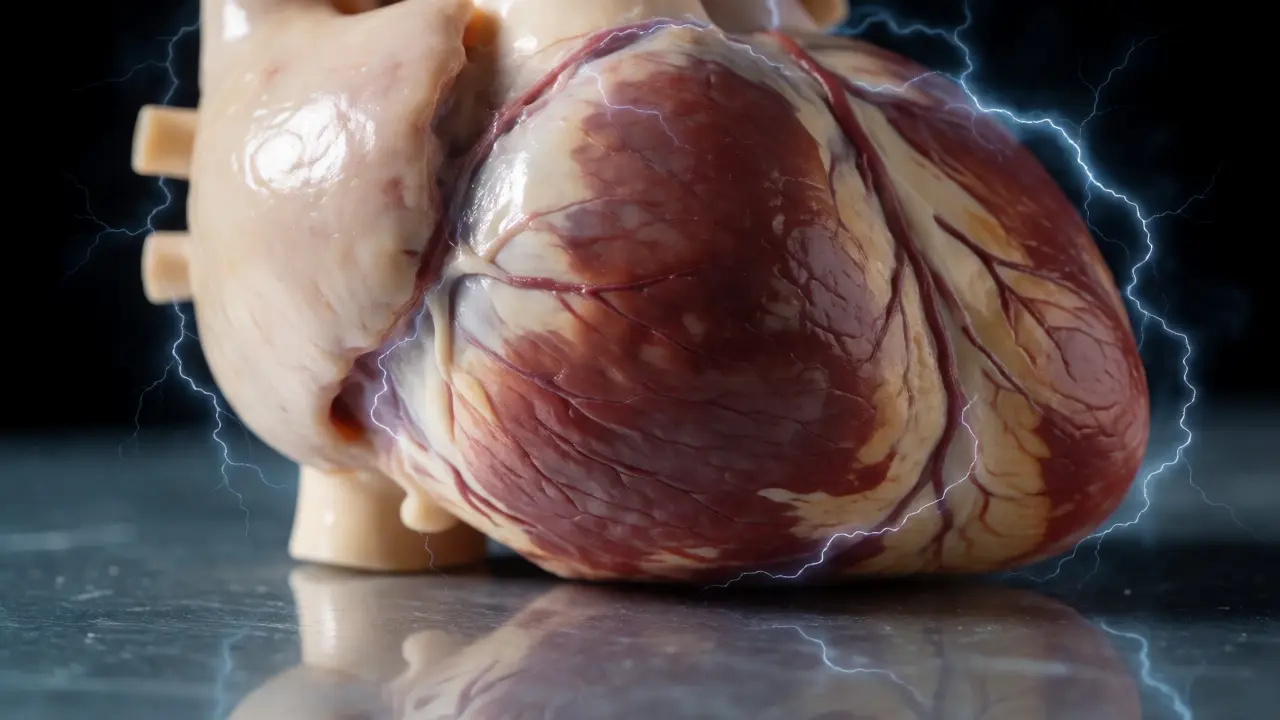
Consider Cardiac Arrhythmia, which is an abnormality in the electrical impulses of the heart that controls its rhythm. Some arrhythmias, particularly those linked to channelopathies like Long QT Syndrome, can kill instantly during sleep or exertion. After death, the heart muscle looks perfectly normal. There is no blockage, no scar tissue from a previous heart attack, no inflammation. Unless the pathologist specifically tests for genetic mutations in ion channels-which requires specialized DNA analysis-the autopsy will look clean. Without that genetic context, the cause remains undetermined.
Another common culprit is epilepsy-related sudden unexpected death (SUDEP). While some SUDEP cases show subtle lung congestion or petechiae (tiny broken blood vessels), many present with no significant findings. The seizure activity itself leaves no permanent mark on the brain tissue that survives decomposition or fixation. If witnesses weren’t present to describe the seizure, and toxicology is negative, the ME is left with a healthy-looking brain and a dead patient.
Toxicology’s Blind Spots
Toxicology screens are powerful, but they aren’t magic wands. Standard panels test for common drugs of abuse: opioids, benzodiazepines, cocaine, amphetamines, alcohol. But the world of pharmacology is vast. New psychoactive substances (NPS), designer drugs, and herbal supplements appear constantly. Many of these compounds are not included in routine immunoassay screens.
If someone dies after taking a rare supplement or a novel synthetic cannabinoid, a standard tox screen might return negative results. The substance might be metabolized so quickly that it’s gone by the time the body reaches the morgue. Or, it might interact synergistically with another drug, creating a lethal effect at doses that would be harmless individually. For example, combining small amounts of alcohol with certain antihistamines can depress respiration significantly. If neither substance is at a "lethal" level individually, the pathologist struggles to attribute death to one over the other.
| Category | Description | Example Scenario |
|---|---|---|
| Negative Autopsy | No structural abnormalities found. | Young athlete dies during marathon; heart appears normal. |
| Inconclusive Toxicology | Drugs present but levels non-lethal or unknown. | Mix of prescription meds and alcohol with unknown interactions. |
| Advanced Decomposition | Tissue degradation obscures injuries. | Body found weeks later in water; soft tissue lost. |
| Conflicting Evidence | Scene suggests suicide, autopsy suggests natural. | Gunshot wound consistent with suicide, but no exit wound or trajectory match. |
| Lack of History | No medical records or witness accounts. | Unidentified male found alone; no known medical conditions. |
The Role of Context and Investigation
A pathologist doesn’t work in a vacuum. The autopsy is just one piece of the puzzle. If the scene investigation is poor, the autopsy’s value drops dramatically. Imagine a man found slumped over his steering wheel. No skid marks, no impact damage to the car. The autopsy shows mild coronary artery disease-not enough to kill him outright, but enough to cause chest pain. Did he have a heart attack and then crash? Did he crash first and suffer cardiac arrest from stress? Was he having a seizure?
Without dashcam footage, witness statements, or a clear medical history, these scenarios blur together. The pathologist might find "atherosclerotic cardiovascular disease" as a contributing factor, but can’t rule out external factors. Hence, undetermined.
Furthermore, the chain of custody matters. If blood samples were mishandled, hemolysis (rupturing of red blood cells) can alter potassium levels, making it hard to interpret electrolyte imbalances. If urine wasn’t collected properly, drug metabolites degrade. Small procedural errors can turn a solvable case into an obscure one.
Legal Implications of an Unknown Death
For families, an undetermined verdict is emotionally devastating. It denies closure. You don’t know if your loved one suffered, if it was their fault, or if someone else was responsible. From a legal standpoint, it complicates insurance claims and criminal investigations.
Life insurance policies often exclude suicide within the first two years. If the cause is undetermined, insurers may contest the payout, arguing the burden of proof hasn’t been met. Conversely, in criminal cases, prosecutors hesitate to charge anyone without a clear cause. If a suspect confesses to pushing someone, but the autopsy shows no fatal injury, the confession might be disregarded as unreliable.
However, "undetermined" is not final. As new technologies emerge, old cases can be reopened. Genetic testing for channelopathies has become cheaper and faster. Advanced imaging like post-mortem CT scans (virtopsies) can detect air embolisms or subtle fractures missed by traditional methods. What was undetermined in 2015 might be solved in 2026.
Beyond the Scalpel: Emerging Solutions
Forensic science is evolving to close these gaps. Molecular autopsy involves analyzing DNA for mutations associated with sudden death syndromes. This is becoming standard in cases involving young, healthy individuals with negative autopsies. Instead of guessing, pathologists sequence genes related to heart rhythm and muscle function.
Post-mortem imaging is another game-changer. A full-body CT scan before dissection preserves spatial relationships that get destroyed during cutting. It helps visualize gas patterns, fluid distributions, and skeletal injuries in 3D. When combined with traditional histology, it provides a richer dataset.
Additionally, interdisciplinary teams are becoming more common. Neurologists, cardiologists, and toxicologists consult on complex cases. This collaborative approach reduces the chance of oversight. If a pathologist sees a faint discoloration in the liver, a hepatologist might recognize it as a sign of early-stage Wilson’s disease-a rare copper accumulation disorder that could explain the death.
Key Takeaways
- Undetermined is valid: It reflects scientific honesty, not incompetence.
- Functional deaths hide: Electrical or chemical failures often leave no physical trace.
- Toxicology has limits: Novel drugs and rapid metabolism can evade detection.
- Context is critical: Poor scene investigation leads to ambiguous autopsy findings.
- Science advances: Genetic testing and virtual autopsies are solving previously unsolvable cases.
Does "undetermined" mean the person was murdered?
Not necessarily. It means there isn't enough evidence to prove homicide, accident, suicide, or natural causes. It leaves the door open for future discovery but currently indicates uncertainty.
Can an undetermined death certificate be changed later?
Yes. If new evidence emerges-such as genetic test results, new witness testimony, or advanced toxicology reports-the Medical Examiner can amend the death certificate to reflect a determined cause.
How long does it take to determine cause of death?
Basic autopsy findings are immediate, but toxicology and histology results can take weeks or months. Complex cases requiring genetic testing or expert consultation may take longer, delaying the final determination.
Is a negative autopsy the same as an undetermined cause?
No. A negative autopsy means no disease or injury was found. An undetermined cause means the pathologist cannot definitively say what killed the person. Often, a negative autopsy leads to an undetermined cause, but not always.
Do families have rights regarding the autopsy report?
Generally, yes. Next of kin usually have the right to receive a copy of the autopsy report and the death certificate. However, access rules vary by jurisdiction, especially if the case is part of an active criminal investigation.