You send a critical DNA sample to an outside lab for toxicology screening. Three weeks later, the report comes back. The results are solid, but there’s a gap in the paperwork. Who held the vial between your intake desk and their analyzer? If that question makes your stomach drop, you’re not alone. In the high-stakes world of outsourced lab transfers, the physical movement of evidence is just half the battle; the other half is maintaining an unbroken chain of custody through contractual and procedural controls.
Most labs treat outsourcing as a simple vendor transaction. You pay, they test, they report. But legally and scientifically, this creates a vulnerability. When evidence leaves your controlled environment, it enters a "black box" unless you build specific walls around it. These walls aren’t made of concrete; they’re made of contracts, audit trails, and strict hand-off protocols. If you can’t prove who touched the sample at every second, your data is worthless in court.
The Legal Reality of Third-Party Handling
Why does this matter so much? Because the defense bar loves a broken chain. They don’t need to prove your lab messed up; they just need to show that someone else had access to the evidence without proper documentation. This is where contract chain controls become non-negotiable. A standard service agreement usually covers liability and turnaround time. It rarely covers the granular details of custody transfer.
Think about the last time you mailed something valuable. Did you track it door-to-door? Probably not. Now imagine that package contained blood samples from a homicide case. You need more than a tracking number. You need a signed log at every node. The contract must mandate that the receiving lab treats your samples with the same rigor as their own internal cases. If they mix your evidence with routine clinical samples without distinct segregation, you’ve already lost control.
Here is the hard truth: if the external lab doesn’t document the receipt exactly as you documented the shipment, the link breaks. A discrepancy of even one hour in timestamps can raise reasonable doubt. Your contract needs to specify that any deviation from the agreed-upon handling protocol triggers an immediate notification. Not a weekly summary. An immediate alert.
Defining the Handoff Points
To maintain integrity, you must map out every single touchpoint. This isn’t theoretical. It’s operational logistics. Let’s break down the journey of a typical forensic specimen sent to an external partner.
- Internal Packaging: Your staff seals the evidence. The seal number is recorded. The tamper-evident tape is verified against the inventory log.
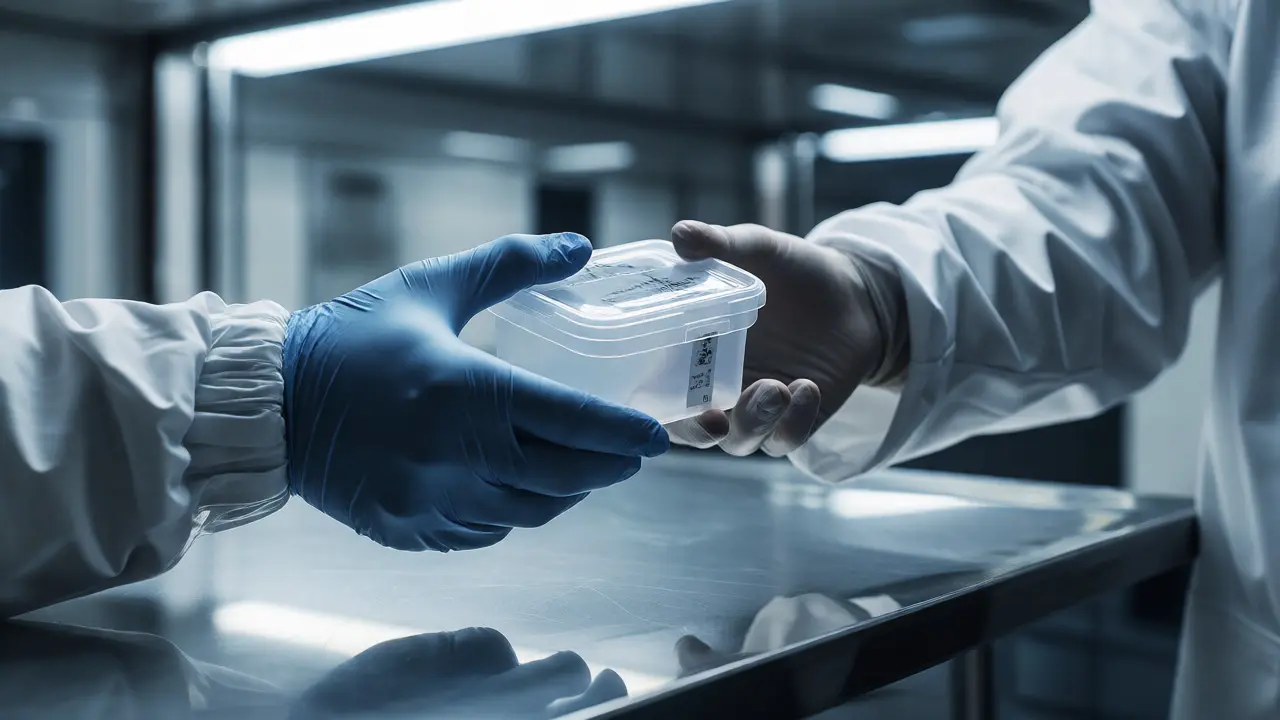
- Courier Pickup: The driver signs for the package. Crucially, the driver should not be allowed to open or inspect the contents. The contract must prohibit unauthorized opening by transport personnel.
- External Intake: The receiving lab logs the package upon arrival. They verify the seal integrity before breaking it. If the seal is compromised, the sample is quarantined, not processed.
- Analysis Phase: Technicians access the sample. Their IDs are logged in the Laboratory Information Management System (LIMS). Each step-extraction, amplification, sequencing-is timestamped.
- Disposal or Return: What happens to the residual material? Does it get incinerated? Returned? The contract must define the final disposition of the evidence.
Notice how many points exist for failure? At each stage, the chain of custody relies on human compliance enforced by digital records. If the courier forgets to sign, the chain weakens. If the technician uses a generic login instead of a unique user ID, the attribution fails. Your job is to close these gaps before the first sample ships.
Contract Clauses That Actually Protect Evidence
Standard procurement contracts are written by lawyers who have never held a pipette. They focus on cost and delivery dates. You need to insert technical clauses that speak the language of science and law. Here are three specific provisions that save cases.
| Clause Type | Purpose | Risk Mitigated |
|---|---|---|
| Audit Rights | Allows your team to inspect the lab’s physical storage and digital logs without prior notice. | Undocumented mishandling or storage failures. |
| Notification Protocol | Mandates immediate email/phone alert if seal integrity is compromised or temperature excursions occur. | Silent degradation of evidence quality. |
| Data Ownership & Retention | Specifies that raw data files belong to you, not the lab, and defines retention periods. | Loss of original data needed for re-testing or appeal. |
The Audit Rights clause is often resisted by vendors. They claim it disrupts workflow. Push back. If they are handling legal evidence, they are part of your forensic pipeline. You have the right to see their freezer temperatures and their accession logs. If they refuse, walk away. There are plenty of accredited labs that will accept oversight.
Consider the Notification Protocol. Suppose a power outage hits the external lab’s freezer. The temperature rises above -80°C for four hours. Without a mandated notification, you might not know until the results come back anomalous. With the clause, you get an alert within minutes. You can then decide whether to proceed with testing or request a new aliquot. This proactive control prevents wasted resources and protects the evidentiary value.
Digital Trails vs. Paper Logs
We live in a digital age, yet many labs still rely on paper custody forms. This is a mistake. Paper gets lost, coffee-stained, or misfiled. Digital systems offer immutable timestamps. When integrating with an external provider, ensure their LIMS can export standardized data formats like HL7 or FHIR. This allows automatic ingestion into your system, reducing manual entry errors.
But technology introduces its own risks. Cybersecurity is now part of the chain of custody. If the external lab suffers a data breach, is your evidence metadata exposed? The contract must include HIPAA-compliant security standards if medical data is involved, and general data protection regulations (GDPR) if international transfers occur. Encryption during transit and at rest is mandatory, not optional.
Ask yourself: Can I trace a specific barcode scan from my lab to theirs in real-time? If the answer is no, you are relying on trust rather than proof. Trust is good, but verifiable digital logs are better. Implement a shared dashboard where both parties can view the status of shipments. Transparency reduces anxiety and speeds up dispute resolution.
Managing Temperature and Environmental Excursions
For biological samples, temperature is a silent killer. Enzymes degrade, bacteria multiply, and chemical compounds shift. Outsourcing adds transit time, which increases exposure risk. You cannot simply put a cooler in a truck and hope for the best.
Use continuous temperature monitoring devices. These small loggers record conditions every minute. Upon arrival, the external lab must download this data and attach it to the case file. If the temperature exceeded the threshold, the result is flagged as "conditional." This nuance is vital. A blanket rejection of all out-of-range samples is wasteful; a nuanced assessment based on duration and magnitude of the excursion is scientific.
Your contract should define acceptable temperature ranges for different analytes. Blood alcohol requires different stability profiles than DNA swabs. One-size-fits-all policies fail here. Specify these parameters in the Statement of Work (SOW). If the lab deviates, they bear the cost of re-testing. This financial incentive ensures they take cold-chain integrity seriously.
Auditing the External Partner
Accreditation is a baseline, not a finish line. ISO 17025 certification tells you the lab has a quality management system. It doesn’t tell you if they followed it yesterday. Regular audits are essential. These shouldn’t be annual checkbox exercises. Conduct surprise inspections focusing specifically on evidence handling areas.
Look for the "gray zones." Are unlabeled tubes sitting on benches? Are technicians wearing gloves when handling sealed bags? Is the quarantine area physically separated from the clean room? These visual cues reveal the true culture of the lab. Document everything. Photos, notes, and interviews with staff create a comprehensive picture of compliance.
During audits, test the chain. Pick a random closed case. Ask them to produce the full custody trail from receipt to disposal. Can they do it in under ten minutes? If it takes days to pull the records, their system is inefficient. Efficiency correlates with reliability. Slow retrieval times increase the chance of lost documents.
Building a Culture of Shared Responsibility
Ultimately, outsourcing works when both sides view themselves as partners in justice, not just buyer and seller. Train your staff on what to look for when shipping. Train the external lab’s intake team on your specific requirements. Miscommunication causes most breaches.
Create a joint committee that meets quarterly. Review near-misses. Discuss trends in errors. Celebrate successes. This feedback loop improves processes over time. When everyone understands why the rules exist-not just that they exist-compliance becomes habitual.
Remember, the goal isn’t to make outsourcing difficult. It’s to make it defensible. By tightening your contract chain controls, you transform a potential liability into a robust extension of your own laboratory capabilities. The evidence remains secure, the story remains intact, and the truth stays accessible.
What is the biggest risk in outsourced lab transfers?
The biggest risk is a break in the chain of custody due to undocumented handoffs or environmental excursions (like temperature fluctuations) that go unnoticed until after analysis. This can render evidence inadmissible in court.
Do external labs need to follow my specific SOPs?
Yes, especially regarding evidence handling, labeling, and storage. While they may use their own analytical methods, the custody procedures must align with your legal and quality standards to ensure consistency and admissibility.
How often should I audit an outsourced lab?
At least annually, but biannually is recommended for high-volume or high-risk partnerships. Surprise audits are also valuable to check daily compliance with custody protocols.
Who owns the raw data generated by the external lab?
This must be defined in the contract. Ideally, the originating agency retains ownership of all raw data and derived results. Ensure the contract specifies data retention periods and access rights for future review or appeals.
What happens if a sample is damaged during transit?
The contract should dictate immediate notification. Typically, the sample is quarantined and assessed. Depending on the damage type, it may be rejected, re-tested if possible, or returned for replacement. Liability for costs depends on who was responsible for the packaging or transport failure.