Imagine standing in a dark alley at 2:00 AM. A car passes by. To the naked eye, it’s just a blur of headlights. But to a digital camera, that vehicle is a string of data points: license plate, speed, direction, and timestamp. In modern homicide investigations, this intersection of CCTV (Closed-Circuit Television) and ALPR (Automated License Plate Recognition) has become the backbone of reconstructing what actually happened. It’s no longer just about finding a body; it’s about proving where the suspect was, when they were there, and who they met along the way.
The challenge for investigators isn’t just collecting footage-it’s stitching together a coherent narrative from fragmented digital sources. A single dashcam might show a car turning left, but without ALPR data confirming the plate number across three different intersections, that clip is just a suggestion, not proof. This article breaks down how these two technologies work together to build an unbreakable timeline in fatal cases.
The Role of CCTV in Establishing Presence
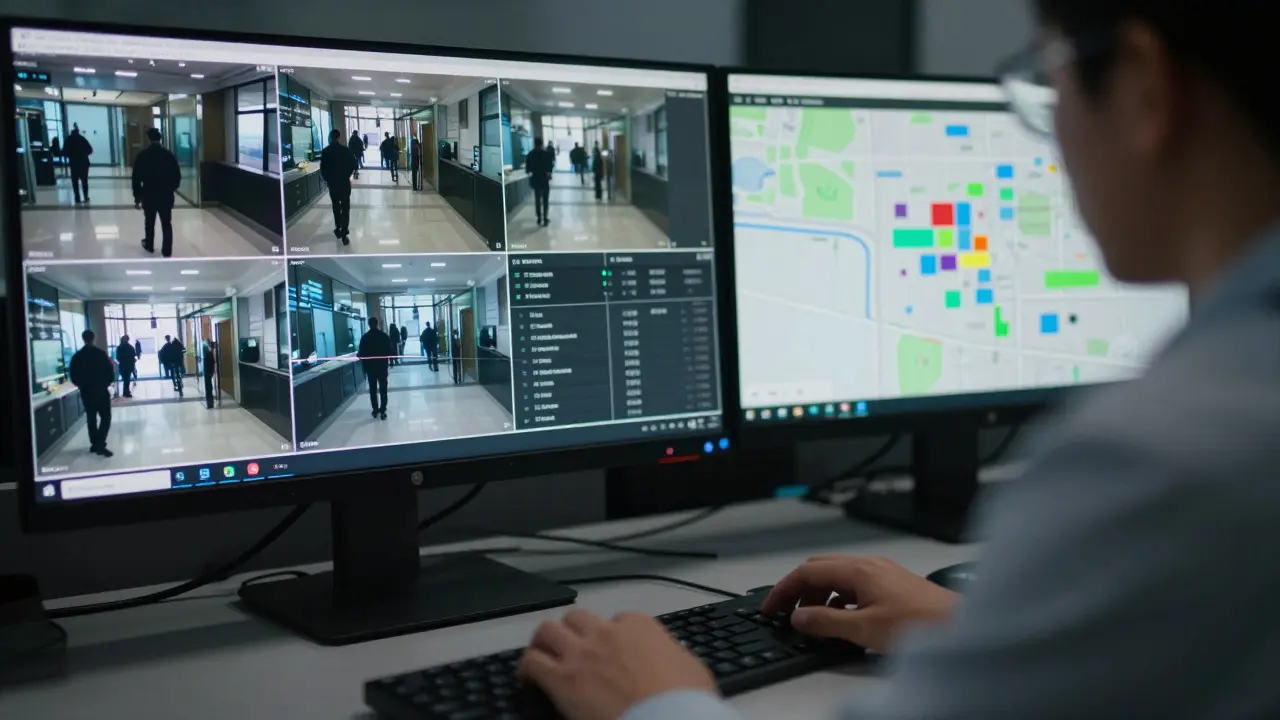
CCTV is a system of video surveillance cameras connected to a private monitoring network, used primarily for security purposes. In the context of a homicide, its primary job is to establish presence and absence. If a victim was last seen alive at 8:00 PM at a bar, and a suspect is captured on camera leaving that same bar at 8:15 PM, you have a starting point. But the real power of CCTV lies in continuity.
Investigators don’t just look for the suspect; they look for the environment. They analyze lighting conditions, weather patterns, and crowd density to determine if the footage is reliable. For example, grainy night vision footage might show a figure, but can it definitively identify a person? That’s where metadata comes in. Modern IP cameras store timestamps synchronized with NTP (Network Time Protocol), ensuring that the time on the screen matches atomic clock accuracy. This precision is critical when trying to align a suspect’s movements with the estimated time of death determined by medical examiners.
- Geographic Anchoring: CCTV fixes a location in space. It tells us *where* someone was.
- Temporal Anchoring: Timestamps fix a location in time. It tells us *when* they were there.
- Behavioral Clues: Body language, gait, and interactions provide context that still photos miss.
How ALPR Creates a Digital Trail
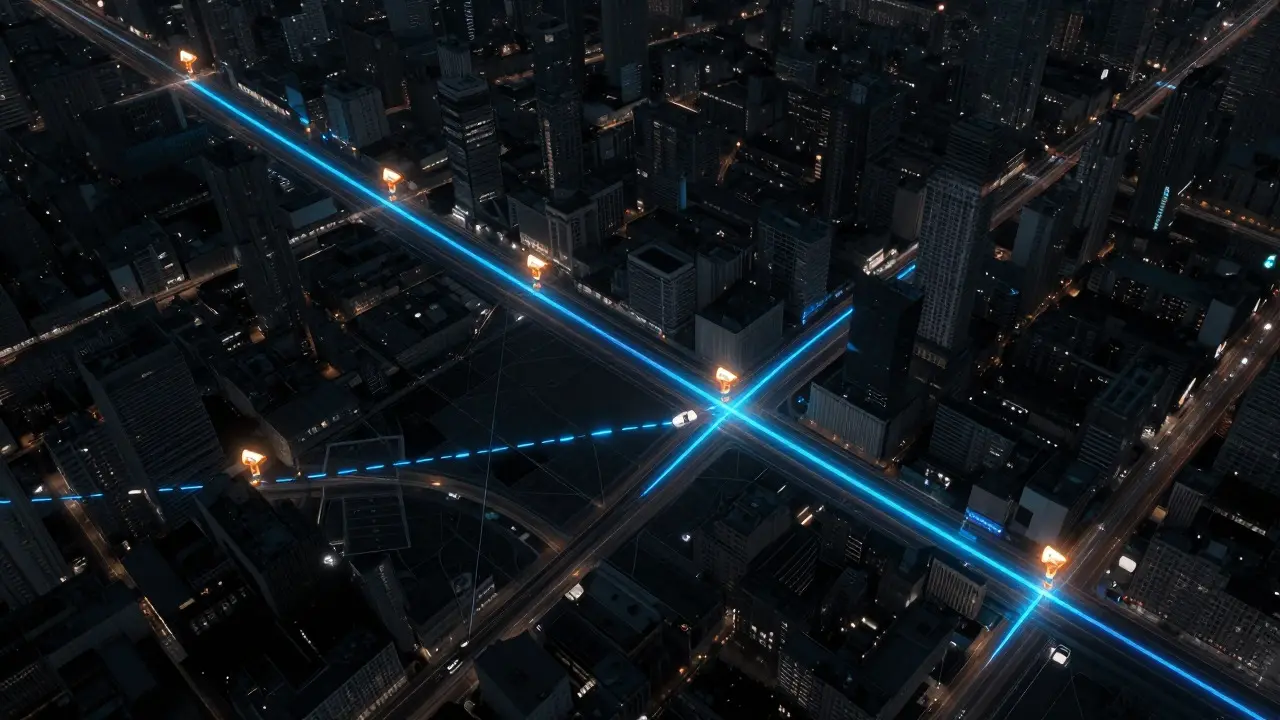
ALPR is technology that uses optical character recognition to read license plates from moving vehicles. While CCTV watches people, ALPR watches cars. And in urban homicide cases, cars are often the suspects’ best friends or their biggest liabilities. ALPR systems are installed on police cruisers, toll booths, traffic lights, and even private security gates. Every time a car passes one of these sensors, a record is created: Plate Number, Camera ID, Date, Time, and GPS Location.
This creates a digital breadcrumb trail. Let’s say a suspect is driving a red sedan. At 9:00 PM, an ALPR camera at a highway exit reads the plate. At 9:15 PM, another camera downtown reads the same plate. Suddenly, the suspect’s alibi is tested against physical reality. If they claim they were home sleeping, but their car was scanned five miles away, the story starts to crumble. ALPR doesn’t prove guilt on its own, but it proves movement. And movement contradicts static alibis.
| Feature | CCTV (Video Surveillance) | ALPR (License Plate Reader) |
|---|---|---|
| Primary Data Type | Visual Image / Video Clip | Text String (Plate Number) + Metadata |
| Key Strength | Identifies individuals and actions | Tracks vehicle movement over large distances |
| Weakness | Limited field of view; poor low-light performance | Requires clear plate visibility; limited to vehicle tracking |
| Legal Admissibility | High, if chain of custody is maintained | High, as it is automated and less subjective than visual ID |
Building the Timeline: Merging Data Streams
The magic happens when you merge these two datasets. Investigators use software tools to overlay ALPR hits onto a map, creating a route. Then, they pull CCTV footage from locations along that route. The goal is to find gaps or confirmations. Did the car stop at a gas station? Is there CCTV showing the driver buying coffee? Did the car turn off the main road? Is there a residential driveway camera capturing the entry?
This process requires meticulous attention to time zones and synchronization errors. A common pitfall is assuming all cameras are set to the same local time. In states like Oregon, where daylight saving time changes can affect older systems, a five-minute discrepancy can shift a suspect’s entire whereabouts. Forensic analysts often cross-reference multiple independent sources-cell tower pings, utility records, and witness statements-to validate the electronic timeline.
- Establish the Window: Determine the probable time of death based on autopsy findings.
- Cast the Net: Query ALPR databases for all vehicles matching the suspect’s description within a 5-mile radius during that window.
- Correlate Locations: Map the ALPR hits and identify key nodes (intersections, businesses).
- Pull Footage: Request CCTV from businesses and municipalities at those nodes.
- Verify Identity: Use facial recognition or gait analysis on the CCTV to link the person to the vehicle.
Challenges and Pitfalls in Digital Evidence
It’s not always smooth sailing. One major issue is data retention. Many private businesses only keep CCTV footage for 30 days. If the investigation takes too long to identify a suspect, that crucial footage might be overwritten. This is why early preservation orders are vital. Another challenge is resolution. An ALPR hit confirms a plate, but if the CCTV at that exact moment is blurry, you can’t prove the driver was the suspect. You’d need secondary evidence, like a passenger’s phone location or a witness statement, to bridge that gap.
There’s also the issue of privacy and legal compliance. In many jurisdictions, using ALPR data requires specific warrants or statutory authority. Misusing this data can lead to suppressed evidence in court. Investigators must document every step of the retrieval process to ensure the chain of custody is intact. If the metadata is altered, or if the original file isn’t preserved, defense attorneys will attack the integrity of the timeline.
Real-World Application: The Portland Case Study
Consider a hypothetical scenario in Portland, Oregon. A victim is found in a park at 4:00 AM. Autopsy suggests death occurred between 1:00 AM and 3:00 AM. Police release a composite sketch of a man seen near the scene. Within hours, ALPR data shows a gray SUV, matching the suspect’s known vehicle, passing through four checkpoints in the Pearl District between 1:15 AM and 2:45 AM. Investigators pull CCTV from a nearby hotel lobby at 2:30 AM. The footage shows the gray SUV pulling into the valet stand. The driver exits, wearing a jacket identical to the one in the composite sketch. He enters the lobby, checks his phone, and leaves three minutes later. This sequence links the vehicle, the person, and the time frame, narrowing the search window significantly and providing a solid foundation for further interrogation.
Frequently Asked Questions
Is ALPR data admissible in court without a warrant?
Generally, yes, if the vehicle was in a public place. The U.S. Supreme Court has ruled that tracking a vehicle’s movement on public roads does not constitute a search under the Fourth Amendment, provided the data is collected by law enforcement or shared via consent. However, laws vary by state, so local statutes must be checked.
How accurate are ALPR readings?
Modern ALPR systems have an accuracy rate of over 99% in good lighting conditions. Accuracy drops in heavy rain, snow, or if the plate is obscured. Most systems require a second confirmation scan or manual verification before flagging a plate as a match to avoid false positives.
Can CCTV footage be enhanced to identify a face?
Yes, but with limits. Forensic video analysts use techniques like deblurring, noise reduction, and super-resolution AI to enhance images. However, enhancement should never be mistaken for creation. Courts require that the original, unaltered file be presented alongside any enhanced versions to prove authenticity.
What happens if the suspect changes their license plates?
This is a common tactic. Investigators then rely on other identifiers: distinctive vehicle features (stickers, damage, color), partial plate matches, or associated vehicles (e.g., a friend’s car). ALPR networks can also track 'related' plates if the suspect is known to drive multiple vehicles.
How long does it take to retrieve CCTV footage from private businesses?
It varies. Some businesses have dedicated security staff who can export clips within hours. Others may take days if they lack technical expertise. Speed is critical because most commercial DVRs overwrite old footage after 7 to 30 days. Subpoenas should be issued immediately upon identifying relevant locations.