Quick Summary / Key Takeaways
- Objective writing in forensics means presenting verifiable evidence without personal opinion, emotion, or assumption.
- Bias often hides in word choice (e.g., "disastrous" vs. "failed") and structure (e.g., listing one group as the "norm").
- Use neutral, precise labels for people and groups; avoid adjectives-as-nouns like "the poor" or "schizophrenics."
- Replace absolute claims ("all," "never") with data-backed quantifiers ("68% of cases showed...").
- A dedicated "bias pass" during revision is essential to catch loaded language and missing counter-evidence.
You spend hours at a crime scene, meticulously collecting fibers, measuring distances, and documenting every detail. But if your final report uses words like "obviously," "shockingly," or "negligent," you’ve just undermined weeks of careful work. In forensic reporting, the difference between a trusted expert witness and a dismissed one often comes down to how you write. Objective writing isn’t about being robotic; it’s about being fair, accurate, and transparent so that judges, juries, and opposing counsel can evaluate the evidence on its own merits.
For decades, the standard for scientific reporting has been rooted in the Royal Society’s motto from 1660: Nullius in verba-take nobody’s word for it. Today, this principle lives on in style guides like the American Psychological Association’s (APA) 7th Edition and the Society of Professional Journalists’ Code of Ethics. For forensic professionals, these aren’t just academic suggestions; they are legal necessities. A biased report can lead to wrongful convictions or acquittals, damaging both justice and your professional reputation.
What Is Objective Writing in Forensics?
At its core, objective writing presents information based on verifiable evidence rather than personal opinion or emotion. It minimizes the influence of the writer’s assumptions. When you write objectively, you allow the data to speak for itself. If a blood spatter pattern indicates a specific angle of impact, you state the measurement and the conclusion derived from established formulas. You do not say, "The suspect violently attacked the victim," because "violently" is an interpretation, not a measurement.
In contrast, bias is a systematic error. In research methodology, Pannucci & Wilkins (2010) define bias as any factor that leads to an incorrect estimate or distorted interpretation. In writing, this manifests as language or structure that favors a particular outcome without justification from the data. For example, describing a defendant’s alibi as "far-fetched" introduces subjective judgment. An objective alternative would be, "The defendant’s timeline conflicts with surveillance footage by 15 minutes." The latter allows the reader to decide if the conflict is significant.
The Hidden Dangers of Loaded Language
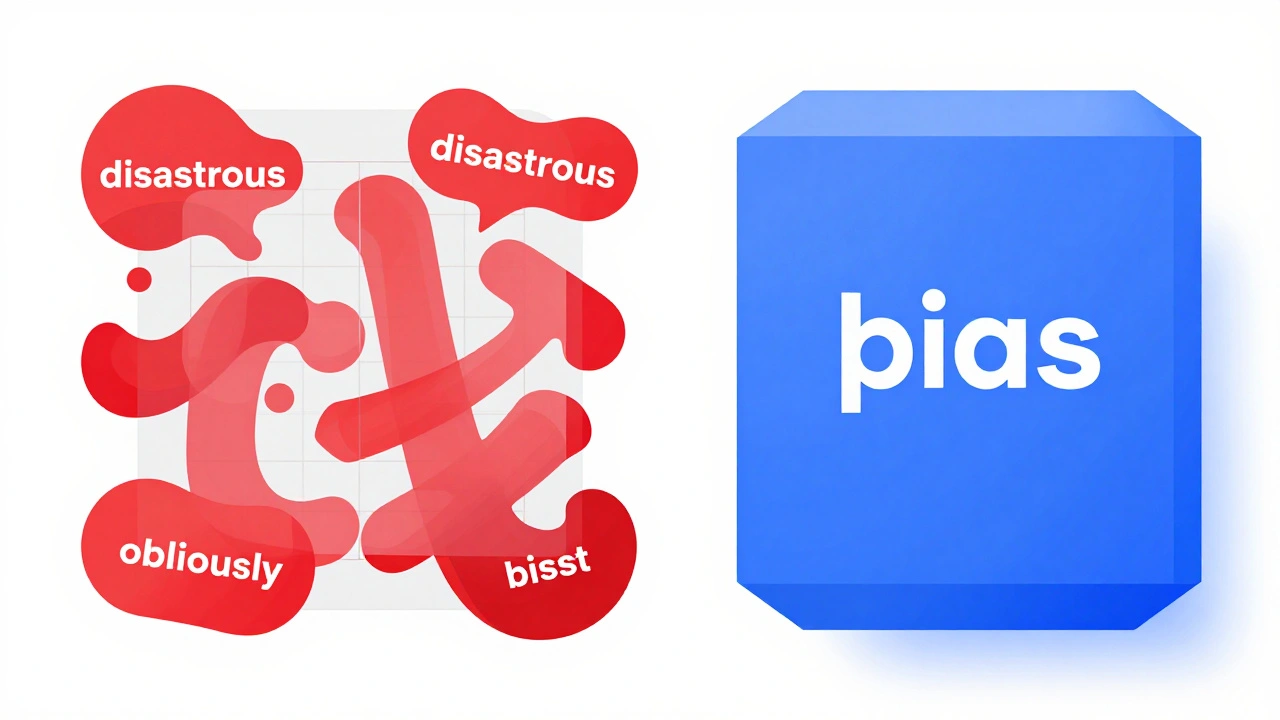
We often think bias only affects who we investigate, but it also affects how we describe what we find. Emotive language smuggles in personal attitudes. Words like "brilliant," "terrible," "disastrous," or "clearly" carry weight that data does not support.
Consider this common scenario: A fire investigation reveals that accelerants were used. An unbiased report states, "Analysis detected traces of gasoline in the origin area." A biased version might say, "The arsonist carelessly left behind gasoline." The first sentence is a fact. The second assigns intent ("carelessly") and identity ("arsonist") before the legal determination has been made. In court, the second phrasing opens you up to cross-examination attacks on your credibility.
To avoid this, replace evaluative adjectives with neutral descriptions and data. Instead of saying a policy was "disastrous," report the quantitative change: "Unemployment in the sector increased by 3.5 percentage points after implementation." This approach removes the emotional charge while preserving the factual impact.
Describing People and Groups Without Bias
One of the most critical areas for bias reduction is how you describe people. The APA’s guidelines emphasize using language that is respectful, precise, and aligned with community norms. This applies even more strictly in forensics, where victims, suspects, and witnesses come from diverse backgrounds.
- Avoid adjectives as nouns: Never use terms like "the poor," "the elderly," or "schizophrenics." These dehumanize individuals by reducing them to a single characteristic. Instead, use descriptive phrases like "people living in poverty," "older adults," or "people with schizophrenia."
- Respect self-identification: Some communities prefer person-first language ("a person with autism"), while others prefer identity-first language ("an autistic person"). Research current preferences for the groups you are describing. When in doubt, person-first is generally safer in formal reports unless specified otherwise.
- Be appropriately specific: Only mention characteristics relevant to the case. If a suspect’s race is not pertinent to the identification or motive, omit it. However, if demographic data is part of a statistical analysis, include it with precision. As the APA notes, it is easier to aggregate data than to disaggregate it later, so record details accurately from the start.
Also, watch the order in which you list groups. Listing one group first often implicitly treats it as the "normal" or reference group. To avoid this hierarchy, list groups alphabetically or by sample size, and keep the order consistent throughout the document.
Structural Bias: Framing and Selection
Bias isn’t just about word choice; it’s also about what you choose to include or exclude. Confirmation bias occurs when you highlight evidence that supports your initial hypothesis while ignoring contradictory data. In forensics, this is dangerous. If you believe a fire was accidental, you might overlook small traces of accelerant because they don’t fit your narrative.
Framing bias happens when you present facts in a way that steers the reader toward a specific interpretation. Describing a 5% budget cut as a "drastic reduction" versus a "modest efficiency measure" changes the perception of the same number. In forensic reports, mitigate framing by providing context. Compare the 5% cut to industry averages or previous years’ figures. Let the comparison do the talking, not your adjective.
Another structural pitfall is selective citation. Always answer the question, "According to whom?" If you claim a method is reliable, cite the peer-reviewed studies that validate it. Don’t rely on personal belief or anecdotal experience. Support every assertion with credible, up-to-date sources.
A Practical Workflow for Bias-Free Reporting
Achieving objectivity requires a disciplined process. Here is a step-by-step workflow to integrate into your reporting routine:
- Pre-Writing Reflection: Before drafting, identify your own biases. Do you distrust certain types of defendants? Do you have a strong view on a particular cause of death? Acknowledge these views so you can consciously seek out evidence that challenges them.
- Multisource Research: Gather evidence from multiple angles. Consult at least three to five peer-reviewed articles, official statistics, and reputable technical manuals. This ensures your conclusions are grounded in broad consensus, not isolated opinions.
- Drafting with Neutral Tone: Write in the third person. Avoid contractions (use "cannot" instead of "can’t") and slang. Use precise technical terminology. Frame interpretations as reasoned inferences: "These results suggest..." rather than "I believe..."
- The Bias Pass: After drafting, perform a specific revision pass focused solely on bias. Check for:
- Absolute words ("all," "always," "never"). Replace with "some," "most," or specific percentages.
- Loaded adjectives. Remove words that express emotion or judgment.
- Dehumanizing labels. Ensure all references to people are respectful and precise.
- Missing counter-evidence. Have you addressed alternative explanations?
- Peer Review: Share your draft with a colleague or editor. Fresh eyes often spot biases that the original writer misses. In academic and journalistic fields, peer review is standard; in forensics, internal quality assurance serves the same purpose.
Comparison: Biased vs. Objective Phrasing
| Biased/Subjective Phrase | Objective/Data-Driven Alternative | Why It Works |
|---|---|---|
| "The suspect obviously lied." | "The suspect’s statement contradicted video evidence at timestamp 14:02." | Removes judgment ("obviously") and cites specific evidence. |
| "All criminals leave DNA." | "In 92% of analyzed cases, DNA was recovered from the scene." | Replaces absolute generalization with statistical reality. |
| "The elderly victim was helpless." | "The victim, aged 78, had limited mobility due to arthritis." | Uses respectful, specific language instead of demeaning labels. |
| "A disastrous failure of security." | "Security cameras were non-functional for 48 hours prior to the incident." | States the factual condition without emotional evaluation. |
Conclusion: Objectivity as Fairness, Not Neutrality
It is important to recognize that perfect neutrality is impossible. Every writer has a perspective. However, objective writing aims for fairness. It acknowledges limitations, discloses potential conflicts of interest, and presents evidence transparently. By following established guidelines from the APA, university writing centers, and forensic best practices, you ensure that your reports withstand scrutiny. Your goal is not to hide your voice, but to amplify the truth of the evidence.
Is it ever okay to use first-person pronouns in forensic reports?
Modern style guides, including APA 7th Edition, allow first-person singular ("I") when describing methodological actions, such as "I collected the samples." However, you should avoid first-person for opinions or interpretations, such as "I believe the fire was accidental." Stick to third-person for conclusions to maintain an objective tone.
How do I handle conflicting evidence in an objective report?
Do not ignore conflicting evidence. Present it clearly alongside supporting data. Explain why one line of evidence may be stronger than another based on reliability, quantity, or relevance. Transparency about limitations and contradictions builds credibility rather than undermining it.
What is the difference between person-first and identity-first language?
Person-first language places the individual before the condition (e.g., "person with diabetes"), emphasizing that the condition does not define them. Identity-first language integrates the condition into the identity (e.g., "diabetic person"), which some communities prefer. Always research the preferred terminology for the specific group you are describing.
Why should I avoid absolute words like "all" or "never"?
Absolute words make claims that are difficult or impossible to prove. If you say "all suspects lie," one exception disproves your entire argument. Using quantifiers like "most," "many," or specific percentages reflects the uncertainty and complexity of real-world data, making your report more accurate and defensible.
How can I check my report for bias before submission?
Perform a dedicated "bias pass" during revision. Look for emotive adjectives, absolute statements, and dehumanizing labels. Ask yourself if every claim is supported by cited evidence. Finally, have a peer review the document to identify blind spots you may have missed due to familiarity with the case.