When blood hits a surface, it doesn’t just sit there. It spreads, dries, clots, and sometimes gets mixed with other substances-or wiped away entirely. What looks like a simple stain to the untrained eye might actually be a modified record of what really happened at a crime scene. These are called altered bloodstains, and they’re some of the most tricky pieces of evidence forensic analysts have to untangle.
Think about it: blood is a fluid. It moves. It changes. If a person bleeds on the floor and then someone mops it up, or if a fly lands on it hours later, or if a fire scorches the room, the original pattern is gone. But that doesn’t mean the evidence is useless. It just means you have to read it differently.
What Makes a Bloodstain "Altered"?
Not all bloodstains are created equal. In forensic science, bloodstains are grouped into three main types: passive (drips, pools), spatter (projected by force), and altered (changed after deposition). The altered category is broad and includes any stain that’s been touched, moved, heated, cleaned, or otherwise interfered with after the blood hit the surface.
This isn’t just about messiness. It’s about truth. A bloodstain that’s been wiped clean might look like a smear, but if you know what you’re looking at, you can tell it was deliberately cleaned. That’s not just a cleanup-it’s a clue.
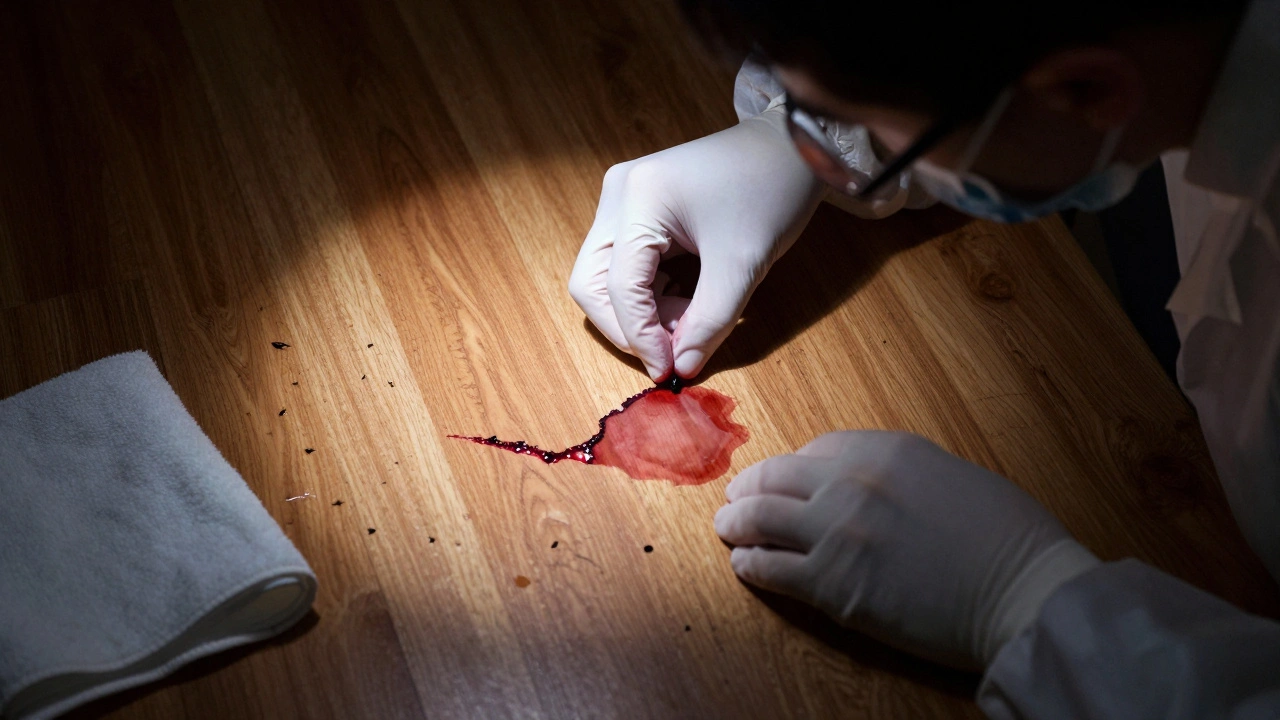
Clotting: Time’s First Signature
Blood doesn’t clot instantly. It takes time. Fibrinogen in the blood starts forming threads, turning liquid into a gel. That process can take anywhere from a few minutes to over an hour, depending on how much blood there is and the temperature of the room.
If you see a stain with a thick, jelly-like edge, that’s clotting. It tells you the blood sat for a while before drying. But here’s the catch: small amounts of blood-like a single drop from a minor cut-dry before clotting even begins. That means no clotting doesn’t mean no time passed. It just means there wasn’t enough blood to trigger it.
This matters because investigators use clotting to build timelines. If a victim was stabbed at 8 p.m. and then again at 10 p.m., the stains from the second wound might show more clotting than the first. But if those stains were cleaned up or exposed to heat, that timeline gets blurry.
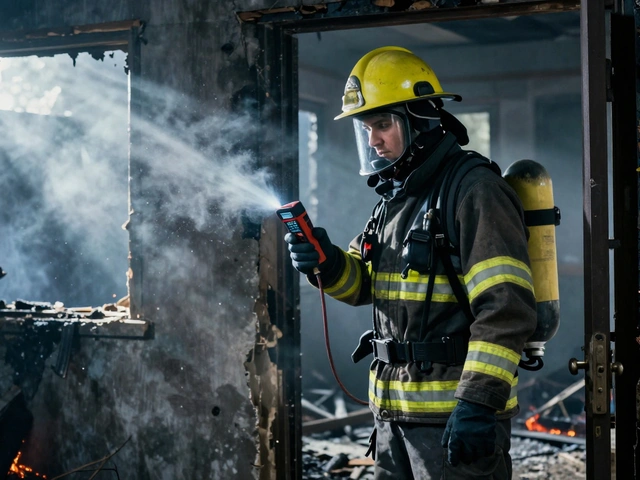
Heat and Fire: When the Scene Burns
Fire changes everything. And yes, even blood.
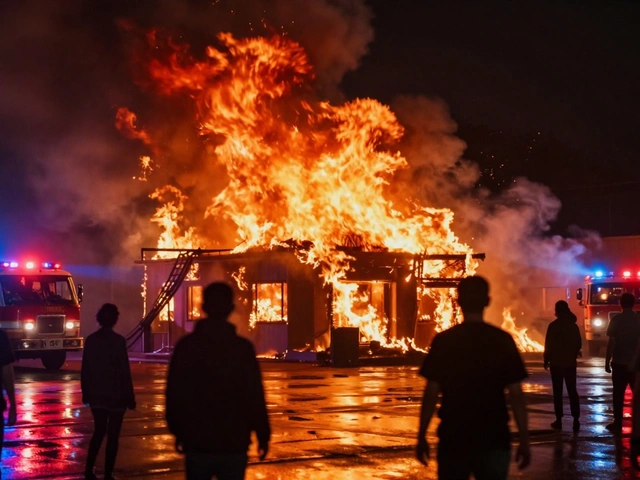
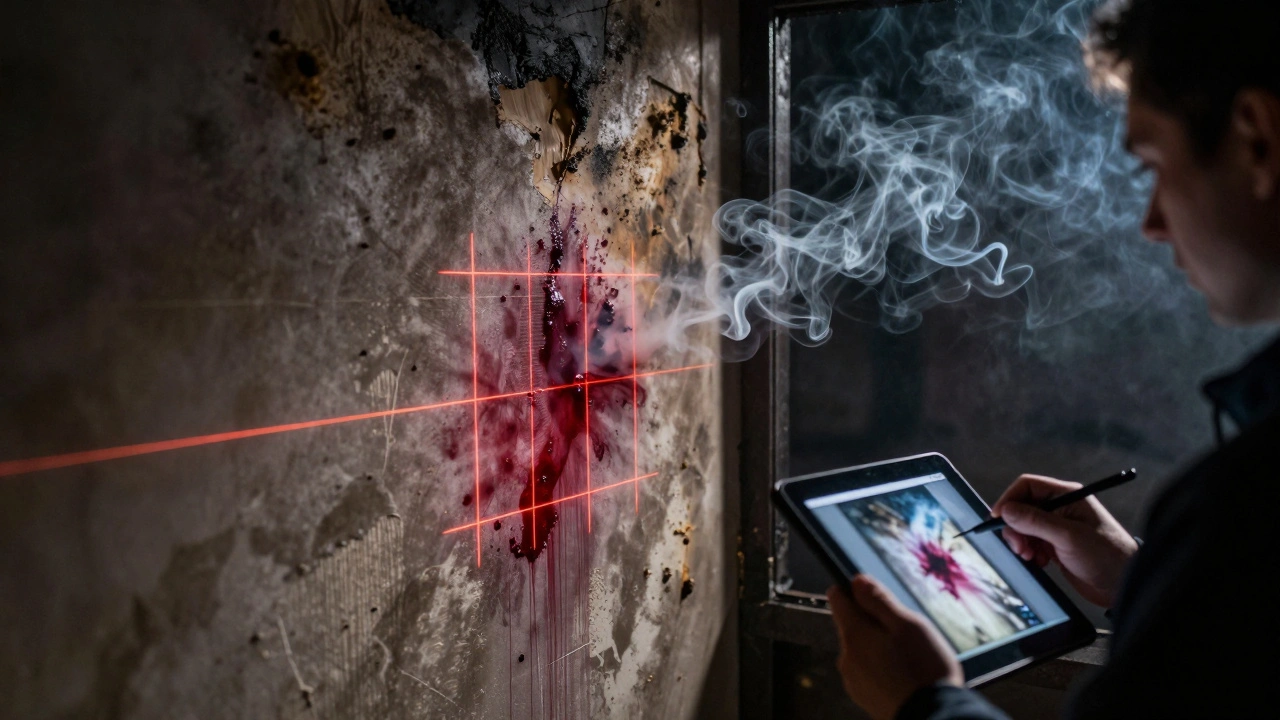
A 2024 study tested bloodstains on glass, drywall, and plywood by exposing them to controlled fire conditions. They measured the angle of impact and the area of origin-the two most critical numbers in bloodstain analysis. Even after extreme heat, the angle of impact stayed within two degrees of its original value. That’s incredibly stable.
But the shape? Totally different. The edges melted. The colors turned black. The texture cracked. You wouldn’t recognize it as blood unless you knew what you were looking for.
The big takeaway? You can still figure out where the blood came from-even after fire-if you can still see the edge of the stain. If the surface warped or the stain vanished completely, then you’re stuck. That’s why photos taken at the scene are non-negotiable. If you don’t have them, you’re guessing.
Flies, Bugs, and Other Unwanted Guests
It sounds strange, but insects are major players in bloodstain alteration. Flies, especially houseflies and blowflies, are drawn to blood. They land on it, feed on it, and walk through it. Their legs leave tiny tracks. Their droppings mix with the blood. Sometimes they even lay eggs in the stain.
A 2017 study showed that these tiny creatures can completely obscure impact patterns. A single fly walking across a spatter stain can turn a clear radial pattern into a smeared mess. In outdoor scenes-or indoor scenes where a body isn’t found for days-this becomes a serious problem.
Forensic entomologists now work alongside bloodstain analysts to help distinguish between insect interference and human movement. You can’t just look at the stain. You have to ask: Was this altered by a person… or a bug?
Cleaning Up: The Human Touch
People try to clean up blood. A lot. And when they do, they leave behind something called a void stain.
A void stain isn’t a stain at all. It’s the absence of blood. Imagine someone leans against a wall while bleeding, then moves. The shape of their body is left blank in the blood pattern. Or someone wipes a surface with a towel-there’s a clean space where the towel blocked the blood.
These voids are powerful. They can reveal the shape of a person, a weapon, or even a piece of furniture that was moved. Sometimes, a void shows exactly where a killer stood while attacking. Or where a victim tried to crawl away.
And here’s the kicker: if you find a wipe pattern, it often means someone knew they were covering something up. That’s not just evidence of the crime-it’s evidence of intent.
Why Documentation Is Everything
Once a bloodstain is altered, you can’t undo it. You can’t go back. That’s why the first thing investigators do is photograph everything. Every angle. Every detail. Every smudge.
Why? Because once the crime scene is cleared, once the lights are turned off, once the evidence is packed up-those stains change. They dry more. They get disturbed. They fade. The only record left is what was captured on film.
Skilled analysts don’t just look at stains. They look at the photos, the sketches, the police reports, and the lab results. They cross-reference everything. A single stain might be too altered to measure, but if a photo from the scene shows its original shape, they can still reconstruct the event.
Without documentation, altered bloodstains are just stains. With it, they become timelines, movement maps, and confessions written in red.
When Pattern Analysis Fails
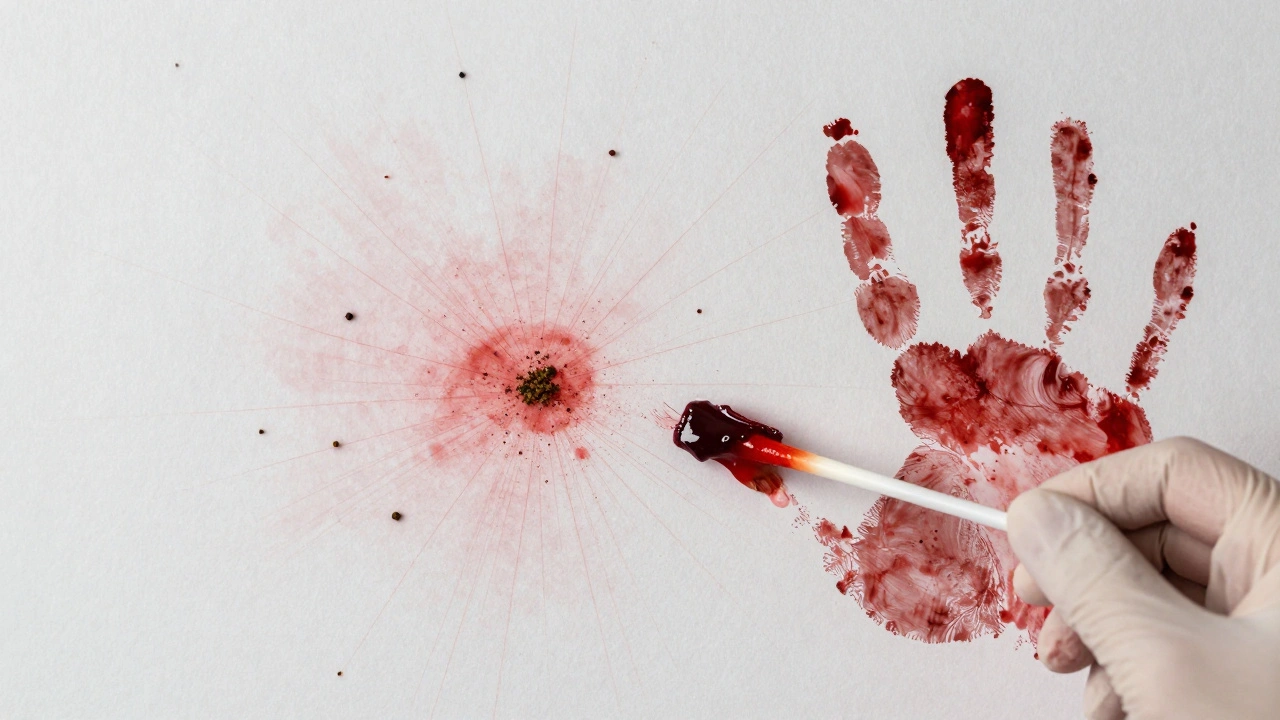
Not every altered stain can be analyzed for direction, angle, or origin. Sometimes, the damage is too severe. The stain is too small. Too old. Too mixed.
But that doesn’t mean the blood is useless.
DNA is still there. Blood type still shows up. Even if the pattern is gone, the biological material remains. A swab from a wiped floor can still identify the victim-or the attacker.
In fact, in many cases where pattern analysis fails, DNA becomes the star. It’s not as flashy as a spatter pattern, but it’s more reliable. And in a world where stains are constantly being changed, that’s what matters most.
What Analysts Look For
When you’re dealing with altered bloodstains, you don’t look for perfect shapes. You look for inconsistencies:
- Does the stain look too clean in one area? That’s a void.
- Is there a crusty edge on a small stain? That’s clotting.
- Are the edges melted or charred? That’s heat.
- Is there a trail of tiny dots leading away? That might be fly activity.
- Does the color look faded or uneven? That’s aging or cleaning.
Each of these tells a story. The trick is knowing which story to believe.
Final Thought: The Truth Is Still There
Altered bloodstains don’t hide the truth-they bury it under layers of time, heat, and human error. But they don’t erase it.
Forensic science doesn’t rely on perfect conditions. It relies on careful observation, solid documentation, and the willingness to question what you see. A stain that looks like a smear might be the key to proving someone lied. A void that looks like a shadow might be the outline of a weapon.
Every altered stain is a puzzle. And the best analysts don’t just solve it. They rewrite the story the crime scene tried to hide.
Can altered bloodstains still be used to identify the victim?
Yes. Even if the pattern is completely destroyed by fire, cleaning, or insects, the biological material in the stain-like DNA or blood type-can still be tested in a lab. Identification through DNA analysis is often the most reliable method when pattern analysis is no longer possible.
Do void stains always mean someone tried to clean up?
Not always. A void stain simply means something blocked the blood from landing on the surface. It could be a person, a piece of furniture, or even a moving object like a swinging door. But if a void appears in an area where blood should have pooled, and there’s no logical object that could have caused it, investigators treat it as a possible cleanup attempt.
Can fire destroy all evidence from bloodstains?
No. While fire changes the appearance of bloodstains-melting edges, darkening colors, and cracking surfaces-it doesn’t always destroy the core data. Studies show that the angle of impact remains accurate if the stain’s edge is still visible. The area of origin can also still be estimated. Photos taken before the fire are critical for confirming these measurements.
How do flies change bloodstain patterns?
Flies walk through blood, pick it up on their legs, and spread it in random patterns. Their droppings mix with the blood, and their bodies can block or smear stains. This can turn a clear spatter pattern into a chaotic mess, making it hard to tell if the blood came from a blow, a fall, or a wound. Analysts now work with entomologists to identify insect interference.
Is it possible to tell how long ago blood was deposited?
Sometimes. Clotting and drying patterns can give rough estimates-especially if the blood volume is large and environmental conditions are known. But these methods are unreliable if the stain was altered by cleaning, heat, or moisture. DNA degradation can also help estimate time, but it’s not precise. Time estimates are always educated guesses, not exact science.
Why are photos so important in altered bloodstain cases?
Because once investigators move in, touch things, or turn on lights and fans, the stains begin to change. Photos capture the scene exactly as it was found. Without them, analysts are working from memory or sketches-both of which can be wrong. In court, photos are often the only thing that proves the original pattern existed.