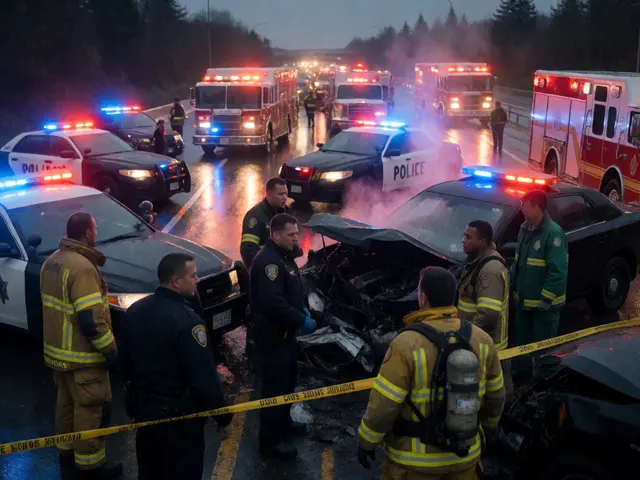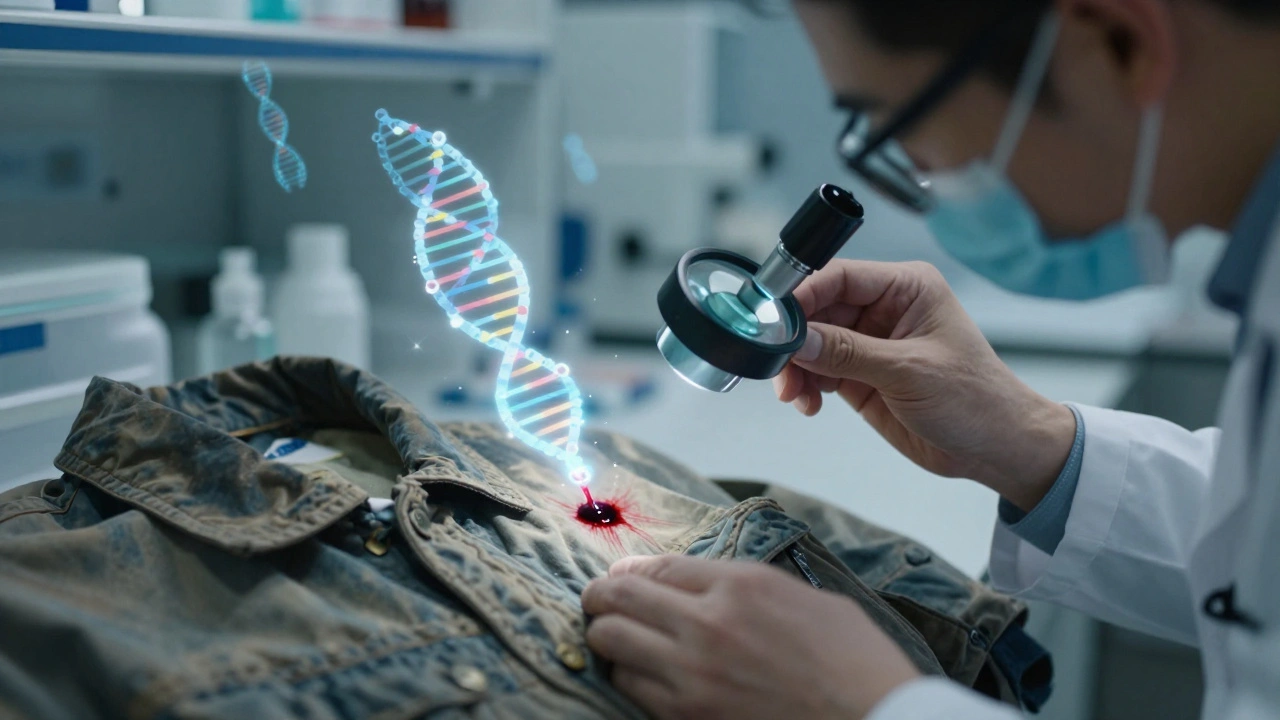
For decades, investigators stared at dried bloodstains on floorboards, clothing, or walls-evidence that seemed frozen in time. The patterns told a story: a struggle, a blow, a final moment. But without a name, without a suspect, the story went nowhere. That changed. Today, cold case DNA analysis isn't just improving-it's rewriting the rules. What used to take years now takes hours. What was once considered too degraded to test is now readable with near-perfect clarity. And it’s not just about blood anymore-it’s about what the blood contains.
From Bloodstains to Genetic Blueprints
Old forensic labs relied on STR analysis, a method that looked at 13 specific spots on the genome. It needed a lot of DNA-between 100 and 500 nanograms. If a bloodstain was small, old, or exposed to moisture or heat, it was often discarded. But modern techniques don’t need much at all. Today’s tools can extract usable DNA from samples as tiny as a few picograms. That’s a thousand times smaller than what was required just ten years ago.How? Chemical Repair Kits now use synthetic enzymes to fix broken DNA strands. Think of it like a molecular glue that rebuilds shattered genetic fragments. These kits stabilize the phosphate backbone-the structural spine of DNA-that breaks down over time due to heat, water, or bacteria. Once repaired, ultra-high-throughput sequencers read the entire sequence, building a full genetic profile from what was once considered trash.
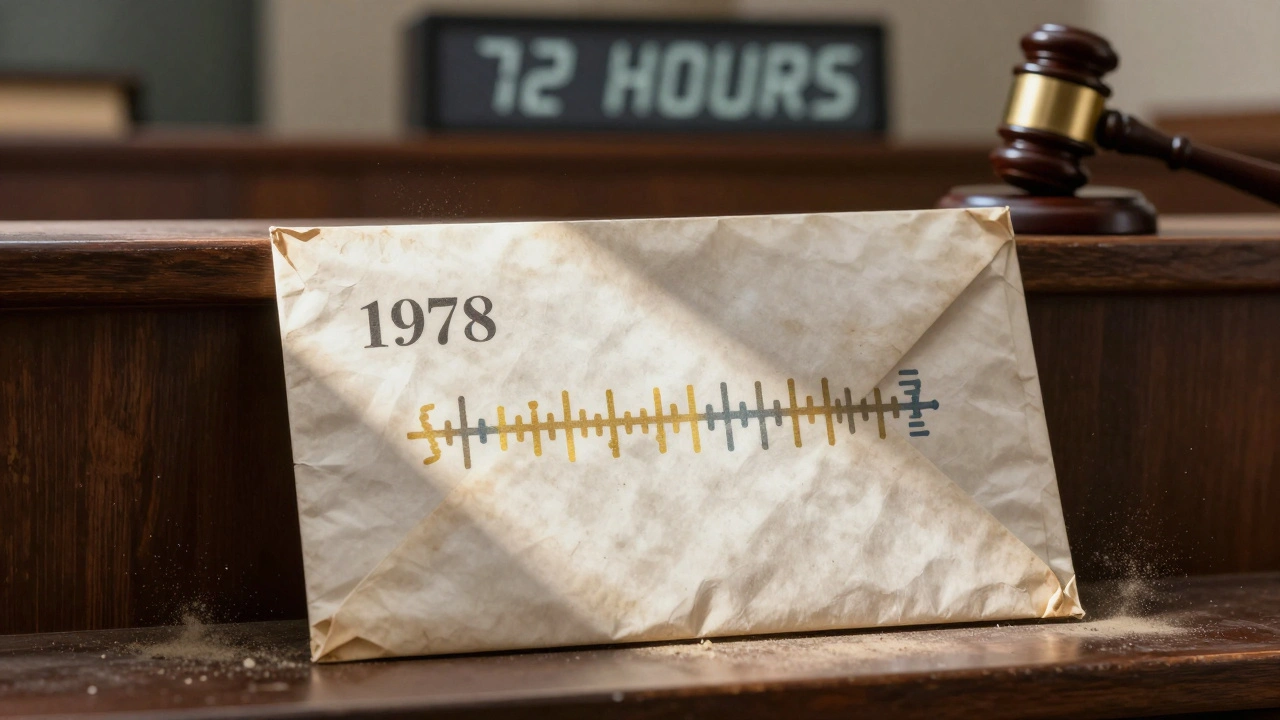
This isn’t theoretical. In 2025, a case from 1978 in rural Oregon was reopened after a bloodstain on a jacket was retested. The sample had been stored in a cardboard box for 47 years. Previous tests yielded nothing. The new GDM protocol reconstructed a complete genome from that single stain. Within 72 hours, a match was found in a public genealogy database. The suspect? A 79-year-old man living two states away. He confessed within a week.
The Genealogy Revolution
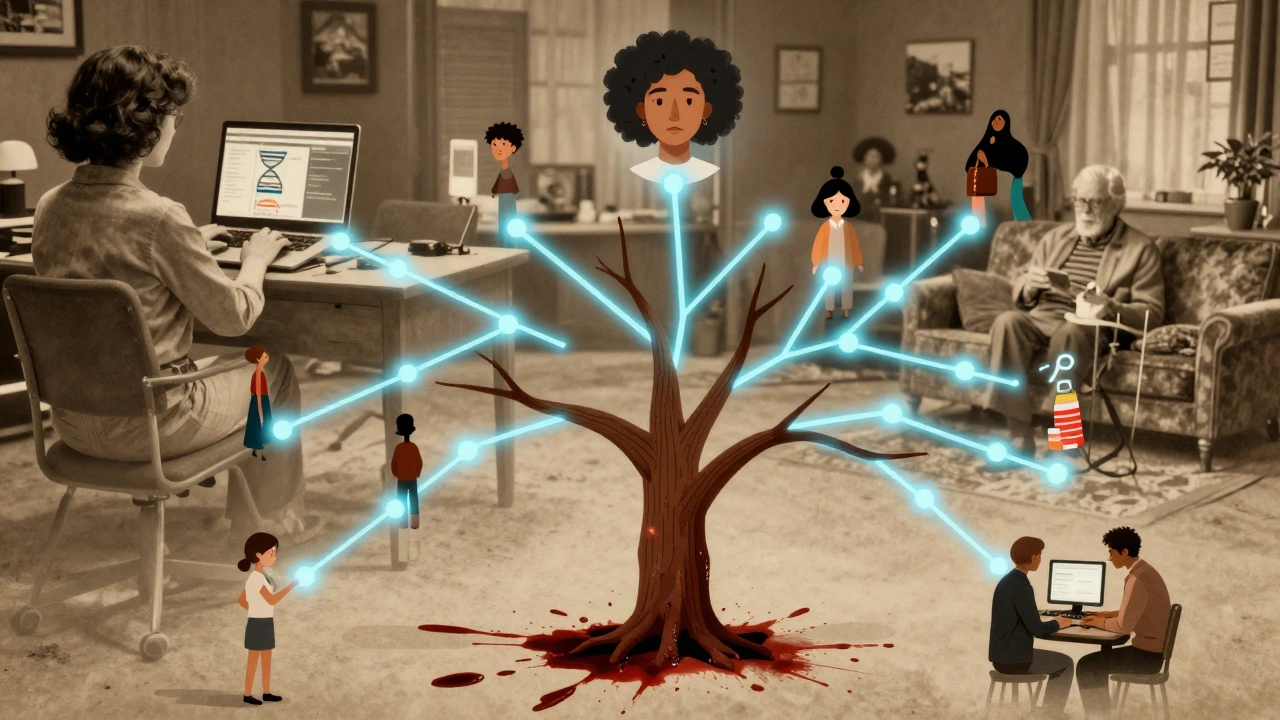
DNA alone doesn’t solve crimes. You need context. That’s where forensic genetic genealogy comes in. Instead of matching DNA to known criminals (like CODIS used to), investigators now upload profiles to public family trees-sites like GEDmatch and FamilyTreeDNA. These databases contain millions of people who uploaded their DNA for ancestry reasons. Suddenly, a crime scene sample isn’t anonymous-it’s connected to cousins, aunts, uncles, even distant relatives.Stanford researchers Lawrence Wein and Mine Su Ertürk developed an algorithm that cuts genealogical search time by nearly 90%. Traditional methods would manually trace family trees, often taking months. Their system uses probability theory to predict the most likely path back to a common ancestor. In tests with 7,500-person family trees, their method succeeded 94% of the time. The old way? Just 4%. It’s not magic-it’s math. And it works.
One 2026 case in Florida involved skeletal remains found in a swamp in 1983. No fingerprints. No dental records. Just a few bone fragments with trace blood. The GDM process reconstructed the victim’s genome. A match led to 17 second cousins. The algorithm built a family tree backward from there, pinpointing a missing man who disappeared in 1982. His daughter, unaware of his fate, submitted her own DNA to a genealogy site in 2021. That one decision led to closure 44 years later.
The Retroactive Golden Hour
There’s a new term in forensics: the Retroactive Golden Hour. It’s not about the first hour after a crime-it’s about the first 48 hours after you retest an old sample. This is when the evidence is hottest. Witnesses are still alive. Memories are fresh. Suspects haven’t passed away. Evidence hasn’t been destroyed.Before these tools, cold cases were shelved because time worked against investigators. Suspects grew old. Witnesses died. Crime scenes vanished. Now, with GDM, a case from 1975 can be reopened on Monday and solved by Wednesday. In one international case handled by the Global Genome Initiative, three sets of skeletal remains from different decades were processed simultaneously. AI reconstructed facial features. Genetic profiles were matched. Ancestral origins were traced. All three victims were identified by name within 48 hours. That’s not a breakthrough-it’s becoming standard.
Automation and the Death of the "Perfect Crime"
The biggest bottleneck in cold case investigations wasn’t the lab-it was the paperwork. Building family trees by hand took months. Investigators would spend weeks cross-referencing birth certificates, marriage records, obituaries. Now, software does it all. Automated crawlers scan global databases, build thousands of family trees in seconds, and use triangulation algorithms to narrow suspects down to a single nuclear family.Imagine walking into an evidence room in the morning. You pull a bloodstained shirt from 1991. You send a swab to the lab. By afternoon, your desk has a name, a photo, and a list of relatives. No waiting. No bureaucracy. Just results.
This has changed the psychology of crime. Suspects who thought they got away with it are now confessing. Why? Because they know the evidence is irrefutable. DNA doesn’t lie. It doesn’t fade. It doesn’t forget. A man in Texas, who’d lived under a new name for 30 years, turned himself in after seeing his own genetic profile on a news report. "I thought I was safe," he said. "I didn’t know they could read my blood from a shirt I threw in a dumpster in '93."
Math That Holds Up in Court
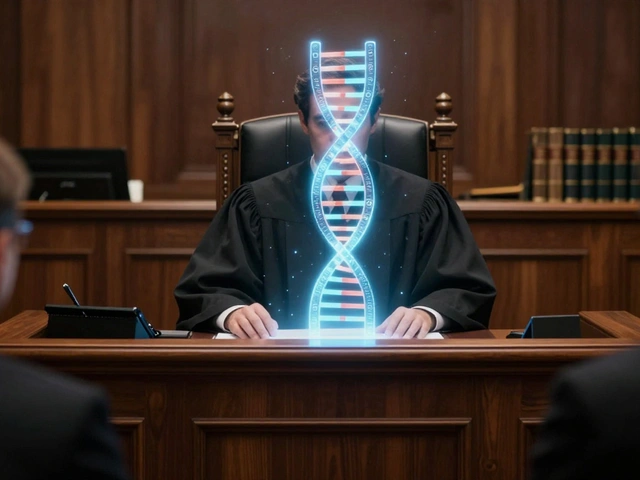
Early DNA methods were criticized for being pseudoscientific. Hair analysis, bite mark comparisons, shoe print matching-many were later debunked. Courts lost trust. But GDM is different. It’s built on Bayesian statistics and decay constants. These aren’t guesses. They’re calculations based on how DNA degrades over time, how genes are inherited, and how likely a match is by chance.For example, if a bloodstain shares 18 centimorgans with a distant cousin, the algorithm calculates the probability that this connection is coincidental. The answer? Less than 0.0001%. That’s not "probably"-it’s mathematically certain. This rigor is why courts now accept GDM results as evidence. It’s not opinion. It’s data.
What This Means for Bloodstain Patterns
Bloodstain pattern analysis used to be about angles, spatter, and droplet size. It told you how the blood got there-but not who left it. Now, the pattern is just the starting point. The real breakthrough is what comes after: the DNA inside it.A single drop of blood from a 1980s murder can now reveal:
- The suspect’s sex
- Approximate eye and hair color
- Geographic ancestry
- Genetic relatives
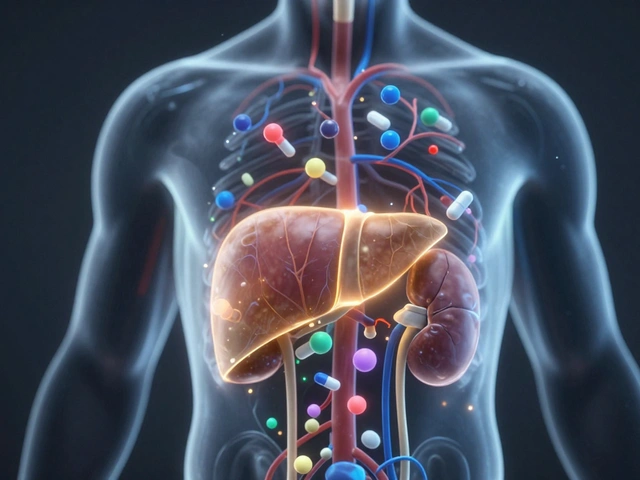
- Even traits like lactose intolerance or predisposition to certain diseases
This isn’t science fiction. It’s happening in real time. In 2025, a case in Pennsylvania used bloodstain patterns to reconstruct a violent struggle. The pattern suggested the victim was struck from behind. The DNA from the stain matched a man who had moved out of state in 1987. He had no criminal record. No one knew he was there. But his DNA didn’t lie.
The New Normal
By 2026, cold cases aren’t cold anymore. They’re active. They’re urgent. They’re solvable. The tools aren’t just better-they’re transformative. What used to be a graveyard of unsolved crimes is now a pipeline of justice.And it’s not just about catching killers. It’s about giving families answers. It’s about clearing the innocent. In 2024, a man in Ohio who spent 28 years in prison for a murder he didn’t commit was exonerated after DNA from the crime scene was reanalyzed. The real suspect? A man who died in 2005. His DNA had been in a database, but no one had connected it until now.
The future of forensics isn’t about bigger labs or more funding. It’s about smarter science. Better math. Faster tools. And the quiet, relentless power of DNA-waiting in a stain, in a bone, in a forgotten envelope, ready to speak when the world is finally ready to listen.
Can old bloodstains really be used to identify someone today?
Yes. Modern Genetic Deep-Mapping (GDM) can extract usable DNA from bloodstains that are over 50 years old. Even samples exposed to water, heat, or soil can be repaired and sequenced. Labs now use chemical repair kits to fix degraded DNA strands, allowing full genome reconstruction from as little as a few picograms of biological material.
How is modern DNA analysis different from old CODIS testing?
Old CODIS testing looked at 13 specific locations on the genome and required 100-500 nanograms of DNA. Modern GDM analyzes up to 1,000 genetic markers, requires only picograms of DNA, and uses AI to predict traits and relationships. It also connects to public genealogy databases, which CODIS never did. This makes it far more powerful for identifying unknown suspects or victims.
Do I need to be a suspect for my DNA to be used in a cold case?
No. Investigators don’t need your DNA on file to identify you. If a relative-no matter how distant-has uploaded their DNA to a public genealogy site like GEDmatch, your genetic profile can be inferred from shared segments. This is how many suspects are found: through a third cousin who never knew they were linked to a crime.
Can this technology clear innocent people too?
Absolutely. Since 2020, over 140 wrongful convictions in the U.S. have been overturned using modern DNA reanalysis. In many cases, the real perpetrator’s DNA was found in old evidence, proving the convicted person was innocent. This isn’t just about catching killers-it’s about fixing past mistakes.
Are these methods used only in the U.S.?
No. The Global Genome Initiative has standardized GDM protocols across 17 countries, including Canada, the UK, Australia, and Germany. Cases in Europe have been solved using the same methods-often with faster turnaround times due to centralized forensic databases. The technology doesn’t respect borders.