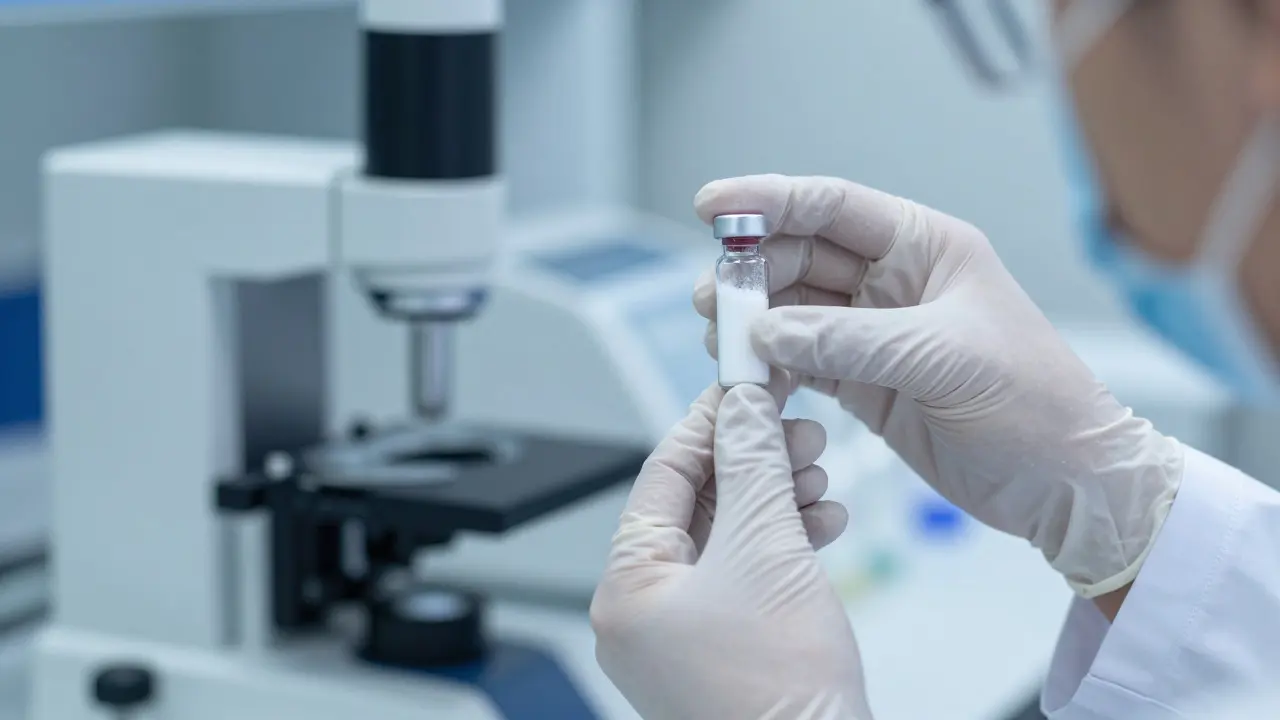
Imagine a detective holding a bag of white powder. It looks like pure cocaine. But under the microscope, it’s a mess. It’s not just one thing; it’s a cocktail. Maybe it’s cut with levamisole to stretch the supply. Maybe it’s mixed with fentanyl because that’s what’s in the neighborhood this week. This is where Mixture Analysis is the forensic science process used to identify and quantify multiple active ingredients within a single sample. It’s the difference between charging someone with possession of one substance versus knowing exactly what they were dealing.
In the old days, chemists would guess. They’d run a test for cocaine, get a positive, and call it a day. But modern crime scenes don’t play by those rules. Today, a “batch” of drugs is rarely pure. It’s a complex matrix of active pharmaceuticals, cutting agents, and sometimes unexpected contaminants. If you’re trying to understand how labs break down these chaotic samples, you need to look past simple identification and into the world of separation science.
Why Single-Substance Testing Fails
The biggest problem with traditional drug testing is that it assumes simplicity. A field test kit might tell you there’s morphine present. Great. But does it tell you if there’s also codeine? What about heroin metabolites? Or worse, what if the sample contains an opioid that reacts similarly but has different legal implications?
This is where mixture analysis shines. It doesn’t just ask “Is drug X here?” It asks “What is here, and how much of each component is present?” This distinction matters for three main reasons:
- Toxicology Accuracy: A patient dies from a combination of two mild sedatives that are lethal together. Identifying both is critical for determining cause of death.
- Legal Precision: In court, saying “it was cocaine” is weak evidence if it turns out to be 10% cocaine and 90% inert filler. Quantification changes the weight of the charge.
- Trend Monitoring: Public health officials need to know if a local supply of heroin is being spiked with xylazine or carfentanil. You can’t spot trends if you only measure the primary target.
Think of it like cooking. If I taste a soup and say “it has salt,” I’m right. But if I want to replicate the recipe, I need to know the exact ratio of salt, pepper, garlic, and thyme. Mixture analysis provides that recipe.
The Core Tools: Separation Before Identification
You can’t analyze a mixture if everything is stuck together. Imagine trying to count red marbles and blue marbles in a jar when they’re glued together. First, you have to separate them. In the lab, this happens through chromatography.
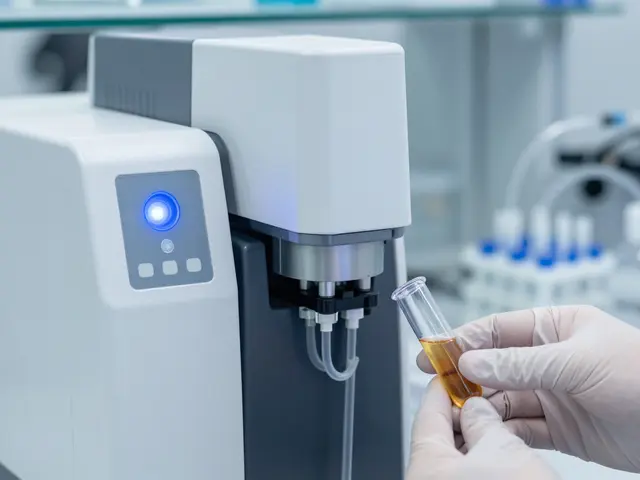
The two heavy hitters here are Gas Chromatography (GC) and Liquid Chromatography (LC). GC works best for volatile compounds-things that turn into gas easily at moderate temperatures. Think alcohols, some opioids, and certain stimulants. LC handles things that are too big or too heat-sensitive for GC, like many synthetic cannabinoids or peptide-based drugs.
Once separated, we need to know what each drop is. That’s where Mass Spectrometry (MS) comes in. The detector smashes the molecules into fragments and measures their masses. It’s like fingerprinting the chemical structure. When you combine them-GC-MS or LC-MS-you get a system that separates the mixture and identifies each part with high confidence.
| Technique | Best For | Limitations | Detection Limit |
|---|---|---|---|
| Gas Chromatography (GC) | Volatile, thermally stable compounds | Poor for large, non-volatile molecules | Parts per billion (ppb) |
| Liquid Chromatography (LC) | Large, polar, or heat-sensitive compounds | Slower run times than GC | Parts per trillion (ppt) with MS |
| Mass Spectrometry (MS) | Structural identification | Requires prior separation in mixtures | Extremely sensitive |
| Nuclear Magnetic Resonance (NMR) | Full structural elucidation without standards | Less sensitive, expensive equipment | Parts per thousand (ppt) |
Handling the Unexpected: Unknown Contaminants
Here’s the tricky part. Sometimes the mixture contains something nobody expected. Maybe a new designer drug hits the market before the reference library is updated. Or maybe a manufacturing error introduces a toxic impurity.
When this happens, standard databases fail. The machine sees a peak but doesn’t know its name. This is where High-Resolution Mass Spectrometry (HRMS) steps in. Unlike older units that give you a rough mass, HRMS gives you the exact molecular weight to four decimal places. This allows chemists to calculate the elemental composition of the unknown molecule. Combined with fragmentation patterns, they can often deduce the structure even without a physical standard to compare against.
For example, in 2016, a wave of deaths in the Pacific Northwest was linked to xylazine, a veterinary tranquilizer. It wasn’t in most standard drug panels initially. Labs had to use HRMS to confirm its presence in blood and tissue samples. Without that capability, the trend would have been missed until it was too late.
Quantification: How Much Is Enough?
Identification is step one. Step two is quantification. Knowing *that* fentanyl is in the bag is good. Knowing there are 50 micrograms per gram is better. Why? Because potency varies wildly. One batch of heroin might be 40% pure; another might be 10%. If you’re calculating dosage for a medical case or sentencing guidelines for a criminal case, that percentage is everything.
Labs use calibration curves to do this. They prepare known concentrations of the drug, run them through the instrument, and create a relationship between signal strength and amount. Then they apply that curve to the unknown sample. It’s straightforward math, but it requires rigorous quality control. If your calibration is off by 5%, your legal testimony could be wrong by 5%.
There’s also the issue of matrix effects. The other stuff in the mixture (the cutting agents, the sugars, the binders) can interfere with the detection of the target drug. A skilled analyst adjusts for this by using internal standards-chemicals added to the sample that behave similarly to the target but aren’t naturally present. This acts as a control, ensuring the measurement is accurate despite the messy background.

Quality Control and Legal Admissibility
In the courtroom, method validation is king. If you use a fancy new technique but haven’t proven it works reliably, your results might be thrown out. The lab must demonstrate:
- Selectivity: Can it distinguish the target from similar-looking compounds?
- Accuracy: Does it recover the correct amount?
- Precision: If you run the same sample ten times, do you get the same answer?
- Linearity: Does the response increase proportionally with concentration?
These aren’t just academic exercises. They are the backbone of expert testimony. A defense attorney will poke holes in any gap. If the lab didn’t account for potential interference from a common cutting agent, the entire result is suspect. This is why accreditation bodies like ISO/IEC 17025 exist-to ensure that every step, from sample collection to final report, follows strict protocols.
The Future: Automation and AI
We’re moving toward automated workflows. Instead of a chemist manually tuning the mass spec for every sample, software now suggests parameters based on the sample type. Artificial Intelligence (AI) is starting to assist in spectral interpretation. Algorithms can flag unusual peaks that might indicate novel substances, prompting a deeper investigation by human experts.
However, automation isn’t a replacement for expertise. A machine can detect a pattern, but a human understands context. Did the patient take their prescribed medication? Was the sample exposed to heat during transport? These nuances require judgment. The future of mixture analysis is a partnership: powerful machines doing the heavy lifting, and skilled analysts making the final calls.
So, next time you hear about a drug bust or a toxicology report, remember it’s not just a yes/no answer. It’s a detailed dissection of a complex chemical environment. And getting it right saves lives, ensures justice, and keeps our understanding of public health sharp.
What is the difference between identification and quantification in drug testing?
Identification determines *what* substances are present in a sample. Quantification determines *how much* of each substance is present. For example, identifying fentanyl tells you it's there; quantifying it tells you the concentration, which is crucial for assessing toxicity or legal penalties.
Why is Gas Chromatography-Mass Spectrometry (GC-MS) so popular in forensics?
GC-MS is popular because it combines effective separation of volatile compounds with highly specific identification via mass spectrometry. It offers a good balance of sensitivity, speed, and reliability for many common drugs of abuse and toxins.
Can mixture analysis detect brand-new designer drugs?
Yes, especially when using High-Resolution Mass Spectrometry (HRMS). While standard libraries may not have the reference data yet, HRMS can provide enough structural information to identify novel compounds or at least flag them for further investigation.
What role do cutting agents play in mixture analysis?
Cutting agents dilute the active drug to increase profit. They can interfere with analysis by causing matrix effects, potentially masking or enhancing signals. Analysts must account for these interferents to ensure accurate quantification of the active ingredient.
How long does a typical mixture analysis take?
A standard GC-MS run might take 15-30 minutes per sample, but the full process including preparation, data review, and reporting can take several hours to days depending on lab workload and complexity. Complex mixtures requiring NMR or structural elucidation can take weeks.