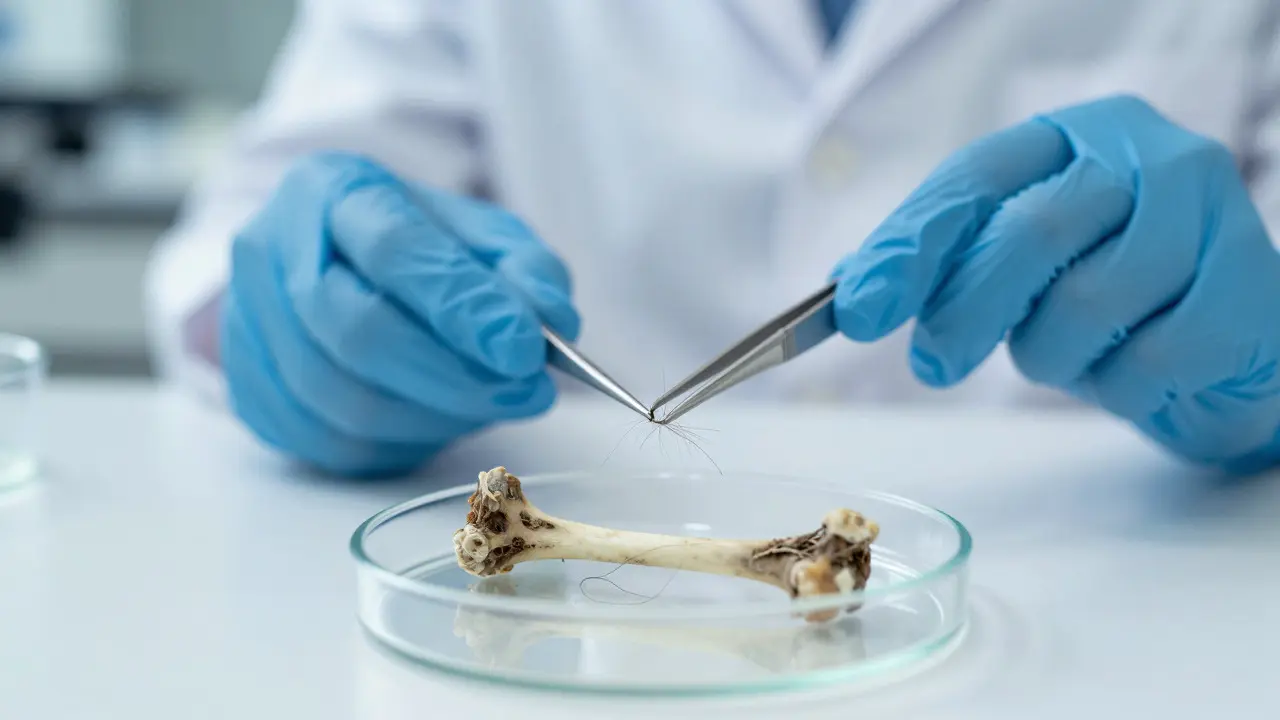
Imagine a crime scene where the only biological trace left is a single hair shaft without a root, or a bone fragment that has been in the ground for decades. Standard nuclear DNA testing often fails here because the cellular material is too damaged to extract a full profile. This is where Mitochondrial DNA (mtDNA) analysis steps in as a critical forensic tool. Unlike nuclear DNA found in the cell nucleus, mtDNA resides in the mitochondria-the energy-producing organelles of cells. Because there are hundreds to thousands of mitochondria per cell, the chance of recovering usable genetic material from degraded samples is significantly higher. For forensic scientists and legal professionals, understanding when and how to use mtDNA can mean the difference between a cold case remaining unsolved and securing a conviction.
Why Standard DNA Testing Fails on Old or Damaged Evidence
Nuclear DNA is packaged into chromosomes within the nucleus. It is highly specific to an individual (except for identical twins), making it the gold standard for identifying suspects. However, it is also fragile. When tissue dries out, freezes, or decomposes, the long strands of nuclear DNA break into short fragments. If these fragments are shorter than about 100 base pairs, standard Short Tandem Repeat (STR) analysis-which relies on longer sequences-often cannot generate a complete profile.
In contrast, mitochondrial DNA exists as a small, circular molecule replicated independently of the nucleus. In a typical human cell, you might find one copy of a specific nuclear gene but up to 10,000 copies of the mitochondrial genome. This abundance means that even if most nuclear DNA has disintegrated, enough intact mtDNA molecules usually remain for sequencing. This makes mtDNA particularly valuable for:
- Hair shafts lacking the follicular root.
- Bones and teeth that have been exposed to elements.
- Decades-old preserved remains.
- Tissue samples with heavy bacterial contamination.
How Mitochondrial DNA Inheritance Works in Forensics
To interpret mtDNA results correctly, you must understand its unique inheritance pattern. Nuclear DNA is inherited from both parents, recombining each generation. mtDNA, however, is almost exclusively inherited from the mother. This maternal lineage creates a direct line that can be traced back through generations without recombination.
This has two major implications for forensic casework. First, all siblings share the same maternal mtDNA sequence. Second, a person’s mtDNA matches their mother, her sisters, and their children. Therefore, an mtDNA match does not prove identity in the same way a nuclear DNA match does; instead, it proves maternal lineage. To confirm a suspect’s identity using mtDNA, investigators typically compare the suspect’s sample against a known maternal relative, such as a mother or sibling, rather than relying solely on the suspect’s own profile unless no relatives are available for comparison.
| Feature | Nuclear DNA (STR) | Mitochondrial DNA (mtDNA) |
|---|---|---|
| Location | Cell Nucleus | Mitochondria |
| Copies per Cell | 2 (one from each parent) | Hundreds to Thousands |
| Inheritance | Biparental | Maternal Lineage |
| Degradation Resistance | Low (longer fragments break easily) | High (abundant copies survive degradation) |
| Identification Power | Individual-specific (highly discriminating) | Family-specific (maternal clan) |
| Best Use Case | Fresh blood, saliva, fresh tissue | Hair shafts, bones, old remains |
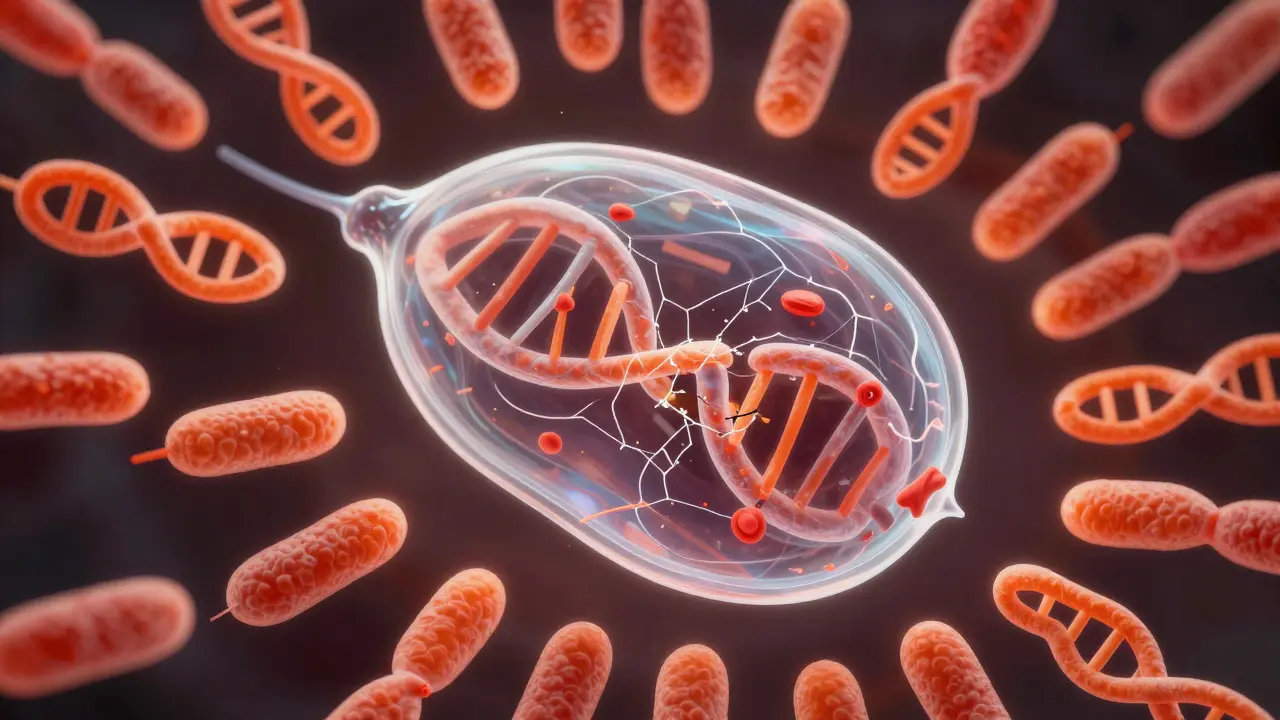
The Analytical Process: From Extraction to Sequencing
Extracting mtDNA requires specialized laboratory protocols to avoid contaminating the sample with modern DNA. Since the technique is so sensitive, even a tiny amount of skin flake from a technician can skew results. Laboratories use clean-room environments and negative controls to ensure purity.
Once extracted, the DNA is amplified using Polymerase Chain Reaction (PCR). The target region is usually the Hypervariable Regions I and II (HV1 and HV2) of the control region, which contain the most mutations and thus the highest variability among individuals. Modern techniques also utilize Next-Generation Sequencing (NGS), which allows for the analysis of multiple regions simultaneously, providing more data points than traditional Sanger sequencing.
The resulting sequence is then compared to databases like GenBank or internal reference collections. A "match" in forensics means the sequence from the evidence matches the sequence from a reference sample. However, because many people in the population may share the same maternal haplogroup, statisticians calculate a frequency estimate to explain how common that specific sequence is in the relevant population.
Interpreting Results: Matches, Exclusions, and Heteroplasmy
When reviewing an mtDNA report, three outcomes are possible. An exclusion occurs when the evidence sequence differs from the reference sequence, effectively ruling out that maternal lineage. A match occurs when the sequences are identical. However, a match is not a proof of identity; it indicates that the individual belongs to the same maternal family line.
A complex phenomenon called heteroplasmy adds another layer of difficulty. Heteroplasmy occurs when an individual has more than one type of mtDNA sequence within their body. This can happen due to mutations during early embryonic development. As a result, different tissues from the same person (e.g., blood vs. hair) might show slightly different mtDNA sequences. Forensic scientists must account for this by analyzing multiple samples and using statistical models that incorporate heteroplasmy rates to avoid false exclusions.

Legal Admissibility and Courtroom Challenges
Since the 1990s, mtDNA has been widely accepted in courts under the Daubert standard in the United States and similar frameworks globally. However, defense attorneys often challenge the probative value of mtDNA matches, arguing that they do not uniquely identify a suspect. To counter this, prosecutors present expert testimony explaining the population frequency of the specific haplotype. If a sequence is rare in the population, the match carries significant weight. If it is common, the evidence supports the suspect’s presence but does not exclude other members of the same maternal family.
For example, if a hair shaft from a crime scene yields an mtDNA sequence found in 5% of the local population, the jury understands that while the suspect fits the profile, so do roughly one in twenty people. This context is crucial for setting realistic expectations in trial strategy.
Strategic Considerations for Investigators
Knowing when to order mtDNA testing saves time and resources. It is generally not the first choice for fresh, high-quality samples where nuclear DNA can provide a definitive identification. Instead, reserve mtDNA for cases where:
- Nuclear DNA extraction has failed or yielded low-template results.
- The evidence consists of non-nuclear sources like hair shafts or ancient bones.
- You need to link a suspect to a victim via a maternal relative when the victim’s identity is unknown.
Always collect reference samples from the suspect’s mother or full siblings if available. Comparing the suspect directly to the evidence is valid, but comparing them to a maternal relative provides stronger logical support in court because it confirms the shared maternal lineage explicitly.
Can mitochondrial DNA identify a person uniquely?
No, mitochondrial DNA identifies a maternal lineage, not an individual. Multiple people in a family or population can share the same mtDNA sequence. It is used to include or exclude a suspect based on their maternal family history, often requiring comparison with a maternal relative.
What types of evidence are best suited for mtDNA analysis?
Hair shafts without roots, bones, teeth, and highly degraded tissue samples are ideal. These materials often lack sufficient nuclear DNA but retain enough mitochondrial copies for successful sequencing.
How does heteroplasmy affect forensic results?
Heteroplasmy causes variation in mtDNA sequences within the same individual. This can lead to apparent mismatches between different tissue samples from the same person. Forensic labs use statistical adjustments to account for this natural variation.
Is mtDNA admissible in court?
Yes, mtDNA is generally admissible in courts worldwide. Its acceptance depends on proper laboratory protocols and expert testimony explaining the statistical significance of the match relative to population frequencies.
Should I test for nuclear DNA before mtDNA?
Generally, yes. Nuclear DNA offers higher discriminatory power. MtDNA should be reserved for cases where nuclear DNA is unavailable, degraded, or insufficient, or when the evidence source (like a hair shaft) lacks nuclear material.