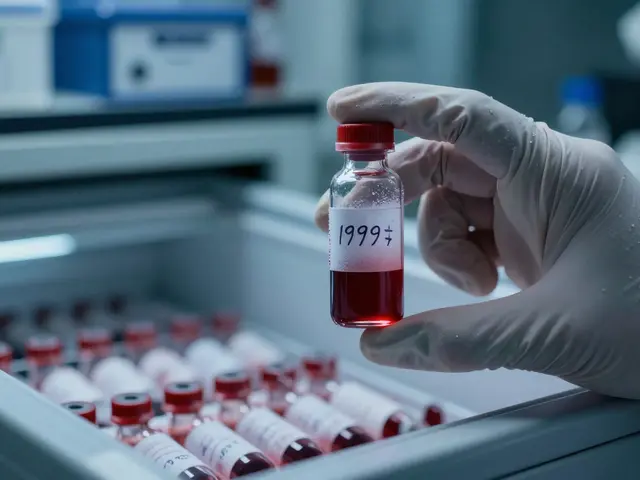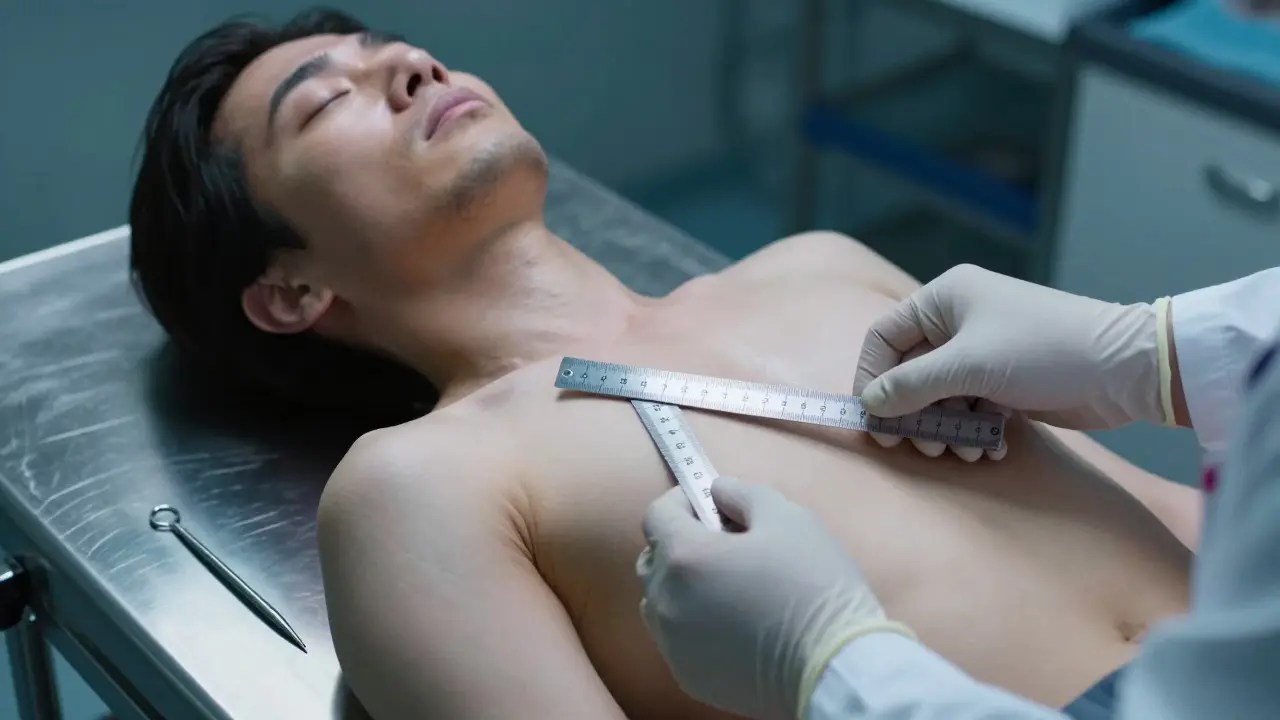
Imagine standing over a body that has been dead for three days. The skin is mottled, the joints are stiff, and the family is waiting for answers. In this moment, forensic pathology is the medical discipline dedicated to determining the cause and manner of death through scientific examination. While many focus on toxicology or wound analysis, the foundation of every reliable autopsy report rests on something far more basic: accurate body measurement and documentation. Without precise data on height, weight, and physical characteristics, even the most sophisticated lab results can be misinterpreted.
Why does this matter? Because in legal proceedings, a difference of two inches in stature or five pounds in weight can change the narrative from accidental fall to assault. This guide breaks down exactly how forensic pathologists measure and document bodies, why specific tools are used, and how these numbers feed into the final legal record.
Key Takeaways
- Standardization is critical; using different methods for living vs. deceased individuals leads to significant errors.
- Post-mortem changes like rigor mortis and bloating affect weight and length readings if not accounted for.
- Digital photography and 3D scanning are replacing manual sketches but require strict calibration protocols.
- Documentation must include both metric and imperial units to satisfy diverse legal jurisdictions.
- The "Chain of Custody" applies to measurement tools just as it does to biological samples.
The Core Metrics: Height, Weight, and Stature Estimation
When you first encounter a decedent, the immediate task is establishing baseline anthropometric data. For height, forensic pathologists typically use a stadiometer if the body is fresh. However, decomposition complicates this. As tissues break down, the spine can compress or shift, altering apparent length. To mitigate this, examiners often measure the distance between fixed bony landmarks, such as the top of the head (vertex) to the heel, while ensuring the legs are straightened against rigor mortis.
Weight is perhaps the most variable metric. A body’s mass changes rapidly after death due to fluid shifts, bloating from gas production by bacteria, and dehydration. A person who weighed 180 lbs at death might register 195 lbs during an autopsy performed 48 hours later. Therefore, experienced pathologists note the time since death when recording weight. If the exact time of death is unknown, they may estimate the ante-mortem weight based on body habitus and clothing size, flagging this as an estimation rather than a direct measurement.
| Metric | Fresh Body (< 24h) | Decomposed Body (> 72h) | Potential Error Margin |
|---|---|---|---|
| Height | Stadiometer (standard) | Bone landmark measurement | ±0.5 inches |
| Weight | Calibrated scale | Scale + fluid adjustment notes | ±5-10 lbs |
| Circumference | Tape measure | Avoided unless critical | High variability |
Tools of the Trade: From Tape Measures to 3D Scanners
You might assume that measuring a body is simple. Just grab a tape measure, right? It’s not that straightforward. Standard cloth tapes stretch, leading to inconsistent readings. Forensic labs prefer rigid metal rulers or laser distance meters for linear measurements. For circumference, non-stretch fabric tapes are used, but only with caution.
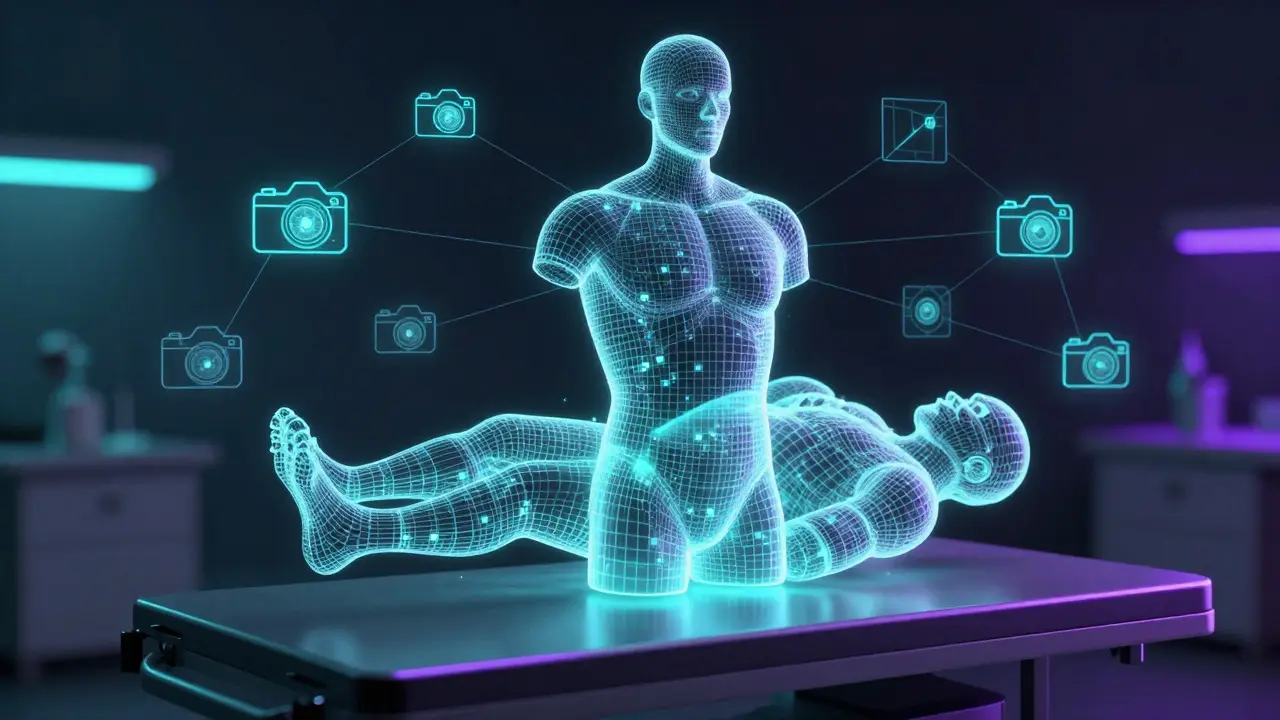
In recent years, photogrammetry is a technique that uses multiple photographs to create 3D models of objects has become a game-changer. Instead of manually measuring every bruise or wound, investigators take hundreds of photos from various angles. Software then reconstructs the body in 3D space, allowing for precise virtual measurements that can be shared with defense attorneys and judges without moving the remains. This reduces handling, which preserves evidence integrity.
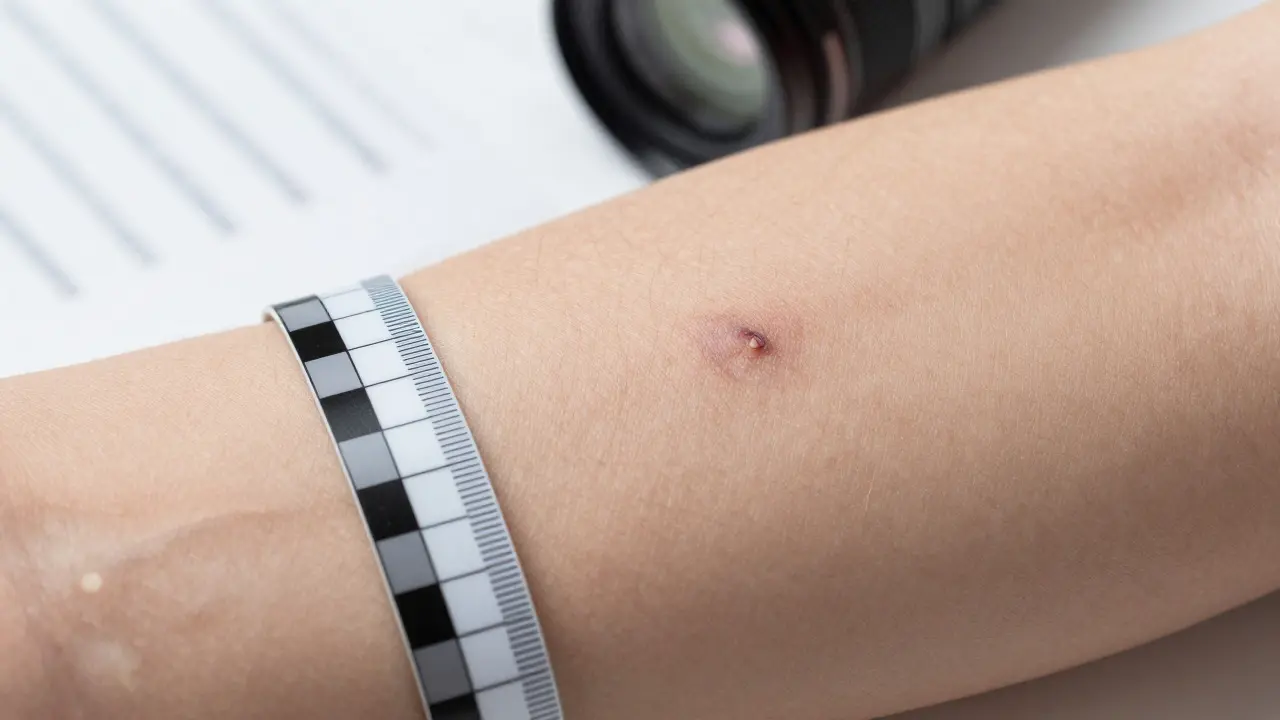
However, technology isn’t a silver bullet. If the camera isn’t calibrated with a reference scale (like a forensic ruler placed next to the body), the digital model is useless. That’s why every photo set includes a standardized scale marker. This small detail ensures that when a lawyer zooms in on a wound width of 12mm, they know it’s accurate to the millimeter.
Documenting Physical Characteristics and Anomalies
Measurement isn’t just about numbers; it’s about context. A scar on the left forearm is meaningless without knowing its location relative to the elbow and wrist. Forensic pathologists use anatomical landmarks to describe positions. For example, "2 cm medial to the olecranon process" is far more precise than "near the elbow."
Unique identifiers play a huge role here. Tattoos, birthmarks, and surgical scars are documented with high-resolution photos and measured distances from standard points. Why? Because identification is often the first step in a death investigation. If a body is unidentified, matching tattoo dimensions against missing persons databases can solve cases quickly. I once saw a case where a 3-inch tattoo was off by half an inch in the initial sketch, leading to a wrong ID match that took weeks to correct. Precision prevents these costly errors.
The Role of Rigor Mortis and Post-Mortem Changes
Here’s a tricky part: the body fights back against your measurements. Rigor mortis is the temporary stiffness of muscles after death caused by chemical changes sets in within 2-6 hours and lasts until decomposition begins. During this phase, joints lock up. Trying to straighten a leg to measure height can result in false readings if the examiner doesn’t account for the angle of resistance.
Experienced pathologists assess the stage of rigor before measuring. If the body is fully rigid, they may wait for it to pass or use specialized techniques to gently release tension without damaging tissue. Similarly, bloating can make limbs appear longer or heavier. Documenting the state of decomposition alongside measurements allows future reviewers to adjust their interpretations. This context is often omitted in rushed reports, leading to disputes in court.
Legal Implications and Chain of Custody
Every measurement tool is evidence. If you use a digital caliper to measure a bone fragment, that device becomes part of the chain of custody. Was it calibrated? Who last used it? These questions arise in cross-examination. Labs maintain logs for all measuring instruments, noting calibration dates and usage history. This mirrors the care taken with DNA samples.
In trial, opposing counsel might argue that a weight discrepancy proves negligence. To counter this, the pathologist must present a clear methodology: "We measured at 14:00 hours, noted moderate bloating, and adjusted for estimated fluid loss based on ambient temperature." Specificity builds credibility. Vague statements like "the body weighed approximately 180 lbs" invite skepticism. Precise, reproducible data withstands scrutiny.
Best Practices for Accurate Documentation
To ensure your documentation holds up, follow these practical steps:
- Calibrate First: Check all digital devices and scales before starting. Record the calibration status in the report header.
- Photograph Everything: Include a scale in every shot. Use macro lenses for small details like nail beds or dental work.
- Note Environmental Conditions: Temperature and humidity affect decomposition rates and thus measurement accuracy. Log these values.
- Use Dual Units: Always provide centimeters/inches and kilograms/pounds. International cases or mixed-jurisdiction trials require both.
- Describe Limitations: If rigor mortis prevented full extension, say so. Transparency beats assumption.
By treating measurements as core evidence rather than administrative tasks, you elevate the quality of the entire autopsy. The numbers don’t lie, but they do need proper context to speak the truth.
Frequently Asked Questions
How accurate are post-mortem weight measurements?
Accuracy varies significantly based on time since death. Within 24 hours, error margins are low (±2 lbs). After 72 hours, bloating and fluid loss can introduce errors of 5-10 lbs or more. Contextual notes about decomposition stage are essential for interpretation.
Do forensic pathologists use the same tools as living patients?
While similar tools (scales, tapes) are used, forensic contexts require stricter calibration logs and non-stretch materials. Digital photogrammetry is also widely used in forensics but less common in routine clinical settings due to cost and workflow differences.
Why is height measured from bone landmarks in decomposed bodies?
Soft tissue degradation causes the body to lose structural integrity, making external surface measurements unreliable. Bone landmarks remain stable, providing a consistent reference point for estimating original stature even when skin and muscle have broken down.
What is the role of a forensic ruler in photography?
A forensic ruler provides a known reference scale within the image. This allows software or human analysts to calculate actual sizes of wounds, tattoos, or objects from the photograph. Without it, images lack quantitative value for legal or investigative purposes.
How does rigor mortis affect measurement protocols?
Rigor mortis locks joints, preventing natural alignment. Examiners must either wait for rigor to pass or carefully manipulate limbs to achieve straight lines for height measurement. Failure to account for joint angles can lead to underestimating height by several inches.