Most labs think they are safe because they haven't had a major incident. That is a dangerous assumption. Laboratory Safety is the systematic process of identifying, evaluating, and controlling hazards in research and testing environments to prevent injury and ensure regulatory compliance. For accredited facilities, safety isn't just about keeping people alive; it is a core component of your quality management system. If you fail an OSHA inspection or miss a protocol step during an audit, your accreditation status is at risk. This guide breaks down exactly how to align your daily operations with federal requirements so you stay compliant without slowing down your workflow.
The Core Framework: OSHA Standards for Labs
When we talk about compliance, we are usually referring to two main pillars: the General Duty Clause and specific industry standards. The General Duty Clause requires employers to provide a workplace free from recognized hazards that are causing or are likely to cause death or serious physical harm. However, for most labs, the specific rulebook is the Occupational Chemical Hygiene Standard, often called the Lab Rule (29 CFR 1910.1450). This standard applies to workplaces where chemicals are used on a routine basis in quantities greater than trace amounts.
You need to understand that OSHA does not dictate *how* you run your experiments. Instead, it mandates that you have a documented plan. This plan must be reviewed annually. If you change a procedure, add a new solvent, or hire a new technician, your documentation needs to reflect that immediately. Stale documents are the number one reason labs fail initial compliance checks.
Building Your Chemical Hygiene Plan
The heart of your compliance effort is the Chemical Hygiene Plan (CHP). This is not a binder that sits on a shelf. It is a living document that dictates how every chemical in your facility is handled. A robust CHP includes four critical components:
- Standard Operating Procedures (SOPs): Specific instructions for high-risk tasks. Do not rely on general guidelines. If you use formaldehyde, you need a specific SOP for its handling, storage, and disposal.
- Hazard Communication: How employees know what they are working with. This ties directly into labeling and Safety Data Sheets (SDS).
- Engineering Controls: Physical methods to remove or reduce exposure, such as fume hoods or local exhaust ventilation.
- Personal Protective Equipment (PPE): The last line of defense, including gloves, goggles, and lab coats.
A common mistake is treating the CHP as a static PDF. You should assign a designated Chemical Hygiene Officer (CHO) who has the authority to stop work if a hazard is present. This person is responsible for ensuring the plan stays current and that training is consistent across all shifts.
Mastering Hazard Communication and SDS Management
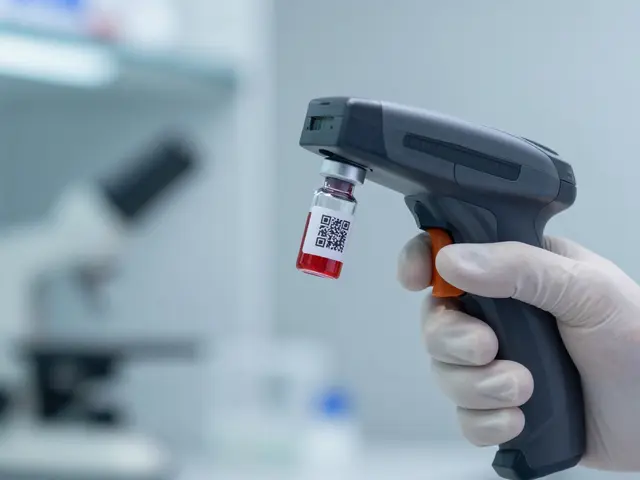
Since the adoption of GHS (Globally Harmonized System) standards, labeling has become stricter. Every container of hazardous chemical in the workplace must be labeled, tagged, or marked with the identity of the material and appropriate warnings. But labels alone aren't enough. You need access to Safety Data Sheets (SDS) for every chemical in your inventory.
Here is a practical tip: do not keep paper-only copies of SDSs unless required by a specific state regulation. Digital repositories are faster to update and easier to search. When a new supplier ships a reagent, the first thing your receiving team should do is verify that the digital SDS is uploaded to your central system before the bottle hits the bench. If the SDS is missing, the chemical should not be used until the document is secured.
| Hazard Type | Primary PPE Requirement | Key Consideration |
|---|---|---|
| Corrosive Liquids | Face Shield + Nitrile Gloves | Gloves must be changed after each task or if compromised |
| Volatile Solvents | Nitrile Gloves + Fume Hood | Check glove permeation rate against specific solvent |
| Biohazards | Nitrile Gloves + Lab Coat | Double gloving recommended for high-risk samples |
| Radiation | Lead Apron + Dosimeter | Monitor cumulative dose monthly |
Engineering Controls: Beyond the Fume Hood
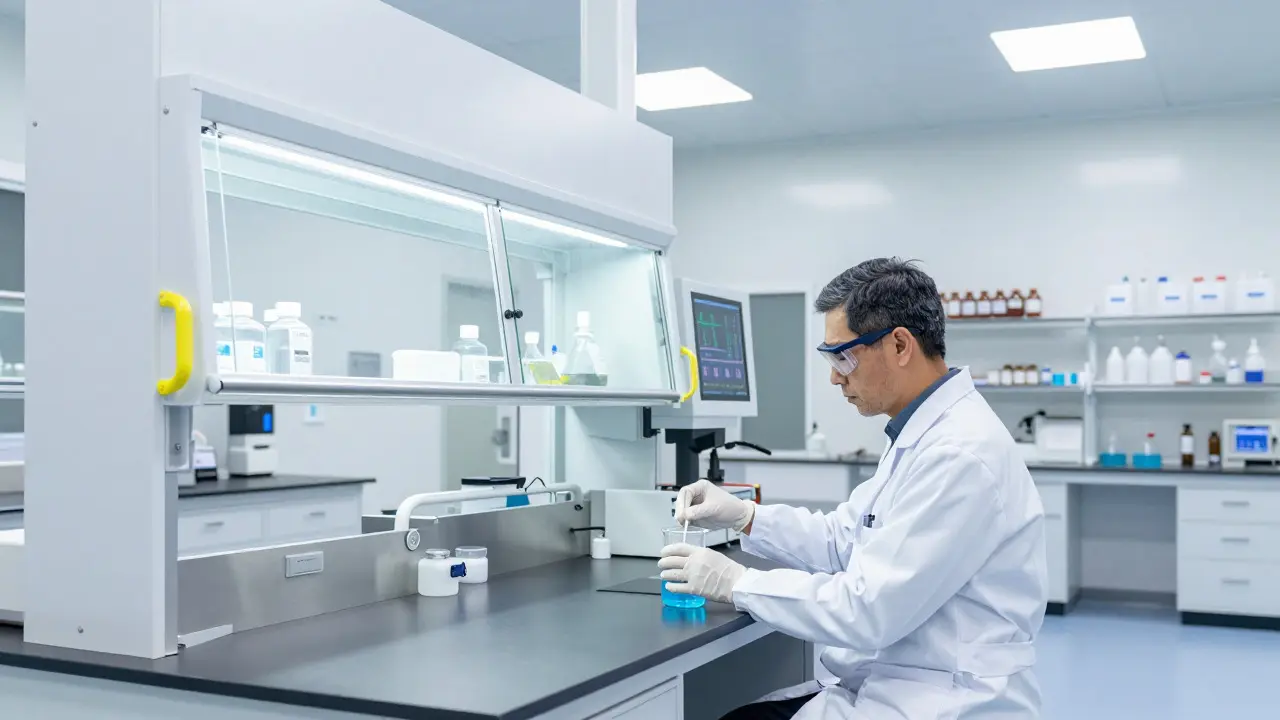
Many labs assume that if they have a fume hood, they are covered. Not necessarily. A fume hood is only effective if it is functioning correctly. You need regular certification of your Fume Hoods. Most standards recommend face velocity tests at least once a year, but many accredited labs perform them quarterly. If a sash is left open too wide, airflow drops, and vapors escape into the room.
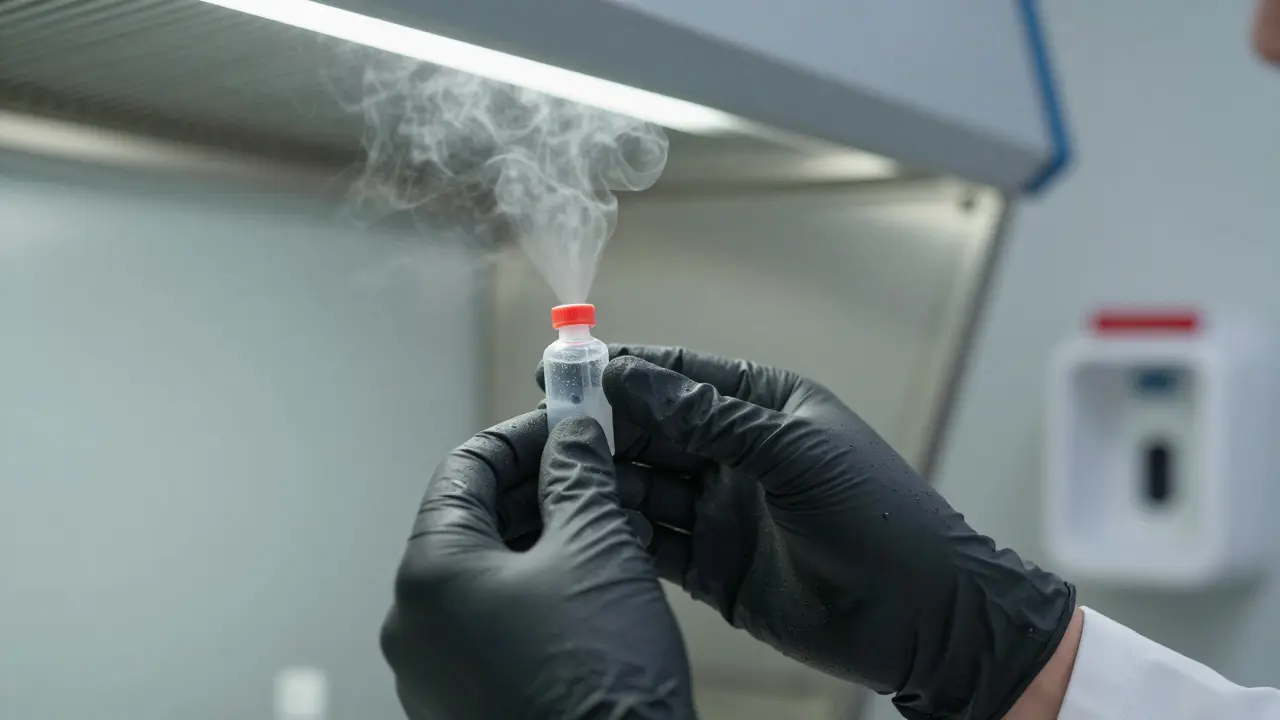
Beyond hoods, consider Local Exhaust Ventilation (LEV) for smaller tasks. If you are opening a small vial of volatile acid, a full fume hood might be overkill, but doing it on an open bench is a violation. LEV units can capture vapors right at the source. Additionally, ensure your general ventilation system maintains a slight negative pressure in the lab relative to the hallway. This prevents contaminated air from drifting into clean zones or office areas.
Training: Making It Stick
Training is where compliance often fails. New hires get a generic orientation, but they rarely receive task-specific safety training. OSHA requires that employees receive training prior to initial assignment and whenever a new hazard is introduced. But "training" doesn't mean reading a manual. It means demonstrating competency.
Create a checklist for new technicians. Before they are allowed to run a sample alone, they must demonstrate:
- How to read and interpret an SDS.
- Proper donning and doffing of PPE for their specific role.
- How to operate the emergency shower and eyewash station.
- Correct waste segregation procedures.
Document this. Keep sign-off sheets. During an audit, showing that Jane Doe completed her spill response drill in March 2026 is far more convincing than saying "we train everyone regularly."
Waste Management and Disposal Protocols
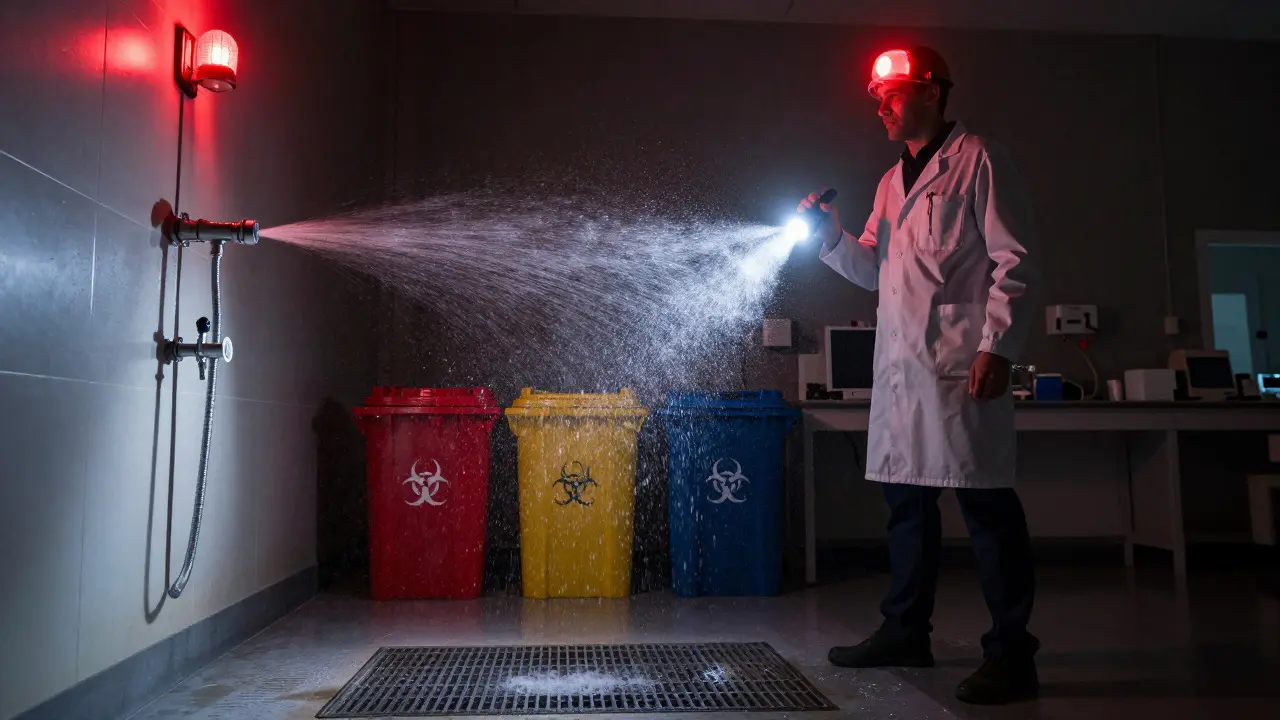
Safety ends when you throw away the trash, right? Wrong. Waste management is a major part of OSHA compliance and environmental regulations. Mislabeling a waste container can lead to a fine or, worse, a reaction between incompatible chemicals. Use color-coded bins strictly according to your facility's protocol. Typically, red is for biohazard, yellow for infectious waste, and blue for sharps, but check your local rules.
For chemical waste, never mix unknown substances. Label every jar with the date, contents, and initials of the person who added it. If a jar has been sitting for six months with no label, treat it as a mystery waste and consult your CHO before disposing of it. Mystery wastes are expensive to characterize and dispose of properly.
Emergency Preparedness: The Last Line of Defense
Even with perfect prevention, accidents happen. Your emergency plan must be simple enough for a tired night-shift technician to follow. Test your Emergency Showers and Eyewash Stations weekly. Flush them for at least 30 seconds to ensure clear water flow. If the handle sticks or the water is cold, fix it immediately.
Keep fire extinguishers accessible and ensure staff know which type to use. Water extinguishers are bad for electrical fires and organic solvents. Class D extinguishers are needed for metal fires. Post a map of evacuation routes near every exit. Conduct a full evacuation drill at least once a year and document the time it takes to clear the building.
Connecting Safety to Accreditation
If you are pursuing or maintaining accreditation (such as ISO 17025 or CLIA), safety is not a separate department; it is part of your quality control. Auditors will look for evidence that safety incidents are logged, investigated, and corrected. If a minor spill happens and nobody records it, an auditor might view that as a lack of oversight. Implement a non-punitive reporting system where staff feel safe reporting near-misses. This data helps you identify trends before they become big problems.
Regular internal audits are your best friend. Walk through your lab with fresh eyes. Look for unlabeled bottles, blocked exits, or expired PPE. Fix these issues before an external inspector finds them. Consistency is key. If the front bench is tidy but the back corner is chaotic, you have a problem.
How often should a Chemical Hygiene Plan be updated?
The plan should be reviewed at least annually. However, it must be updated immediately whenever there is a significant change in operations, such as introducing a new hazardous chemical, changing a procedure, or modifying engineering controls. Many labs set a calendar reminder for a comprehensive review every January, but trigger-based updates are mandatory.
What is the difference between OSHA and EPA regarding lab waste?
OSHA focuses on worker safety during the handling and use of materials. EPA focuses on the environmental impact of disposal. While OSHA cares that you wear gloves when pouring waste, EPA cares that the waste goes to a licensed treatment facility. Both require documentation, but their scopes differ. You must comply with both to avoid legal liability.
Do I need a written policy for using cell phones in the lab?
Yes, indirectly. OSHA requires that employees are trained on hazards. If a distraction leads to a spill or injury, you may be liable for failing to control the hazard. Having a clear policy that limits phone use during critical steps demonstrates due diligence. It is a low-cost way to mitigate risk.
How long must I keep safety training records?
OSHA generally requires that employee exposure and medical records be kept for the duration of employment plus 30 years. Training records should be kept for the duration of employment plus at least 3-5 years, depending on your state regulations and accreditation body requirements. Digital backups are recommended to prevent loss.
Is it okay to store flammable liquids in a regular refrigerator?
No. Standard refrigerators use spark-generating switches and lights that can ignite vapors. You must use a Flammable Storage Cabinet or a dedicated explosion-proof refrigerator. Storing acetone or ethanol in a normal fridge is a major code violation and a leading cause of lab fires.