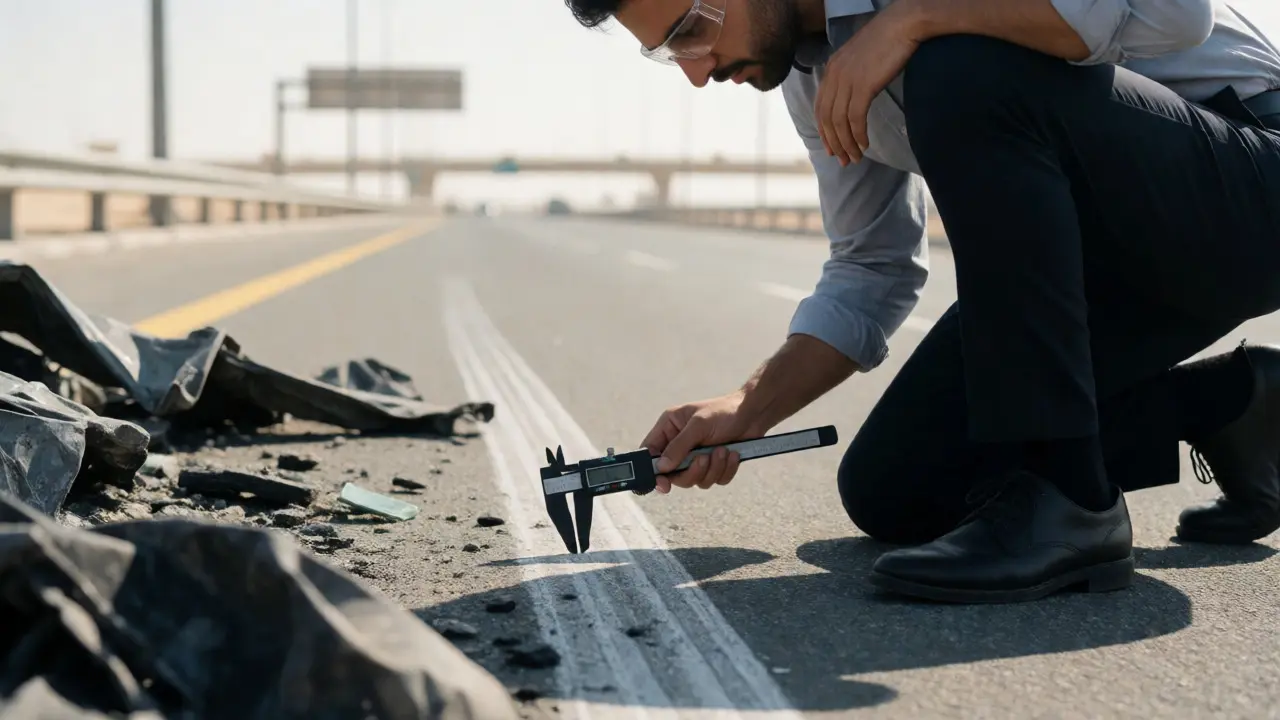
You see the twisted metal, the shattered glass, and the skid marks fading into the asphalt. To most people, it’s just a car wreck. But to a forensic engineer who specializes in accident reconstruction, that scene is a puzzle waiting to be solved with physics, math, and a whole lot of coffee. These professionals don’t just look at what happened; they calculate exactly how it happened, down to the millisecond.
If you’re thinking about entering this field or just curious about who determines fault when two vehicles collide, you need to understand that this isn’t like TV. There are no dramatic courtroom revelations without hours of data crunching first. A forensic engineer uses principles of mechanics, material science, and human factors to rebuild an event after the fact. It’s part detective work, part engineering challenge, and entirely dependent on evidence preservation.
What Does a Forensic Engineer Actually Do?
At its core, an accident reconstruction expert analyzes physical evidence from a crash site to determine speed, direction, and impact forces. Think of them as translators between the chaotic reality of a collision and the rigid laws of physics. They answer questions like: "Was the driver speeding?" "Did the brakes fail?" or "Who had the right of way?"
The process starts long before the report is written. Often, these engineers visit the scene immediately after an accident. Why? Because evidence disappears. Skid marks fade, debris gets swept away, and witness memories distort within days. By capturing precise measurements-using tools like total stations for 3D mapping-they create a digital twin of the crash site. This allows them to run simulations later, testing different scenarios against the physical damage found on the vehicles.
It’s not just about cars, either. While vehicle dynamics is the most common application, forensic engineers also reconstruct industrial accidents, slip-and-fall incidents, and even structural failures. If something broke, fell, or collided unexpectedly, there’s likely a forensic engineer trying to figure out why.
The Toolkit: Physics Meets Technology
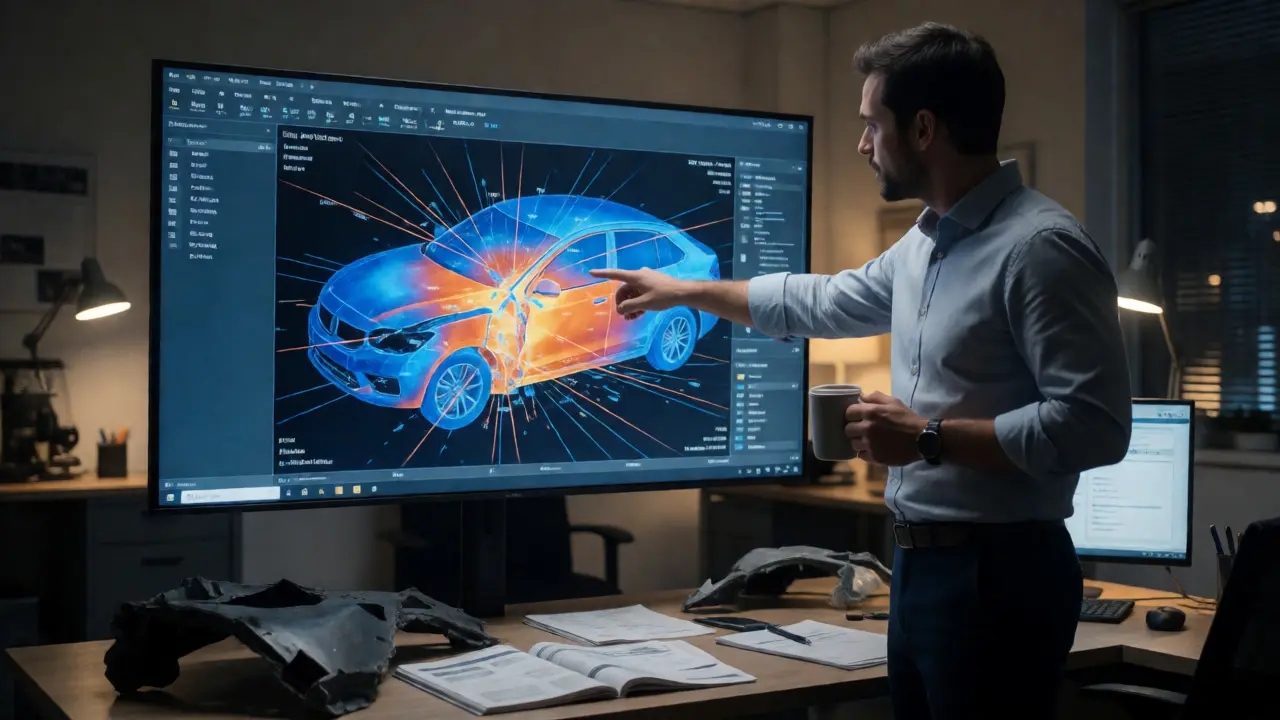
You can’t reconstruct an accident with intuition alone. You need hard data. Modern forensic engineers rely heavily on specialized software like HVE (Human Vehicle Environment) or PC-Crash. These programs allow experts to input variables-mass of the vehicle, coefficient of friction on the road, initial velocity-and watch the simulation play out. If the simulated damage matches the real-world damage, the hypothesis holds up. If not, they tweak the variables until it does.
But software is only as good as the inputs. That’s where traditional engineering skills come in. Understanding tire marks is crucial. A locked-wheel skid mark tells you the driver slammed the brakes, while a yaw mark indicates the car was sliding sideways during a turn. Calculating the speed from these marks requires knowing the drag factor of the pavement, which varies wildly depending on whether it’s dry concrete or wet asphalt.
| Evidence Type | What It Reveals | Analysis Method |
|---|---|---|
| Skid Marks | Braking duration and initial speed | Drag factor calculation & length measurement |
| Crush Depth | Impact energy and closing speed | Stiffness coefficients & EES (Energy Equivalent Speed) |
| Event Data Recorder (EDR) | Pre-crash speed, brake status, throttle position | Data download via scan tool (like Bosch CDR) |
| Debris Field | Point of Impact (POI) and direction of travel | Geometric mapping & trajectory analysis |
Another critical tool is the Event Data Recorder, often called the "black box" of a car. Since federal regulations mandated EDRs in most new vehicles, engineers can pull actual data from the seconds before a crash. Did the driver hit the brakes? How fast were they going? Was the seatbelt buckled? This objective data often trumps eyewitness testimony, which is notoriously unreliable due to stress and perspective issues.
Career Path: From Engineering Degree to Courtroom
Becoming a forensic engineer isn’t a shortcut. You generally need a strong foundation in mechanical, civil, or electrical engineering. Most firms require at least a bachelor’s degree, but many senior experts hold master’s degrees. Why? Because you’re dealing with complex systems. Understanding stress fractures in metal or the biomechanics of whiplash injuries requires more than basic physics knowledge.
After getting your degree, the path usually leads to working under a licensed Professional Engineer (PE). In many states, signing off on legal reports requires a PE license. This involves passing rigorous exams and gaining supervised experience. It’s a slow burn, but necessary. Courts trust credentials. A random person with a calculator might have a guess; a licensed forensic engineer has a methodology.
Where do you find jobs? Insurance companies hire them to assess claim validity. Law firms retain them to build cases for plaintiffs or defendants. Government agencies, like state Departments of Transportation, use them to analyze high-accident intersections. And then there are independent consulting firms, which is where many veterans end up once they’ve built a reputation.
The Human Factor: Why People Lie (or Forget)
Here’s the tricky part: humans are bad judges of speed and distance. Studies consistently show that witnesses overestimate vehicle speeds by significant margins. A driver traveling at 40 mph might be described as "speeding" if the observer expects 25 mph. A forensic engineer knows this bias exists. They don’t ignore witness statements, but they treat them as clues rather than facts.
Consider a scenario where a pedestrian claims a car ran a red light. The engineer looks at the traffic signal timing, the sight lines, and the vehicle’s stopping distance. If the math shows the car couldn’t physically stop in time given the distance and speed, the pedestrian’s account might be psychologically true (they felt unsafe) but physically inaccurate. This nuance is vital in court. The engineer’s job isn’t to call someone a liar, but to explain why their perception differed from physical reality.

Challenges and Pitfalls in the Field
Not every case is clean. Sometimes the police report is incomplete. Maybe the officers didn’t measure the final resting positions of the vehicles correctly. Or perhaps the weather conditions changed rapidly, affecting traction. One of the biggest pitfalls is assuming too much. An engineer must stick to the evidence. If you assume the road was dry because it looked dry in photos taken an hour later, you might miss that it was raining during the crash. Moisture changes everything.
Another challenge is keeping up with technology. Cars are changing. With the rise of Advanced Driver Assistance Systems (ADAS), crashes now involve sensors, cameras, and automated braking. A forensic engineer today needs to understand how a Tesla’s Autopilot interprets a lane marking versus how a human does. If the system failed, was it a sensor glitch or a design limitation? Answering that requires diving into manufacturer documentation and sometimes even code.
Is This Career Right for You?
If you love solving puzzles, hate ambiguity, and enjoy explaining complex ideas simply, this might be your niche. You’ll spend a lot of time alone with data, running models, and reading technical manuals. But you’ll also get to testify in depositions and trials, defending your findings against opposing experts. It’s intellectually demanding and financially rewarding. Senior forensic engineers can earn six figures, especially those who specialize in high-liability cases like trucking accidents or product liability.
However, it’s not for everyone. The pressure is high. Your report could decide who pays millions in damages. You need thick skin. Opposing counsel will try to pick apart your assumptions. If you crumble under scrutiny, you’ll struggle. But if you thrive on precision and logic, the satisfaction of proving exactly what happened-against all odds-is unmatched.
Do I need a law degree to become a forensic engineer?
No, you do not need a law degree. The primary requirement is an engineering degree, typically in mechanical, civil, or automotive engineering. However, having a solid understanding of legal standards and evidentiary rules is crucial, as you will frequently interact with attorneys and testify in court. Many engineers learn the legal aspects on the job or through continuing education.
How accurate is accident reconstruction?
Accuracy depends heavily on the quality of available evidence. When Event Data Recorders (EDRs) and clear video footage are present, reconstructions can be extremely precise, often within a few miles per hour. Without these, engineers rely on physical damage and scene measurements, which introduces a margin of error. Experts always provide a range of possible outcomes rather than a single definitive number when data is limited.
Can forensic engineers help in non-car accidents?
Absolutely. While vehicle collisions are the most common application, forensic engineers also analyze industrial machinery failures, construction site accidents, slip-and-fall incidents, and even structural collapses. Any situation involving physical forces, materials failure, or motion can benefit from engineering analysis.
What is the difference between a forensic engineer and an investigator?
A police investigator focuses on establishing facts, identifying parties involved, and determining potential violations of law. A forensic engineer focuses on the physics of the event. The investigator asks "who did it," while the engineer asks "how did it happen." Often, the engineer’s findings support or contradict the investigator’s conclusions regarding speed or causation.
How long does it take to complete an accident reconstruction?
Simple cases might take a few weeks, but complex multi-vehicle collisions or those involving disputed evidence can take several months. The timeline includes scene inspection, vehicle inspections, data retrieval, modeling, peer review, and report writing. Rushing the process often leads to errors that can be exploited in court.