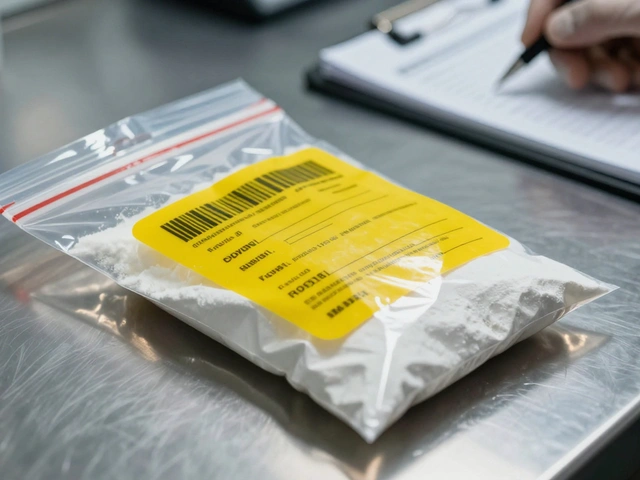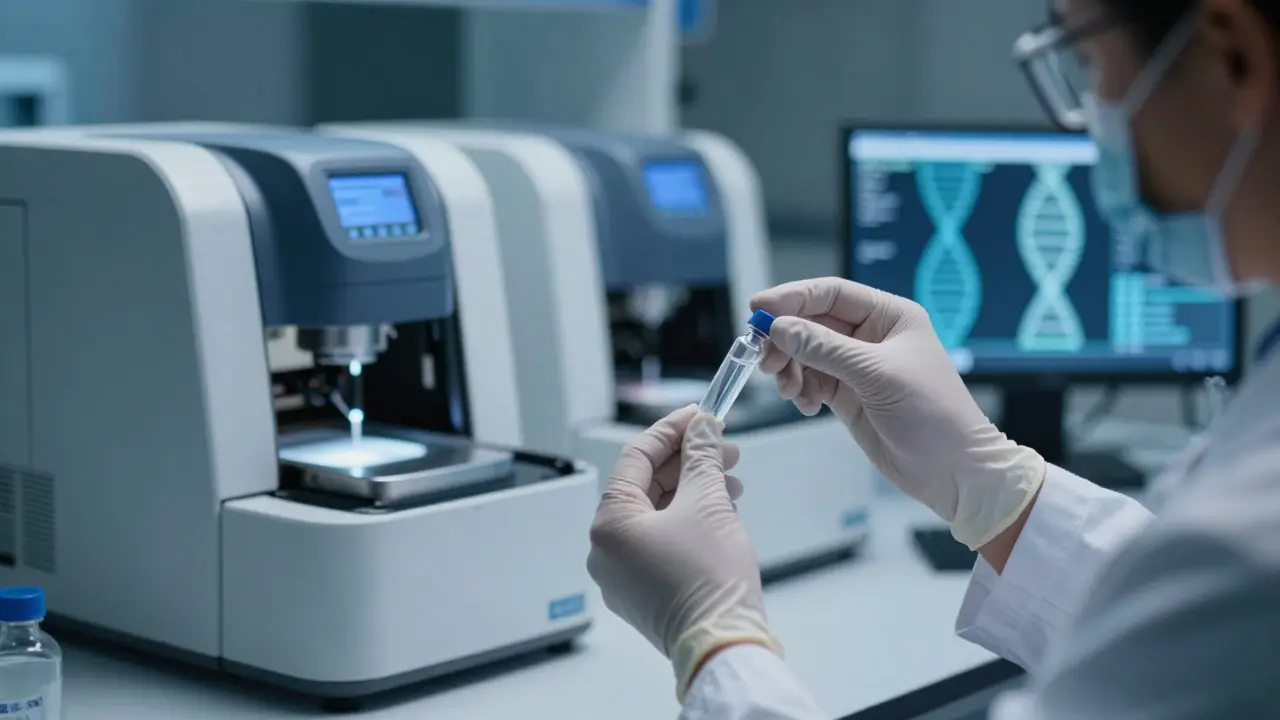
Imagine finding a set of unidentified remains in a river. The face is unrecognizable. The clothes are old. You have no name to search for in a database. This is where Kinship Analysis is a forensic technique used to determine biological relationships between individuals by comparing their DNA profiles. It doesn't just say "this person matches that suspect." It says, "This unknown person is likely the child of this known parent," or "These two victims are siblings." In 2024 alone, over 15% of casework in major U.S. forensic labs involved some form of kinship calculation, not just direct identification. It’s the bridge when direct evidence fails.
What Kinship Analysis Actually Does
DNA Profiling is the process of extracting and analyzing specific regions of an individual's DNA to create a unique genetic fingerprint. Standard DNA profiling compares an unknown sample directly to a suspect or reference sample. If they match, you have your answer. But what if you don’t have the suspect? What if the victim is a child whose parents are alive but the body has been decomposing for months? Direct comparison isn't possible because the child’s DNA is a mix of both parents, not identical to either one.
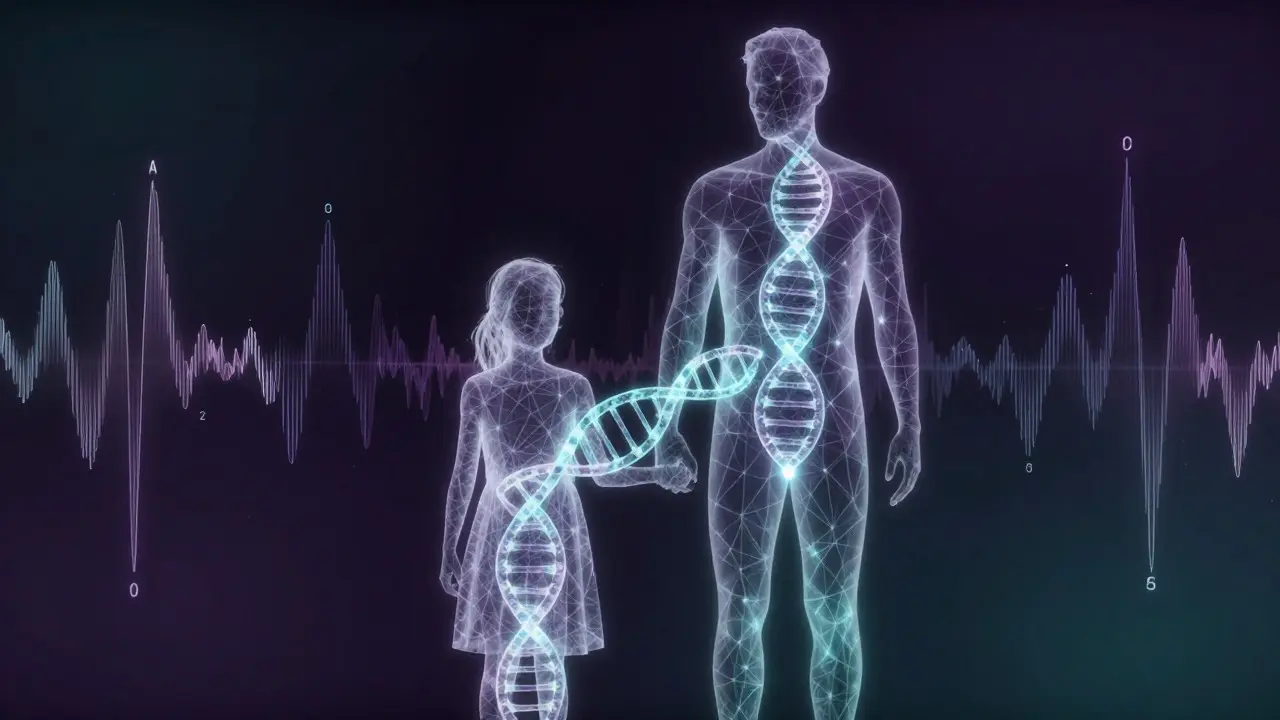
Kinship analysis solves this by looking at inheritance patterns. Humans inherit half their DNA from each parent. By comparing the DNA of the unknown individual (the "proband") with potential relatives (parents, siblings, children), statisticians calculate the probability that these people are biologically related versus unrelated. This isn't a simple yes-or-no test. It’s a likelihood ratio. A ratio of 100 means it is 100 times more likely that they are related than not. Courts generally look for ratios above 1,000 to consider the relationship established beyond reasonable doubt.
The Core Metric: Likelihood Ratios
The heart of kinship analysis is the Likelihood Ratio is a statistical measure comparing the probability of observing the DNA data if the individuals are related versus if they are unrelated. Let’s break down how this works in practice using a common scenario: identifying a missing child using the mother’s DNA.
- Extract DNA: Lab technicians extract DNA from the unknown remains and the mother’s buccal swab.
- Profile Generation: Both samples are analyzed using Short Tandem Repeat (STR) markers. Most accredited labs use at least 20 STR loci, often including the amelogenin gene to determine sex.
- Data Comparison: Software looks at each marker. For every allele in the child’s profile, it checks if it could have come from the mother. If the child has an allele the mother doesn’t have, it must have come from the father (who is missing).
- Probability Calculation: The software calculates the probability of seeing this specific combination of alleles if the woman were the true mother (Hypothesis 1) versus if she were a random, unrelated woman (Hypothesis 2).
- Result: The final number is the ratio of Hypothesis 1 to Hypothesis 2.
If the LR is 50,000, it means the DNA pattern is 50,000 times more consistent with her being the mother than with her being a stranger. This metric allows experts to testify clearly without overstating certainty.
Common Scenarios in Casework
Kinship analysis isn't just for high-profile cold cases. It appears in three main types of investigations:
- Missing Persons & Mass Disasters: When planes crash or landslides occur, bodies are often fragmented. Dental records might be gone. Matching a femur fragment to a mother’s blood sample can confirm identity faster than waiting for dental charts.
- Paternity & Maternity Testing: While often done in private clinics, forensic labs handle disputed custody cases or immigration issues where legal proof is required. The standards here are stricter than commercial home tests.
- Cold Cases & Historical ID: Decades-old cases where suspects were never identified can be reopened if relatives of the victim provide DNA. This was pivotal in solving the case of the "Green River Killer" where familial searching and kinship analysis helped narrow suspects.
How It Differs From Direct Identification
It’s crucial to understand the difference between a direct match and a kinship inference. They serve different legal purposes.
| Feature | Direct DNA Match | Kinship Analysis |
|---|---|---|
| Primary Goal | Identify a specific individual | Determine biological relationship |
| Reference Sample | Suspect or Victim | Parent, Sibling, or Child |
| Statistical Output | Random Match Probability (RMP) | Likelihood Ratio (LR) |
| Legal Certainty | High (if full profile matches) | Probabilistic (depends on LR value) |
| Sample Quality Needs | High quality, complete profile | Can work with degraded/partial profiles |
Note the last row. Kinship analysis is often more robust against degraded DNA. Why? Because you don’t need a perfect match. You only need enough shared alleles to prove inheritance. If 10 out of 20 markers are readable, that’s often enough to calculate a strong kinship index, whereas a direct match would fail due to missing data.
Challenges and Pitfalls
Kinship analysis is powerful, but it’s not magic. Several factors can skew results.
Mutations: About 1 in 2,000 mutations occurs per generation per locus. If a child has an allele that neither parent has, it might be a new mutation. Statisticians account for this by adjusting the calculation, but it adds complexity. Ignoring mutations can lead to false exclusions.
Inbreeding: If the family has a history of consanguinity (related partners), the standard population frequency databases may not apply. Alleles might be more common in that specific family group than in the general population. This requires specialized modeling to avoid underestimating the strength of the evidence.
Partial Profiles: As mentioned, partial data helps kinship more than direct matching. However, if too many markers are missing, the confidence interval widens. An LR of 100 is suggestive, but an LR of 10,000 is conclusive. Labs must report the number of informative markers used in the calculation so the jury understands the weight of the evidence.

Best Practices for Reliable Results
To ensure kinship analysis holds up in court, labs follow strict protocols. Here is what separates professional forensic work from amateur speculation:
- Use Accredited Software: Tools like MLSTATS or STRmix are validated for kinship calculations. Avoid generic online calculators which often lack proper population database updates.
- Verify Population Databases: Allele frequencies change as populations migrate. Using outdated frequency data (e.g., from 1990s studies) can invalidate modern LRs. Always use current, geographically relevant databases.
- Document All Assumptions: Did you assume the father was unknown? Did you assume no inbreeding? These assumptions must be stated in the report. Transparency is key to expert credibility.
- Blind Review: A second analyst should independently review the calculation. Human error in data entry is the most common cause of lab mistakes.
Future Directions in Genetic Genealogy
The field is moving beyond simple parent-child checks. Genetic Genealogy is the use of consumer DNA databases to identify distant relatives and trace ancestry for investigative purposes. This extends kinship analysis to third and fourth cousins. While controversial regarding privacy, it has solved hundreds of cold cases. The technology relies on segment sharing rather than single-locus inheritance. It’s a natural evolution of kinship principles, applying them to larger family trees.
For now, standard kinship analysis remains the gold standard for immediate family identification. It is precise, statistically sound, and legally accepted worldwide. Whether you are a detective closing a case or a family seeking closure, understanding how these numbers are derived helps demystify the science behind the headlines.
Is kinship analysis accurate?
Yes, when performed correctly. The accuracy depends on the number of STR markers used and the quality of the DNA. With 20+ markers and good quality samples, the error rate is extremely low. The main source of error is usually human mistake in data entry or failure to account for mutations, not the math itself.
Can kinship analysis work with old or damaged DNA?
Often, yes. Degraded DNA tends to lose long fragments first. Since STRs are short, they survive better than other markers. Kinship analysis requires fewer matching points than a full direct match, making it more tolerant of partial profiles found in skeletal remains or waterlogged bodies.
What is a good Likelihood Ratio for court?
There is no universal legal threshold, but most jurisdictions accept an LR of 1,000 or higher as strong evidence. An LR below 10 is considered weak or inconclusive. The judge and jury evaluate the number in context, but 1,000 is the general benchmark for "beyond reasonable doubt" in genetic terms.
Does kinship analysis require consent from all relatives?
Legally, it depends on the jurisdiction and the type of case. In criminal investigations, police may request voluntary samples. In civil cases like paternity disputes, courts may order samples. Ethically, informed consent is always best practice to maintain public trust in forensic science.
How does kinship analysis differ from paternity testing?
Paternity testing is a specific application of kinship analysis. Paternity tests usually compare a child, mother, and alleged father. General kinship analysis can compare any two relatives, such as siblings or grandparents. The mathematical framework is the same, but the hypotheses tested differ based on the family structure.