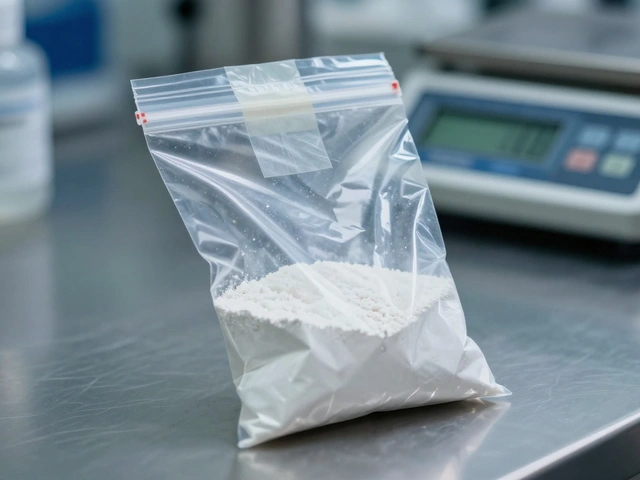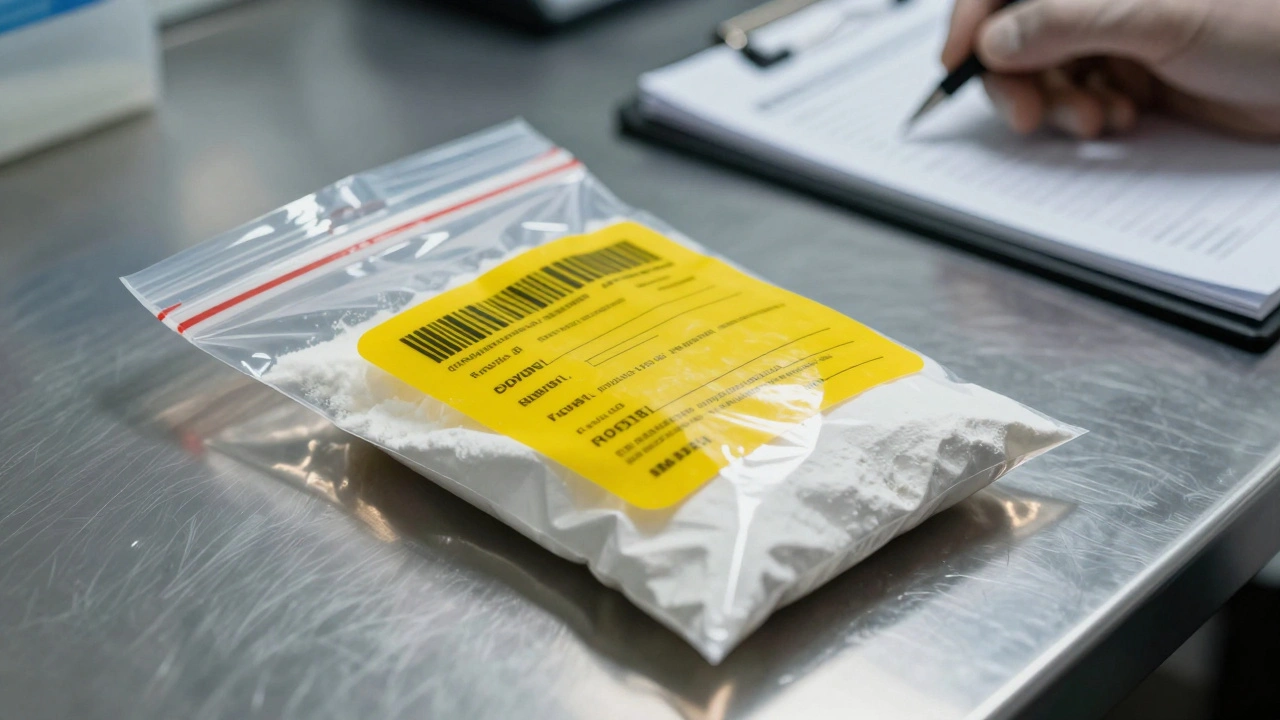
Imagine a baggie containing white powder seized during a traffic stop. It looks like a solid piece of evidence for a drug possession charge. But what if that bag sat on a desk unsealed for an hour? What if the label was smudged, or the logbook showed a gap in time where no one claimed responsibility? In court, that physical substance stops being proof of guilt and becomes a liability for the prosecution. This is why chain of custody is the documented process tracking evidence from collection to trial to verify its integrity and prevent tampering matters more than the chemical composition of the drugs themselves.
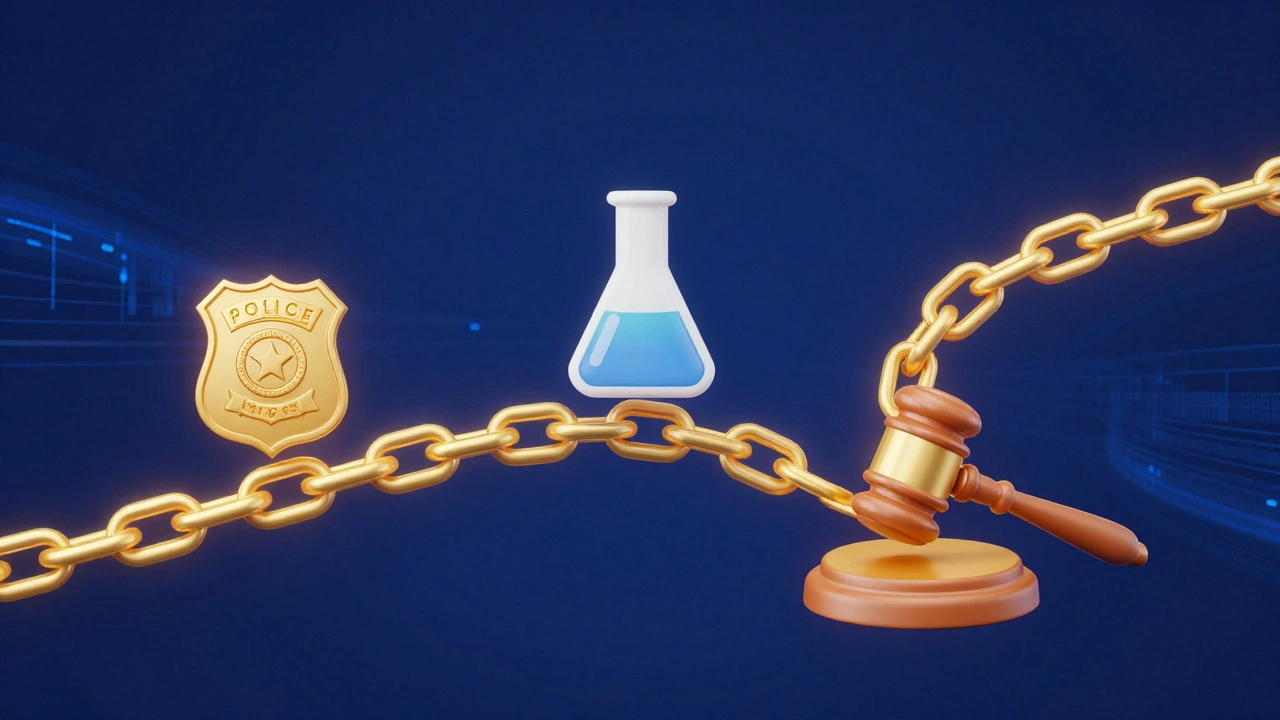
The chain of custody isn't just paperwork; it is the legal backbone of any criminal case involving controlled substances. Without an unbroken, verified timeline showing exactly who handled the evidence, when, and under what conditions, judges often exclude the evidence entirely. For defense attorneys, finding a break in this chain can mean walking a client out of court. For law enforcement and forensic labs, maintaining it is the difference between a conviction and a dismissed case.
The Five Stages of Handling Drug Evidence
Every piece of drug evidence travels through five distinct stages before it ever reaches a judge's bench. Each stage introduces risks of contamination, loss, or tampering if protocols are not followed strictly.
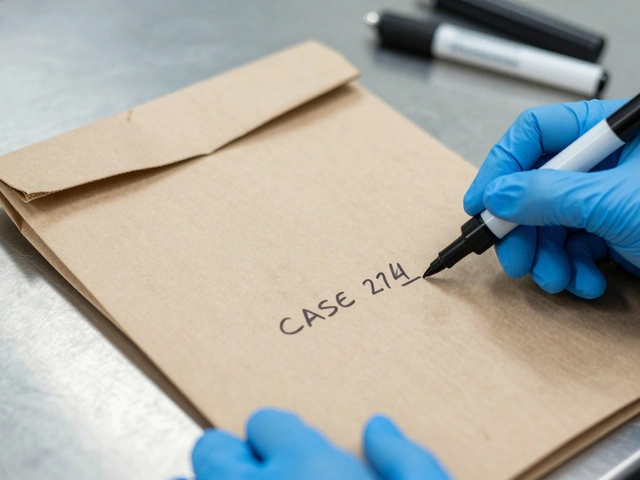
- Evidence Collection: This happens at the crime scene or during an arrest. Officers must wear protective gear to avoid contaminating samples with their own DNA or fibers. They place items in tamper-proof bags with unique identifiers immediately. Photographs and sketches of the scene are taken to document the original context.
- Transportation: Moving evidence from the street to a lab is high-risk. Biological samples, like blood or urine, require strict temperature controls. If a blood sample warms up during transit, enzymes can degrade the sample, altering test results. Every handoff between officers must be logged with timestamps.
- Storage: Once at a facility, evidence custodians take over. They store items in secure, climate-controlled environments. Logs must record every time the storage room is entered. For blood samples specifically, refrigeration is mandatory if analysis is delayed beyond seven days, and testing must occur within 60 days of collection to ensure validity.
- Testing and Analysis: Forensic analysts open the sealed packages. They document their methods, equipment used, and findings. Crucially, they must prove that the package was intact when they opened it. Any breach in the seal raises immediate questions about potential substitution.
- Court Presentation: The final stage involves presenting the physical evidence and the accompanying logs in court. The prosecutor must link the item on the witness stand back to the original seizure point without any gaps in the narrative.
Documentation Requirements That Can’t Be Skipped
Paperwork is where most chains break. A perfect physical preservation means nothing if the paper trail is messy. According to guidelines from the National Institute of Justice (NIJ) and NIH NCBI resources, a valid chain of custody form must include specific data points.
You cannot simply write "Officer Smith took it." The documentation must be granular. Here is what needs to be on the form:
- A unique identifier for the sample (barcode or serial number).
- Name and signature of the person who collected the sample.
- Date and exact time of collection.
- Description of the matrix (e.g., urine, blood, plant material).
- Type of analysis required.
- Signatures and dates from every single person who touched the evidence, including transport drivers and lab receptionists.
- Date and method of delivery to the next party.
If you have three different people handling a sample, all three must sign sequentially. If Officer A collects it, Driver B transports it, and Lab Tech C receives it, there must be three distinct entries. Missing one signature creates a "gap"-a period where the evidence’s location and condition are unknown. Defense attorneys live for these gaps.

Specific Handling Rules for Biological Samples
Drug evidence isn't always pills or powder. Often, it’s biological specimens like urine or blood, which are highly susceptible to degradation and contamination. The rules here are tighter because human biology changes rapidly.
For urine samples, the donor should ideally seal the cup themselves. This prevents accusations that someone else switched the sample. The collector then signs the chain of custody form immediately after the donor. In emergency room settings where a patient is unconscious, the nurse collecting the sample acts as the identifier, but this requires additional documentation explaining the patient’s inability to participate.
Blood samples are even more sensitive. They must be collected using aseptic techniques to prevent bacterial growth. They must be stored in tamper-evident containers. If a blood sample is left at room temperature for too long, hemolysis (the breaking down of red blood cells) can occur, which might interfere with certain drug screening assays. Laboratories reject samples that show signs of improper storage because the results become scientifically unreliable.
Legal Consequences of Broken Chains
What actually happens when the chain breaks? It depends on the severity of the error. A minor clerical error, like a misspelled name that can be clearly identified by context, might result in a limiting instruction to the jury-meaning the judge tells them to weigh that evidence carefully but not ignore it completely.
However, major breaches lead to exclusion. If the defense can prove that unauthorized personnel had access to the evidence, or if there is an unexplained gap in custody lasting hours or days, the judge may rule the evidence inadmissible. This is known as a motion to suppress. If the primary evidence is suppressed, the entire case often collapses. Statistics from legal analyses suggest that improper handling contributes significantly to wrongful convictions and exonerations. In fact, poor environmental controls account for roughly 15% of evidence degradation incidents, while documentation errors weaken prosecutions in countless cases annually.
The principle is simple: if you can’t prove the evidence didn’t change, you can’t use it to convict. The burden of proof lies entirely with the state to demonstrate an unbroken chain.
How Defense Attorneys Exploit Chain Weaknesses
Criminal defense lawyers don't just look at the drugs; they look at the logs. A methodically maintained chain of custody is the prosecutor's best friend, but a sloppy one is the defense's best tool. Attorneys will request discovery documents early in the process to scrutinize every signature and timestamp.
They look for:
- Missing signatures on transfer forms.
- Inconsistent timestamps (e.g., evidence arriving at the lab before it was picked up by the transport officer).
- Lack of temperature logs for biological samples.
- Unsealed evidence bags upon arrival at the laboratory.
If an attorney finds these irregularities, they file motions challenging the authenticity of the evidence. They argue that tampering, alteration, or substitution occurred during the undocumented periods. Even if tampering didn’t happen, the mere possibility creates reasonable doubt. Judges respect procedural integrity, and when law enforcement fails to follow its own protocols, the credibility of the entire investigation suffers.
| Error Type | Description | Potential Consequence |
|---|---|---|
| Missing Signatures | A handler failed to sign the log upon receiving evidence. | Gaps in accountability; potential suppression of evidence. |
| Temperature Violations | Blood or urine samples stored outside required ranges. | Degraded samples; invalid test results; exclusion. |
| Broken Seals | Tamper-evident bags opened without proper documentation. | Accusations of tampering; high risk of exclusion. |
| Inaccurate Timestamps | Times do not align logically across transfers. | Questions about whereabouts of evidence; reduced weight. |
| Improper Labeling | Vague descriptions or missing unique identifiers. | Difficulty linking evidence to defendant; confusion. |
Best Practices for Maintaining Integrity
To prevent these issues, agencies and labs follow strict best practices. First, limit the number of people who handle the evidence. Fewer hands mean fewer opportunities for error. Second, use technology. Digital logging systems with biometric scanners reduce human error in signing and dating records compared to paper logs. Third, train personnel continuously. Officers and lab staff need regular updates on protocol changes and common pitfalls.
Finally, transparency is key. If a mistake happens, document it immediately. Hiding an error usually makes it worse. Acknowledging a minor slip-up and explaining how it was mitigated can sometimes preserve the admissibility of evidence, whereas discovering a cover-up later destroys credibility entirely.
What happens if a chain of custody form is lost?
If the primary chain of custody form is lost, the evidence may still be admissible if other corroborating records exist, such as video footage of the handling, backup digital logs, or testimony from witnesses who saw the transfer. However, without the form, proving an unbroken chain becomes much harder, increasing the risk of the evidence being excluded by the court.
How long must drug evidence be retained?
Retention periods vary by jurisdiction and case type. Generally, evidence must be kept until the appeal period expires. For serious felonies, some states require retention for several years or indefinitely. Blood samples specifically often have shorter retention windows due to degradation risks unless preserved properly.
Can a small error in the chain of custody dismiss a case?
Minor clerical errors, like a typo in a name, rarely dismiss a case on their own. Courts look for substantial breaches that affect the integrity or authenticity of the evidence. Significant gaps, missing signatures, or broken seals are more likely to lead to dismissal or suppression.
Who is responsible for maintaining the chain of custody?
Everyone who handles the evidence is responsible. This includes law enforcement officers, transport drivers, evidence custodians, and forensic analysts. Each person must sign and date the log when they receive or release the item.
Why are temperature logs important for drug evidence?
Temperature logs are critical for biological samples like blood and urine. Improper temperatures can cause bacterial growth or chemical degradation, altering the composition of the sample. This can lead to false positives or negatives, making the test results unreliable and potentially inadmissible.