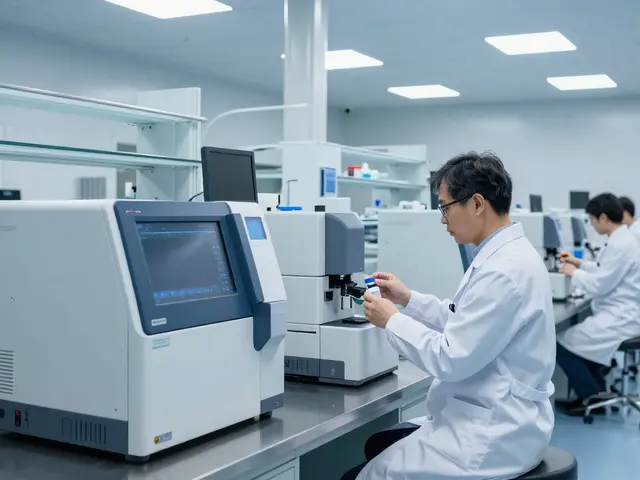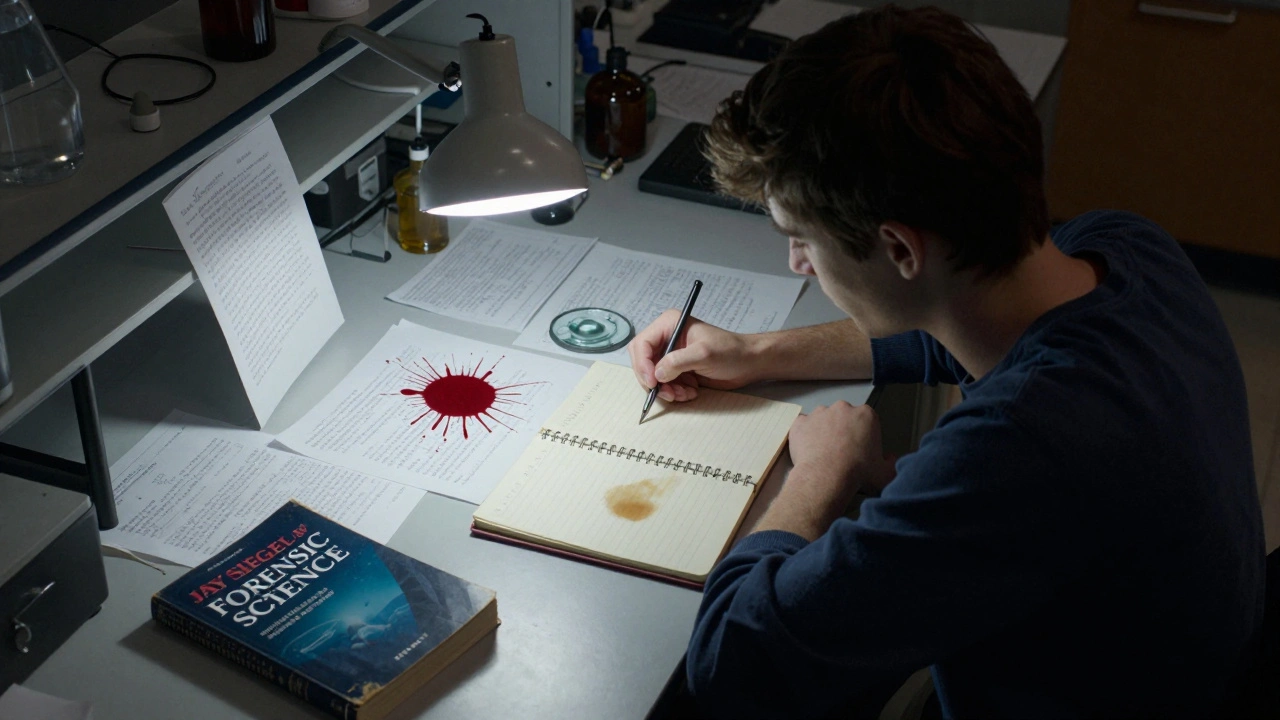
Getting into a forensic science graduate program isn’t just about grades. Admissions committees see hundreds of applications with similar GPAs and lab experience. What sets one applicant apart? A personal statement that doesn’t just list achievements-it tells a story. A real one. The kind that shows you’ve thought deeply about what forensic science actually means, not just what you saw on TV.
Start With the Real Reason You’re Here
Most people first get interested in forensic science from crime dramas. Crime scene investigators in lab coats, perfect DNA matches in 20 minutes, dramatic courtroom confessions. It’s exciting. But if your personal statement starts there, you’re already behind. Admissions committees want to know how you moved past the fiction.Don’t say, "I love CSI." Say this: "I watched a documentary on the 1996 O.J. Simpson trial and realized the blood spatter analysis wasn’t magic-it was math, physics, and repetition. I spent weeks reading through court transcripts, trying to understand how a single drop of blood could change a case. That’s when I knew I wanted to be the one doing the analysis, not just watching it on screen."
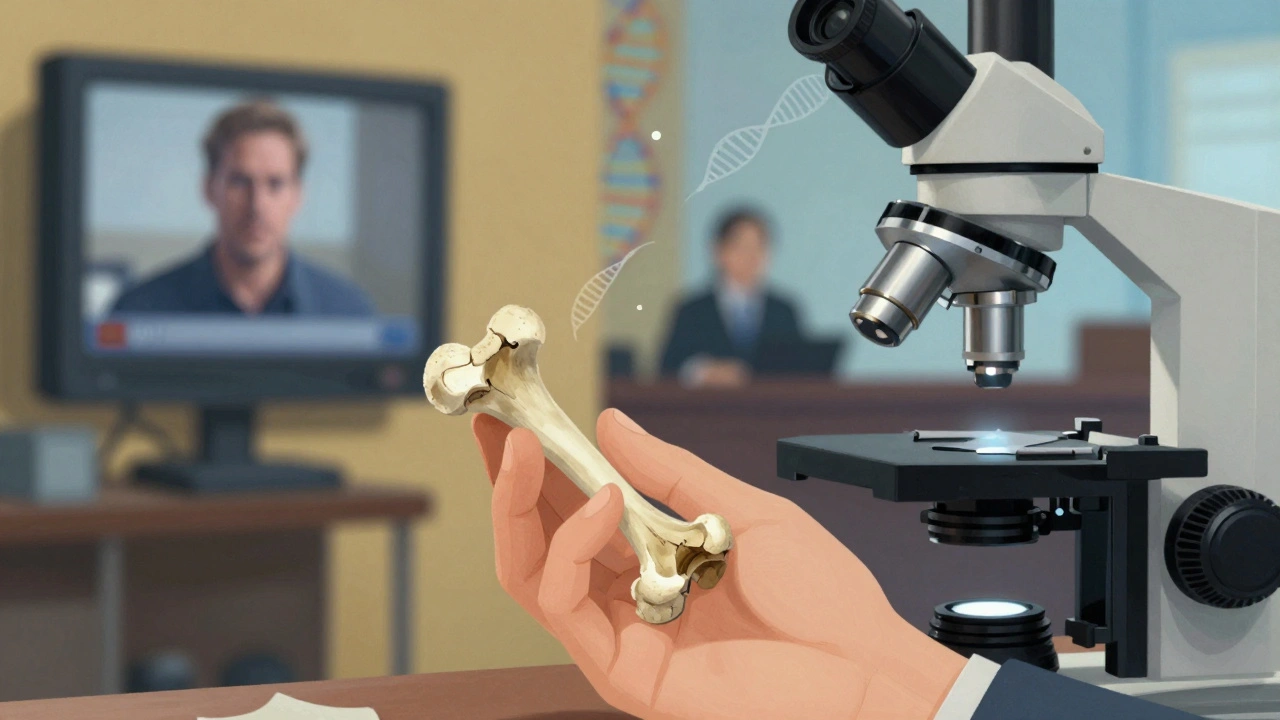
Be specific. Mention the moment you understood forensic science isn’t about solving crimes-it’s about reconstructing them. One applicant described watching a forensic anthropologist testify about skeletal trauma in a missing persons case. She didn’t just hear testimony-she went to the university’s anthropology lab the next week and asked if she could observe. That’s the kind of detail that sticks.
Show You Know the Science-Not Just the Buzzwords
You don’t need to list every course you took. You need to show you understand how those courses connect to real forensic work.Don’t write: "I took biology and chemistry." Write: "My work in organic chemistry helped me understand how trace evidence degrades over time. I once analyzed a paint chip from a hit-and-run scene in a lab project and realized how humidity and sunlight altered the polymer composition. That’s when I started reading about the ASTM standards for paint analysis-something most undergrads never touch."
Same with biology. Don’t say "I like DNA." Say: "I spent a semester working in a genetics lab isolating degraded DNA from bone fragments. We had a 12% success rate. I spent two months optimizing extraction protocols. That’s when I realized forensic DNA isn’t about perfect samples-it’s about working with what’s left."
And don’t forget chemistry. Glass fragments, fibers, accelerants, drug residues-each requires different techniques. Mention one. Explain how you learned it. Show you’ve done more than memorize a textbook.
Experience Isn’t Just Internships
You don’t need to have worked in a crime lab to stand out. What matters is what you’ve done that taught you the mindset of a forensic scientist.One applicant volunteered at a county jail, helping inmates write appeals. He didn’t just hand out forms-he started asking questions. Why did this person lie under oath? How did the witness identify the suspect? He kept a journal of behavioral patterns. That journal became the foundation for his research paper on eyewitness reliability. That’s not just volunteering. That’s forensic psychology in action.
Another applicant tutored high school students in biology. She didn’t just explain cell division. She taught them how to analyze a mock crime scene-blood spatter patterns, fingerprint lifting, chain of custody. She learned how to break down complex science for people with no background. That’s the kind of communication skill labs need when you’re testifying in court.
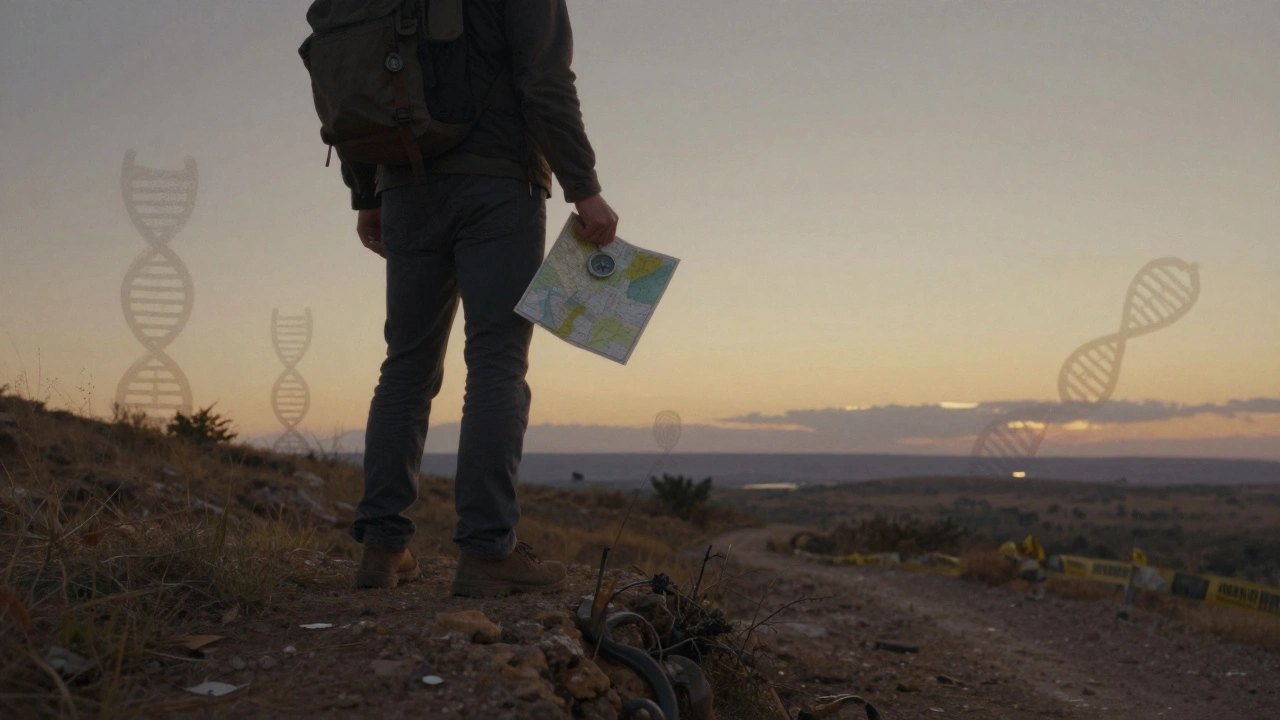
Even non-science experiences count. One applicant earned her Duke of Edinburgh Award by navigating remote trails with a team. She wrote: "We had no GPS. We had maps, compasses, and one walkie-talkie. We had to make decisions under pressure, communicate clearly, and trust each other. That’s exactly what I need in a crime scene investigation-where there’s no second chance to collect evidence."
Own Your Past-Even the Messy Parts
You didn’t get a 4.0 as an undergrad? You worked two jobs while studying? You switched majors? Say it.Admissions committees don’t want perfect applicants. They want resilient ones.
One applicant wrote: "My first two years of undergrad were a mess. I was working 30 hours a week in finance, convinced I’d become a stockbroker. Then I took a forensic anthropology elective. I spent 14 hours in the lab one week, analyzing skeletal remains from a mass grave. I didn’t sleep. I didn’t care. I realized I’d spent my life avoiding hard truths. Forensic science forces you to face them. I dropped finance. I changed my major. I got a 4.0 in my last two years. I’m not here because I was always good. I’m here because I finally found something worth being good for."
Honesty like that cuts through the noise. Don’t hide your past. Show how it shaped you.
Understand the Real Work-Not the Myth
Forensic science isn’t glamorous. It’s repetitive. It’s emotionally heavy. It’s waiting months for a lab result. It’s testifying in court while a defense attorney tries to make you look like a liar.Don’t write: "I want to help solve crimes." Write: "I’ve read Jay Siegel’s Forensic Science: A Beginner’s Guide cover to cover. I’ve watched recordings of real courtroom testimonies from the National Institute of Justice archive. I know the pressure of being the only expert in the room. I know how easily a misinterpreted fiber can ruin a case. I’m not applying because I think this is heroic. I’m applying because I want to be precise, even when no one’s watching."
One applicant volunteered with a nonprofit that helps families of unidentified remains. She spent six months helping match dental records to bones. She wrote: "I didn’t solve a crime. But I gave a mother closure. That’s why I’m here. Not for justice. For truth."
Connect Your Future to the Field’s Future
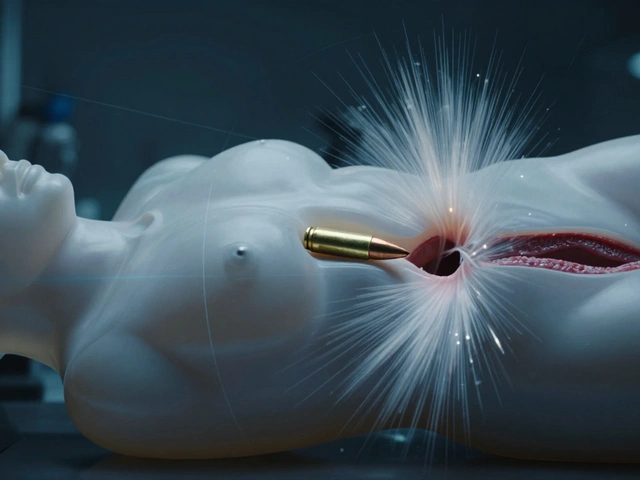
You’re not just applying for a degree. You’re applying to contribute to a field that’s changing.Don’t say: "I want to work in a lab." Write: "I’m interested in the emerging use of machine learning to analyze ballistic patterns. I’ve read the 2024 study from the National Institute of Standards and Technology on AI-assisted bullet trajectory reconstruction. I want to help develop protocols that reduce human bias in forensic comparisons. I’m not just looking for a job-I’m looking for a research path."
For forensic psychology applicants: "I want to study the impact of trauma-informed interviewing on false confessions. I’ve reviewed the 2023 Innocence Project report on interrogation methods. I want to design training modules for police departments in Oregon-where I’m from-and eventually help shape state policy."
Be specific about the gap you want to fill. Show you’ve done the homework.
Don’t Write a Resume. Write a Reflection.
Your personal statement isn’t a list of accomplishments. It’s a map of your thinking.Every paragraph should answer: Why does this matter? Why this field? Why now? Why you?
One applicant ended with: "I used to think forensic science was about finding the guilty. Now I know it’s about finding the truth-even when it’s ugly, even when it doesn’t fit the story, even when it hurts. I’m not here to be a hero. I’m here to be accurate. And I’m ready to do the work."
That’s the tone. Quiet. Confident. Real.
Don’t use phrases like "passionate about justice." Show it through actions. Don’t say you’re "detail-oriented." Prove it with a story about how you caught a mislabeled sample in a lab. Don’t say you’re a "team player." Describe the time you stayed late to help a lab partner re-run a failed analysis because you both knew the evidence mattered too much to get wrong.
Admissions committees don’t want to read another generic essay. They want to meet you-through your words. Be specific. Be honest. Be human.