Imagine a cold case from thirty years ago. A detective finds a latent print at a crime scene, but the suspect is now a senior citizen. Does it even matter that three decades have passed? You might wonder if your skin effectively "updates" its patterns as you age, potentially making a match impossible. The short answer is that while your skin changes, your identity doesn't. Your fingerprints are remarkably stable, though the fingerprint aging process introduces some physical hurdles for the machines trying to read them.
| Feature | Change Over Time | Impact on Identification |
|---|---|---|
| Ridge Patterns | Fundamentally Stable | Negligible / No Change |
| Skin Elasticity | Decreases with age | Can cause scanning errors |
| Ridge Thickness | Increases/Becomes rigid | Minor sensor challenges |
| Image Quality | Variable | High impact on match accuracy |
The Blueprint: Why Your Prints Stay the Same
To understand why fingerprints don't just "drift" over time, we have to look at when they are actually made. Fingerprint ridge patterns are the unique series of peaks and valleys on the fingertips established during the first trimester of pregnancy. Specifically, these patterns lock in around the 24th week of gestation. Because they are baked into the dermal layer of the skin before you are even born, they remain the same until the day you die.
A massive study published in the Proceedings of the National Academy of Sciences put this to the test. Researchers tracked over 15,000 people, recording their prints at least five times over several years. What they found was that while the "score" a computer gives a match might dip slightly as the years pass, the core pattern never actually changes. You aren't getting a new set of prints every decade; you're just getting older skin over the same old map.
The Physical Shift: Texture vs. Pattern
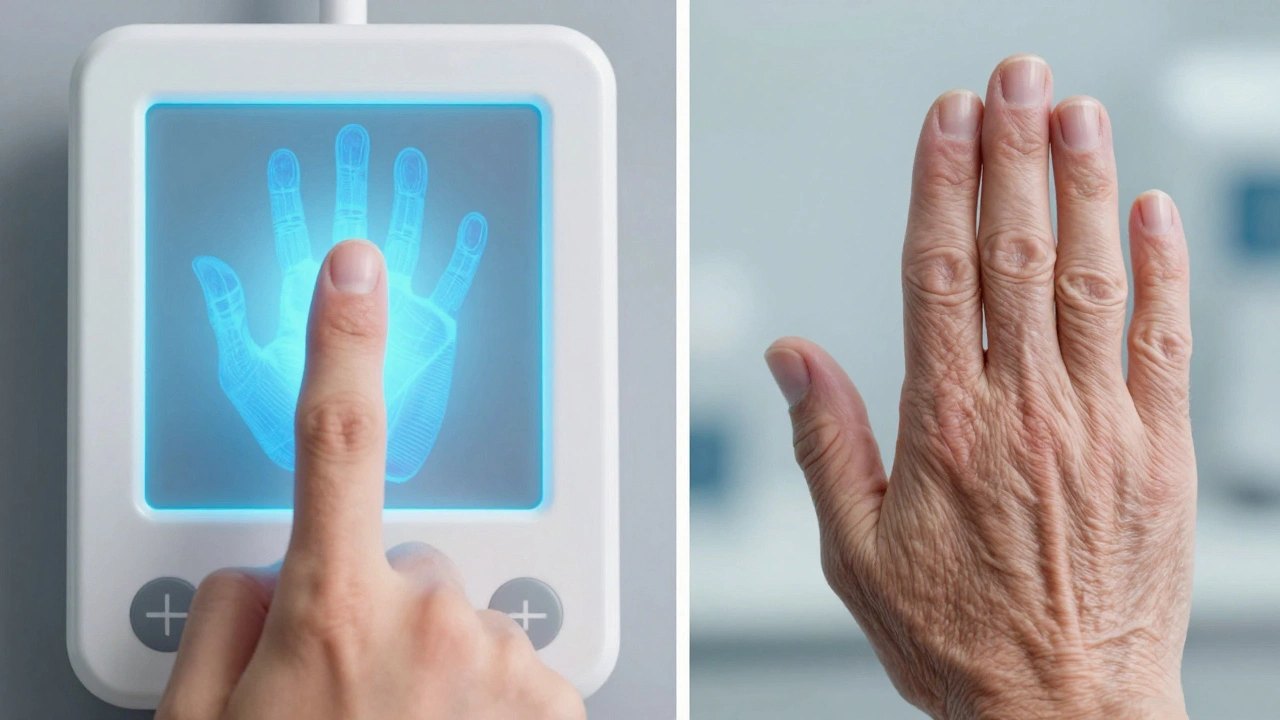
If the pattern stays the same, why do some people experience "false rejections" on their smartphones or office scanners as they age? This is where we distinguish between the pattern and the physiology. As we get older, our skin undergoes changes that make it harder for sensors to get a clean read.
First, skin elasticity drops. When you're young, your skin is supple and molds easily to a scanner's surface. As you age, your fingertips become more rigid. Second, the pores in older skin often produce less lubrication, leading to drier fingertips. When dry, rigid skin hits a sensor, it doesn't always make the firm, flush contact required for a high-resolution image. This isn't a change in the fingerprint itself, but a change in the biometric authentication environment.
This is why modern devices are moving toward larger sensors and more flexible matching algorithms. They aren't looking for a different pattern; they are just trying to account for the fact that a 70-year-old's skin doesn't press against glass the same way a 20-year-old's does.
The Childhood Gap: When Prints Actually Do Change
While we've established that adults are pretty stable, childhood is a different story. If you've ever wondered why a child's biometric profile might fail after a few years, it's because of rapid developmental growth. Fingerprints exist at birth, but they aren't "final."
Until about age 12, a child's skin is incredibly elastic and growing fast. The patterns are there, but they become more visible and spaced further apart as the hand grows. Because of this, a print enrolled in a system when a child is five years old likely won't match when they are fifteen. Once a person hits puberty and reaches skeletal maturity around age 12, the patterns stabilize. From that point forward, you're essentially locked in.
External Factors: Scars, Chemicals, and Labor
Life happens, and not all "aging" is biological. Many people worry that their jobs will erase their fingerprints. If you work in construction, handle harsh cleaning chemicals, or do heavy manual labor, you might notice your ridges looking "worn down."
In most cases, this is temporary. When you expose your skin to abrasive surfaces, you are wearing down the outer layer of the epidermis. However, as long as the deeper dermal layer isn't destroyed, the ridges will grow back once the exposure stops. Even severe burns or acid damage often result in the ridges regenerating. Interestingly, in the world of Forensic identification is the process of using physical evidence to identify an individual, a permanent scar can actually become an additional identifying marker, making the person even easier to uniquely identify.
There are, of course, rare exceptions. A genetic condition called Adermatoglyphia is a rare disorder where a person is born without any fingerprints at all. In these cases, the fingertips are completely smooth. While this is a biological anomaly and not a result of aging, it's one of the few times a person truly lacks the patterns we rely on for security.
Quality Over Chronology: What Actually Causes Mismatches?
There is a common misconception that the primary reason for a failed match in a long-term database is the age of the print. The data suggests otherwise. Image quality is a much bigger culprit than the calendar.
If you compare a high-quality scan from 1990 to a high-quality scan from 2026, the match rate is incredibly high. However, if you compare a smudge-filled, low-resolution print from 1990 to a perfect scan from 2026, the system is more likely to struggle. The error isn't coming from the aging of the finger, but from the quality of the original image. For forensic experts, this means that the focus shouldn't be on "adjusting for age," but on ensuring that the initial collection of the print is crisp and clear.
Do fingerprints change as you get older?
The fundamental ridge patterns do not change. However, the physical characteristics of the skin-such as elasticity, moisture, and thickness-do evolve, which can occasionally make it harder for digital scanners to get a clear read.
Can a person lose their fingerprints through hard work?
Yes, manual labor involving abrasives or chemicals can wear down the surface ridges. However, this is usually temporary. Once the exposure ends, the ridges typically grow back because the underlying pattern is stored in the deeper layers of the skin.
At what age do fingerprints become stable?
Fingerprints are generally stable by age 12. Before this age, rapid growth and skin elasticity changes mean that prints are still shifting in scale and visibility, making early childhood prints unreliable for long-term biometric databases.
Can aging cause a false positive match in forensics?
Research shows the probability of a false positive-where the machine matches two different people because of aging-is nearly zero. While aging might cause a "false rejection" (failing to recognize the correct person), it does not cause the system to mistake one person for another.
Why do scanners sometimes fail to recognize older adults?
It's usually due to decreased skin elasticity and dryness. Older skin is more rigid and less lubricated, which prevents the finger from making a firm, complete seal against the scanner's surface, leading to a poor-quality image.
Next Steps for Biometric Accuracy
If you are managing a biometric system or working in a field where long-term identification is key, don't worry about the biological clock. Instead, focus on the hardware and the process. To minimize errors related to aging, consider these strategies:
- Update regularly: Encourage users to re-enroll their prints every few years to capture their current skin texture.
- Improve Capture: Use sensors with higher dynamic range to better handle dry or rigid skin.
- Clean the Interface: Ensure scanners are clean; a smudge on the glass combined with dry skin is a recipe for a false rejection.
- Hybrid Methods: Pair fingerprints with other biometrics (like iris scans) if you need 100% reliability for an aging population.