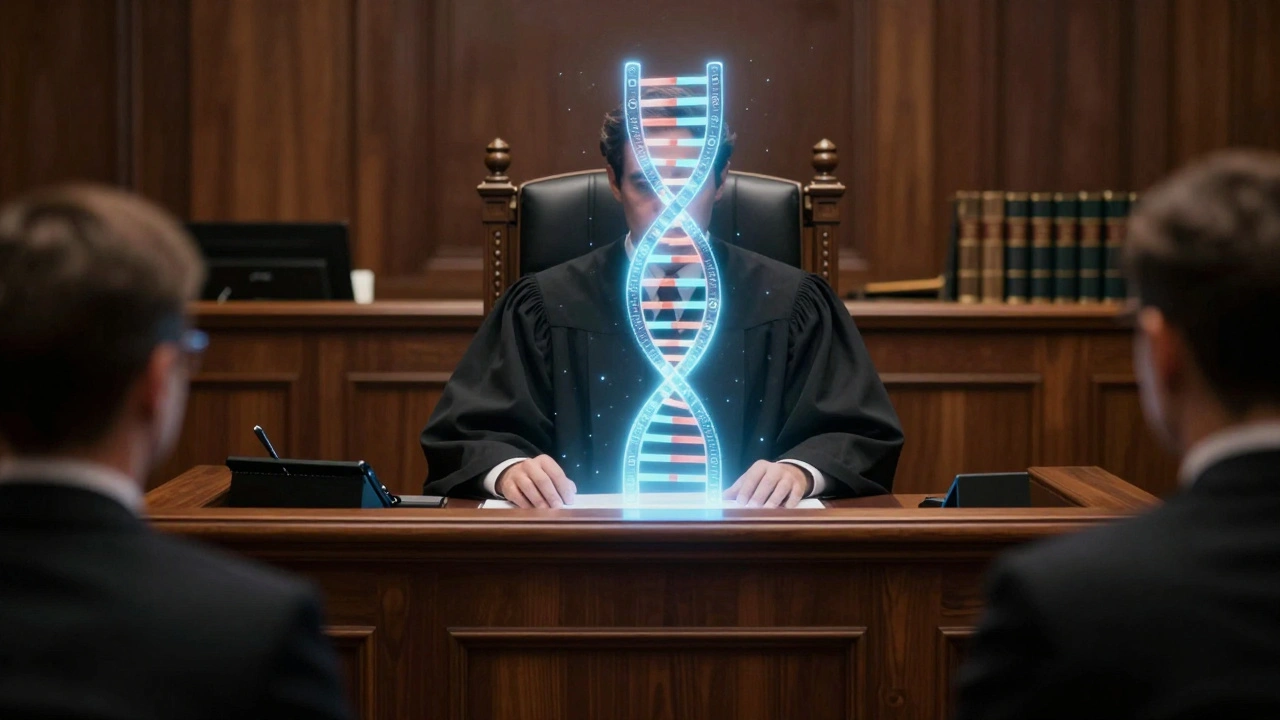
Imagine a courtroom where the prosecution asks the judge to accept that DNA profiling is reliable. The judge nods and says, "Yes, we know this is true." No expert witness takes the stand. No lengthy debate about methodology happens. This is judicial notice, a legal shortcut that allows courts to accept certain facts as true without requiring formal proof. But when does this shortcut apply to complex forensic science? And what happens when it doesn't?
In criminal cases, the line between accepted science and disputed theory can mean the difference between conviction and acquittal. Understanding how judges decide which scientific facts are "too obvious" to argue over-and which require rigorous testing-is crucial for anyone involved in the justice system.
What Is Judicial Notice?
Judicial notice is a doctrine rooted in common law but codified in modern American law by Federal Rule of Evidence 201, established in 1975 under the Federal Rules of Evidence enacted by Congress. It allows a court to treat a fact as established if that fact is not subject to reasonable dispute.
There are two main types of facts a court might notice:
- Adjudicative facts: Specific details about the case at hand (e.g., "The defendant was present at the scene").
- Legislative facts: General background information used to make policy or interpret laws (e.g., "Drugs impair driving ability").
Rule 201 applies strictly to adjudicative facts. For a fact to qualify, it must be either generally known within the trial court’s jurisdiction or capable of accurate and ready determination from sources whose accuracy cannot reasonably be questioned. Think of things like the laws of gravity, basic chemical reactions, or the calendar date. These aren’t debated; they’re just accepted.
The High Bar for Scientific Facts
When it comes to forensic science, the bar for judicial notice is incredibly high. Courts don’t just need to believe a method works-they need to be sure that no reasonable person could dispute its validity.
According to legal scholars like A. Jay Moenssens, judicial notice is appropriate for scientific principles with "inherent credibility" due to universal acceptance. However, Professor Edward J. Imwinkelried warns against "judicial notice creep," where courts might accidentally accept emerging techniques that haven’t yet reached that level of consensus.
To determine if a source is reliable enough for judicial notice, courts often use a three-factor test:
- Does the source have knowledge of the subject matter?
- Is the source independent from relevant bias?
- Does the source have a motivation to ensure accuracy?
If any of these answers are weak, the fact likely doesn’t qualify for judicial notice. Instead, it needs to go through the normal evidentiary process.
Judicial Notice vs. Daubert and Frye Standards
It’s easy to confuse judicial notice with other standards for admitting scientific evidence, like Daubert v. Merrell Dow Pharmaceuticals (1993) or Frye v. United States (1923). But they serve different purposes and have different thresholds.
| Standard | Key Question | Threshold for Acceptance | Role of Judge |
|---|---|---|---|
| Judicial Notice (Rule 201) | Is this fact indisputable? | Universal notoriety; no reasonable dispute | Accepts fact as true without proof |
| Daubert Standard | Is this methodology scientifically valid? | Reliable methodology; meets minimum reliability factors | Gatekeeper evaluating validity |
| Frye Standard | Is this generally accepted in the scientific community? | General acceptance among peers | Determines general acceptance |
The key difference is that Daubert allows evidence to be admitted even if it can still be contested later. Under Daubert, the judge acts as a gatekeeper, checking if the science is valid enough to enter the courtroom. Once inside, the jury decides how much weight to give it. Judicial notice skips this step entirely because the fact is considered beyond dispute.
This distinction matters greatly in forensics. For example, while fingerprint analysis might pass a Daubert hearing in many jurisdictions, it wouldn’t necessarily qualify for judicial notice everywhere because there are documented error rates. In 2011, an FBI-DoJ study found a 0.8% false positive rate in latent print examination. That small percentage means it’s not universally indisputable.
Which Forensic Techniques Qualify?
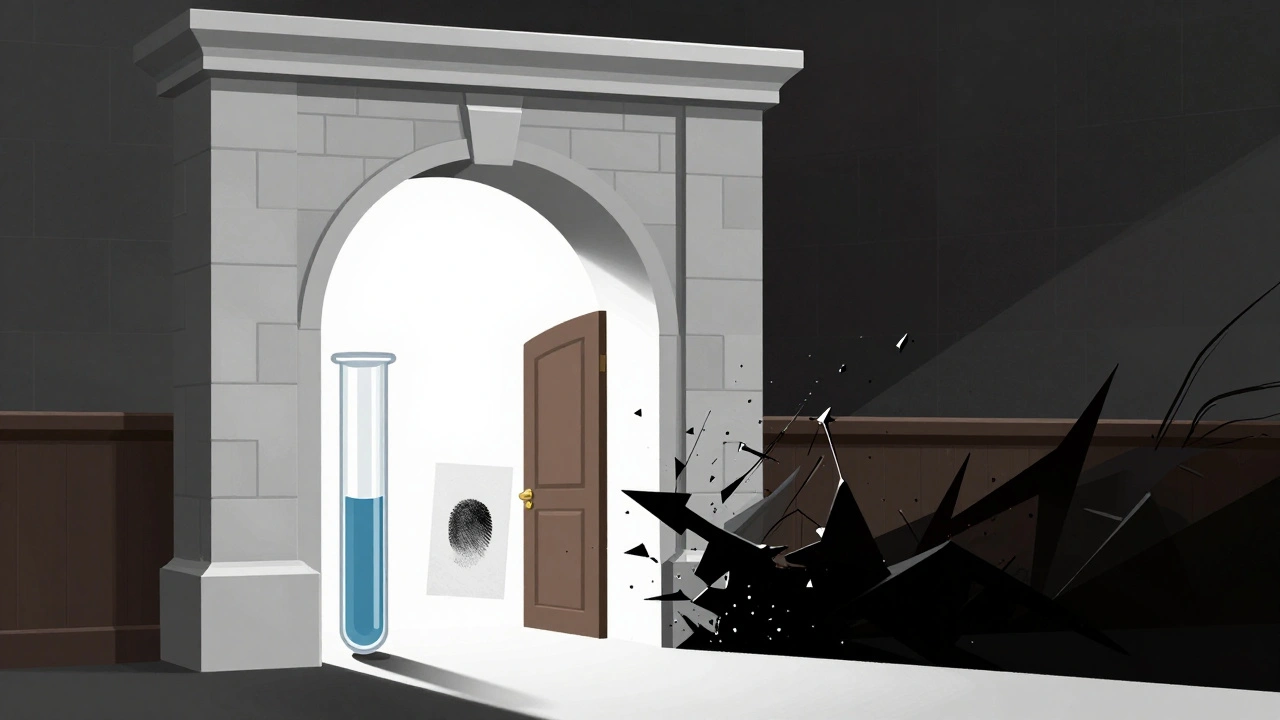
Not all forensic methods are created equal in the eyes of the law. Some have achieved such widespread validation that courts may take judicial notice of their underlying principles. Others remain controversial.
Likely candidates for judicial notice include:
- DNA Analysis: Widely regarded as having foundational validity. The 2016 President's Council of Advisors on Science and Technology (PCAST) report noted that DNA analysis meets the highest standards of reliability.
- Basic Toxicology: Chemical tests for alcohol or common drugs often rely on well-established chemistry principles that are rarely disputed.
Techniques usually requiring full evidentiary hearings (not judicial notice):
- Bite Mark Analysis: Heavily criticized for lack of validation. The 2009 National Academy of Sciences (NAS) report highlighted significant issues with its reliability.
- Hair Comparison Microscopy: While once widely accepted, studies have shown high error rates, leading to overturned convictions.
- Gunshot Residue (GSR) Analysis: In United States v. Tinius (2012), the Eighth Circuit rejected judicial notice of GSR analysis due to ongoing scientific controversy.
- Probabilistic Genotyping Software: In United States v. Jones (2023), the D.C. Circuit refused judicial notice due to debates over allele frequency databases.
The trend is clear: courts are becoming more cautious. Following the NAS report’s criticism of "the absence of uniform standards" across forensic disciplines, judges increasingly prefer full Daubert hearings over shortcuts.
How to Request Judicial Notice in Court
If you’re an attorney looking to save time and resources by asking the court to take judicial notice of a scientific fact, you need to follow specific procedural steps.
First, remember that under Rule 201(c), a court may take judicial notice on its own initiative. However, under Rule 201(d) and (e), if a party requests it and provides necessary information, the court shall take judicial notice. Failing to make the request can waive your right to it later.
Here’s what you should do:
- Identify the Fact Clearly: Be precise. Don’t ask for "forensic science" to be noticed. Ask for a specific principle, like "the refractive index of glass fragments varies based on composition."
- Provide Authoritative Sources: Cite peer-reviewed journals, publications from the National Institute of Standards and Technology (NIST), or consensus reports from organizations like the American Academy of Forensic Sciences (AAFS). Avoid generic web searches, which face heightened scrutiny.
- Demonstrate Universal Acceptance: Show that the scientific community broadly agrees on this fact. If there’s even a minority dissenting view, judicial notice is unlikely.
- Address Potential Disputes: Anticipate counterarguments. If the opposing counsel argues that the technique has known error rates, be prepared to show why those errors don’t undermine the core principle being noticed.
A common pitfall is assuming that long-standing use equals universal acceptance. Just because a method has been used for decades doesn’t mean it’s scientifically validated. As Professor Jennifer L. Mnookin testified before the National Commission on Forensic Science in 2022, "the era of automatic judicial notice for forensic techniques has ended."

Current Challenges and Future Trends
We are living in a time of rapid change in both technology and legal standards. The Judicial Conference of the United States’ Evidence Rules Committee is currently considering amendments to Rule 201 to address "digital age challenges." Proposed language emphasizes "reproducibility through independent validation" as a criterion for judicial notice.
This shift reflects a broader movement toward greater transparency and accountability in forensic science. The American Law Institute’s 2024 Restatement of the Law, Evidence is expected to clarify that judicial notice of forensic methodology requires demonstration of both universal acceptance and established error rates.
For practitioners, this means relying less on historical precedent and more on current, robust scientific data. The days of arguing that "we’ve always done it this way" are fading. Courts now demand concrete evidence of reliability.
Moreover, the rise of digital forensics adds new complexity. How do you take judicial notice of an algorithm used in cybercrime investigations? Unlike physical laws, software algorithms can change, contain bugs, or be proprietary. These factors make judicial notice difficult, pushing most digital forensic evidence into the Daubert framework instead.
Practical Takeaways for Legal Professionals
Whether you’re a defense attorney, prosecutor, or judge, understanding the limits of judicial notice is essential. Here are some key points to keep in mind:
- Don’t Assume: Never assume a forensic technique qualifies for judicial notice just because it’s commonly used. Always verify its status in your jurisdiction.
- Prepare for Daubert: If there’s any doubt about universal acceptance, prepare for a Daubert hearing. Gather experts, review literature, and understand error rates.
- Use Reliable Sources: When requesting judicial notice, cite authoritative, unbiased sources. NIST publications and major academic journals carry more weight than industry trade magazines.
- Stay Updated: Forensic science evolves quickly. What was accepted five years ago might be challenged today. Keep abreast of reports from bodies like PCAST and the Organization of Scientific Area Committees for Forensic Science (OSAC).
By respecting the boundaries of judicial notice, you help maintain the integrity of the judicial process. You ensure that only truly indisputable facts bypass the adversarial system, while everything else gets the scrutiny it deserves.
Can a judge take judicial notice of a new forensic technique?
Generally, no. New techniques rarely meet the "universal notoriety" threshold required by Federal Rule of Evidence 201. They typically need to undergo Daubert or Frye hearings to establish their validity and reliability before being admitted as evidence.
What is the difference between adjudicative and legislative facts?
Adjudicative facts are specific to the case at hand, such as who did what and when. Legislative facts are general background information used to interpret laws or make policy decisions. Rule 201 primarily governs adjudicative facts.
Why was bite mark analysis excluded from judicial notice in many cases?
Bite mark analysis lacks sufficient scientific validation. The 2009 National Academy of Sciences report highlighted its unreliability, and subsequent studies have shown high error rates. Because it is subject to reasonable dispute, it cannot be judicially noticed.
How does the Daubert standard differ from judicial notice?
Daubert allows evidence to be admitted if it meets minimum reliability standards, even if it can still be contested. Judicial notice applies only to facts that are universally accepted and not subject to reasonable dispute, bypassing the need for any evidentiary hearing.
What sources are acceptable for supporting a request for judicial notice?
Acceptable sources include peer-reviewed scientific journals, publications from authoritative bodies like NIST or the American Academy of Forensic Sciences, and consensus reports. Generic internet sources or biased industry materials are usually insufficient.