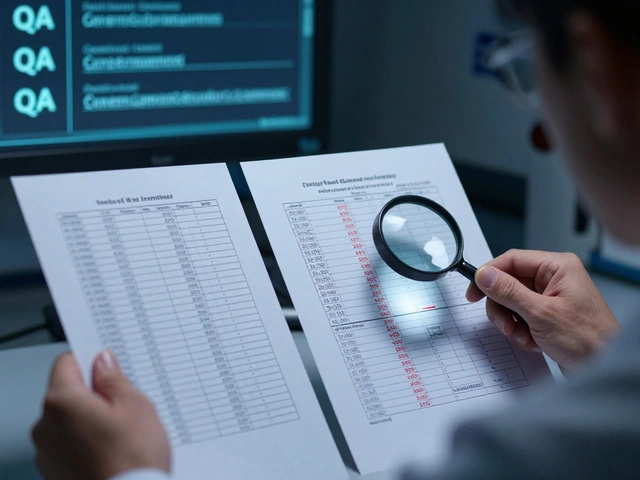
When an auditor walks into a room, they aren't just looking for a "yes" or "no" answer. They are looking for a story told through documentation. If you can't prove a process happened with a timestamped record or a signed policy, it effectively never happened. In the world of evidence handling audits, the gap between doing the work and proving the work is where most organizations fail, leading to costly non-compliance findings and operational risks.
The goal isn't just to pass an inspection; it's to build a system where evidence is collected, stored, and validated so naturally that an audit becomes a non-event. This requires moving away from frantic spreadsheet hunting and toward a structured evidence chain that links a discovery to a fix and, finally, to a proven result.
The Blueprint of an Audit-Ready Evidence Trail
An audit trail isn't just a folder of PDFs; it's a logical sequence of events. Regulators and auditors look for three specific markers to determine if your evidence is sufficient: fit, timeliness, and results. "Fit" means the action you took actually matches the problem you found. "Timeliness" asks if you fixed the issue in a reasonable window or let it linger for six months. "Results" is the most critical-did the fix actually stop the problem from coming back?
To satisfy these requirements, your evidence chain should follow a strict linear path. It starts with the Investigation Summary, which defines the scope and the specific findings. From there, it must flow into a documented root cause analysis, followed by a corrective action plan with clear owners and deadlines. The trail only closes when you attach proof of completion and the results of a follow-up check.
Imagine a scenario where a lab discovers that temperature logs for a vaccine fridge were missing for three days. A "checkbox" fix would be to simply start logging again. An audit-ready trail, however, would include the investigation of why the logs stopped, the discovery that a sensor was faulty (root cause), the purchase order for a new sensor (corrective action), and a week of perfect logs showing the new sensor works (validation).
Mastering Root Cause Analysis (RCA)
You cannot have an effective corrective action without a honest Root Cause Analysis (RCA). Many teams make the mistake of treating symptoms rather than the disease. If a technician forgets to sign a logbook, the "symptom" is the missing signature. The "root cause" might be a poorly designed workspace where the logbook is kept in a separate room, making it inconvenient to sign in real-time.
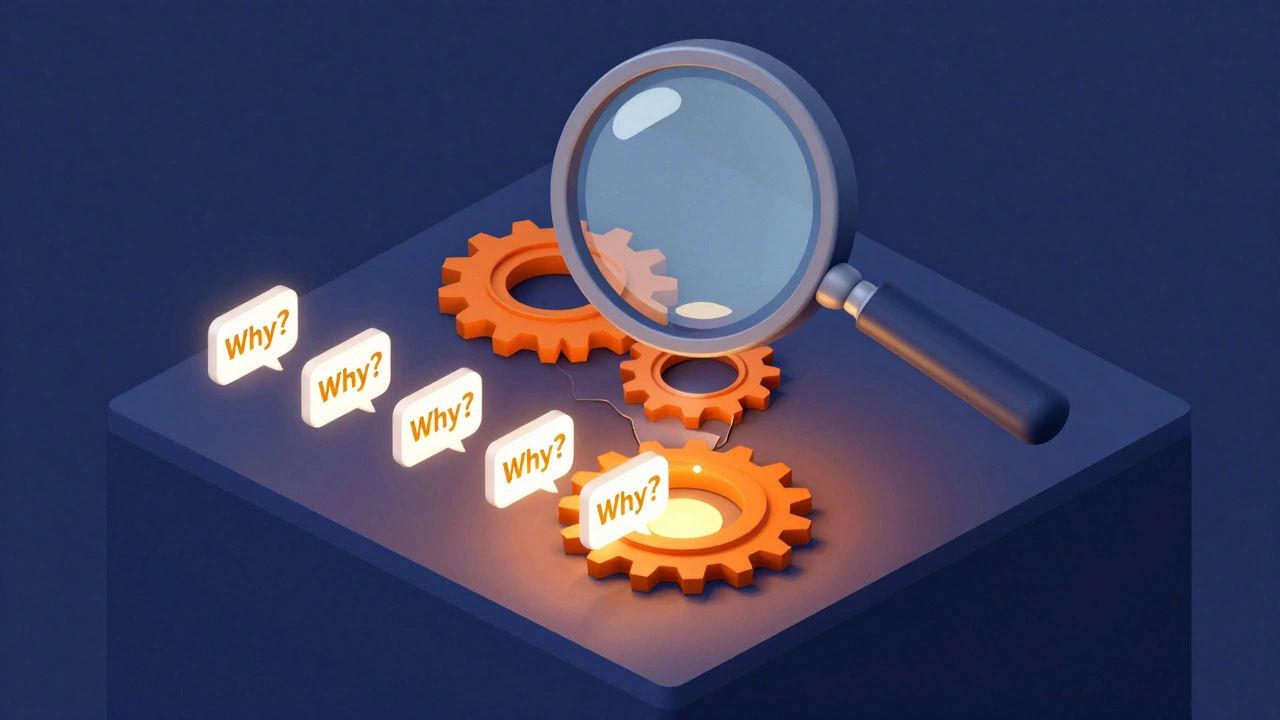
To dig deeper, professional auditors recommend structured methods like the "5 Whys" or the Fishbone Diagram. By asking "why" five times, you peel back the layers of a problem until you hit a systemic failure. If you only apply a surface-level fix-like telling the technician to "be more careful"-you are guaranteed to see the same finding in your next audit. This creates a cycle of repeat findings that signals to regulators that your management system is ineffective.
Types of Corrective Actions and Their Evidence Requirements
Not every fix is a policy change. Depending on the finding, your corrective actions will fall into different categories, each requiring unique types of evidence to prove implementation. A simple checkmark in a project management tool is never enough for a high-stakes audit.
| Action Category | What it Solves | Required Evidence (The "Proof") |
|---|---|---|
| Immediate Fixes | Stops immediate harm/risk | Incident reports, process pause notices, disciplinary memos |
| Policy Updates | Closes systemic gaps | Revised SOPs with version control and approval dates |
| Training & Outreach | Fixes knowledge gaps | Attendance sheets, quiz results, training certificates |
| Stronger Controls | Prevents recurrence | New approval workflows, system logs, automated alerts |
| Structural Changes | Fixes organizational failure | Updated org charts, new reporting lines, resource re-allocation |
Moving Toward Automated Evidence Collection
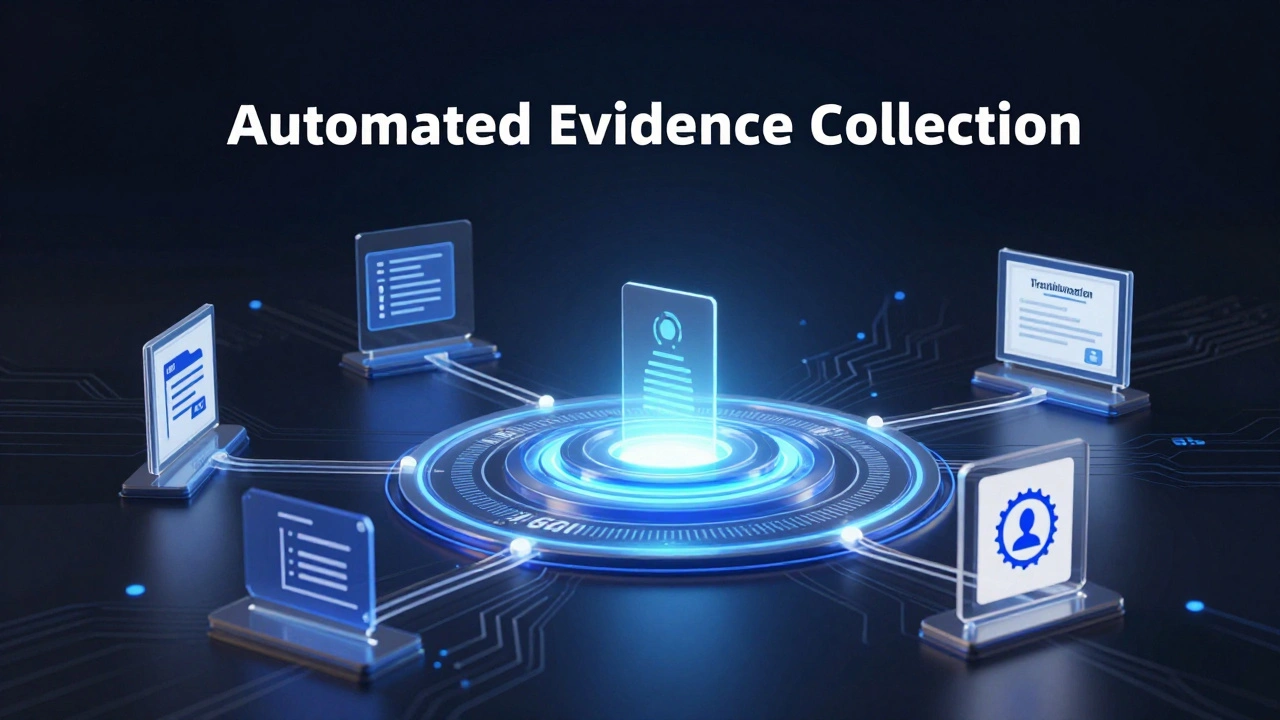
Manual evidence collection is where human error thrives. Forgetting to save a screenshot or losing a signed PDF can jeopardize an entire compliance certification. This is why organizations are shifting toward Automated Evidence Collection. Instead of a person manually exporting a user list every month, software integrations pull that data directly from the system of record.
Automation is most effective when you map your internal controls to external frameworks. If you are aiming for ISO 9001:2015 or SOC 2, you can identify which pieces of evidence satisfy multiple requirements. For example, a system configuration log might serve as evidence for both access control and change management. By automating these "high-value" data points, you reduce the audit burden on your staff and ensure the data is untampered and current.
Validating Results Before Closure
The most common mistake in evidence handling is closing a task as soon as the action is "done." In a professional audit cycle, "done" does not mean "closed." There is a critical gap between implementing a fix and knowing that the fix actually worked. Validation is the process of proving the effectiveness of the action.
There are four primary ways to validate a corrective action:
- Follow-up Reviews: Conducting a mini-audit three months after the fix to see if the new process is still being followed.
- Data Analysis: Checking reporting trends to see if the number of errors in that specific area has dropped.
- Stakeholder Feedback: Asking the people on the front lines if the new workflow is practical or if they've found workarounds.
- Risk Re-scoring: Updating your risk register to reflect the lower likelihood of the issue recurring.
If you implement a new training program to stop data entry errors but the error rate remains the same, the corrective action failed. The evidence handling process must capture this failure and trigger a new cycle of RCA. This iterative loop is what demonstrates a "culture of compliance" to an auditor.
Framework-Specific Requirements
Depending on which regulatory body is knocking on your door, the format of your evidence may change. While the logic of a corrective action remains the same, the naming conventions and templates vary. For instance, FedRAMP requires a specific Plan of Actions and Milestones (POA&M), whereas HITRUST utilizes a formal Corrective Action Plan (CAP). For SOC 1 or SOC 2, the "management response" is more flexible, but still needs to be specific and evidence-backed.
Using a centralized case management system helps bridge these differences. By tying the original investigation to the subsequent tasks in one platform, you create a 360-degree view of risk. This prevents the "fragmentation of evidence," where the investigation is in an email, the RCA is in a Word doc, and the proof of completion is in a folder on someone's desktop. When an auditor asks for the full story, you should be able to pull it up in minutes, not days.
What is the difference between a correction and a corrective action?
A correction is an immediate action to fix a detected non-conformity (e.g., cleaning up a spill). A corrective action is an action taken to eliminate the cause of the non-conformity to prevent it from happening again (e.g., fixing the leaking pipe that caused the spill). Evidence handling audits focus on the latter to ensure systemic improvement.
Can a signed training log count as sole evidence for a corrective action?
Generally, no. A training log proves that a person sat through a class, but it doesn't prove the training was effective or that the behavior changed. To be audit-ready, you should pair the training log with a follow-up review or data analysis showing that the errors decreased after the training took place.
How often should we conduct evidence handling audits?
While formal external audits happen annually or bi-annually, internal "spot checks" should be continuous. The best practice is to review a random sample of closed corrective actions every quarter to ensure the evidence chain is complete and the validation steps were actually performed.
What happens if we can't find the evidence for a completed action?
From a regulator's perspective, if it isn't documented, it didn't happen. If evidence is missing, you must treat it as an open finding. You should document the gap, perform a new RCA to find out why the evidence was lost, and implement a better record-keeping system as a new corrective action.
Which RCA method is best for evidence handling?
The "5 Whys" method is excellent for simple to moderately complex issues because it's fast and easy to document. For complex systemic failures involving multiple departments or technical layers, a Fishbone (Ishikawa) Diagram is better as it allows you to categorize causes by people, processes, equipment, and environment.