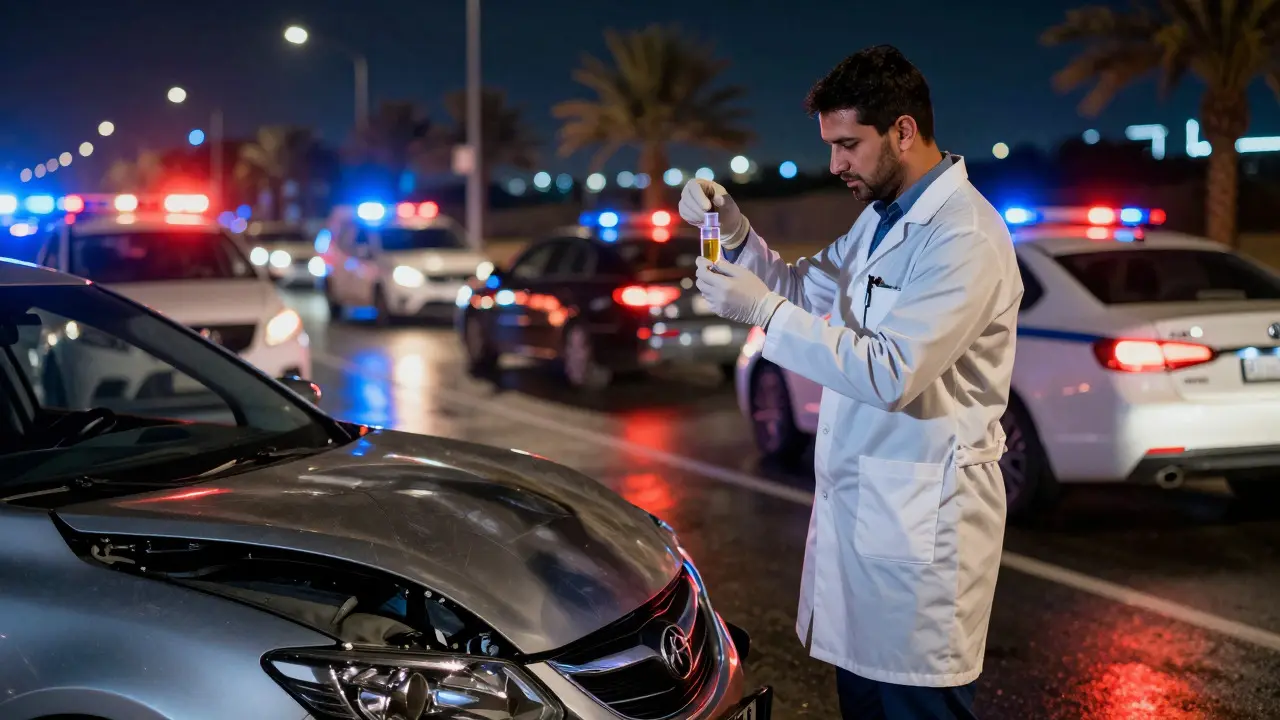
Imagine a crash scene at 2:00 AM. The driver is unconscious, airbags deployed, and the smell of alcohol hangs in the cold air. Before the ambulance even arrives, a medical examiner or law enforcement officer needs to know: was this person under the influence? They don't have time to wait three days for a complex lab result. This is where immunoassay comes in. It is the first line of defense in forensic toxicology, providing rapid initial drug detection that guides immediate medical and legal decisions.
However, relying solely on this quick test can lead to serious errors. Immunoassays are sensitive but not specific. They detect the presence of a drug class, not necessarily the exact molecule. Understanding how these screens work, their limitations, and when to move to confirmatory testing is critical for anyone involved in post-accident analysis or workplace safety compliance.
How Immunoassay Screening Works
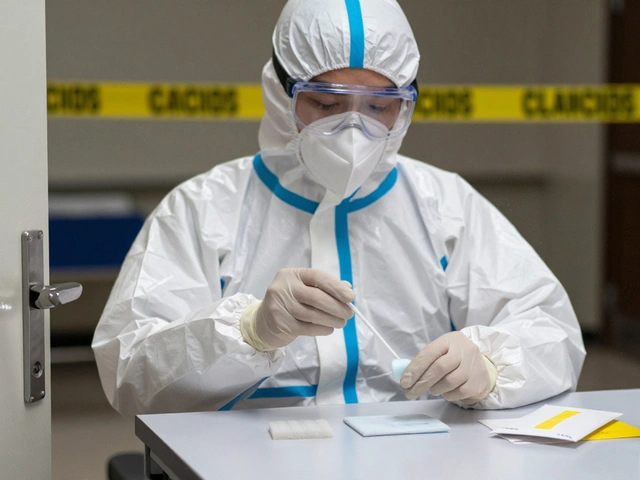
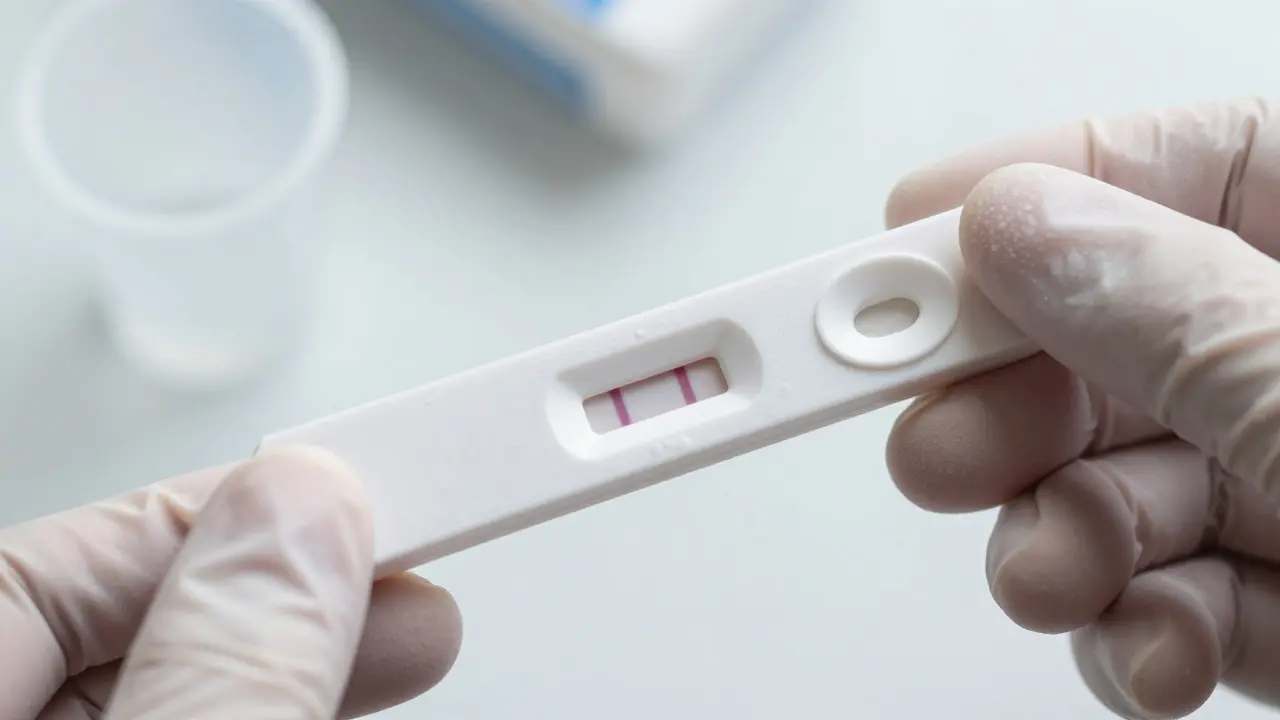
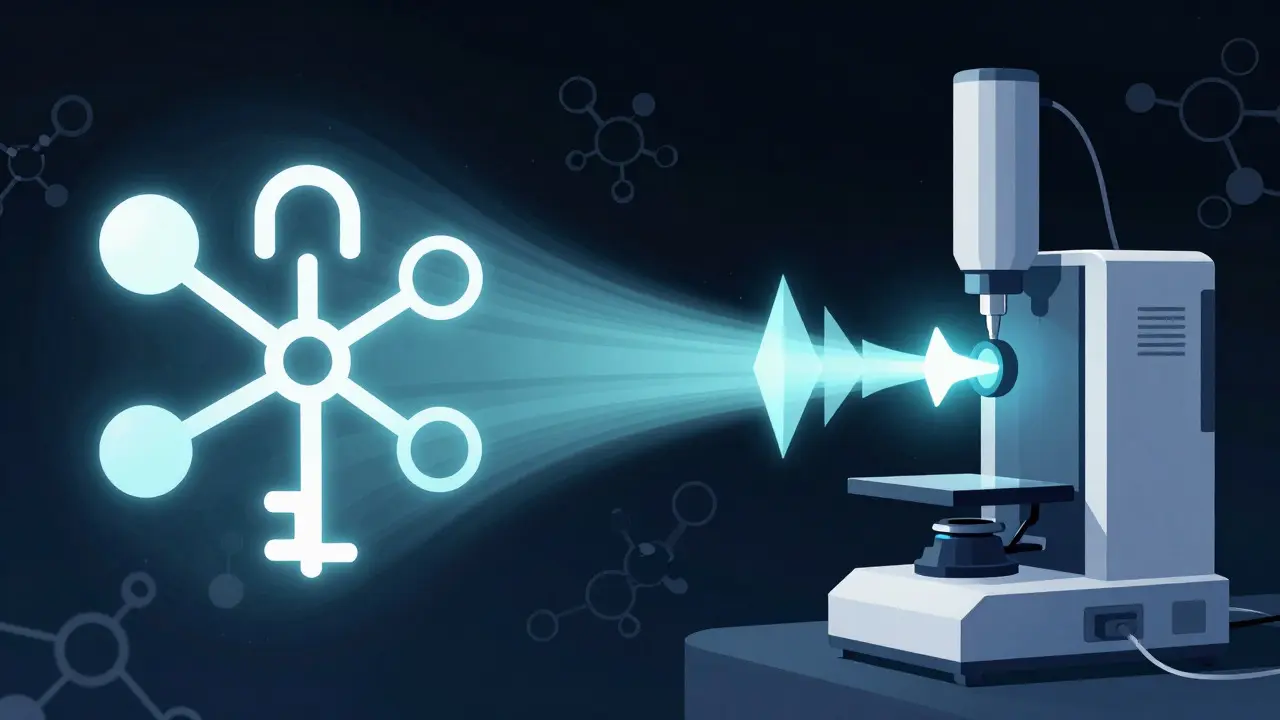
At its core, an immunoassay uses the biological principle of antigen-antibody binding. Think of it like a lock and key mechanism. The antibody acts as the lock, specifically designed to fit the shape of a target drug (the antigen) or its metabolite. When you add a sample-usually urine or blood-to the test device, if the drug is present, it binds to the antibody. Most modern point-of-care devices use a competitive format. A labeled version of the drug competes with the unlabeled drug in your sample for the limited number of antibody sites. If your sample has a lot of the drug, it blocks the labeled version from binding, resulting in a visible signal change that indicates a positive result.
This process happens fast. Depending on the platform, results can appear in as little as 5 to 15 minutes. This speed is why immunoassays dominate emergency room protocols and roadside screening programs. They provide a binary answer-positive or negative-within a timeframe that aligns with clinical decision-making windows.
Common Drug Classes Detected
Not all drugs are detected by the same test strip. Standard forensic and clinical panels typically screen for five major classes. Each panel has specific targets and known cross-reactivities:
- Opioids: Primarily detects morphine, codeine, and heroin metabolites. Synthetic opioids like fentanyl often require separate tests because they do not bind well to standard opioid antibodies.
- Amphetamines: Detects amphetamine and methamphetamine. Note that some over-the-counter decongestants like pseudoephedrine can cause false positives here.
- Cocaine: Specifically looks for benzoylecgonine, the primary metabolite of cocaine, rather than the parent drug itself, which breaks down quickly in the body.
- Barbiturates: Screens for phenobarbital and other barbiturate sedatives. Cross-reactivity with non-barbiturate sedatives is a common issue.
- Benzodiazepines: Detects oxazepam, a common metabolite of many benzodiazepines. However, newer benzos like alprazolam may show lower sensitivity on older panels.
It is crucial to remember that "negative" does not mean "drug-free." It only means no target analyte was detected above the cutoff threshold. Conversely, "positive" means a substance similar enough to the target was found, triggering the reaction.
The Critical Role of Cutoff Levels
Every immunoassay has a cutoff concentration, usually measured in nanograms per milliliter (ng/mL). This is the minimum amount of drug required to produce a positive result. For example, the standard FDA-recommended cutoff for THC (marijuana) in urine is 50 ng/mL. Why 50? Because below this level, the likelihood of a true positive drops significantly, and the risk of false positives rises.
Changing the cutoff changes the test's behavior. Lowering the cutoff increases sensitivity (catching more users) but decreases specificity (more false alarms). Raising the cutoff does the opposite. In forensic contexts, labs often use lower cutoffs for screening to ensure no potential evidence is missed, knowing full well that every positive must be confirmed later. In workplace settings, higher cutoffs might be used to reduce unnecessary disciplinary actions based on incidental exposure.
False Positives: The Biggest Pitfall
If you ask any toxicologist about the biggest frustration with immunoassays, they will say false positives. These occur when a non-target compound mimics the structure of the target drug closely enough to bind to the antibody. Common culprits include:
- Naproxen (Aleve): Can trigger a positive result for THC.
- Ibuprofen: Has been linked to false positives for opiates in some cases, though less common than naproxen.
- Dextromethorphan (cough syrup): Can sometimes interfere with benzodiazepine or barbiturate screens depending on the manufacturer.
- Pseudoephedrine (Sudafed): A frequent cause of false-positive amphetamine results due to structural similarity.
This is why the SAMHSA guidelines mandate that any positive immunoassay result must be confirmed by a second, more specific method before it is considered valid for employment or legal purposes. Ignoring this step can lead to wrongful terminations or erroneous criminal charges.
From Screen to Confirmation: GC-MS and LC-MS/MS
Once an immunoassay flags a sample, the baton passes to instrumental analysis. The gold standards for confirmation are Gas Chromatography-Mass Spectrometry (GC-MS) and Liquid Chromatography-Tandem Mass Spectrometry (LC-MS/MS).
Unlike immunoassays, which rely on biological binding, these methods separate compounds physically and identify them by their mass-to-charge ratio. GC-MS is excellent for volatile compounds like cocaine and amphetamines. LC-MS/MS is superior for polar, non-volatile compounds like fentanyl, synthetic cannabinoids, and certain benzodiazepines that degrade easily in the heat of GC-MS.
The confirmation step provides two critical pieces of data: identity and quantity. It tells you exactly which molecule is present and how much of it is there. This quantitative data is essential for determining impairment levels in driving cases or therapeutic drug monitoring in hospitals.
| Feature | Immunoassay (Screening) | GC-MS / LC-MS/MS (Confirmation) |
|---|---|---|
| Turnaround Time | 5-15 minutes | 1-3 days |
| Specificity | Low (Class-specific) | High (Molecule-specific) |
| Cost per Test | $10-$30 | $100-$300+ |
| Result Type | Qualitative (Positive/Negative) | Quantitative (Concentration) |
| Primary Use Case | Rapid triage, field screening | Legal evidence, clinical dosing |
Best Practices for Sample Handling
Even the best test fails if the sample is compromised. In forensic toxicology, chain of custody is paramount. But beyond paperwork, physical handling matters. Urine samples should be collected in clean, plastic containers. Avoid glass if possible, as some drugs can adsorb to glass surfaces. If storage is delayed, refrigerate at 4°C. Freezing is acceptable for long-term storage but should be avoided if the sample will be tested immediately, as ice crystals can damage cells and release intracellular contents that might interfere with the assay.
For blood samples, use EDTA tubes for general toxicology. Heparinized plasma is also common. Ensure the sample is mixed gently after collection to prevent clotting, especially if serum separation is required later. Hemolysis (ruptured red blood cells) can alter pH and enzyme activity, potentially affecting immunoassay performance in edge cases.
Emerging Trends in Rapid Detection
The landscape of initial drug detection is shifting. Traditional lateral flow immunoassays are being supplemented by biosensor-based platforms that offer digital readouts and built-in quality controls. These new devices reduce user error and provide a record of the test conditions, which is valuable for court admissibility. Additionally, multiplex assays are becoming more common, allowing a single drop of blood to screen for ten or more analytes simultaneously, including novel psychoactive substances (NPS) that traditional panels miss.
Despite these advances, the fundamental logic remains unchanged: immunoassays are for finding suspects, not proving guilt. They narrow the field so that expensive, precise instruments can focus their power on the few samples that truly need detailed analysis.
Frequently Asked Questions
Can I drive if my immunoassay test is negative?
A negative immunoassay reduces the likelihood of recent drug use but does not guarantee sobriety. Some drugs, like cannabis, can linger in the system long after impairment has worn off, while others, like short-acting stimulants, may clear below detection limits quickly. Impairment is a clinical assessment, not just a lab value. Always consider the timing of last use and observed symptoms.
Why did my positive screen come back negative on confirmation?
This is a classic false positive scenario. The immunoassay likely reacted to a structurally similar compound, such as an over-the-counter medication or a dietary supplement. Since confirmatory tests like GC-MS identify molecules by mass, they can distinguish between the actual drug and the interfering substance, leading to a final negative result.
What is the difference between qualitative and quantitative testing?
Qualitative testing (like most immunoassays) answers "is it there?" Yes or no. Quantitative testing (like LC-MS/MS) answers "how much is there?" It provides a specific concentration, such as 150 ng/mL of THC-COOH. Quantitative data is essential for establishing dose-response relationships in forensic cases.
Do immunoassays detect all opioids?
No. Standard opioid screens are optimized for natural opioids like morphine and codeine. Semi-synthetic opioids like hydrocodone or oxycodone may be detected, but synthetic opioids like fentanyl and tramadol often require dedicated tests. This gap is a significant concern in current overdose investigations.
How long does it take to get confirmatory results?
Typically, 1 to 3 business days. This includes time for sample intake, instrument run time, data review by a board-certified toxicologist, and report generation. Rush services may shorten this to 24 hours but at a higher cost.