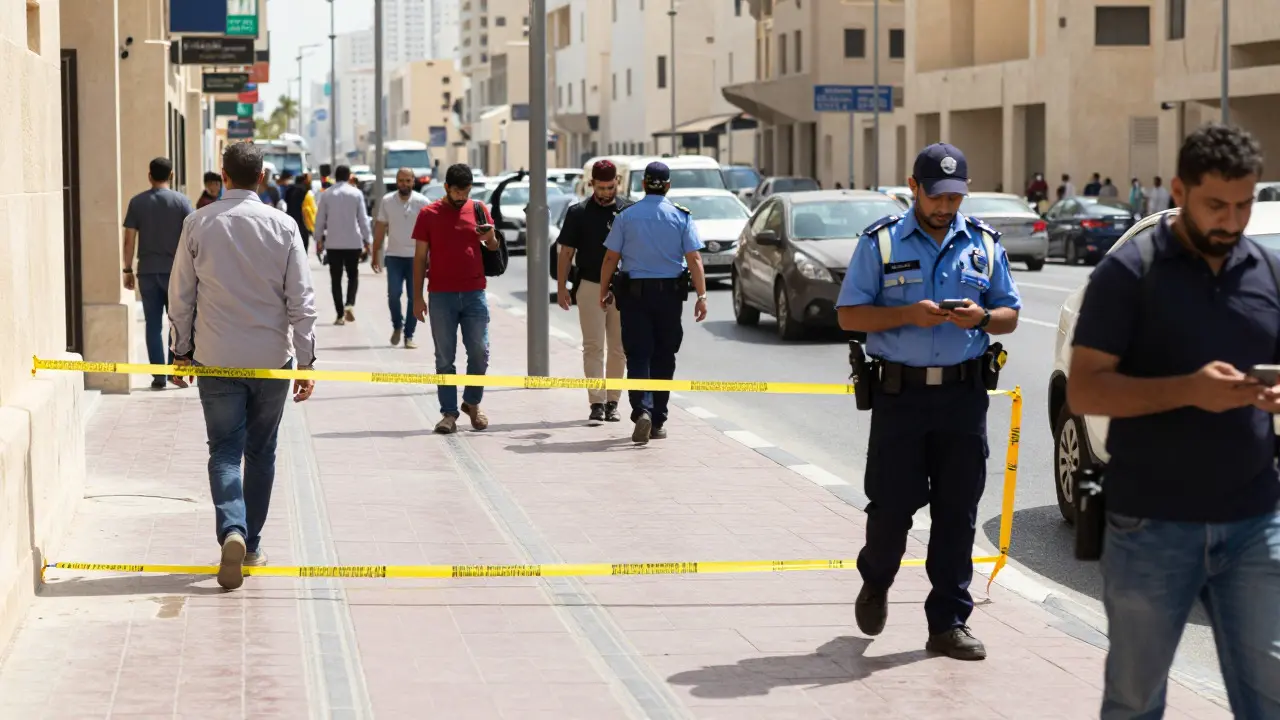
Imagine you are standing on a busy city sidewalk. A siren wails, and suddenly, the calm morning rush turns into chaos. People stop, phones come out, and curiosity replaces caution. For law enforcement and forensic teams, this is the worst-case scenario. Crime scene preservation is the process of securing an area to prevent loss or alteration of physical evidence until it can be collected and analyzed. In crowded public locations, the challenge isn't just about finding clues; it's about stopping hundreds of feet from crushing them before they even arrive.
Why Public Spaces Are the Hardest Ground for Forensics
Unlike a private home where doors can be locked and access controlled, public spaces like parks, subway stations, or shopping malls have no natural barriers. The primary enemy here is not just time, but foot traffic. Every step taken by a bystander can destroy micro-trace evidence, which includes tiny particles such as hair, fibers, glass, or soil that link suspects to victims or crime scenes. Research from the National Institute of Justice indicates that up to 40% of potential trace evidence in open areas is lost due to environmental factors and human interference within the first hour after discovery.
The "hot zone" in a public setting is often larger than expected. If a body is found near a crosswalk, the impact zone might extend to the curb, the grass, and even the street itself. Without immediate containment, witnesses walking past become unwitting agents of destruction. This is why the initial response must be aggressive yet precise. You aren't just protecting a spot on the ground; you are protecting a chain of custody that starts with the air around the scene.
The First Ten Minutes: Containment Strategy
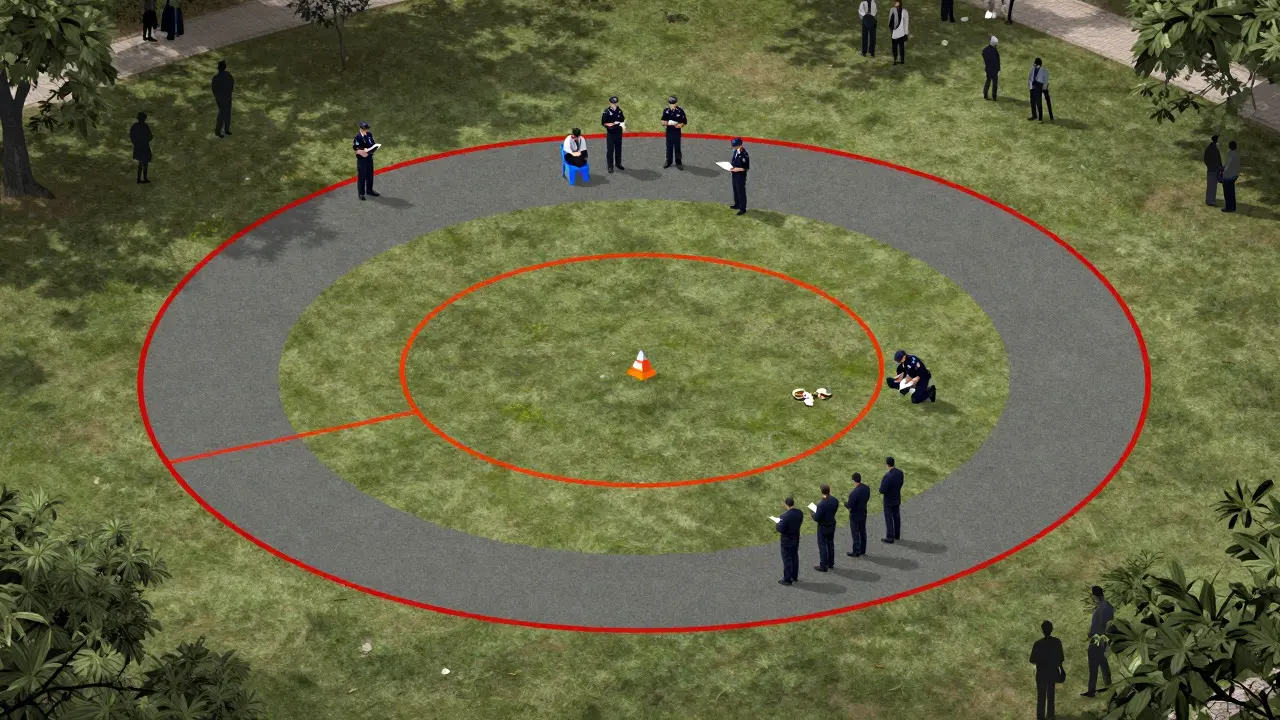
When officers arrive at a crowded incident, the first ten minutes dictate the success of the entire investigation. The goal is to create three distinct zones: inner, middle, and outer. In a public location, these boundaries are fluid and require constant adjustment.
- Inner Zone (Hot Zone): This is the immediate area where evidence exists. Access is restricted to lead investigators and forensic specialists only. In a park, this might be a 10-meter radius around the victim. In a mall, it could be a specific storefront aisle.
- Middle Zone (Warm Zone): This serves as a buffer. Officers manage witness interviews here and log everyone entering or leaving. It prevents casual observers from drifting closer to the inner zone.
- Outer Zone (Cold Zone): This is where the general public is kept. It should be far enough away that normal conversation doesn't carry over, but close enough to maintain order.
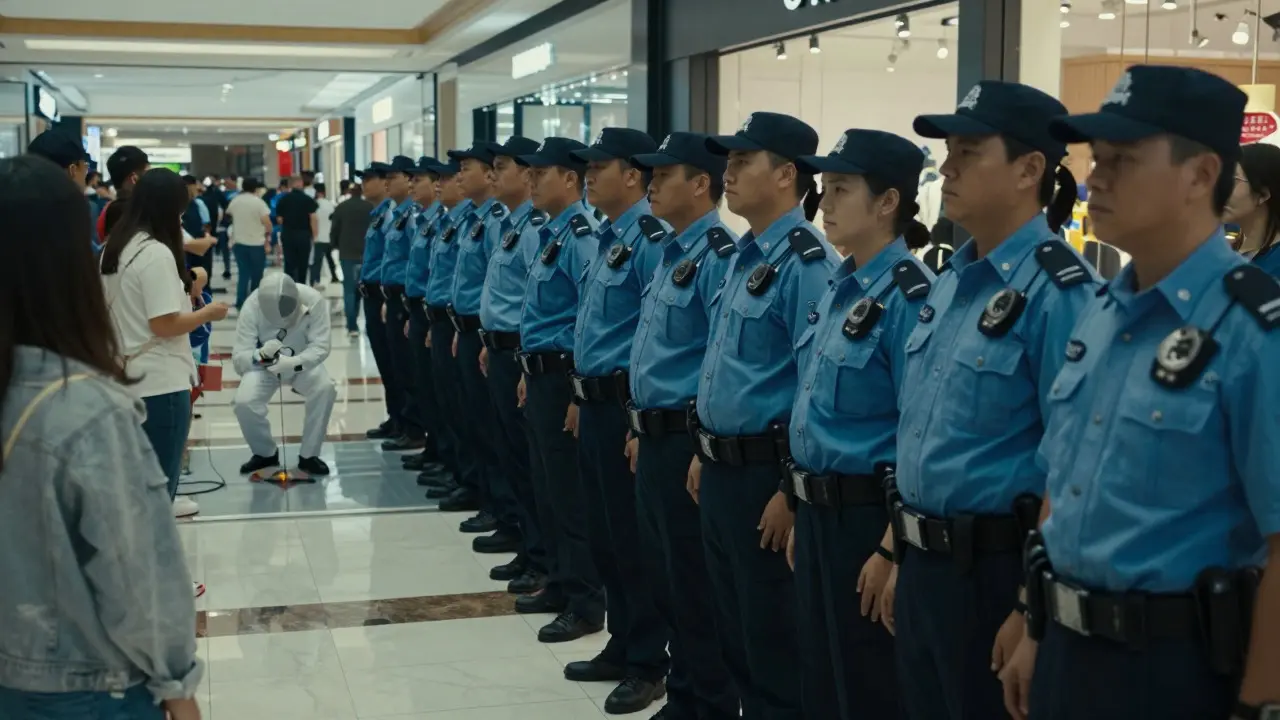
A critical tactic in crowds is the use of temporary barriers. While police tape is standard, it offers little physical resistance. In high-traffic areas, using portable barricades or even having officers stand shoulder-to-shoulder creates a psychological and physical wall. This technique, known as "human fencing," works because people are less likely to push through a line of uniformed officers than they are to cut through plastic tape.
Managing the Crowd: Psychology and Communication
People in crowds act differently than individuals. The "bystander effect" suggests that when many people are present, individual responsibility feels diluted. Someone thinks, "The police will handle it." Your job is to break that mindset immediately. Clear, direct communication is key. Instead of vague warnings like "Stay back," use specific instructions: "Do not walk past this blue line. Your footprints may be evidence."
Engaging local authorities or business owners helps too. If the scene is in a shopping center, the security team knows the layout and has authority over employees. They can clear aisles faster than uniformed officers who don't know the building's internal corridors. This partnership reduces friction and speeds up containment. Also, consider the weather. Rain washes away blood spatter patterns; wind blows away paper or small debris. If the scene is outdoors, tarps or protective covers might be necessary, but they must be placed carefully so they don't disturb underlying evidence.
| Location Type | Primary Risk Factor | Recommended Containment Method | Evidence Vulnerability |
|---|---|---|---|
| Busy Sidewalk | Foot Traffic | Human Fencing + Portable Barricades | High (Micro-trace, Footwear Impressions) |
| Shopping Mall | Indoor Airflow & Staff Movement | Security Team Coordination + Signage | Medium (Fibers, DNA transfer via surfaces) |
| Park/Green Space | Weather & Animals | Tarps + Wide Perimeter Tape | High (Biological degradation, Soil disturbance) |
| Subway Station | Ventilation Systems & Commuters | Line Closures + Vent Shutdowns | Very High (Airborne particles, Rapid dispersal) |
Documenting Before You Touch Anything
In a crowded scene, documentation is your safety net. If evidence is lost later, detailed records prove what was there initially. Start with a wide-angle photograph of the entire area, including the crowd barriers. This establishes the scale and context. Then, move to mid-range shots showing the relationship between the victim or object and nearby landmarks, like fire hydrants, benches, or store signs.
Use a grid system if possible. Place markers every meter across the scene. This allows you to pinpoint the exact location of any item found. For example, if a button is found near the victim's hand, noting its position relative to Grid Square B4 is more useful than saying "near the left arm." Digital mapping tools can now overlay these coordinates onto photos, creating a virtual replica of the scene. This is crucial if the physical scene is compromised by rain or a surge of curious onlookers.
Common Pitfalls That Ruin Investigations
Even experienced teams make mistakes in public settings. Here are the most common ones to avoid:
- Assuming the Scene is Static: In a mall, escalators move. In a park, wind blows leaves. Assume everything is moving until you secure it.
- Ignoring Indirect Evidence: A dropped phone case or a torn piece of clothing thrown aside by a passerby might be vital. Train your eyes to see "out-of-place" objects.
- Over-Reliance on Technology: Drones are great for aerial views, but they can startle crowds, causing panic and movement. Use them only after initial containment is solid.
- Failing to Log Exits: If someone walks out of the inner zone without being logged, their shoe prints are now contaminated. Keep a strict entry/exit log.
Another subtle issue is light. Streetlights and car headlights cast long shadows that can hide small objects. Use flash photography sparingly, as it can alter the appearance of certain chemicals or fluids. Natural light is best, but if you're working at night, consistent artificial lighting is essential for accurate color rendering in photographs.
Long-Term Maintenance of the Scene
Preservation isn't just about the first hour. Sometimes, scenes remain active for days, especially in complex cases. During this time, the environment changes. Temperature fluctuations can dry blood spatter, changing its shape. Dew can obscure tire tracks. You need a rotation schedule for officers to ensure fresh eyes are monitoring the perimeter. Fatigue leads to gaps in attention.
Coordinate with media teams. Journalists want close-ups, but they also bring lights, cameras, and crowds. Establish a designated media area outside the outer zone. Give them information releases regularly so they don't feel the need to push forward for exclusive angles. A satisfied press corps is a quiet press corps.
Best Practices for Future Training
To improve outcomes in public locations, departments should simulate crowd scenarios during training. Set up mock scenes in parking lots or plazas with volunteers acting as bystanders. Practice the transition from arrival to containment under pressure. Measure how long it takes to establish the inner zone. Aim for under five minutes. Also, invest in portable, high-visibility barrier systems that are easy to deploy and remove. Speed and visibility go hand-in-hand in public preservation.
How large should the initial perimeter be in a public space?
Start wider than you think is necessary. In a busy urban area, a 50-foot radius is a good baseline for the inner zone, expanding outward for the middle and outer zones. Adjust based on the type of evidence involved; if ballistic evidence is suspected, expand further to account for trajectory paths.
What should I do if a witness steps into the hot zone?
Freeze the area immediately. Do not let them move. Document exactly where they stepped and which direction they were facing. If possible, ask them to lift their feet one by one to check for attached evidence, though this is rarely practical. More importantly, note the path they took to exit, as their footprints may have disturbed other traces.
Can drones help in crowded crime scenes?
Yes, but cautiously. Drones provide excellent overhead views of large areas and can identify evidence from above that might be missed on the ground. However, they can cause noise and visual distraction, leading to crowd movement. Use them after the perimeter is secure and inform the public to reduce anxiety.
How does weather affect evidence preservation in public parks?
Rain can wash away biological evidence and blur tire tracks. Wind can disperse small items like buttons or shell casings. Sunlight can dry blood quickly, altering spatter patterns. Use tarps to shield specific areas from rain, but ensure they are weighted down securely so wind doesn't move them and disturb the ground beneath.
What is the role of local business security in scene preservation?
Local security teams know the building layout and have authority over employees. They can quickly clear hallways, lock down elevators, and manage staff movements. Integrating them into the command structure early speeds up containment and reduces the number of unknown variables entering the scene.