Imagine a crime scene where the only clue is a faint odor of alcohol or a suspicious residue on a glass. You can’t just guess what’s there. You need proof. That’s where GC-MS is a powerful analytical technique that combines gas chromatography for separation with mass spectrometry for identification to detect and quantify trace amounts of substances. Also known as Gas Chromatography-Mass Spectrometry, it has become the gold standard in forensic labs for identifying drugs, toxins, and volatile compounds.
If you’ve ever wondered how police labs confirm a positive drug test or identify an unknown chemical in a seized package, GC-MS is likely doing the heavy lifting. It doesn’t just tell you *what* is there; it tells you *how much*. This distinction is critical in courtrooms, where precision separates a guilty verdict from a wrongful conviction.
Key Takeaways
- GC-MS separates complex mixtures using gas chromatography before identifying them via mass spectrometry.
- It offers high sensitivity, capable of detecting parts per billion (ppb) levels of analytes.
- The method is non-destructive to the sample, allowing for re-testing if needed.
- It is widely accepted in legal proceedings due to its reproducibility and specificity.
- Limitations include the inability to analyze non-volatile or thermally unstable compounds without modification.
How GC-MS Actually Works
To understand why this technology is so effective, you have to look at its two distinct stages. Think of it like sorting a messy room. First, you separate the items by type (chromatography). Then, you label each item with a unique ID code (spectrometry).
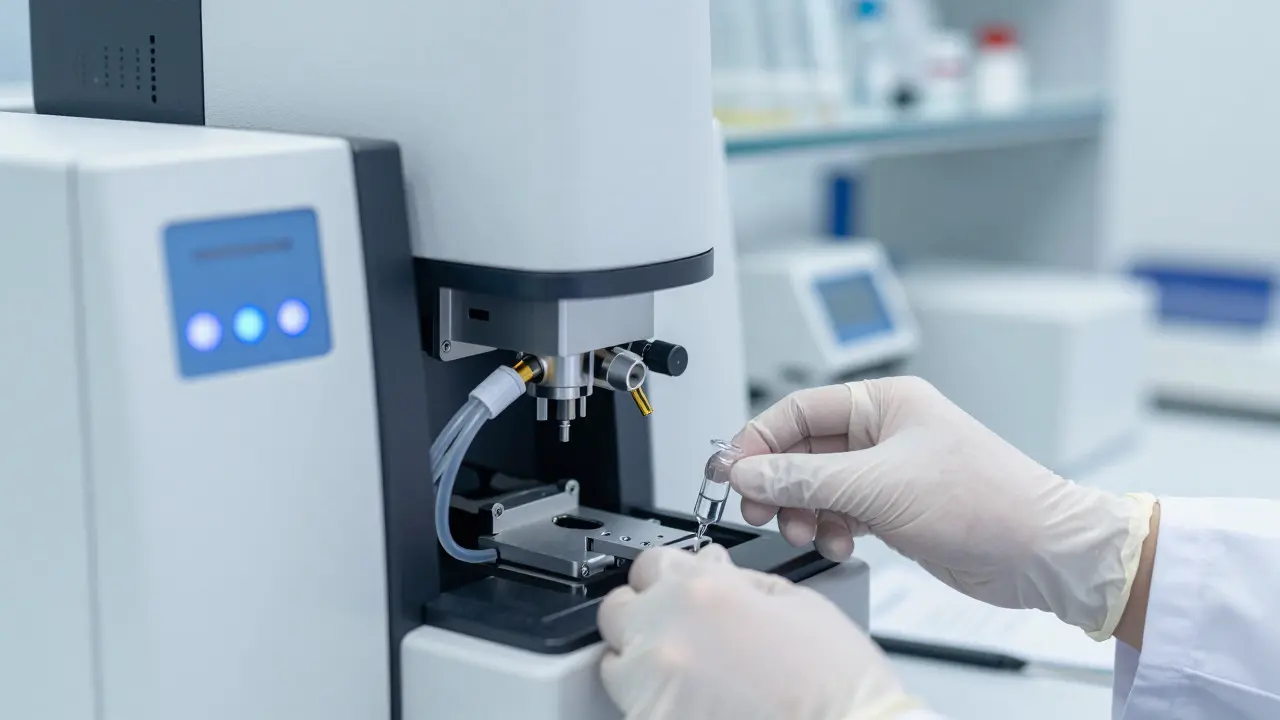
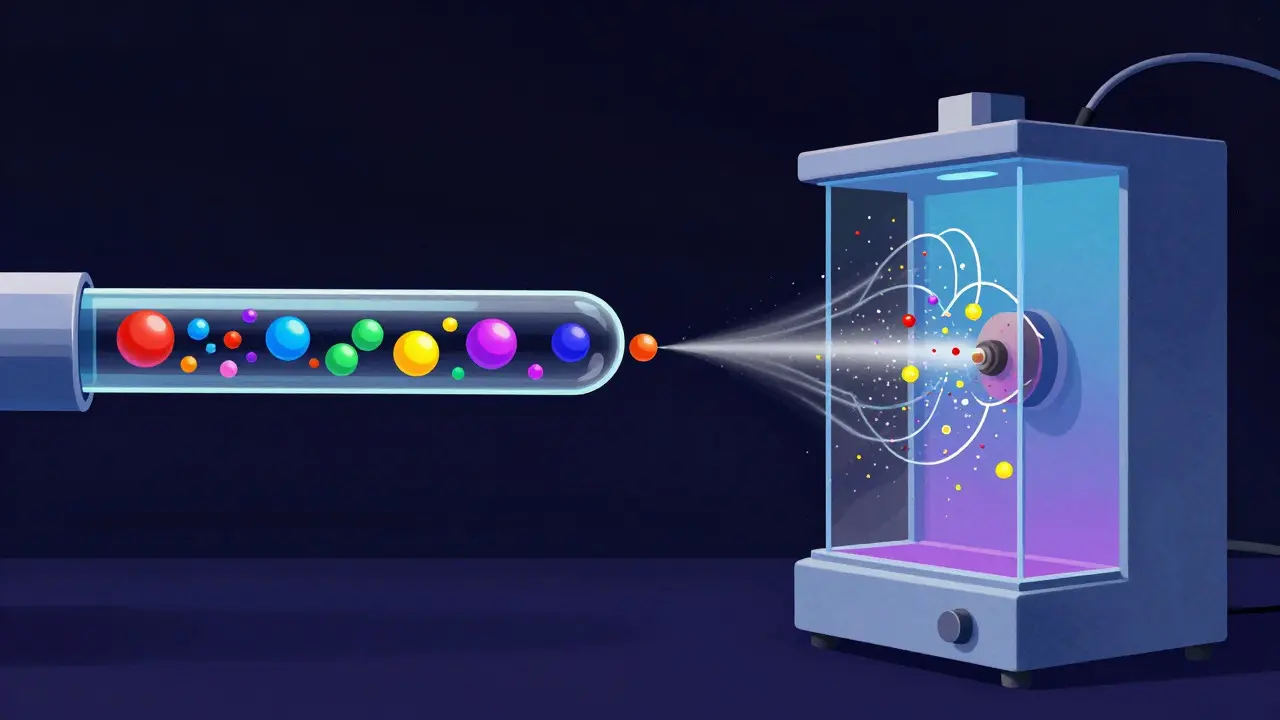
In the first stage, Gas Chromatography is a separation technique that uses a carrier gas to move a vaporized sample through a column, separating components based on their volatility and interaction with the stationary phase. The sample is injected into a heated injector, turning it into a gas. A carrier gas, usually helium or nitrogen, pushes this gas through a long, thin column coated with a specific chemical material. Different molecules stick to this coating for different lengths of time. Lighter, more volatile molecules zip through quickly, while heavier ones linger. This creates a timeline called a chromatogram, where each peak represents a different compound eluting from the column.
But knowing *when* something comes out isn’t enough. You need to know *what* it is. That’s where the second stage kicks in. The separated compounds enter the Mass Spectrometer is an instrument that ionizes chemical species and sorts ions based on their mass-to-charge ratio to generate a spectrum used for identification. Here, the molecules are bombarded with electrons, causing them to break apart into charged fragments. These fragments fly through an electric field, and their paths curve based on their mass. Heavier fragments take a wider path than lighter ones. The detector records these impacts, creating a "fingerprint" pattern of peaks. This mass spectrum is compared against a database of known standards to identify the substance with near-certainty.
Why It’s the Gold Standard in Forensic Toxicology
In the world of Forensic Toxicology is the application of chemistry and pharmacology to legal matters, focusing on the detection and quantification of drugs and poisons in biological samples, accuracy is everything. A simple urine dipstick test might flag a positive for THC, but it can produce false positives from other medications. GC-MS eliminates that doubt. Because it relies on physical separation and molecular fragmentation, the chance of two different unknown substances having the exact same retention time *and* the exact same mass spectrum is astronomically low.
This reliability makes it ideal for confirming results from screening tests. For example, if a driver fails a roadside breathalyzer, the lab will often use GC-MS to verify the blood alcohol concentration (BAC). The method can distinguish between ethanol and other alcohols like methanol or isopropanol, which might interfere with simpler sensors. In cases involving opioids, GC-MS can differentiate between morphine, codeine, and heroin metabolites, providing a clear picture of what was actually consumed versus what might be present from prescription medication.
Practical Applications Beyond Drugs
While drug analysis is the most common association, GC-MS is a versatile tool used across multiple industries. In environmental science, it detects pesticide residues in water samples at extremely low concentrations. In food safety, it identifies contaminants like aflatoxins in grain or residual solvents in packaged goods. Even in perfumery, chemists use it to analyze the scent profile of essential oils, ensuring consistency in production batches.
However, the technique has limits. It requires the sample to be volatile or convertible into a volatile form. Large, polar molecules like proteins or sugars don’t work well in standard GC because they decompose before they can evaporate. For those, scientists turn to Liquid Chromatography-Mass Spectrometry (LC-MS), which handles non-volatile compounds better. But for small organic molecules-like most illicit drugs, solvents, and hydrocarbons-GC-MS remains unmatched in speed and resolution.
Comparison: GC-MS vs. Other Analytical Methods
When choosing an analytical method, cost, speed, and complexity matter. Here is how GC-MS stacks up against common alternatives:
| Feature | GC-MS | LC-MS | FTIR |
|---|---|---|---|
| Best For | Volatile, semi-volatile organics | Polar, non-volatile, large molecules | Functional groups, polymers |
| Sensitivity | High (ppb level) | Very High (ppt level) | Moderate |
| Sample Prep | Extraction, derivatization | Filtration, dilution | Minimal |
| Data Output | Chromatogram + Mass Spectrum | Chromatogram + Mass Spectrum | Infrared Spectrum |
| Cost | High ($150k-$300k) | Higher ($200k-$400k) | Moderate ($50k-$100k) |
Notice that FTIR (Fourier Transform Infrared Spectroscopy) is cheaper and faster for quick checks, but it lacks the specificity of MS. If you’re trying to identify a single ingredient in a complex mixture, FTIR gets muddy. GC-MS cuts through that noise by physically separating the components first.
Common Pitfalls and How to Avoid Them
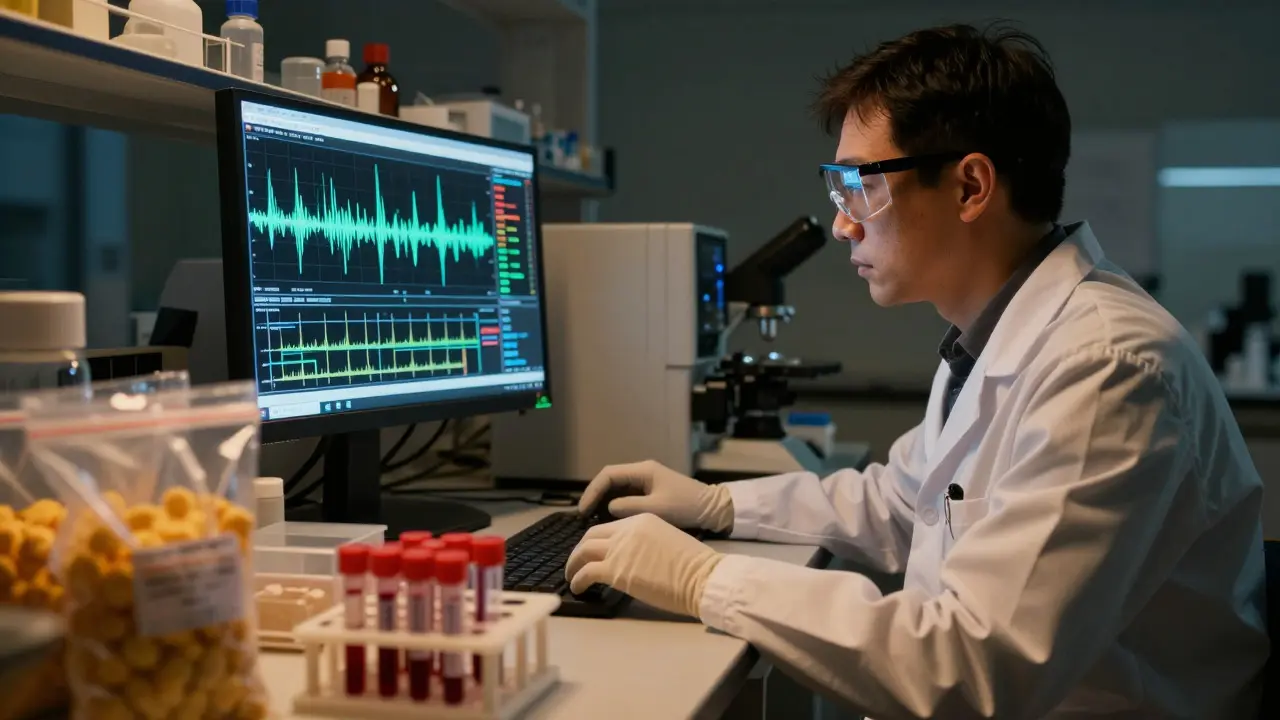
Even with such a robust tool, errors happen. The biggest issue is sample preparation. If you contaminate your vial during extraction, you’ll get a false positive. Labs use rigorous chain-of-custody protocols and blank runs to catch this. Another pitfall is matrix effects. Biological fluids like blood contain salts and proteins that can clog the GC column or suppress ionization in the MS. Using solid-phase extraction (SPE) cartridges helps clean the sample before injection.
Also, remember that GC-MS is not magic. It identifies what is present, but it doesn’t always explain *why* it’s there. A high level of a drug metabolite could mean recent use, chronic use, or even passive exposure. Interpretation requires context, which is why forensic toxicologists pair data with clinical history.
Frequently Asked Questions
What is the main advantage of GC-MS over other drug testing methods?
The main advantage is specificity. By combining physical separation (GC) with molecular fingerprinting (MS), GC-MS minimizes false positives. It can distinguish between structurally similar compounds that other methods might confuse.
Can GC-MS detect any kind of drug?
Not directly. It works best with volatile or semi-volatile compounds. Large, polar drugs like some antibiotics or peptides require LC-MS instead. However, many common drugs of abuse (opioids, cannabinoids, stimulants) are suitable for GC-MS after proper sample preparation.
How long does a GC-MS analysis take?
A typical run takes 15 to 30 minutes per sample. However, including sample preparation (extraction, drying, reconstitution), the total turnaround time can be several hours to a day, depending on lab workload.
Is GC-MS expensive to operate?
Yes. The instrument itself costs $150,000 to $300,000. Operating costs include carrier gases (helium/nitrogen), column replacements, and maintenance contracts. Despite the cost, the high throughput and reliability make it cost-effective for high-volume forensic labs.
Does GC-MS destroy the sample?
Generally, yes. The sample is vaporized and fragmented during analysis. However, forensic labs typically split samples, keeping a portion archived for potential re-testing or alternative methods if the initial result is questioned.