You spent hours analyzing the evidence. You ran the tests twice. The data is solid. But when you hand over your forensic report, it gets shredded in cross-examination or returned with a list of clarifications that takes another week to fix. Why? Because most scientists are trained to analyze, not to write. They forget that a report isn't just a record; it's a legal argument wrapped in science.
If you want your work to hold up in court and satisfy attorneys, judges, and juries, you need to treat writing as a core forensic skill. It’s not about using fancy words. It’s about clarity, reproducibility, and avoiding ambiguity. Here is how to build reports that do their job before you even step into the witness box.
The Audience Is Not Who You Think
The biggest mistake in forensic report writing is assuming everyone reading it has your background. In reality, your primary readers are non-experts. That includes defense attorneys who need to find holes, prosecutors who need to explain findings to a jury, and judges who need to rule on admissibility under standards like Daubert or Frye.
Write for three distinct layers:
- The Layperson (Jury): Needs simple analogies and clear conclusions without jargon.
- The Legal Professional (Attorney/Judge): Needs methodology, limitations, and chain-of-custody details to assess reliability.
- The Peer Reviewer (Other Experts): Needs technical specifics to verify your calculations and methods.
A good report satisfies all three by structuring information hierarchically. Start with the bottom line. Then provide the context. Save the raw data for appendices. If you bury the conclusion on page 40 after pages of chromatography graphs, you’ve already lost the jury’s attention.
Structure Matters More Than Style
Consistency builds trust. When a judge sees a report from a reputable lab, they expect a specific flow. Deviating from this structure makes your work look amateurish or suspicious. While every agency has templates, the universal best practice follows a logical narrative arc.
| Section | Purpose | Key Content |
|---|---|---|
| Executive Summary | Immediate understanding | Conclusions only. No new data. Plain language. |
| Scope & Purpose | Define boundaries | What was asked? What was NOT analyzed? |
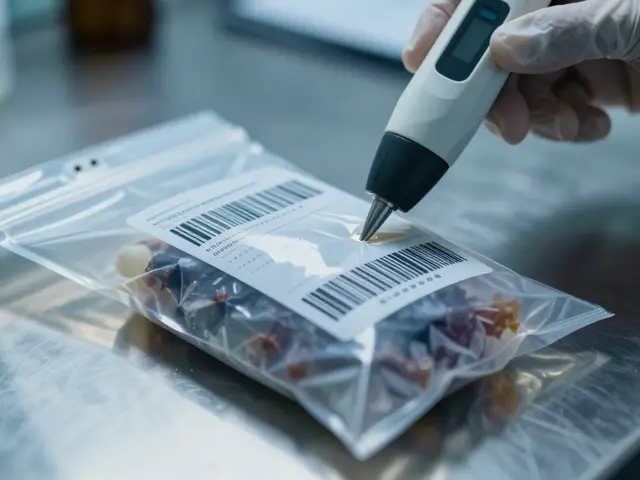
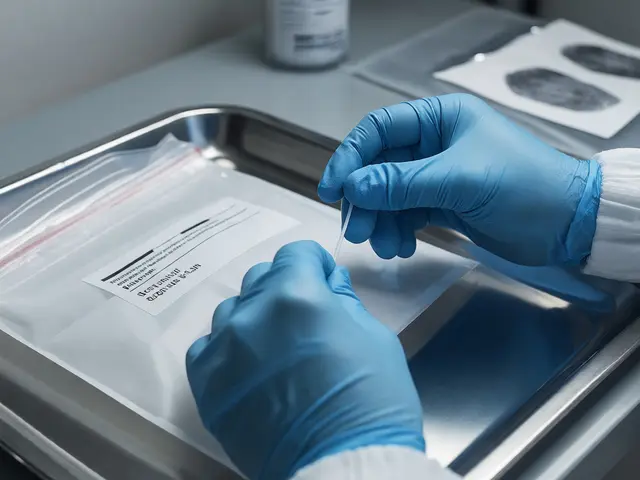
| Evidence Received | Chain of Custody | Description, condition, packaging, dates. |
| Methodology | Reproducibility | Standards used (ASTM, SWGDRUG), equipment, controls. |
| Results | Factual observations | Data tables, images, measurements. No interpretation yet. |
| Discussion/Interpretation | Scientific reasoning | Linking results to conclusions. Addressing limitations. |
| Conclusion | Final answer | Direct response to the request. Confidence levels. |
Notice the separation between Results and Interpretation. This is critical. Results are objective facts (e.g., "The peak at 15 minutes matches standard X"). Interpretation is subjective analysis (e.g., "This suggests the substance is cocaine"). Mixing these confuses the reader and opens you up to attacks on your objectivity.
Language Precision: Avoiding Ambiguity
In science, we hedge. We say "likely," "consistent with," or "cannot exclude." In law, vague language looks like weakness. However, over-stating certainty looks like bias. The goal is precise probability.
Stop using weak verbs. Instead of saying "It seems the DNA matches," say "The DNA profile is consistent with the suspect." Better yet, quantify it if possible: "The random match probability is 1 in 10 billion." Avoid absolute terms unless you are 100% certain, which is rare in forensics. Words like "proven" or "fact" belong to the jury, not the scientist. Your job is to present evidence. Use phrases like:
- "The examination revealed..."
- "The data supports the hypothesis that..."
- "Findings are inconsistent with..."
Also, define your acronyms. First mention: "Gas Chromatography-Mass Spectrometry (GC-MS)." After that, use GC-MS. Never assume the attorney knows what LCN-DNA or STR profiling means without explanation.

Visuals Are Not Decorations
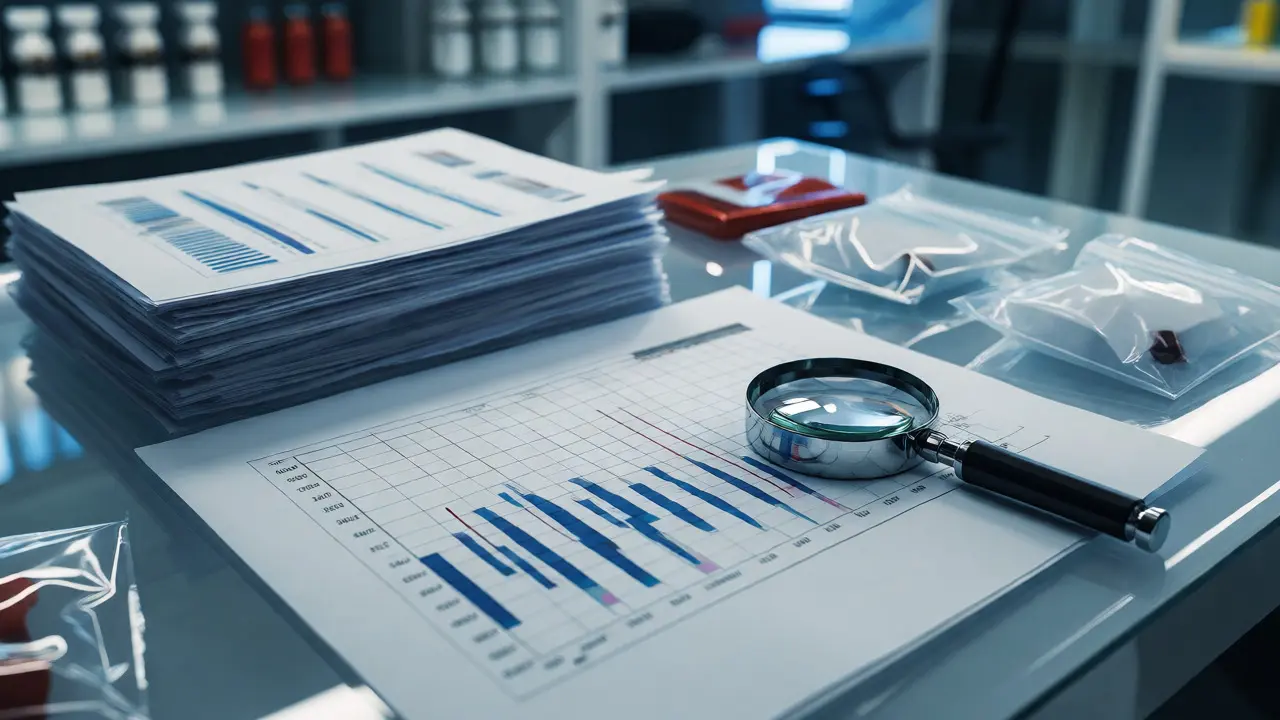
A picture is worth a thousand words, but only if it’s labeled correctly. A blurry photo of a fingerprint with no scale bar is useless. A chart with tiny font is unreadable. Visuals should stand alone. If someone removes the text caption, can they still understand what the image shows?
Best practices for forensic visuals include:
- Scale Bars: Always include them in macro photos. State the units clearly.
- High Contrast: Ensure black-on-white or white-on-black readability. Avoid colored backgrounds.
- Annotated Images: Use arrows or circles to highlight specific features (e.g., striations on a bullet).
- Captions: Every figure needs a detailed caption explaining what is being shown and why it matters.
If you are presenting complex data, consider using a summary graphic in the executive summary. A simple flowchart showing "Evidence Collected → Tested → Result" helps laypeople grasp the process quickly.
Addressing Limitations Head-On
Nothing destroys credibility faster than hiding flaws. If your sample was degraded, say so. If the contamination risk was high, document it. Attorneys will find these issues anyway. If you address them proactively, you control the narrative. If you hide them, they become surprises during testimony.
Create a dedicated section for "Limitations and Caveats." Explain what your method cannot do. For example, if you are doing toxicology, clarify that you tested for common drugs but did not screen for novel synthetic cannabinoids. This transparency shows scientific integrity. Judges respect experts who know the boundaries of their discipline.

The Quality Control Checklist
Before sending a report out, run it through a rigorous review process. This isn't just proofreading for typos. It’s a logical audit.
Ask yourself these questions:
- Does the conclusion directly answer the question asked? If the police asked "Was there blood?" and you wrote about hemoglobin types, you missed the point.
- Is every claim supported by data? If you state something, point to the specific test result that proves it.
- Are all references cited correctly? If you used ASTM E1618, cite it properly.
- Is the tone neutral? Remove emotional language. Avoid "shocking" or "obvious." Stick to "significant" or "clear."
- Did I check for internal contradictions? Does the date in the header match the date in the signature block? Do the case numbers match everywhere?
Have a colleague perform a "blind read." Give them the report and ask them to summarize the findings in one sentence. If they can’t, your writing is too convoluted.
Common Pitfalls to Avoid
Even experienced analysts fall into traps. Here are the most frequent ones seen in courtroom challenges:
- Over-explaining: Including irrelevant background history of the crime scene that doesn't impact the analysis.
- Jargon Dumping: Using technical terms without defining them, assuming the reader is an expert.
- Passive Voice Overuse: "The sample was collected" vs. "Officer Smith collected the sample." Active voice is clearer and assigns responsibility.
- Ignoring Negative Results: Only reporting positive hits. If you tested for arsenic and found none, report it. Absence of evidence is evidence.
- Inconsistent Formatting: Changing font sizes, spacing, or heading styles mid-document. It looks sloppy.
Remember, your report is a permanent record. It might be reviewed years later during an appeal. Clarity today saves headaches tomorrow.
Training and Continuous Improvement
Writing skills degrade if unused. Labs should implement regular peer reviews of reports, not just technical audits. Create a style guide specific to your agency. Define how you handle rounding, significant figures, and terminology. Consistency across the lab reduces confusion and strengthens the institution's reputation.
Consider mock trials where attorneys attack the report itself. Have a colleague play the role of a hostile lawyer. Ask them to find ambiguities. Their feedback is gold. Adjust your template based on recurring questions from legal teams. If five attorneys ask the same clarification question, your report failed to answer it initially.
Should I include raw data in the main body of the report?
Generally, no. Raw data, such as full chromatograms or extensive gene sequencing logs, belongs in an appendix. The main body should contain summarized results that support your conclusions. This keeps the narrative flow intact for non-technical readers while preserving the data for peer verification.
How do I handle inconclusive results?
State clearly that the results were inconclusive and explain why. Was the sample too small? Was it contaminated? Did the reference standards fail? An inconclusive result is a valid scientific finding. Do not force a conclusion if the data does not support one. Specify what additional testing might resolve the issue.
Can I change my report after it has been issued?
Yes, but never overwrite the original. Issue an addendum or a supplemental report. Reference the original report number and date. Explain exactly what changed and why. Transparency about corrections builds more trust than silently fixing errors, which can look like tampering.
What is the best way to describe uncertainty?
Use established confidence scales if available (e.g., Likelihood Ratios in DNA). Otherwise, use qualitative descriptors consistently defined in your glossary, such as "highly probable," "probable," or "possible." Avoid personal interpretations like "I feel" or "I believe." Stick to what the data allows.
Do I need to cite every standard I used?
Yes. Citing standards like ASTM, ISO, or SWGDRUG guidelines demonstrates that your methods are accepted within the scientific community. It provides a benchmark for quality assurance and helps opposing counsel understand the rigor of your procedures.