You spent weeks analyzing blood spatter patterns, calibrating your gas chromatograph, and reviewing chain-of-custody logs. You know the science inside out. But when you hand over that final document to a defense attorney or a prosecutor, does it hold up? Or does it crumble under cross-examination because of a vague sentence or a missing data point?
Here is the hard truth: your lab skills get you in the door, but your Forensic Report Writing skills keep you employed. In the courtroom, you are not just a scientist; you are a translator. Your job is to convert complex chemical reactions, DNA sequences, or ballistics trajectories into plain English that a jury can understand without needing a PhD.
The Core Purpose of a Forensic Report
A forensic report isn't a diary entry. It’s a legal document with specific requirements defined by standards like ISO/IEC 17025 and local jurisdictional rules. If you miss a required element, the entire analysis could be deemed inadmissible. Think of your report as a roadmap for the trier of fact. They need to know exactly where you started, what path you took, and why you arrived at your conclusion.
Most errors in reporting aren't scientific-they're structural. Did you clearly separate observations from interpretations? Did you cite the specific method used? If a judge can’t follow your logic without guessing, you’ve failed the primary test of clarity. Remember, if the report is ambiguous, the opposing counsel will fill those gaps with their own narrative, and it likely won’t favor your client.
Structuring Your Report for Maximum Impact
While formats vary by agency, the most robust reports follow a logical hierarchy. Don't bury the lead. Start with the essentials so busy attorneys can grasp the scope immediately.
- Administrative Data: Case number, examiner name, date of receipt, and description of evidence received. This establishes the foundation.
- Scope of Examination: What did you actually look for? If you were asked to check for gunshot residue, don't wander into fiber analysis unless requested.
- Methodology: Which standard operating procedures (SOPs) did you follow? Cite them explicitly.
- Results: The raw data. Charts, spectra, photos, and measurements go here.
- Conclusions: Your interpretation of the results. Keep this distinct from the data.
Why separate Results from Conclusions? Because mixing them invites bias accusations. If you write, "The blue fiber matches the suspect's shirt," you are interpreting. Instead, write: "The blue fiber exhibits UV fluorescence identical to the reference sample." Let the conclusion section handle the match probability.
Mastering Scientific Methodology in Text
Your methodology section is your shield against Daubert challenges. You must prove your technique is reliable. This means going beyond saying "I ran a GC-MS." You need to specify the instrument model, the column type, the temperature ramp rates, and the detection limits.
Consider this example. A weak statement says, "Alcohol was detected." A strong statement reads: "Ethanol was identified via headspace gas chromatography using a DB-WAX column, with a retention time of 4.2 minutes matching the certified reference standard within ±0.1 minutes." See the difference? One is an assertion; the other is reproducible science.
Always include validation data. If you used a new software algorithm for fingerprint comparison, mention its false-positive rate. Transparency builds credibility. If you deviated from standard protocol, explain why. Maybe the sample was degraded, so you adjusted the extraction time. Documenting these deviations shows professional diligence, not incompetence.

Writing Style: Clarity Over Complexity
Juries are regular people. They might be teachers, mechanics, or nurses. If your report reads like a peer-reviewed journal article, you lose them. Aim for an eighth-grade reading level. Use active voice. Passive voice hides responsibility. "The sample was analyzed" is weaker than "I analyzed the sample."
Avoid jargon where possible. If you must use terms like "allelic dropout" or "latent print," define them immediately in parentheses or footnotes. Never assume knowledge. Also, watch your absolutes. Unless you have 100% certainty (which is rare in forensics), avoid words like "proven" or "definitive." Use probabilistic language: "consistent with," "highly probable," or "cannot exclude."
| Weak Phrase | Strong Alternative | Why It Works |
|---|---|---|
| It looks like cocaine. | The substance tested positive for cocaine using color tests and GC-MS confirmation. | Cites specific methods and avoids visual guesswork. |
| The fingerprint definitely matches. | The latent print shares sufficient minutiae points to support identification. | Acknowledges the subjective nature of comparison while stating confidence. |
| I found no blood. | No presumptive or confirmatory tests for blood yielded positive results. | Clarifies that absence of evidence is based on specific testing limitations. |
Navigating Legal Admissibility and Bias
Your report exists within a legal framework. You must adhere to the Federal Rules of Evidence (or state equivalents). Rule 702 requires that your testimony helps the trier of fact understand the evidence. If your report is so technical it confuses more than it clarifies, it fails this rule.
Bias is the silent killer of forensic credibility. Confirmation bias happens when you unconsciously seek data that supports your initial hypothesis. To combat this, practice blind verification. Have a colleague review your raw data before they see your conclusions. In your report, disclose any potential conflicts of interest. If you were paid per case rather than hourly, note it. Transparency inoculates your work against attacks on objectivity.
Also, consider the audience's perspective. Defense attorneys will look for holes. Prosecutors will look for strength. Write for the skeptic. Anticipate questions about contamination, storage conditions, or equipment calibration dates. Address them proactively in the discussion section.

Common Pitfalls and How to Avoid Them
Even seasoned professionals make mistakes. Here are the top three traps I see in Portland labs and across the country:
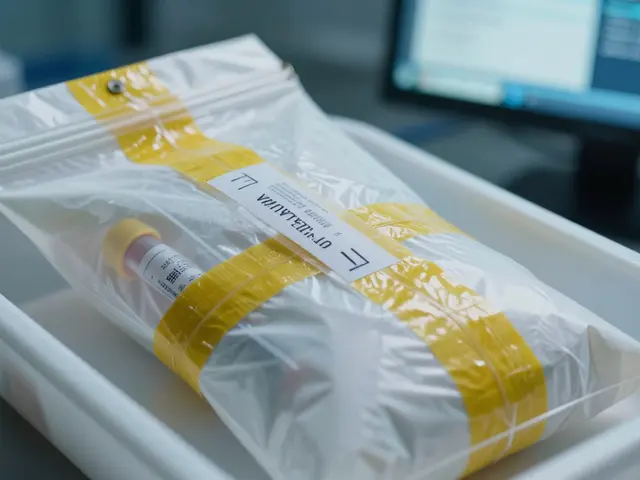
- Vague Chain of Custody References: Saying "evidence was transferred securely" isn't enough. Specify who handed it off, when, and under what seal integrity checks.
- Inconsistent Terminology: Calling a bullet a "projectile" in one paragraph and a "cartridge" in another confuses readers. Pick one term and stick to it throughout.
- Overstating Certainty: Claiming a DNA match is "one in a billion" without explaining the population database used can backfire. Always contextualize statistics.
Proofreading isn't just about grammar. It's about consistency. Check every number against your lab notebook. Ensure every figure cited in the text appears in the appendix. A mismatch between your written claim and your attached data chart is an easy win for opposing counsel.
Finalizing and Reviewing Your Work
Before signing off, perform a self-audit. Read the report aloud. Does it flow? Are the transitions smooth? If you stumble over a sentence, rewrite it. Then, submit it for technical review. A second pair of eyes catches errors you’ve become blind to after staring at the document for hours.
Remember, your reputation rests on these documents. A well-written report enhances the value of your scientific work. A poorly written one undermines it, regardless of how accurate the science was. Treat every report as a piece of art-precise, clear, and impactful.
How long should a forensic report be?
There is no fixed length, but conciseness is key. Most reports range from 3 to 15 pages, excluding appendices. Focus on completeness rather than volume. Include only relevant data that supports your conclusions. Excessive detail can obscure the main findings, while too little may leave gaps in reproducibility.
Should I include raw data in the main body?
Generally, no. Place summarized tables and key graphs in the main body. Move extensive raw data, such as full chromatograms or lengthy sequence lists, to appendices. This keeps the narrative readable while ensuring all supporting evidence is accessible for scrutiny.
What if my conclusion changes after submitting the report?
Issue an amended report promptly. Do not alter the original signed document. Clearly state the reason for the amendment, such as new information or a correction of a clerical error. Transparency regarding changes protects your credibility and maintains trust with the court.
Do I need to list every tool used?
Yes, especially critical instruments like microscopes, balances, and analyzers. List the manufacturer, model, and serial number. This allows others to verify calibration records and assess whether the equipment was suitable for the task performed.
How do I handle inconclusive results?
State clearly that the examination was inconclusive. Explain why, such as insufficient sample quantity or degradation. Suggest further testing if applicable. Avoid speculating on what the result 'might' have been; stick to what the current data supports.