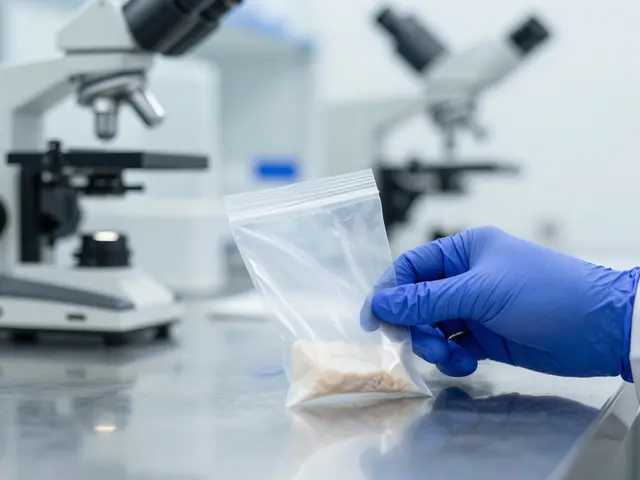
You spent years mastering the art of separating truth from fiction in a crime scene. You can identify a fiber under a microscope or reconstruct a blood spatter pattern with precision. But when you walk into that sterile conference room for your forensic job interview, the pressure shifts. Suddenly, it’s not just about what you know; it’s about how you communicate what you know to people who might never hold a pipette. The gap between technical skill and interview performance is where many qualified candidates stumble.
This isn’t about memorizing textbook definitions. Forensic hiring managers-whether at a state crime lab, a medical examiner’s office, or a private consultancy-are looking for specific traits: integrity, attention to detail, ability to handle stress, and clarity of communication. They need to know you won’t contaminate evidence, but they also need to know you won’t crack under cross-examination. This guide breaks down the most common questions you’ll face and provides answers that show you’re ready for the bench.
The Technical Foundation: Proving Your Competence
Expect the first half of the interview to focus on hard skills. In forensic science, there is rarely room for ambiguity. If you say you “think” a substance is cocaine, you’ve already lost points. You need to demonstrate that you understand the chain of custody, validation protocols, and the limitations of your tools.
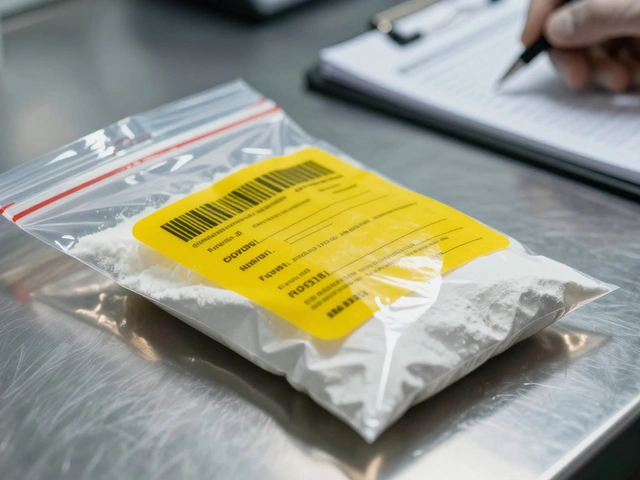
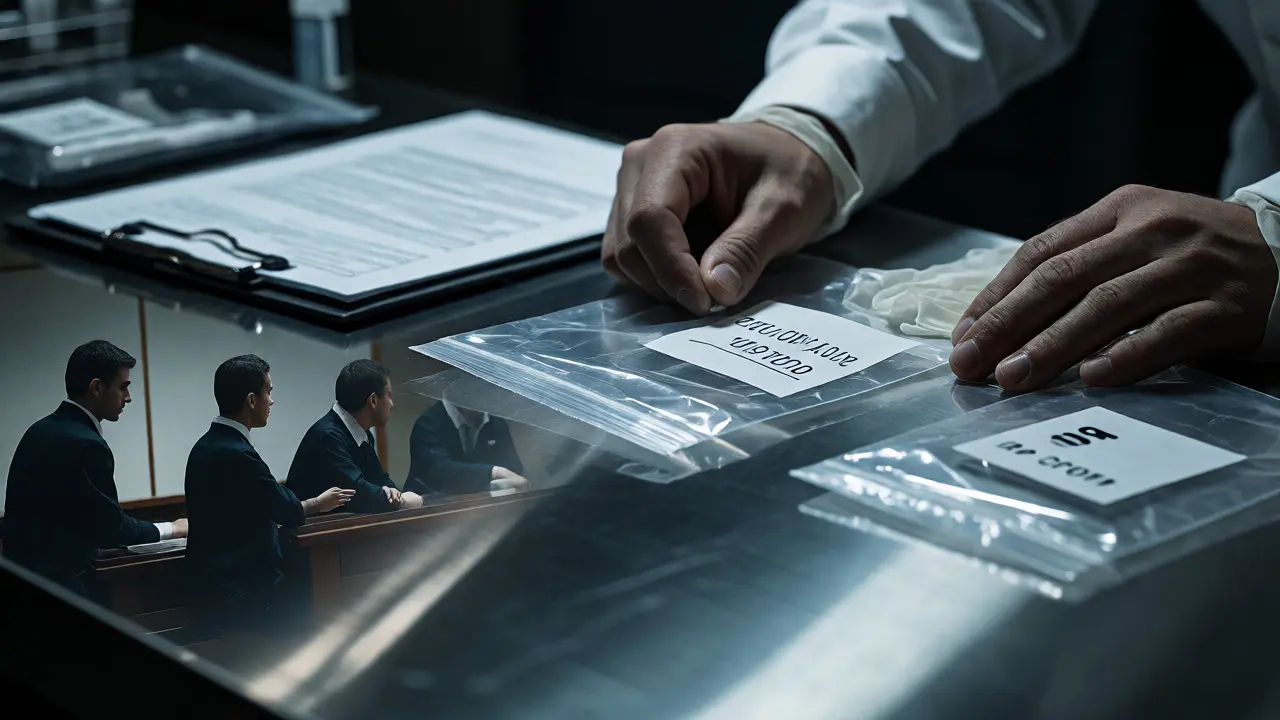
Chain of Custody is the documented chronological record of the seizure, custody, control, transfer, analysis, and disposition of physical evidence. It is the backbone of admissibility in court. Without an unbroken chain, even the most conclusive DNA match becomes worthless.
Hiring managers often ask scenario-based questions here. For example: "You arrive at a crime scene, and the police officer has already collected a weapon without logging it properly. What do you do?" A weak answer is, "I take it back and log it." A strong answer explains that you must document the discrepancy immediately, photograph the scene as-is, consult with the lead detective, and potentially re-collect if possible, while noting the procedural error in your report. This shows you prioritize protocol over convenience.
- Question: How do you ensure quality assurance in your daily workflow?
- Answer Strategy: Mention specific standards like ISO/IEC 17025. Talk about running blank samples, calibration checks, and peer reviews. Don't just say "I'm careful." Say, "I run a negative control every tenth sample to detect contamination early."
The Courtroom Factor: Communication Under Pressure
A significant portion of a forensic scientist's job happens long after the lab work is done: testifying in court. Defense attorneys are trained to find holes in your methodology. Your interviewer knows this. They want to see if you can explain complex scientific concepts to a jury of laypeople without sounding condescending or overly academic.
One classic question is: "Explain PCR (Polymerase Chain Reaction) to a judge who has no science background." If you start talking about nucleotides and primers, you’ll lose them. Instead, try an analogy. Explain that PCR is like a photocopier for DNA-it takes a tiny, unreadable scrap of genetic material and makes millions of copies so we can actually read it. This demonstrates empathy for the audience and mastery of the subject.
| Scenario | Weak Response | Strong Response |
|---|---|---|
| Explaining a negative result | "The test didn't work." | "The sensitivity limits were exceeded by the sample degradation, resulting in a non-informative profile." |
| Handling a mistake | "It was a one-time error." | "I identified the deviation during QA review, documented it per SOP, and implemented a checklist to prevent recurrence." |
| Cross-examination prep | "I'll just stick to the facts." | "I prepare by reviewing my notes and anticipating challenges to my methodology, ensuring I remain calm and objective." |
Behavioral Questions: Integrity and Ethics
Forensic science is built on trust. One compromised sample can ruin a multi-million dollar case. Therefore, behavioral questions focusing on ethics are non-negotiable. You will likely be asked about a time you made a mistake or disagreed with a colleague.
Consider the question: "Tell me about a time you found an error in your own work after submitting a report." Many candidates panic here, thinking they should say they’ve never made a mistake. That sounds dishonest. Everyone makes mistakes. The key is how you handled it. Did you hide it? Did you tell your supervisor immediately? Did you issue an addendum?
Addendum is a supplementary document issued to correct or clarify information in a previously submitted forensic report. Issuing an addendum promptly shows professional responsibility and transparency, which are critical traits for any forensic analyst.
Your answer should follow the STAR method (Situation, Task, Action, Result). Describe the situation briefly, explain the action you took to rectify it, and highlight the positive outcome-such as maintaining the lab’s reputation for accuracy despite the error.
Adapting to the Modern Lab: Technology and Backlogs
The landscape of forensics is changing. Automation is rising, and backlogs are shrinking due to better tech, but new challenges emerge. Interviewers might ask about your experience with specific software like CODIS (Combined DNA Index System) or LIMS (Laboratory Information Management Systems).
If you’re applying for a role in digital forensics, expect questions about encryption and cloud storage. If it’s traditional biology, ask about next-generation sequencing (NGS). Show that you’re adaptable. You don’t need to be an expert in everything, but you need to show curiosity and the ability to learn new systems quickly.
- Tech Tip: Research the specific lab’s accreditation status before the interview. If they are accredited by ANAB or ASCLD/LAB, mention their specific quality manual or recent audits in your answers. It proves you did your homework.
Questions You Should Ask Them
An interview is a two-way street. Asking insightful questions shows you’re serious about the career path, not just grabbing any paycheck. Avoid asking about vacation days in the first round. Instead, ask about their caseload management strategies or their approach to continuing education.
Try these:
- "How does the lab handle inter-agency collaboration when cases involve multiple jurisdictions?"
- "What opportunities exist for staff to present findings at conferences like the American Academy of Forensic Sciences (AAFS)?"
- "How has the recent shift toward rapid DNA technology impacted your turnaround times?"
Final Preparation Checklist
Before you walk in, make sure you have your materials organized. Bring extra copies of your CV, a list of references, and a notebook. Dress professionally-forensic labs are conservative environments. Suit up. It signals respect for the legal process.
Review your past projects. Be ready to discuss a specific case you worked on (anonymized, of course). Focus on the problem-solving aspect. How did you troubleshoot a failed extraction? How did you interpret ambiguous results? Concrete examples beat vague generalizations every time.
Remember, they aren’t trying to trick you. They want to hire someone they can trust with evidence that determines someone’s freedom. Show them you’re reliable, rigorous, and ready to defend your science in the courtroom.
What is the most important trait for a forensic scientist?
Integrity and objectivity are paramount. Unlike other scientists, forensic experts serve the justice system, not a hypothesis. You must be willing to let the evidence dictate the conclusion, even if it contradicts what investigators hope to find. Bias can lead to wrongful convictions, so demonstrating impartiality is crucial during interviews.
How should I handle a question about a topic I don't know?
Do not bluff. Say something like, "I haven't worked directly with that specific technique, but I am familiar with its principles and eager to learn more. Here is how I would approach learning it..." Honesty builds trust. Bluffing destroys credibility instantly in a field based on truth.
Are certifications required for forensic jobs?
While not always mandatory for entry-level roles, certifications like those from the American Board of Criminalistics (ABC) or the International Association for Identification (IAI) significantly boost your employability. They validate your competence and show a commitment to professional standards, which hiring managers value highly.
How do I talk about gaps in my employment history?
Be brief and positive. If you were studying, volunteering, or working in a related field, mention it. If it was personal, keep it simple. Focus on what you did to stay engaged with the field, such as reading journals or attending webinars. Employers care more about your current readiness than past pauses.
What is the difference between a forensic technician and an analyst?
Generally, technicians handle routine processing, equipment maintenance, and initial screening. Analysts interpret data, perform complex analyses, write reports, and may testify in court. Technicians follow strict protocols; analysts exercise judgment within those protocols. Clarify the role expectations in your application to ensure alignment.