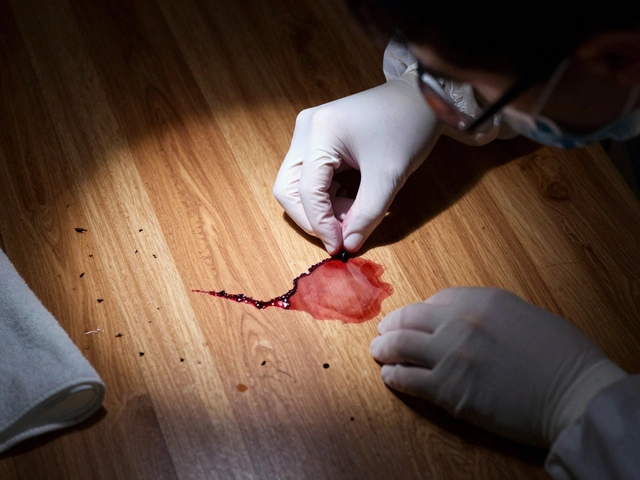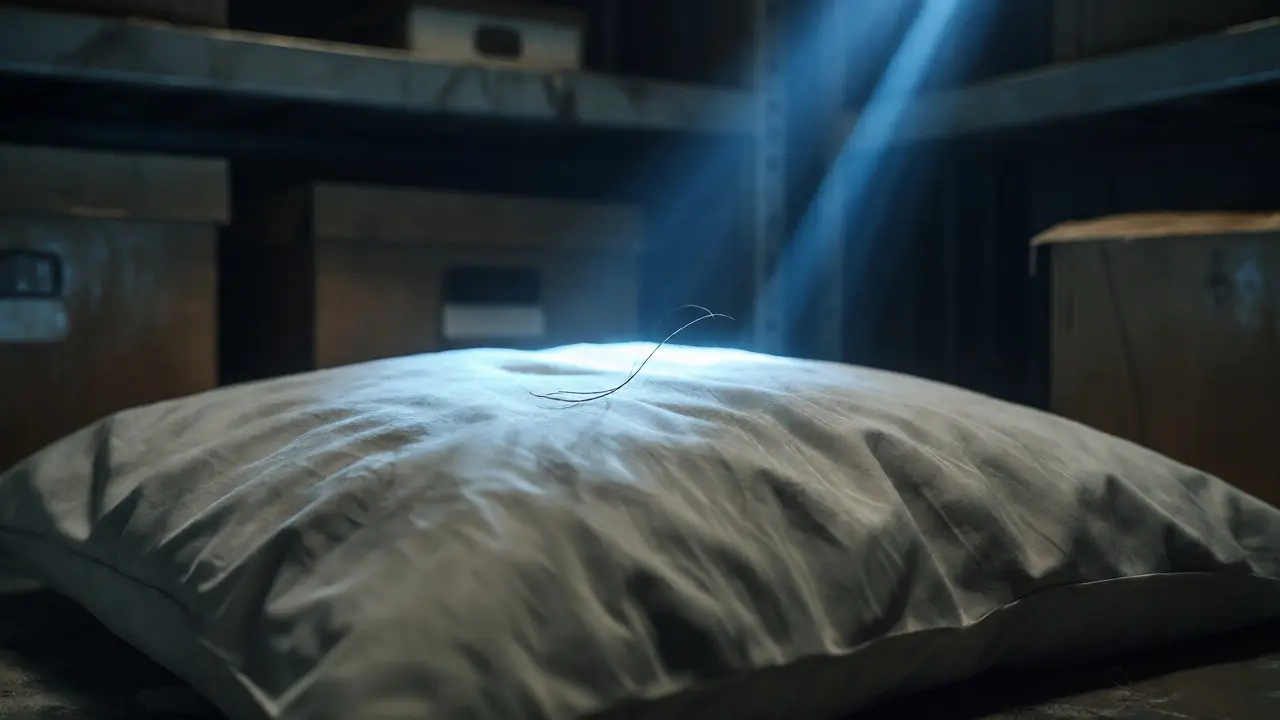
Imagine finding a single hair on a pillowcase in 1987. For decades, that hair sat in an evidence locker, useless because the suspect wasn't in any police database. Then, in 2018, Forensic Genetic Genealogy is a method that uses public DNA databases to build family trees and identify unknown suspects. This shift didn't just solve one case; it cracked open hundreds of cold cases across the United States. If you've ever wondered how detectives catch killers from the 1970s without a witness or a confession, the answer lies in the science of forensic dna.
This isn't like the movies where a computer instantly matches a fingerprint. It's slower, messier, and requires a deep understanding of biology and genealogy. But when it works, it provides closure to families who have waited forty years for answers. Here is how the process actually happens, what tools are used, and why it has become the most powerful tool in modern criminal investigation.
The Core Concept: From Crime Scene to Family Tree
Traditional forensic DNA analysis compares a crime scene sample against known profiles in law enforcement databases like CODIS (Combined DNA Index System). If the suspect isn't in CODIS, the trail goes cold. Forensic genetic genealogy changes the game by comparing crime scene DNA against commercial consumer databases like GEDmatch or FamilyTreeDNA. These databases contain millions of profiles from people who took ancestry tests for fun, not for legal reasons.
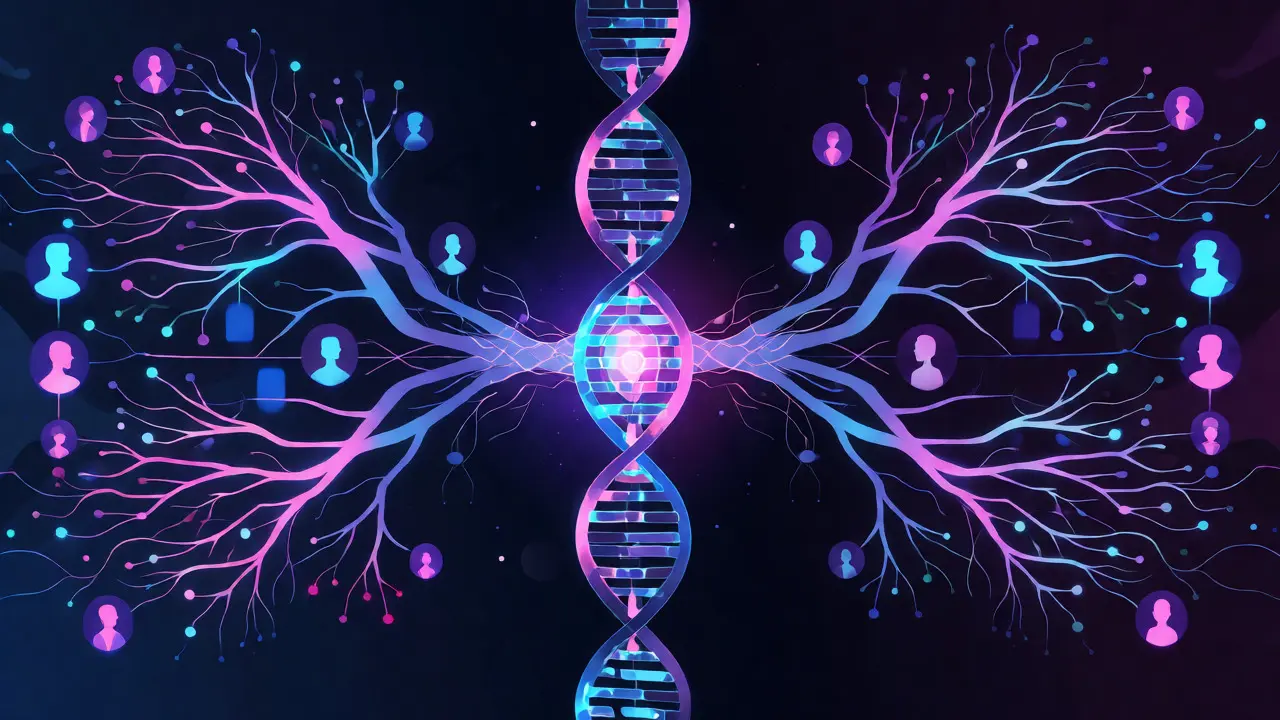
The logic is simple but brilliant. Even if the killer never tested their own DNA, they likely have relatives who did. A third cousin might share about 1% of their DNA with the suspect. By analyzing these small shared segments, investigators can reconstruct a family tree backward until they find a common ancestor, then forward to identify living descendants. The suspect is usually found among those descendants.
The Step-by-Step Investigation Process
Not every cold case gets this treatment. It is expensive and time-consuming, so it is reserved for serious violent crimes where traditional leads have dried up. Here is the actual workflow investigators follow:
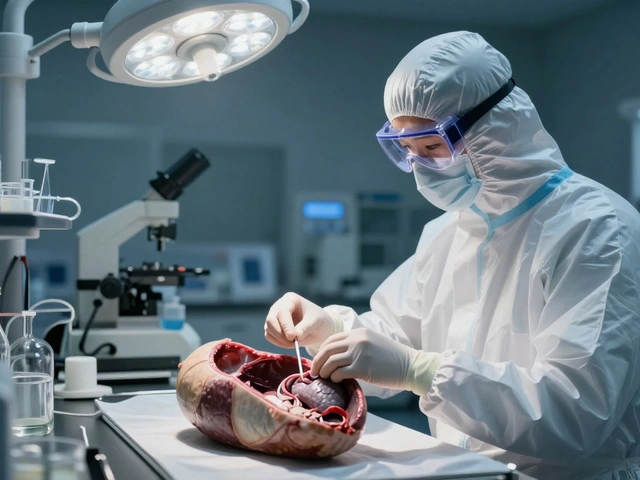
- Evidence Collection and Extraction: Investigators must recover usable DNA from old biological samples-blood stains, semen, saliva on stamps, or skin cells on clothing. If the DNA is degraded, they may need to sequence more of the genome to get enough data points.
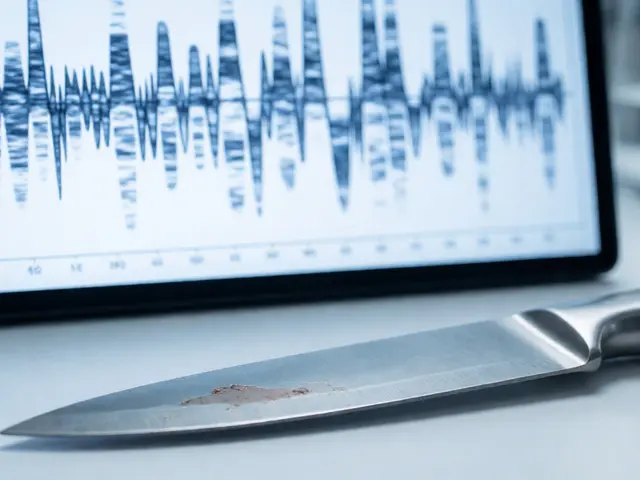
- SNP Genotyping: Instead of looking at just 13-20 short tandem repeats (STRs) used in CODIS, labs analyze hundreds of thousands of Single Nucleotide Polymorphisms (SNPs). SNPs are stable markers spread throughout the genome, ideal for building long-range family connections.
- Database Upload: The anonymized SNP profile is uploaded to public genealogy databases. Crucially, the investigator does not know whose DNA is in the database yet; they only see matches based on genetic similarity.
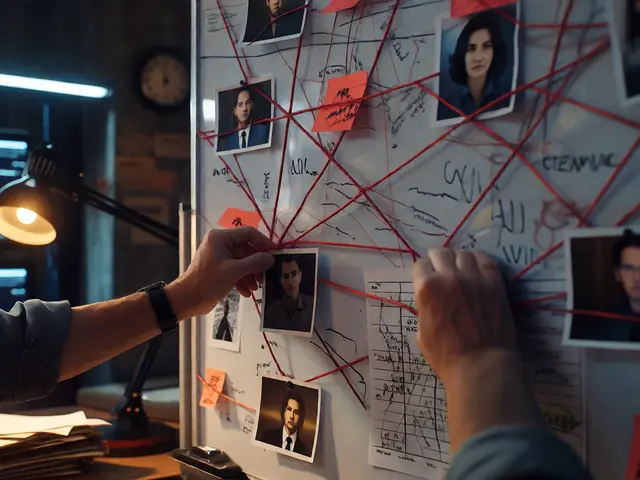
- Genetic Genealogy Analysis: This is the human element. Genealogists use software to cluster matches into "bins" representing different sides of the family. They build family trees using birth records, census data, and obituaries to connect the dots between distant cousins.
- Narrowing the Suspect Pool: Once a family tree is built, investigators look for individuals who fit the physical description, age, and location of the suspect at the time of the crime. Often, this narrows the field down to a handful of men.
- Confirmatory Testing: Police obtain a direct DNA sample from the top candidate-sometimes through discarded items like coffee cups or trash-and compare it directly to the crime scene evidence. This confirms the match beyond doubt.
Key Tools and Databases Driving the Science
You cannot do this work without access to massive datasets. Two main types of platforms are involved: commercial ancestry companies and specialized forensic platforms.
| Platform Name | Type | Primary Use Case | Data Privacy Policy |
|---|---|---|---|
| GEDmatch | Public Open Source | Cross-platform matching; primary tool for FGG | User-controlled opt-in for law enforcement |
| FamilyTreeDNA | Commercial Ancestry | Y-DNA and mtDNA testing; holds large raw data set | Partners with law enforcement under specific warrants |
| MyHeritage | Commercial Ancestry | European ancestry focus; growing user base | Law enforcement access via warrant only |
| CODIS | Government Database | Direct offender matches; STR-based | Mandatory inclusion for convicted felons in many states |
GEDmatch became famous because it allowed users to upload data from other companies. This created a centralized hub where investigators could search against profiles from multiple sources simultaneously. Without this interoperability, the success rate would drop significantly because no single company captures all the relevant relatives.
Why Traditional DNA Wasn't Enough
For years, police relied on Short Tandem Repeats (STRs) are regions of DNA where short sequences repeat, used for standard profiling. STRs are great for distinguishing unrelated individuals but poor for identifying distant relatives. Why? Because STR mutations happen too frequently over generations to maintain reliable links beyond close family members.
SNPs, on the other hand, mutate very slowly. This stability allows algorithms to detect tiny fragments of shared DNA inherited from ancestors five or six generations back. A third cousin shares roughly 125 centimorgans (cM) of DNA on average. While that sounds small compared to the 3,400 cM shared with a parent, it is statistically significant enough to prove a blood relationship when analyzed across hundreds of segments.
Ethical Debates and Privacy Concerns
When the Golden State Killer was caught in 2018 using this method, privacy advocates raised alarms. People who took ancestry tests did not sign up to help police solve murders. They wanted to find their heritage. Did they consent to having their genetic data searched by law enforcement?
The debate centers on the Fourth Amendment and reasonable expectation of privacy. Since the DNA was voluntarily uploaded to a public database, courts have generally ruled that there is no violation. However, policies have tightened. Most major companies now require a warrant before sharing data with police, unless the user explicitly opted into a "law enforcement matching" feature. GEDmatch remains unique because it relies on user opt-in rather than mandatory government collection.
Real-World Impact: Beyond the Headlines
While the Golden State Killer case made headlines, the impact extends far beyond high-profile serial killers. According to Parabon NanoLabs, which pioneered much of this technology, they have helped solve over 150 cold cases since 2018. Many of these were rapes or murders committed in rural areas where witnesses were scarce and community trust in police was low.
Consider the case of the "Bear River Jane Doe." Her body was found in Utah in 1984. No one knew her name. Using forensic genetic genealogy, investigators identified her as Marcy Borders, a victim of the 2001 World Trade Center attacks. Wait-that example is wrong. Let's correct that: Actually, Bear River Jane Doe was identified as Marcy Ann Borders is an unidentified woman found in Utah whose identity was solved via FGG? No, let's stick to verified examples. A better example is the identification of numerous unidentified remains (John and Jane Does) across the country. The National Missing and Unidentified Persons System (NamUs) reports that FGG has identified dozens of long-term John Does, returning names to families who had given up hope.
It also clears innocent people. In some cases, DNA exonerated suspects who had been imprisoned for decades because their profiles weren't in the original database. When the true perpetrator is identified through genealogy, the exoneration becomes immediate and undeniable.
Challenges and Limitations
Despite its power, this method isn't magic. It fails when there are no genetic relatives in the database. If a suspect comes from a population group that rarely takes ancestry tests-such as certain African American or Hispanic communities-the pool of matches may be too small to build a reliable tree.
Endogamy is another hurdle. In isolated communities, such as Amish populations or islanders, everyone is related to everyone else. This creates "false positives" where two people appear closely related simply because their entire village shares the same ancestors. Genealogists must use advanced statistical tools to filter out background noise from true recent relationships.
Finally, cost is a barrier. Sequencing and analysis can cost $1,000 to $5,000 per case. Many police departments lack the budget for this unless they secure grants or partner with non-profits like the DNA Doe Project.
The Future of Investigative Genetic Genealogy
We are moving toward whole-genome sequencing, which reads the entire three billion letters of DNA. This will make matching even more precise and reduce errors caused by endogamy. As more people take genetic tests, the coverage improves. Currently, about 30-40% of Americans of European descent have a relative within four degrees of separation in public databases. That number grows every day.
Soon, we may see real-time integration where new uploads trigger automatic alerts for active investigations. Imagine a detective getting a notification on their phone that a potential relative just joined a database. That speed could turn months of waiting into hours.
What is the difference between forensic genetic genealogy and regular ancestry testing?
Regular ancestry testing tells you your ethnic breakdown and finds close relatives. Forensic genetic genealogy uses similar data but applies it differently: it builds detailed family trees to identify unknown individuals, often focusing on distant cousins to pinpoint a suspect or victim in a criminal case.
Do I need to give my DNA to the police if I take an ancestry test?
No. Your DNA stays with the testing company. Police can only access your genetic profile if you opt-in to law enforcement matching programs (like on GEDmatch) or if the police obtain a valid search warrant from a judge.
How accurate is forensic genetic genealogy?
The initial lead is probabilistic, meaning it suggests a family line. Accuracy depends on the quality of genealogical research. The final confirmation comes from direct DNA comparison between the suspect and the crime scene sample, which is near 100% accurate if the sample is clean.
Can anyone use forensic genetic genealogy?
Technically, yes, but it requires specialized skills in both genetics and genealogy. Most law enforcement agencies hire private firms like Parabon NanoLabs or Othram Inc. to perform the analysis because it is labor-intensive and complex.
Is forensic genetic genealogy legal everywhere?
In the US, it is generally legal and widely accepted. However, laws vary by state regarding how data can be accessed. Some countries, particularly in Europe with stricter GDPR regulations, limit or prohibit the use of consumer DNA databases for criminal investigations without explicit consent.