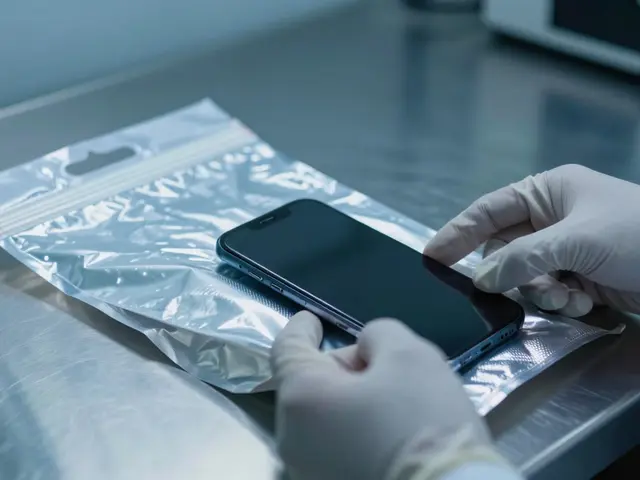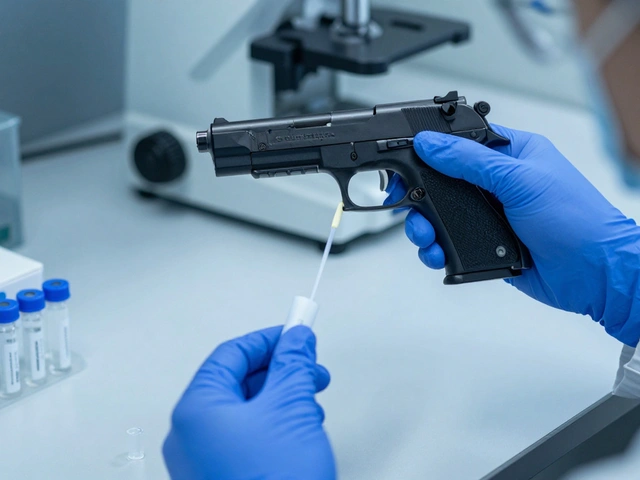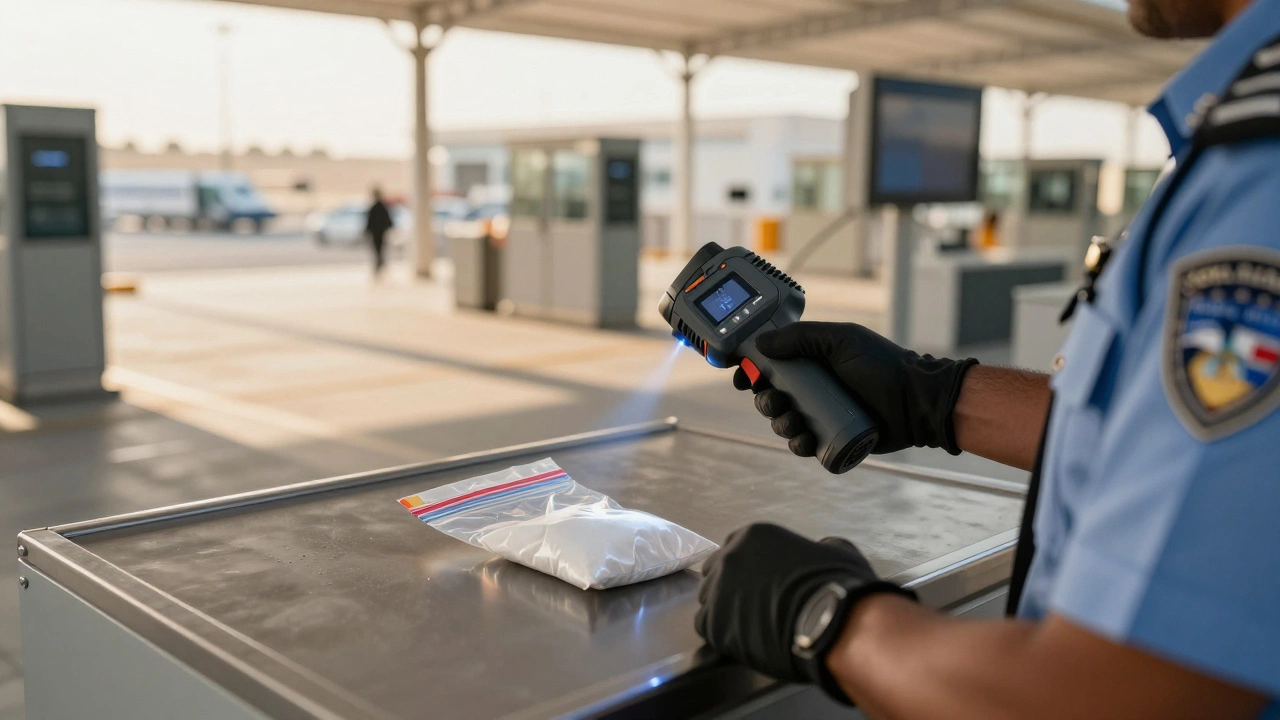
Imagine standing at a border checkpoint or on a street corner with a suspicious package. In the past, you’d rely on color-changing chemical swabs that give vague hints but no definitive answers. Today, officers and first responders carry handheld devices that can identify cocaine, fentanyl analogs, or explosives in seconds. These are not magic wands; they are sophisticated instruments using Raman and Fourier-transform infrared (FTIR) spectroscopy to analyze molecular vibrations. This shift from guesswork to data-driven identification is reshaping how law enforcement handles controlled substances.
The transition away from traditional presumptive tests isn’t just about convenience. It’s about accuracy and safety. Color tests can produce misleading results due to cross-reactivity with common cutting agents. Modern vibrational spectrometers provide a unique chemical fingerprint for each substance, drastically reducing false positives. If you’re involved in forensics, customs, or hazardous materials response, understanding these tools is no longer optional-it’s essential for operational effectiveness.
How Vibrational Spectroscopy Works in the Field
To understand why these devices work, you need to grasp the basic science without getting bogged down in physics jargon. Both Raman and FTIR technologies look at how molecules vibrate. Every chemical compound has a specific pattern of vibrations, much like a musical instrument produces a unique sound. By measuring these vibrations, the device creates a spectral fingerprint.
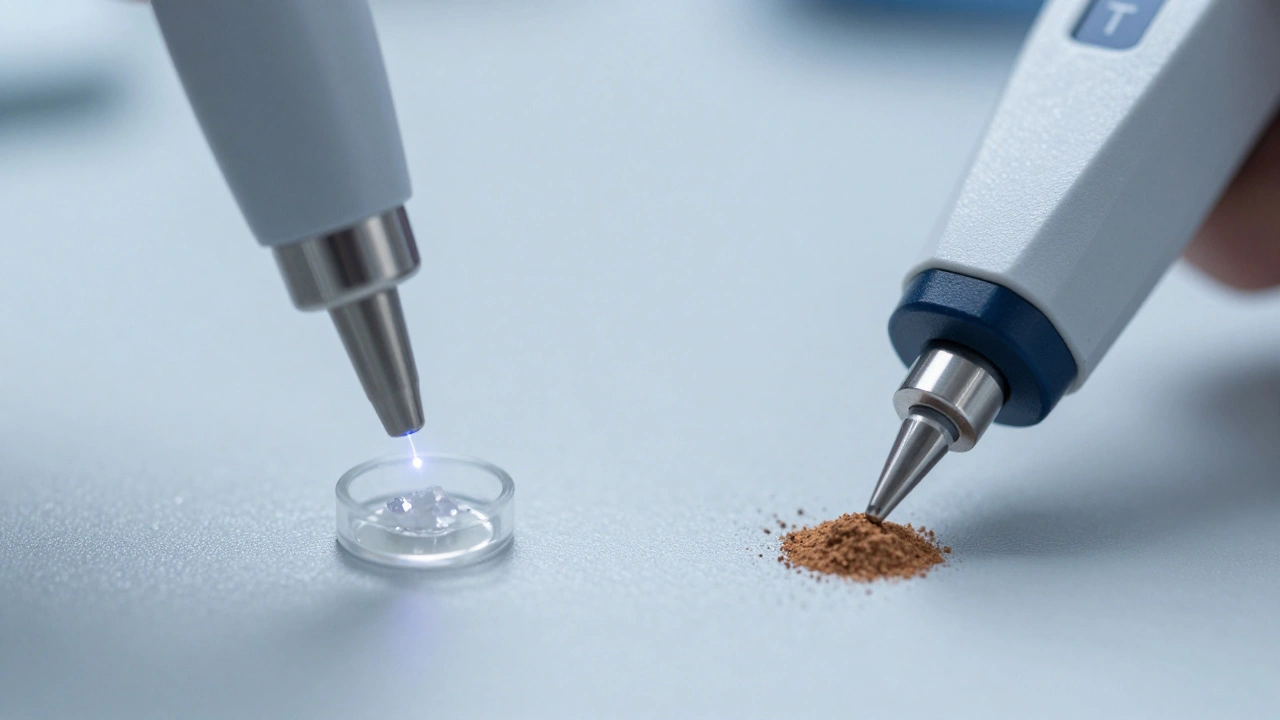
Raman spectroscopy uses a laser to shine light onto a sample. Most light bounces off unchanged, but a tiny fraction scatters with shifted energy levels corresponding to molecular bonds. The device detects this scattered light and matches it against an internal library. The beauty of Raman is that it can often see through clear plastic bags or glass vials, allowing non-contact analysis. This is crucial when dealing with potentially dangerous powders or liquids.
FTIR spectroscopy, on the other hand, measures how much infrared light a sample absorbs. It requires physical contact, usually via a crystal tip called Attenuated Total Reflectance (ATR). You press the sample against the crystal, and the device reads the absorption spectrum. While it lacks the non-contact advantage of Raman, FTIR is generally faster and less prone to interference from fluorescence, which can plague Raman readings on certain colored substances.
Raman vs. FTIR: Choosing the Right Tool
Neither technology is perfect. They complement each other. Here is how they stack up in real-world scenarios:
| Feature | Portable Raman | Portable FTIR |
|---|---|---|
| Sample Contact | Non-contact (through packaging) | Direct contact required (ATR crystal) |
| Fluorescence Interference | High risk (colored samples may fail) | Low risk (robust signal) |
| Ideal Sample Type | Crystalline solids, sealed liquids | Bulk powders, oils, pastes |
| Analysis Speed | Seconds to minutes | Under 60 seconds |
| Library Dependency | Critical for accurate matching | Critical for accurate matching |
If you encounter a white powder in a sealed bag, Raman is your first choice. You scan through the plastic, get a result, and never open the container. But if that powder is dyed blue or mixed with fluorescent cutting agents, the Raman signal might be overwhelmed. That’s when you switch to FTIR, press the sample to the probe, and get a clean read. Many modern units, like the Thermo Scientific Gemini analyzer, combine both technologies into one rugged handheld device to cover all bases.
Performance Metrics: What the Data Says
It’s easy to trust marketing claims, but peer-reviewed studies tell the real story. A notable evaluation of a commercial handheld Raman spectrometer focused on detecting cocaine in seized street samples. The results were striking. The device achieved a true positive rate of 97.5% for cocaine identification. More importantly, it recorded a 0% false positive rate under tested conditions.
Why does zero false positives matter? In legal proceedings, a wrong ID can derail a case or lead to wrongful accusations. The study also highlighted detection limits. For binary mixtures, the limit of detection (LOD) ranged from 10 wt% to 40 wt%. This means if a sample contains less than 10% cocaine diluted with inert filler, the handheld unit might return an inconclusive result. This isn’t a flaw in the machine; it’s a physical limitation of the technology. It works best on bulk or near-bulk substances, not trace residues.
For high-purity samples-those containing 60 wt% cocaine hydrochloride or more-the instrument detected the drug in every single case. This reliability makes these analyzers powerful screening tools, even if they don’t replace laboratory-grade gas chromatography-mass spectrometry (GC-MS) for final confirmation.
Workflow Integration for First Responders
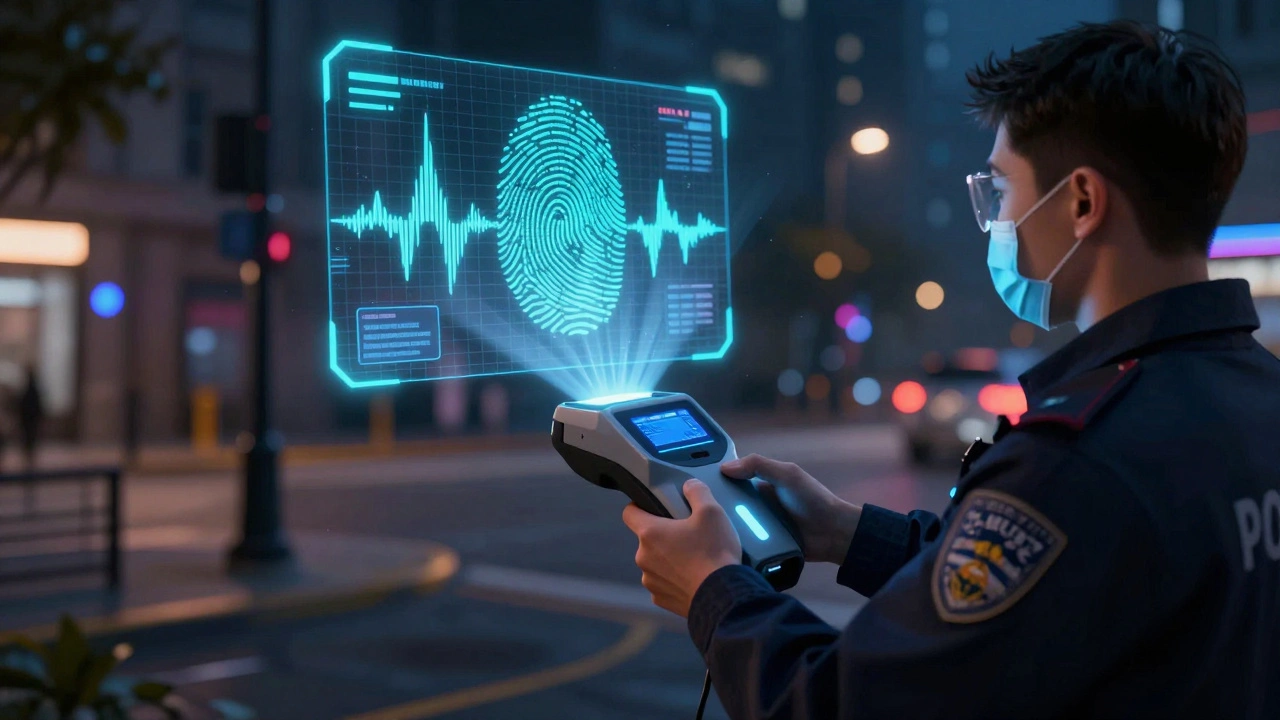
These devices aren’t built for PhD chemists in climate-controlled labs. They are designed for police officers, customs agents, and hazmat teams who need answers now. Manufacturers have simplified the user interface significantly. You typically see a single-button workflow: point, scan, and read the result. The screen displays simple messages like “Match,” “No Match,” or hazard classifications rather than complex spectral graphs.
Behind the scenes, embedded processors run chemometric algorithms to compare the live spectrum against onboard libraries. These libraries are extensive, covering thousands of known drugs, explosives, and chemicals. However, the quality of the answer depends on the quality of the library. New psychoactive substances (NPS) or novel analogs not yet added to the database will result in a “no match” output. Regular updates are critical to keep pace with evolving drug markets.
Ruggedization is another key feature. These units withstand drops, vibration, temperature extremes, and moisture. Whether you’re in a humid jungle outpost or a freezing warehouse, the device needs to function reliably. Battery life is optimized for full shifts, and internal diagnostics ensure calibration remains stable without constant maintenance.
Limitations and Best Practices
No tool is infallible. Understanding where these analyzers fall short prevents over-reliance. First, they struggle with trace analysis. If you’re trying to detect minute residues on a surface, a handheld Raman or FTIR won’t cut it. You need lab equipment for that. Second, complex mixtures can confuse the algorithm. If multiple active ingredients are present in similar concentrations, the software might prioritize the dominant peak and miss secondary components.
Third, library gaps remain a challenge. As synthetic drug manufacturers tweak molecular structures to evade laws, new compounds appear daily. Until these are characterized and added to reference libraries, field devices cannot identify them. Operators should treat a “no match” result as a potential unknown hazard rather than a safe substance.
Finally, while these devices offer high specificity compared to color tests, they are still considered presumptive in many jurisdictions. Courts often require confirmatory testing via GC-MS or LC-MS for conviction. Use field analyzers to make immediate tactical decisions-secure the scene, isolate suspects, or prioritize evidence-but remember they are part of a larger chain of custody, not the final word.
Future Outlook for Field Analysis
The trajectory for field-deployable drug analyzers points toward greater integration and intelligence. We are seeing a move away from single-technology devices toward hybrid platforms like the Gemini, which offers the best of both Raman and FTIR. Future iterations will likely include broader spectral libraries updated via cloud connectivity, ensuring operators always have the latest data on emerging threats.
Artificial intelligence will play a bigger role in interpreting complex spectra. Instead of simple match/no-match outputs, AI could provide probabilistic assessments of mixture components, helping operators understand what else might be present. Miniaturization will continue, making devices lighter and more affordable for widespread adoption across smaller agencies.
As these tools become standard issue, training programs must evolve. Officers need to understand not just how to push a button, but how to interpret confidence metrics and recognize when a sample requires further laboratory analysis. The goal is not to replace the lab, but to create a smarter, faster front line that feeds better-quality evidence into the judicial system.
Can handheld Raman and FTIR devices detect fentanyl?
Yes, provided fentanyl and its analogs are included in the device's spectral library. Modern field analyzers regularly update their databases to include potent opioids. However, detection limits apply; heavily diluted mixtures may yield inconclusive results.
Do I need special training to use a portable drug analyzer?
Basic operation is designed for minimal training, often requiring only hours of instruction. However, understanding limitations, interpreting confidence scores, and maintaining the device benefits from more comprehensive forensic chemistry training.
Are field test results admissible in court?
In many jurisdictions, field analyzer results serve as probable cause for seizure or arrest but are considered presumptive. Confirmatory testing by an accredited laboratory using GC-MS is typically required for conviction.
What causes a false negative in Raman spectroscopy?
False negatives often occur due to low concentration of the target drug (below 10-40 wt%), strong fluorescence from colored cutting agents overwhelming the signal, or the substance being absent from the reference library.
Is it better to buy a dual-tech device or separate units?
Dual-tech devices like the Thermo Scientific Gemini offer versatility by handling both fluorescence-prone samples (via FTIR) and packaged samples (via Raman). For specialized teams focusing on one type of material, single-tech units may suffice, but dual-tech provides higher overall success rates in unpredictable field environments.