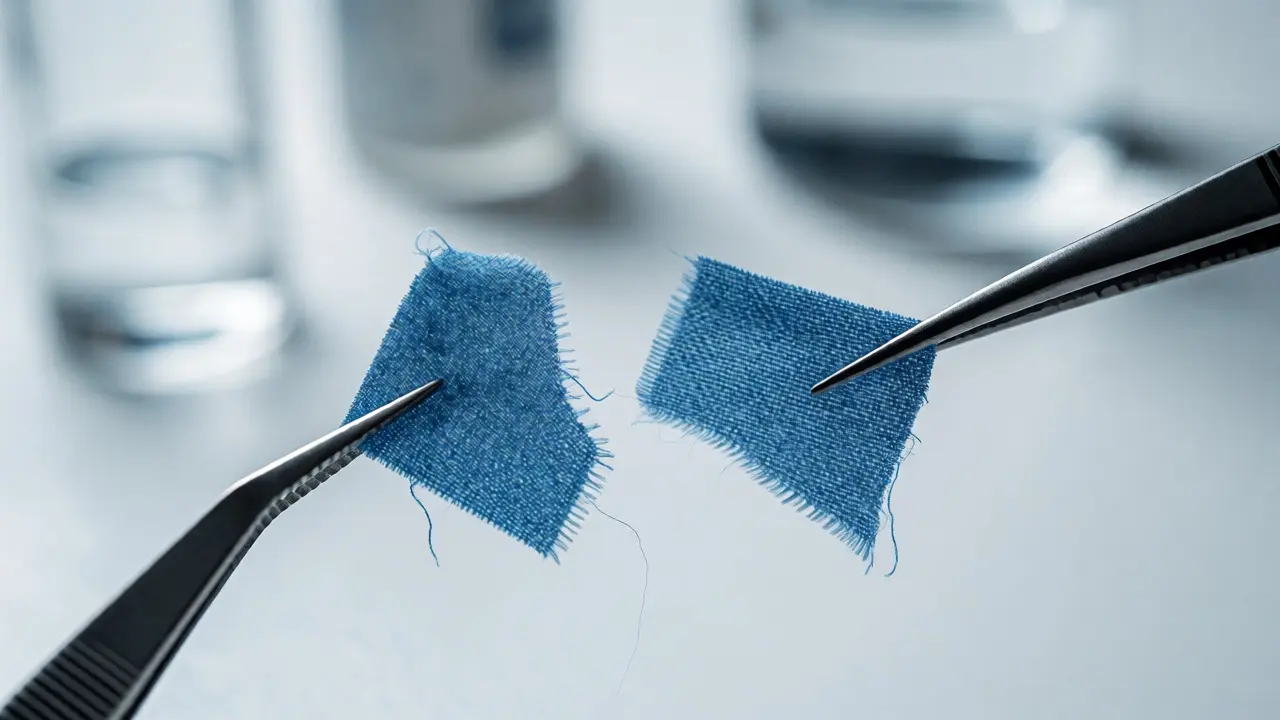
You find a blue cotton shirt at the scene. The suspect wears a blue cotton shirt. Case closed? Not even close. In the world of trace evidence, matching fibers is just step one. The real magic happens when you look at what’s inside those fibers: the dye. Two shirts can be identical in color to the naked eye but completely different under a microscope or spectrometer. That’s where fiber dye analysis comes in-it’s the chemical fingerprint that tells you if two pieces of fabric actually share a common origin.
Most people think forensics is all about DNA and fingerprints. But for property crimes, hit-and-runs, and transfers between people, fiber evidence is often the only physical link. And since millions of shirts are made with similar synthetic dyes, knowing how to profile them chemically is what separates a solid case from a guess. Here is how experts break down dye composition, compare samples, and determine if that transfer really matters.
Why Color Alone Is Never Enough
If you rely on visual comparison, you’re setting yourself up for failure. Human eyes are terrible at distinguishing subtle shade differences, especially under varying lighting conditions. A dark navy shirt might look black in dim light. More importantly, manufacturers use thousands of different dye formulations to achieve the same perceived color. One brand might mix three specific dyes to get "Navy Blue," while another uses five completely different compounds to achieve the exact same hue.
This is why forensic scientists don’t just look at color; they look at composition. If the suspect’s shirt contains Dye A, B, and C, and the crime scene fiber contains Dyes X, Y, and Z, they didn’t come from the same batch, regardless of how similar they look. This distinction is critical in court. Prosecutors need more than "it looks like his shirt." They need data showing the chemical profile matches.
The Chemistry Behind the Dye
To understand profiling, you have to know what you’re dealing with. Textile dyes aren't single molecules; they're complex mixtures designed to bind to specific fiber types. Cotton, wool, and polyester each require different dye classes because their molecular structures are totally different.
Reactive dyes are commonly used on cellulosic fibers like cotton. They form covalent bonds with the fiber, making them very resistant to washing. Disperse dyes are non-polar and work best on hydrophobic fibers like polyester. They diffuse into the fiber structure rather than bonding chemically. Acid dyes bind to protein fibers like wool and silk through ionic interactions.
Knowing the fiber type dictates which extraction method and analytical technique you choose. You can’t use the same solvent to pull dye out of nylon as you would from acrylic. Getting this wrong ruins the sample before you even start testing.
Extraction: Getting the Dye Out Without Destroying It
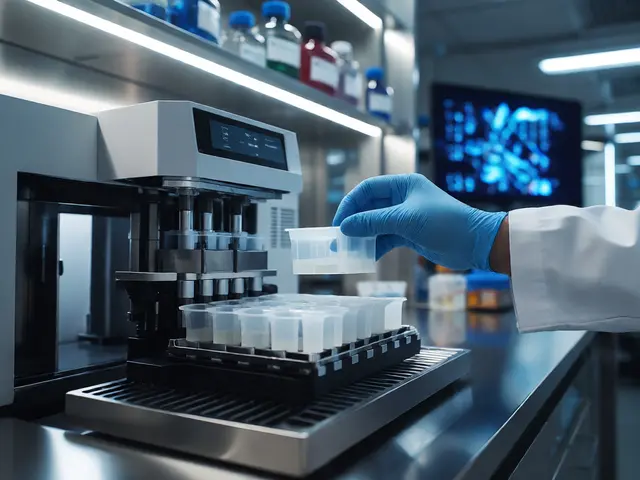
The first hurdle in any lab is getting the dye off the fiber so it can be analyzed. You can’t just run a whole piece of cloth through most machines. You need the pure dye components in solution. This process is called extraction, and it’s an art form in itself.
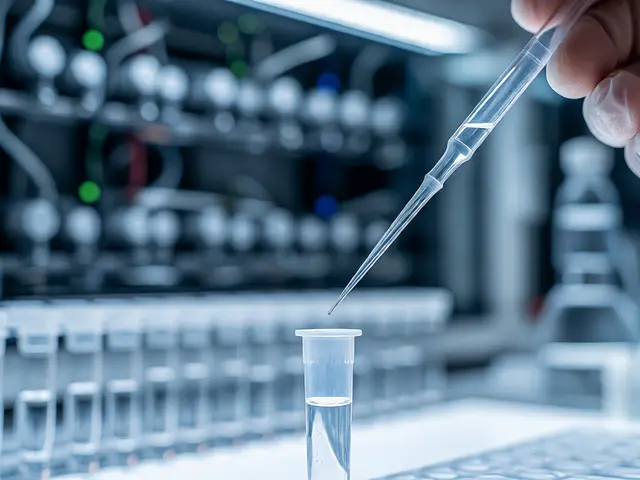
Analysts typically use small amounts of fiber-sometimes less than a millimeter. These tiny fragments are placed in test tubes with specific solvents. Common solvents include:
- Methanol: Good for many disperse and acid dyes.
- Dimethylformamide (DMF): Effective for stubborn synthetic dyes.
- Pyridine-water mixtures: Often used for reactive dyes on cotton.
The tube is heated, sometimes gently shaken, to encourage the dye to dissolve into the liquid. The goal is maximum recovery without degrading the dye molecules. If you overheat it, the dye breaks down, and your profile becomes useless. If you under-extract, you miss components, leading to false exclusions. It’s a delicate balance of time, temperature, and solvent choice.
Analytical Techniques: How We See the Invisible
Once you have the dye extract, you need to separate and identify its components. Two main techniques dominate modern forensic labs: Thin Layer Chromatography (TLC) and Ultraviolet-Visible Spectroscopy (UV-Vis). Sometimes, High-Performance Liquid Chromatography (HPLC) is used for higher precision.
| Method | Best For | Resolution | Sample Size Needed | Cost & Speed |
|---|---|---|---|---|
| Thin Layer Chromatography (TLC) | Rapid screening, separating dye mixtures | Moderate | Very small (<1mm) | Low cost, fast results |
| UV-Visible Spectrophotometry | Identifying absorption peaks, comparing overall color profiles | High for spectral shape | Small (requires clear solution) | Medium cost, rapid scan |
| High-Performance Liquid Chromatography (HPLC) | Precise separation of complex mixtures, quantitative analysis | Very High | Small but requires clean extract | High cost, slower, highly accurate |
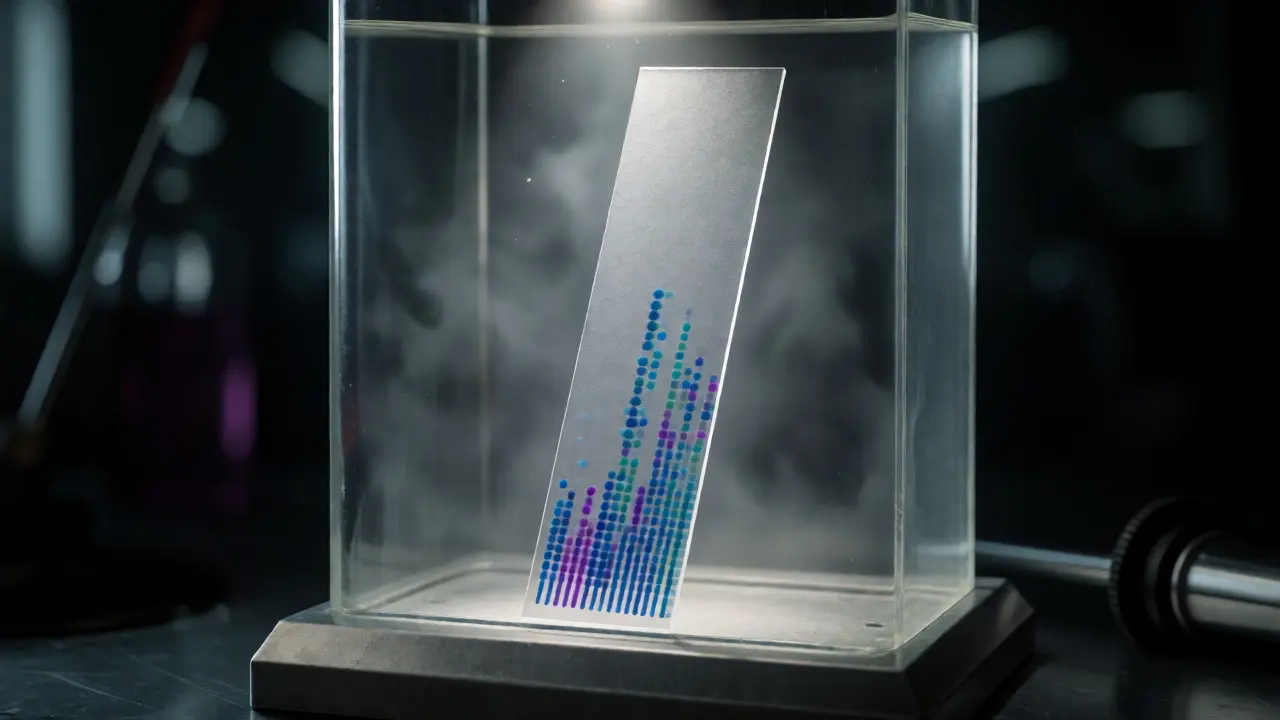
TLC is the workhorse for initial comparisons. You spot the extracted dye onto a coated plate and let a solvent move up the plate by capillary action. Different dye components travel at different speeds, creating distinct spots. By comparing the pattern of spots from the questioned fiber against the known reference, you get a quick yes/no indicator. It’s cheap, effective, and doesn’t require expensive equipment.
UV-Vis spectroscopy goes deeper. It measures how much light the dye absorbs at different wavelengths. Every dye has a unique absorption spectrum-a kind of barcode. If the spectra of the crime scene extract and the suspect’s shirt overlay perfectly, it’s strong evidence of a match. If there are shifts in peak height or position, it suggests different dye batches or degradation.
Interpreting the Results: Match vs. Association
Here’s where legal nuance kicks in. A perfect match in TLC or UV-Vis profiles doesn’t prove the fiber came from that specific shirt. It proves the fiber is consistent with the shirt. Millions of shirts could share the same dye recipe. So, what does a match mean?
It means exclusion is ruled out. If the profiles differ significantly, you can confidently say the fiber did not come from that garment. If they match, you can’t say it definitely did, but you can say it’s possible. This probabilistic nature is crucial. Defense attorneys will argue that a match is meaningless because the dye is common. To counter this, analysts look for rare combinations. If the dye mixture includes three uncommon components found together, the probability of coincidence drops dramatically.
Context matters too. Finding a red nylon fiber on a victim who never leaves her house, when the suspect owns a red nylon jacket, is compelling. Finding a generic black polyester fiber in a city center is less so. Analysts must weigh the rarity of the dye combination against the background frequency of that fiber type in the population.
Common Pitfalls and Contamination
Fiber evidence is fragile. Contamination is the enemy. During collection, if you touch the fiber with bare hands, skin oils can interfere with extraction. If you store it in a plastic bag that previously held other clothes, you might pick up stray fibers. Always use paper envelopes or glass vials for storage.
Another issue is fading. Sunlight and washing degrade dyes. A shirt worn daily for a year may have lost some dye components compared to a new one. If the suspect’s shirt is faded and the crime scene fiber is fresh, the profiles might look different even if they started the same. Experts account for this by looking for relative ratios of remaining dyes rather than absolute presence.
Also, be wary of optical brighteners. Many white fabrics contain fluorescent agents that aren’t technically dyes but affect color appearance. These need to be identified separately, often using fluorescence microscopy, because they don’t behave like standard dyes in TLC or UV-Vis tests.
Real-World Application: Hit-and-Run Cases
Imagine a pedestrian is struck by a car. Fibers are recovered from the victim’s clothing. The suspect vehicle is impounded. Investigators scrape fibers from the bumper area. Visual inspection shows both are gray. But visual isn’t enough.
The lab extracts dye from both sets of fibers. TLC reveals the victim’s fiber has a three-component blue-gray mix. The suspect’s bumper fiber has a two-component green-gray mix. Even though they look similar to the naked eye, the chemical profiles exclude the suspect’s car. Conversely, if the profiles matched exactly, including the ratio of components, it would provide strong associative evidence linking the vehicle to the impact site.
This level of detail helps investigators narrow down suspects quickly. Instead of checking every gray car in town, they focus on vehicles with the specific dye signature. It saves time and resources, directing police effort where it counts.
Future Trends in Fiber Analysis
Technology is evolving. Mass spectrometry coupled with HPLC (LC-MS) is becoming more accessible. This allows analysts to identify the actual molecular weight of dye components, offering a higher degree of certainty than traditional methods. Portable Raman spectroscopy is also emerging, allowing field technicians to get preliminary data without sending samples back to the lab.
However, these advanced tools require extensive databases. Forensic labs are working to build comprehensive libraries of commercial dyes linked to specific manufacturers and product lines. The more robust the database, the stronger the statistical backing for a match.
For now, mastering the basics of extraction, TLC, and UV-Vis remains essential. These methods are reliable, well-understood, and widely accepted in courts. Understanding their limitations is just as important as knowing how to run them.
Can dye analysis prove a fiber came from a specific garment?
No, it cannot prove uniqueness. It can only show consistency. A match means the fiber could have come from that garment, but it doesn't rule out other garments with the same dye recipe. However, a mismatch definitively excludes the garment as the source.
How much fiber material is needed for dye analysis?
Typically, very little is required-often less than 1 millimeter in length. Modern techniques like micro-spectrophotometry and TLC allow analysts to work with microscopic amounts, preserving evidence for other tests like DNA or morphology analysis.
Does washing clothes affect dye analysis results?
Yes, washing can leach out certain dye components, altering the chemical profile. Fading due to sunlight also changes dye structure. Analysts must consider the history of the garment (new vs. old, washed vs. unwashed) when interpreting differences between samples.
What is the difference between TLC and UV-Vis in fiber analysis?
TLC separates dye components physically on a plate, showing the number and type of dyes present based on movement rates. UV-Vis measures light absorption, providing a spectral fingerprint of the dye mixture. TLC is better for detecting individual components, while UV-Vis is excellent for comparing overall color profiles rapidly.
Are natural fibers easier to analyze than synthetic ones?
Not necessarily. Synthetic fibers often have more consistent and stable dye formulations, making them easier to profile reliably. Natural fibers like cotton can vary more due to manufacturing inconsistencies and environmental exposure, requiring careful interpretation of results.