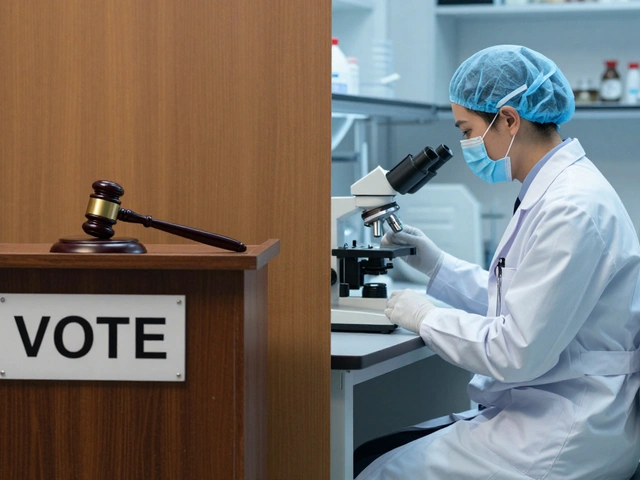
Imagine you’re sitting in a courtroom. A forensic scientist stands up to explain why their DNA match is solid. The opposing attorney jumps up, shouting that the method is unproven. Who wins? In the United States, it’s not just about who sounds smarter. It’s about whether the science passes the Daubert standard is a legal framework established by the U.S. Supreme Court in 1993 to determine the admissibility of expert scientific testimony in federal courts. Before any expert can speak, they must prove their methods are reliable. Two of the most scrutinized pillars of this framework are error rates and peer review.
These two factors often decide cases. If an expert can’t show how often their method fails, or if their work hasn’t been vetted by other scientists, the judge might toss the evidence out entirely. Understanding these specific Daubert factors isn't just for lawyers; it’s crucial for anyone involved in litigation where scientific data plays a role.
The Core of Daubert: What Judges Actually Look For
The Daubert v. Merrell Dow Pharmaceuticals decision replaced the older Frye standard. While Frye asked if a technique was "generally accepted" in the scientific community, Daubert gives judges more flexibility as gatekeepers. They don't need to be scientists themselves, but they must ensure the testimony is based on good science, not junk.
The court outlined several non-exclusive factors to consider. These include testability, known or potential error rate, existence and maintenance of standards controlling the technique's operation, peer review and publication, and general acceptance. However, in practice, error rates and peer review tend to carry the most weight because they provide tangible proof of reliability. If a method has never been tested against a control group, how do we know it works? And if no one else in the field agrees with the method, is it really science?
Error Rates: The Number That Makes or Breaks a Case
An error rate is the statistical probability that a scientific test will produce an incorrect result. It’s the margin of safety. When an expert testifies, they aren't just saying "it matches." They are implying that the chance of a false match is low enough to be trustworthy.
Judges want specific numbers. Vague answers like "very rare" or "negligible" often get challenged. Instead, experts should cite studies showing that the method produces a false positive rate of, say, 0.01% under controlled conditions. This specificity allows the jury to understand the risk. If a fingerprint analyst claims a match is unique, they need to demonstrate that the comparison process has a documented error rate when compared against a large database of non-matching prints.
- Known vs. Potential: Ideally, the error rate is empirically known through validation studies. If it’s only potential (theoretical), the testimony is weaker.
- Context Matters: An error rate of 1% might be acceptable in some contexts but unacceptable in others, depending on the stakes and alternative evidence.
- Human Factor: Many errors come from human interpretation, not the machine. Experts must account for operator variability in their error rate calculations.

Peer Review: The Scientific Community’s Stamp of Approval
Peer review is the process where independent experts evaluate a researcher's work before it is published or accepted into the scientific record. In the context of Daubert, it serves as a proxy for quality control. If a method has been published in a reputable journal and survived scrutiny from other experts, it carries more weight than a proprietary method developed in-house without external validation.
However, peer review isn't a magic shield. A method can be peer-reviewed but still flawed if the sample size was tiny or the methodology was biased. Conversely, some highly reliable techniques, especially those used in law enforcement or military settings, may not have been formally published due to classification or practical constraints. Judges look at the *quality* of the review, not just its existence. Was the journal indexed? Did the reviewers check the math? Were there replications?
| Factor | What It Measures | Common Pitfalls | Strength Indicator |
|---|---|---|---|
| Error Rate | Probability of false results | Lack of empirical validation studies | Low, statistically significant false positive/negative rates |
| Peer Review | Scientific consensus and scrutiny | Publishing in low-impact journals | Publication in high-impact, indexed journals with replication |
How Courts Apply These Factors in Practice
Courts don't treat these factors as a checklist where you need all five to pass. They are flexible guidelines. A judge might find a method admissible even without a precise error rate if the peer review is robust and the method is generally accepted. Conversely, a method with perfect peer review might be excluded if the error rate is dangerously high for the specific case at hand.
In recent years, there has been a push toward stricter application. The U.S. Department of Justice issued guidance suggesting that forensic disciplines like bite mark analysis or hair microscopy needed better validation because their error rates were poorly understood. This led to many convictions being overturned. The lesson here is clear: if you can't prove your error rate, you're vulnerable.

Challenges in Establishing Reliability
Why is this so hard? Because much of forensic science evolved outside of academic labs. Techniques were developed by practitioners, not researchers. There was no incentive to publish negative results or conduct rigorous validation studies. Now, the legal system demands the same rigor as clinical medicine. This creates a gap between what is done in the lab and what is required in court.
Experts now spend significant time preparing for Daubert hearings. They gather validation studies, consult with statisticians to calculate confidence intervals for error rates, and seek publications in top-tier journals. It’s an arms race. The defense attacks the gaps, while the prosecution fills them with new data. For the reader, this means that "scientific evidence" is not static; it evolves as our understanding of its reliability improves.
Practical Tips for Evaluating Expert Testimony
If you’re following a trial or working in legal fields, here’s how to critically assess the expert’s claims regarding these two factors:
- Ask for the Source: Where does the error rate number come from? Is it from a single study or a meta-analysis of multiple studies?
- Check the Journal: Is the peer-reviewed article in a well-known, respected journal? Or is it in a niche conference proceeding?
- Look for Replication: Have other labs tried the method and gotten similar results? One lab’s success doesn’t guarantee universal reliability.
- Consider the Context: Does the error rate make sense given the complexity of the task? A 5% error rate in simple arithmetic is bad; in complex pattern recognition, it might be acceptable.
Understanding these nuances helps separate solid science from speculative theory. It empowers you to ask the right questions and recognize when an expert is stretching the truth.
Does every expert witness need to provide an error rate?
Not necessarily. If the method is widely accepted and has strong peer review, a judge may admit testimony without a precise error rate. However, lacking an error rate makes the testimony easier to challenge during cross-examination.
What counts as valid peer review for Daubert purposes?
Valid peer review typically involves publication in a reputable, indexed scientific journal where the work was evaluated by independent experts in the field. Proprietary internal reviews are less persuasive unless supplemented by external validation.
How does the Daubert standard differ from the Frye standard?
Frye focused on "general acceptance" within the relevant scientific community. Daubert focuses on the scientific validity and reliability of the methodology itself, giving judges broader discretion to exclude unreliable science even if it is somewhat accepted.
Can a method be admissible if it has never been peer-reviewed?
Yes, but it becomes harder. The expert would need to compensate with strong empirical validation studies showing low error rates and adherence to strict professional standards. Lack of peer review raises red flags about bias or lack of scrutiny.
Who decides if the error rate is acceptable?
The judge acts as the gatekeeper during the pre-trial hearing. They weigh the error rate against the other Daubert factors and the specific context of the case. The jury then weighs the significance of that error rate when evaluating the overall credibility of the expert.