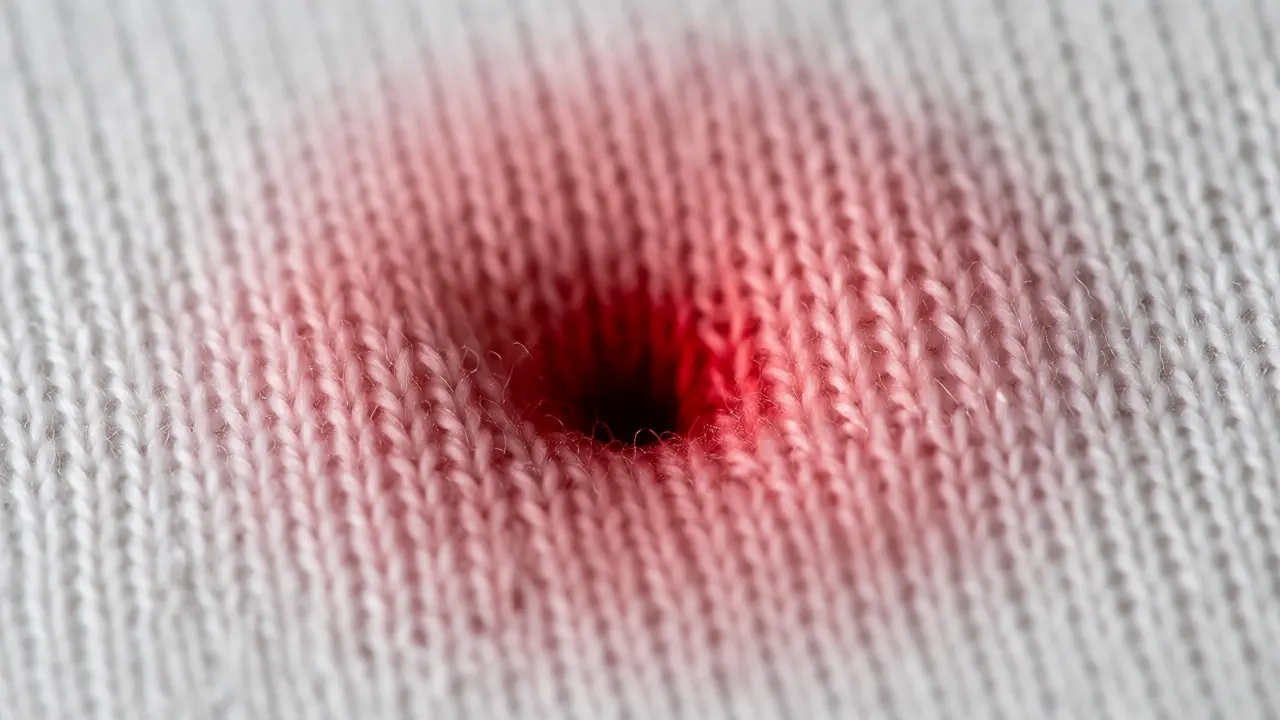
You’re at a crime scene. The floor is concrete, clean as a whistle. But the victim’s shirt? It’s soaked through. You lift it up, expecting a simple transfer stain, but what you see makes your stomach drop. The blood isn’t just sitting there; it’s dancing across the fibers in ways that don’t match the gravity of the situation. Did they fall? Were they dragged? Or was someone else holding them down?
This is where textile forensics gets tricky. Most analysts learn to read blood on hard surfaces-glass, tile, wood. Those are easy. Physics works predictably there. But when blood hits cloth, it doesn’t just sit on top. It wicks, it spreads, it gets trapped, and it hides secrets. The weave of the fabric changes everything. A tight polyester blend behaves nothing like loose-weave cotton. If you ignore the material, you misread the story.
Why Hard Surface Rules Break Down on Cloth
On a smooth surface, blood droplets maintain their shape until impact. They hit, they splatter, they dry. On fabric, capillary action takes over. This is the movement of liquid through small spaces within the material without assistance from external forces. In plain English? The fabric sucks the blood in.
This absorption distorts the impact angle. On glass, a droplet hitting at 30 degrees creates an elongated ellipse with a sharp tail pointing in the direction of travel. On denim, that same droplet might look rounder because the threads pull the blood sideways before it dries. If you calculate the angle based on standard formulas, you’ll be wrong by ten or fifteen degrees. That error margin can shift the origin point of a spatter event by several feet. Suddenly, the suspect’s position looks totally different.
It’s not just about angles. It’s about volume. Fabric holds liquid. A shirt might absorb 50 milliliters of blood before it starts dripping. That means the visible pattern on the front doesn’t tell you how much blood was actually shed. You have to account for what’s hidden inside the layers.
The Weave Factor: Cotton vs. Synthetics
Not all fabrics are created equal. The structure of the threads dictates how blood moves. Let’s break down the two most common culprits in violent crimes: natural fibers and synthetic blends.
| Fabric Type | Absorption Rate | Pattern Distortion | Drying Time |
|---|---|---|---|
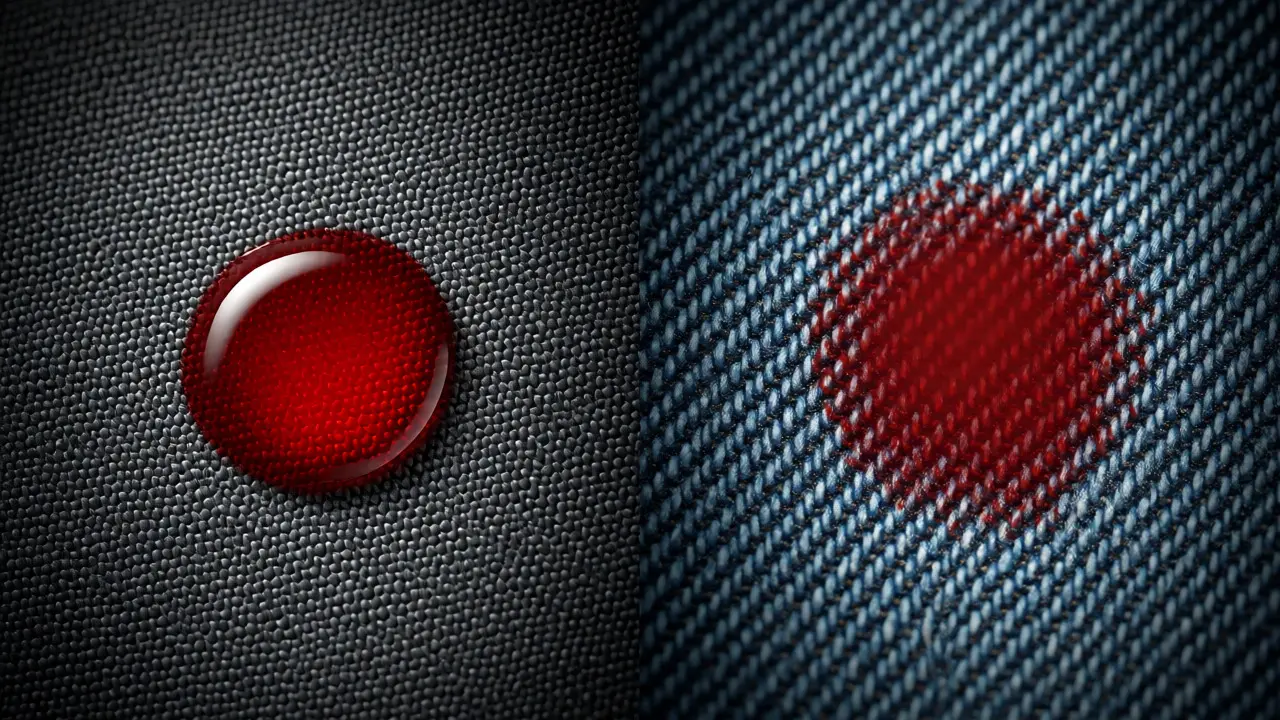
| Cotton (Plain Weave) | High | Significant spreading; edges blur | Slow (hours) |
| Polyester (Tight Weave) | Low | Maintains shape better; sharper edges | Fast (minutes) |
| Denim (Twill Weave) | Medium-High | Directional wicking along diagonal threads | Moderate |
| Silk (Smooth Fiber) | Low-Medium | High gloss; potential for sliding smears | Variable |
Cotton is thirsty. It’s hydrophilic, meaning it loves water-and blood is mostly water. When a droplet hits a cotton t-shirt, it doesn’t stay put. It migrates outward through the yarns. This creates a "halo" effect where the center is dark, but the edges fade into a lighter pink wash. This halo can make a single impact look like multiple impacts if you aren’t careful.
Polyester, on the other hand, is hydrophobic. It repels moisture initially. Blood tends to bead up on the surface longer before soaking in. This means the initial impact shape is preserved better. However, once it does soak, it stays wet longer on the surface because it doesn’t penetrate deep into the fiber core immediately. This leads to interesting secondary effects, like drip trails that form faster than they would on cotton.
Denim is the wildcard. Because it uses a twill weave (diagonal ribs), blood often follows those diagonal lines. A circular stain on jeans might stretch into an oval aligned with the thread direction, even if the impact was straight down. This is called directional wicking. If you see a stain stretched diagonally on jeans, don’t assume the victim was moving diagonally. Check the thread count first.
Void Patterns and Cast-Offs on Textiles
Void patterns occur when something blocks blood from reaching a surface. On a wall, you see a silhouette of the object that was in the way. On clothing, voids happen differently. Imagine a person wearing a heavy jacket. An attacker swings a weapon. Blood flies off the weapon (cast-off pattern) and hits the victim’s chest. But the jacket sleeve is covering part of the chest. The blood lands everywhere except under the sleeve.
When the investigator lifts the arm, they find a clean patch of skin or undershirt surrounded by spatter. This proves the arm was raised during the event. It wasn’t dropped after. The fabric acted as a shield. This is crucial for reconstructing defensive wounds.
Cast-offs themselves look different on clothes. On a wall, cast-off lines are distinct streaks. On a sweater, the texture breaks up the line. Instead of one long streak, you might see a series of dots that follow a curved path. The fuzzy fibers catch the larger droplets, while smaller ones pass through. You have to mentally reconnect the dots to see the arc of the swing. It requires looking at the negative space-the gaps between the stains-as much as the stains themselves.
Transfer Stains: The Smear Problem
Transfer occurs when a bloody object touches a fabric. Think of a hand grabbing a shirt collar. On paper, this leaves a clear fingerprint-like image. On fabric, it smears. The friction drags the blood across the weave. The result is often a chaotic mess that defies easy interpretation.
But here’s a pro tip: look at the edge of the smear. Even on fabric, the leading edge of a transfer stain usually has more deposit than the trailing edge. If you see a thick buildup of blood on one side of a smear and a thinning out on the other, you know the direction of movement. The hand moved from the thick side to the thin side.
Also, consider the pressure. A light touch leaves a faint imprint. A hard grab crushes the fibers and pushes blood deeper. Deeper penetration means the stain will look darker and less defined. If you’re trying to determine if someone grabbed the victim or just brushed past them, check the depth of the stain using a magnifying loupe. Crushed fibers indicate force.
Layering Effects: What Happens Underneath
Criminals wear layers. Victims wear layers. Blood doesn’t stop at the outer layer. It penetrates. But it doesn’t penetrate evenly. The inner layer often shows a different pattern than the outer layer.
Say a gunshot exits a victim’s back. The outer jacket might show a large, diffuse stain because the fabric absorbed the spray. The inner t-shirt, pressed against the skin, might show a smaller, more concentrated stain because it was compressed. The compression reduces the area available for the blood to spread. So, the inner layer tells you the point of contact more accurately than the outer layer.
Conversely, if the blood comes from a wound on the front, the outer layer acts as a filter. It catches the big chunks of tissue and clots. The inner layer sees only the finer mist. Analyzing both layers separately gives you a clearer picture of the mechanism of injury. Never cut out just one layer and call it done. Peel them apart carefully, keeping each piece intact.
Practical Steps for Examining Fabric Evidence
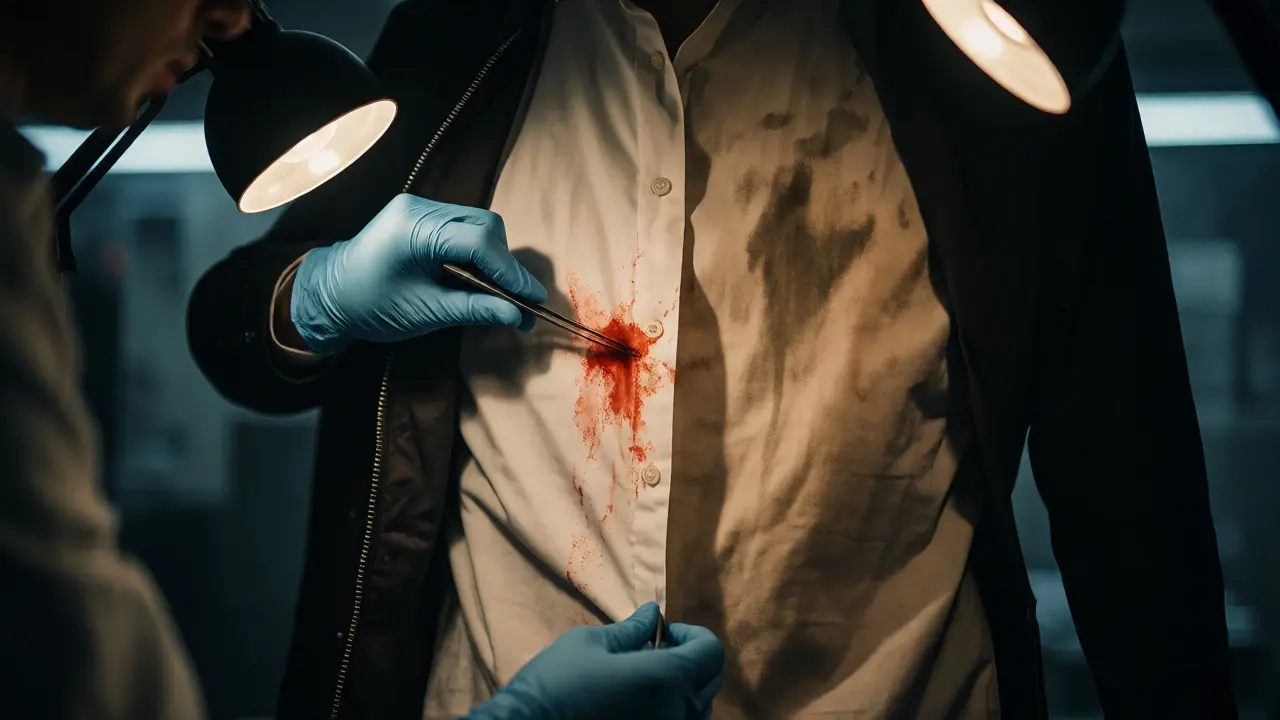
If you’re handling a case involving clothing, here’s how to approach it without messing up the evidence:
- Document Before Touching: Photograph every stain from multiple angles. Use a scale. Note the color and texture of the fabric in the photo metadata.
- Identify the Weave: Use a hand lens to determine if it’s knit (stretchy) or woven (rigid). Knit fabrics distort stains more because they stretch under tension.
- Check for Directionality: Look for wicking along threads. If the stain stretches, align it with the warp and weft of the fabric to rule out false angles.
- Separate Layers Carefully: If the garment is layered, separate them slowly. Use tweezers. Do not rub the stains together.
- Test for Solubility: Some modern fabrics are treated with water-repellent coatings. A quick swab test can tell you if the blood is sitting on top or soaked in. This affects how you collect DNA samples later.
One common mistake is assuming the fabric hasn’t moved since the incident. People move. Clothes shift. A stain on the left shoulder might have started on the right if the shirt twisted. Always correlate the stain location with the body position determined by other evidence, like bone fractures or lividity.
Common Pitfalls in Textile Blood Analysis
Don’t let these errors derail your reconstruction:
- Ignoring Shrinkage: Some fabrics shrink when wet. If a shirt shrank after being soaked in blood, the pattern compresses. Measure the unstained parts of the shirt to estimate original size.
- Misidentifying Mold: Old blood stains can develop mold spots. These look like tiny red dots. Under a microscope, mold has hyphae (filaments); blood cells do not. Don’t confuse biological decay with spatter.
- Overlooking Drip Trails: Gravity pulls blood down fabric folds. A stain on the hem might be a drip from a wound higher up, not an impact site. Trace the trail upward to find the source.
Textile analysis isn’t rocket science, but it requires patience. You have to think like the fabric. How does it breathe? How does it hold water? Once you understand the material, the blood tells you exactly what happened.
Does blood dry faster on cotton or polyester?
Blood generally dries faster on polyester because the fibers are hydrophobic and keep the blood on the surface where air can evaporate it quickly. Cotton absorbs the blood into the fiber core, which slows down evaporation significantly.
Can you determine the angle of impact on a shirt?
Yes, but with caution. The angle calculated from a stain on fabric is often lower than the actual angle due to capillary action spreading the blood. Analysts typically apply a correction factor or rely on the sharpest edge of the stain rather than the overall shape.
What is directional wicking in textiles?
Directional wicking is when blood travels preferentially along specific threads in a fabric, such as the diagonal ribs in denim. This can cause a circular stain to appear elongated in the direction of the weave, regardless of the direction of the blood flow.
How do I distinguish between a transfer stain and a spatter stain on clothes?
Transfer stains usually show smearing and lack the distinct satellite droplets found in spatter. Spatter stains consist of individual drops with tails indicating direction. Transfers often cover a larger, continuous area with blurred edges, while spatter consists of discrete points.
Do knit fabrics affect blood patterns differently than woven fabrics?
Yes. Knit fabrics are stretchable and porous. They tend to distort stains more because the loops of yarn expand when wet. Woven fabrics are more stable, so they preserve the shape of the impact slightly better, though they still suffer from capillary spread.