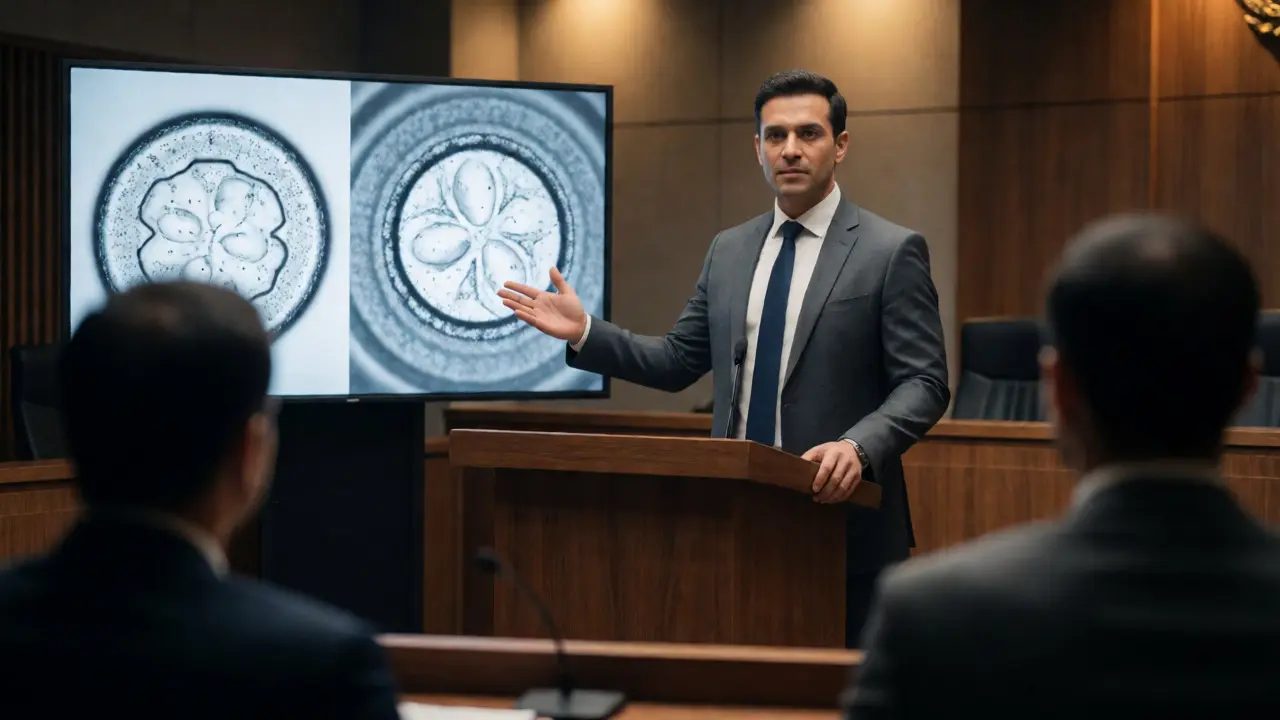
You have the gun. You have the shell casings. You have a match that looks perfect under the microscope. But if you walk into court and start talking about "striations" and "land-and-groove impressions" without translating them for a jury of twelve regular people, you might as well be speaking Greek. The gap between what a forensic ballistics expert sees in the lab and what a juror understands in the courtroom is where cases are won or lost.
It’s not enough to be right. You have to be clear. Judges don’t want lectures; they want facts. Jurors don’t want jargon; they want a story that makes sense. If you’re preparing to present ballistics evidence, your job isn’t just to identify the firearm-it’s to make sure everyone else in the room knows exactly why it matters. Here is how you bridge that gap without losing your credibility.
Know Your Audience Before You Open Your Mouth
The biggest mistake experts make is assuming the jury has the same baseline knowledge they do. They don’t. A detective knows what a rifling pattern is. A grandmother from Portland who has never held a gun does not. If you start your testimony with technical definitions, you’ve already lost half the room.
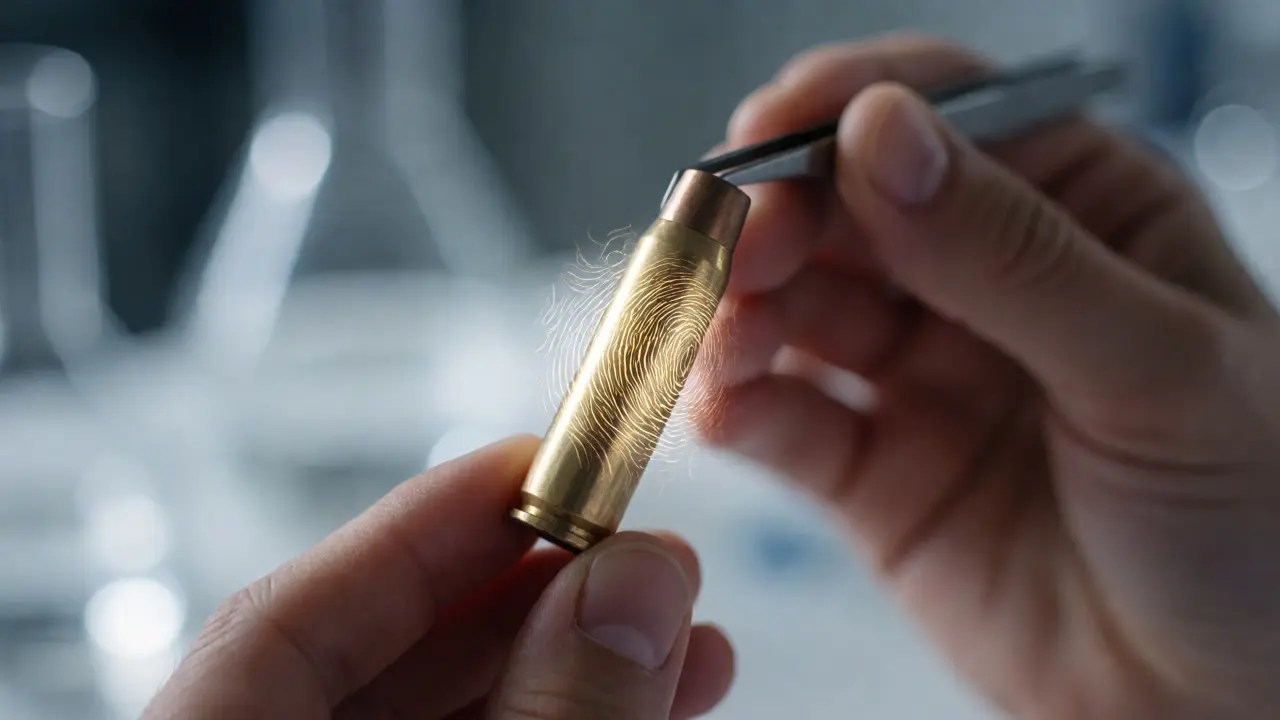
Start with analogies. Explain that every gun leaves a unique fingerprint on the bullet and casing, just like a car tire leaves a mark in mud. It’s imperfect, but it’s distinctive. This simple concept anchors the rest of your explanation. Once they grasp the "fingerprint" idea, you can layer in the details about breech face marks or firing pin impressions. Keep it visual. If you can show them, don’t tell them.
The Foundation: Chain of Custody and Lab Standards
Before you even talk about the match, you have to prove the evidence didn’t get mixed up. This is where many defense attorneys try to poke holes. They won’t argue the science; they’ll argue the handling. Did the officer log the shell casing correctly? Was the bag sealed? Who touched it before it hit the lab bench?
Be ready to walk through the chain of custody step-by-step. Don’t skip the boring parts. Juries actually care about this because it feels fair. If you say, "The evidence was collected by Officer Smith at 10:14 AM, logged into our system at 10:30 AM, and placed in secure storage," you sound organized. If you fumble over dates or names, you look sloppy. Sloppy equals doubt.
Also, mention your lab’s accreditation. Are you following standards set by organizations like the ASCLD (American Society of Crime Laboratory Directors)? Mentioning third-party oversight reassures the jury that you aren’t just making things up in a basement. It adds a layer of institutional trust that individual credibility alone can’t provide.
Translating Technical Findings for Laypeople
This is the core of your testimony. How do you explain a comparison microscope analysis without sounding like a textbook? Use side-by-side visuals. Projected images work better than holding up slides. When you point out matching striations, use a laser pointer. Draw circles around the matching areas. Make it obvious.
Avoid absolute language unless you are 100% certain. The phrase "to the exclusion of all other firearms" is powerful, but it’s also risky. If the defense brings in their own expert who says, "Well, I see some differences," and you said "all," you look arrogant. Instead, use phrases like "consistent with" or "highly probable." These terms are scientifically accurate and legally safer. They acknowledge the limits of the science while still delivering a strong conclusion.
| Technical Term | Plain English Explanation | Why It Matters to the Jury |
|---|---|---|
| Striations | Microscopic scratches left by the barrel's rifling. | Proves the bullet passed through this specific gun barrel. |
| Breech Face Marks | Impressions on the back of the cartridge case when the gun fires. | Links the spent casing directly to the firearm's action. |
| Firing Pin Impression | The dent made by the hammer striking the primer. | Shows how the gun's mechanism operated during discharge. |
| Consecutive Serial Numbers | Guns manufactured in the same batch often share similar wear patterns. | Helps narrow down candidates if the exact serial number is filed off. |
Handling Cross-Examination Without Losing Cool
Cross-examination is where nerves get tested. Defense attorneys aren’t trying to disprove physics; they’re trying to create reasonable doubt. They might ask, "Isn't it true that two different guns could leave similar marks?" Yes, they can. Admit it. Then explain why it’s unlikely in this specific case due to the unique combination of features found.
Never argue with the attorney. Answer the question asked, then stop talking. If you ramble, you give them more ammunition. If they ask a yes/no question, answer yes or no. Don’t launch into a lecture unless invited. Stay calm. If you get defensive, you look guilty. If you stay neutral and factual, you look professional. Remember, you are an educator, not a prosecutor. Your goal is to help the jury understand, not to win the argument yourself.
Watch out for hypothetical questions. "If the gun had been cleaned with steel wool, would the marks disappear?" Be honest. Cleaning removes marks. That’s a fact. Acknowledge it. Then pivot back to the evidence at hand. "In this case, the marks were preserved because..." This shows you consider alternative scenarios, which makes you seem thorough rather than biased.
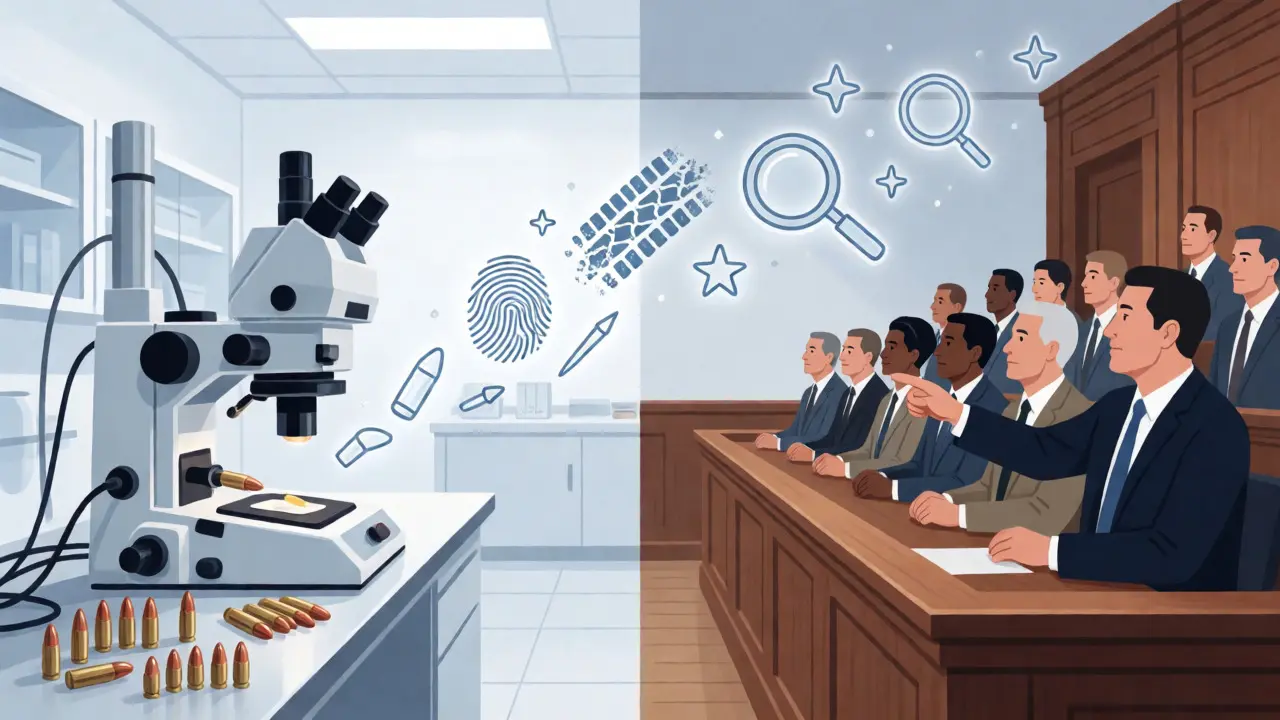
Visual Aids and Demonstrative Evidence
Words fade. Images stick. Bring high-resolution photos of the comparison microscope views. Label them clearly. Use color coding-red for the questioned item, blue for the known sample. This visual cue helps jurors track which part of the image belongs to which piece of evidence without needing to remember complex legends.
If possible, bring a replica gun or a cutaway model of a barrel. Letting a juror hold a cartridge case or see the inside of a barrel makes the abstract concrete. Just check with the judge first. Some courts restrict physical props. But if allowed, these tactile elements engage multiple senses and improve retention. People remember what they touch far longer than what they hear.
Digital animations can also be powerful. Showing a slow-motion simulation of a bullet traveling down a barrel and picking up rifling marks can clarify the process in seconds. However, keep animations simple. Overly flashy graphics can distract from the data. The focus must remain on the matching characteristics, not the special effects.
The Final Verdict: Clarity Over Complexity
At the end of the day, your testimony needs to answer one question: Does this evidence link the suspect to the crime scene? Everything else is support. Keep your narrative focused on that connection. Summarize your findings clearly in your closing statement. Reiterate the key matches. Remind them of the uniqueness of the marks. Leave them with a clear takeaway.
Don’t overreach. If the evidence is strong, let it speak. If there are limitations, state them upfront. Honesty builds trust. Jurors forgive uncertainty if it’s presented honestly. They punish arrogance if it’s contradicted later. By keeping your language simple, your visuals clear, and your demeanor professional, you turn complex ballistics data into compelling courtroom proof.
What is the most common mistake experts make in court?
Using too much jargon without explaining it first. Experts often assume jurors know terms like 'striae' or 'breech face,' leading to confusion and disengagement. Always define terms simply before using them technically.
Can ballistics evidence definitively prove a gun fired a specific bullet?
In modern forensics, experts usually testify that markings are 'consistent with' a specific firearm rather than proving it beyond any scientific doubt. Absolute certainty is rare due to potential manufacturing variations and wear, so probabilistic language is preferred.
How important is the chain of custody for ballistics evidence?
Critical. Even perfect ballistic matches can be thrown out if the chain of custody is broken. Jurors view mishandled evidence as unreliable, regardless of the scientific strength of the match.
Should experts bring physical props to court?
Yes, if permitted by the judge. Props like replica barrels or actual cartridge cases help jurors visualize the concepts. However, ensure they are clean and safe, and always verify admissibility rules beforehand.
What happens if the defense challenges the match quality?
Stay calm and re-explain the criteria used for the match. Highlight the number of consecutive matching striae or unique features. Avoid becoming defensive; instead, educate the jury on why those specific features are significant indicators of a match.