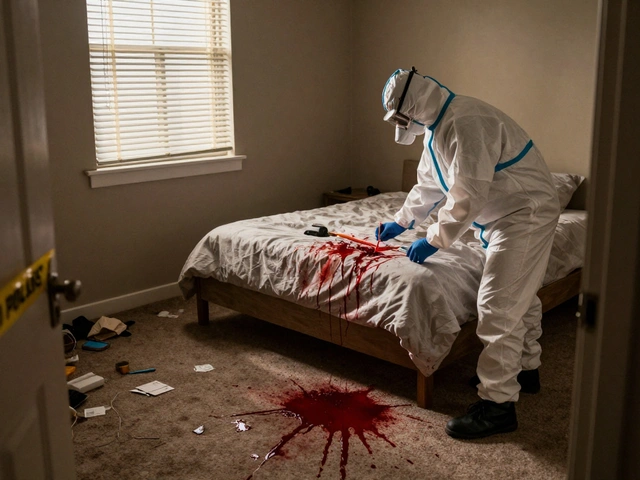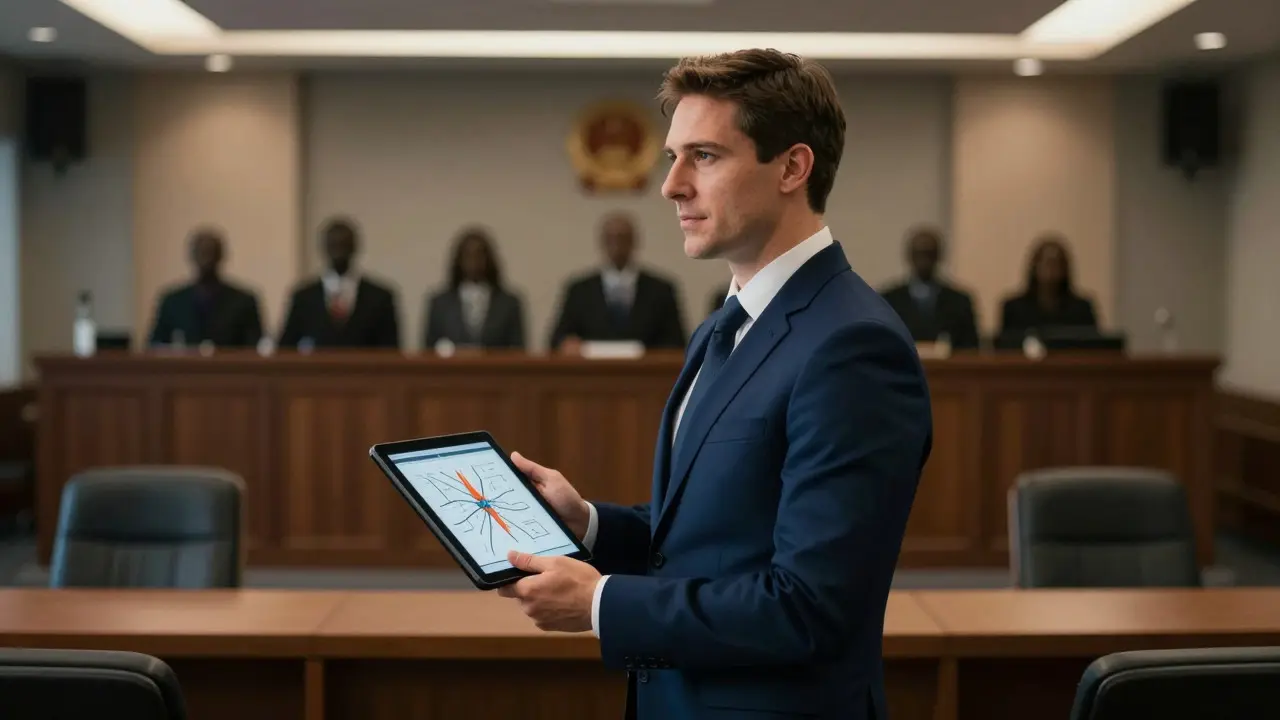
Standing in a courtroom and explaining why a house burned down isn't like giving a technical report to a colleague. The audience changes from peers who understand thermal dynamics to a jury that just wants to know if someone set the match. If you get this wrong, even the most rigorous fire investigationthe systematic process of determining the origin and cause of a fire through scientific analysis can fall apart under cross-examination. The goal isn't just to be right; it's to make the science undeniable to non-experts.
Many investigators focus heavily on the physical evidence but neglect the narrative structure required for legal proceedings. This guide breaks down how to translate complex forensic data into clear, compelling testimony that withstands scrutiny. We will look at the specific pitfalls that sink cases and the strategies that help experts win credibility with judges and juries alike.
The Core Challenge: Translating Science for Laypeople
The biggest hurdle in presenting arson analysisthe examination of fire scenes to determine if an intentional act caused the ignition is the gap between technical precision and human understanding. A jury doesn't care about the exact Kelvin temperature of a flashover; they care about whether the fire started where the suspect said it did. When you use jargon without explanation, you risk appearing arrogant or evasive.
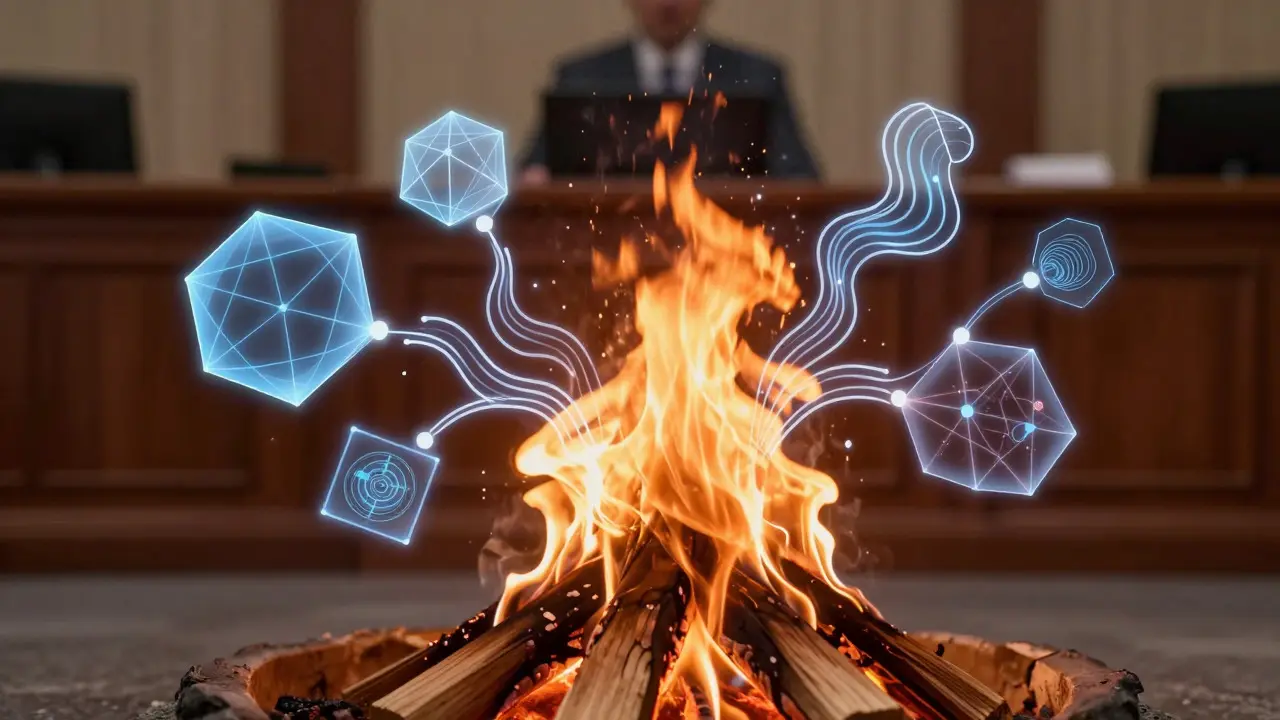
Effective testimony relies on analogies that ground abstract concepts in reality. For example, instead of discussing vapor pressure curves, compare fuel accumulation to loading a campfire. You explain that adding more wood (fuel) makes the fire burn hotter and faster, which helps the listener visualize why a room full of furniture ignites differently than an empty closet. This approach bridges the cognitive gap without dumbing down the science.
- Avoid acronyms unless you define them immediately.
- Use visual aids that simplify complex diagrams.
- Focus on the "so what?" for every technical detail you present.
Establishing Credibility Before the First Question
Credibility is earned before you touch the microphone. Your qualifications as a fire investigatora professional trained to examine fire scenes and determine causes using scientific methods must be transparent and relevant. List your certifications, such as those from the National Association of Fire Investigators (NAFI), and highlight specific experience related to the type of fire in question. If you've worked on electrical fires for ten years, say so. Specificity builds trust.
Judges and opposing counsel often challenge experts on their bias. To preempt this, acknowledge the limitations of your findings early. Admitting that some variables are unknown shows intellectual honesty. For instance, stating "We cannot rule out a lightning strike with 100% certainty, but the pattern of damage strongly suggests an internal origin" is far stronger than claiming absolute certainty. This nuance protects you from being labeled as dogmatic.
Structuring Your Narrative: The Timeline Approach
Disorganized testimony confuses juries. The most effective way to present findings is through a chronological timeline. Start with the last known normal event, move through the point of origin, and end with the full-blaze stage. This linear progression mirrors how people naturally process events.
- Pre-fire conditions: Describe the environment, weather, and occupancy status.
- Ignition source: Identify the likely trigger, such as a candle or electrical fault.
- Progression: Explain how the fire spread based on available fuels.
- Outcome: Detail the final state of the scene and its relation to the cause.
This structure allows you to introduce evidence logically. When you mention the ignition source, you can immediately show the corresponding photo or diagram. This synchronization keeps the audience engaged and reduces the chance of confusion during cross-examination.
Visual Aids: More Than Just Photos
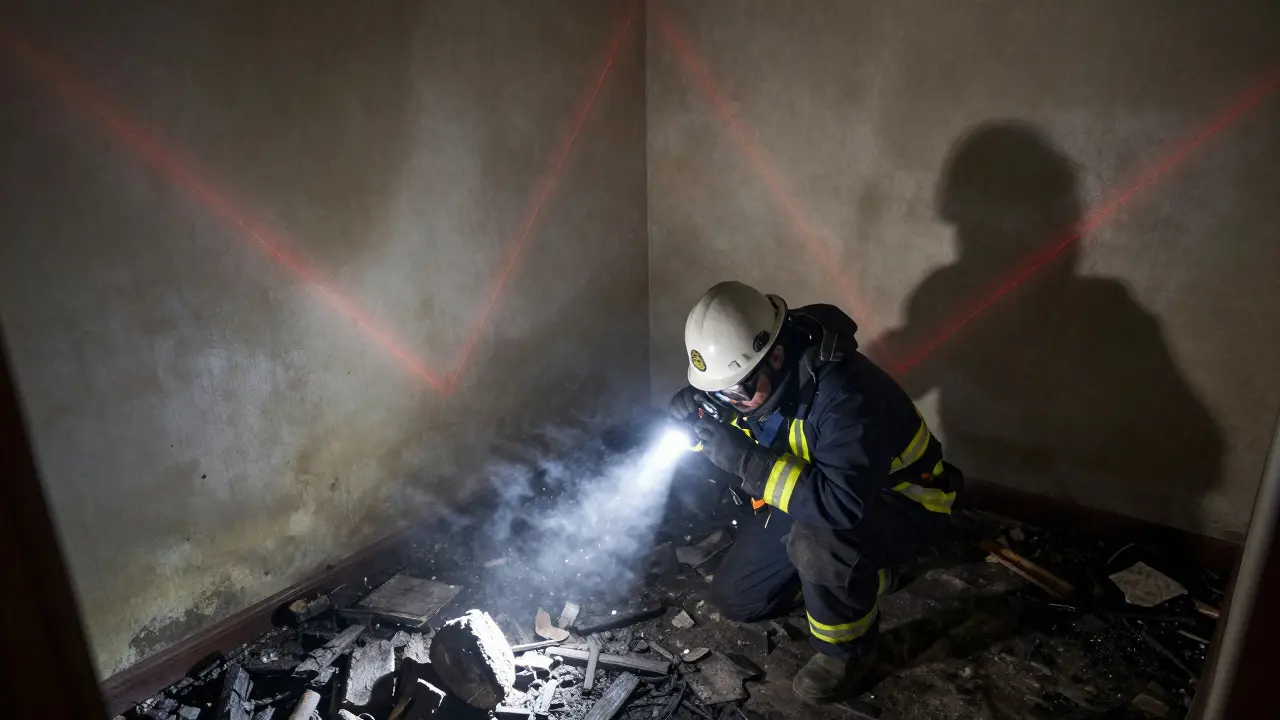
Photographs are essential, but they don't tell the whole story. A photo of charred debris proves nothing without context. Use annotated diagrams that highlight specific features, such as V-patterns indicating the point of origin. These visuals should be simple, high-contrast, and free of clutter.
Consider creating 3D reconstructions or animations for complex scenarios. While expensive, these tools can dramatically clarify spatial relationships in large structures. However, ensure that any animation is backed by solid data. An animation that looks cool but contradicts the physics will destroy your credibility instantly. Always have the raw data ready to support any visual claim.
| Type of Aid | Best Used For | Common Pitfalls |
|---|---|---|
| Still Photographs | Showing condition of evidence | Lack of scale or context |
| Annotated Diagrams | Highlighting specific features | Over-cluttering with too many labels |
| 3D Animations | Demonstrating fire spread paths | Exaggerating speeds or effects |
Navigating Cross-Examination: Staying Grounded
Cross-examination is where many expert witnesses stumble. Opposing counsel will try to trap you in contradictions or force you to speculate beyond your expertise. The key is to stay within the bounds of your data. If asked a question that requires guessing, say so. "Based on the evidence, we believe X, but Y is also possible" is a safe answer.
Listen carefully to the premise of every question. Sometimes, the question itself contains a false assumption. If the lawyer asks, "You agree the fire started in the kitchen, right?" and your data points to the living room, pause and correct the premise gently. "Actually, our analysis points to the living room due to the charring patterns," you might say. This correction maintains your authority without sounding defensive.
Common Mistakes That Sink Cases
Even experienced investigators make errors that undermine their testimony. One frequent mistake is over-reliance on a single piece of evidence. If your conclusion rests entirely on one witness statement or one damaged component, it's vulnerable. Build a web of corroborating evidence. Show how the heat damage aligns with the smoke residue, which aligns with the witness account.
Another error is failing to document the chain of custody properly. If there's any doubt about how evidence was handled, its value drops significantly. Ensure all logs are complete and signatures are present. Small administrative oversights can lead to major evidentiary exclusions.
- Never speculate beyond the scope of your expertise.
- Document every step of the investigation thoroughly.
- Prepare for questions about alternative causes.
- Keep your language simple and direct.
Preparing for the Deposition vs. Trial
Your deposition and trial testimony serve different purposes. In a deposition, you are speaking to attorneys who will dissect your words. Be precise and concise. In trial, you are speaking to a jury who needs a story. Adjust your tone accordingly. During depositions, avoid colloquialisms that could be twisted later. In trial, use those same stories to build empathy and clarity.
Practice both scenarios. Rehearse your answers to difficult questions until they feel natural. Record yourself and watch for filler words or hesitant pauses. Confidence comes from preparation, not just knowledge. The more familiar you are with your material, the less likely you are to be rattled by aggressive questioning.
Final Thoughts on Effective Presentation
Presenting fire investigation findings is a skill that combines scientific rigor with communication artistry. It requires you to be both a detective and a teacher. By focusing on clarity, credibility, and logical structure, you can turn complex data into a compelling narrative. Remember, the goal is not just to prove your case, but to make it obvious to everyone in the room. When the jury walks out understanding exactly why the fire happened, you've done your job.
What is the most important quality for an expert witness in fire investigations?
Clarity is paramount. While technical expertise is necessary, the ability to explain complex concepts in simple terms determines whether a jury understands and accepts your findings.
How do I handle questions that go beyond my expertise?
Admit it. Say, "That is outside the scope of my analysis." Speculating beyond your expertise weakens your credibility and opens you up to attacks on your entire testimony.
Are 3D animations always better than photos?
Not necessarily. Animations are useful for showing dynamic processes like fire spread, but photos are sufficient for static evidence. Use the tool that best illustrates the specific point you are making.
What role does NFPA 921 play in expert testimony?
NFPA 921 is the standard guide for fire and explosion investigations. Citing it shows that your methods follow industry standards, which strengthens the reliability of your conclusions in court.
How much time should I spend preparing for cross-examination?
At least as much time as you spend preparing your direct testimony. Anticipate every angle the opposing counsel might take and prepare calm, factual responses for each.