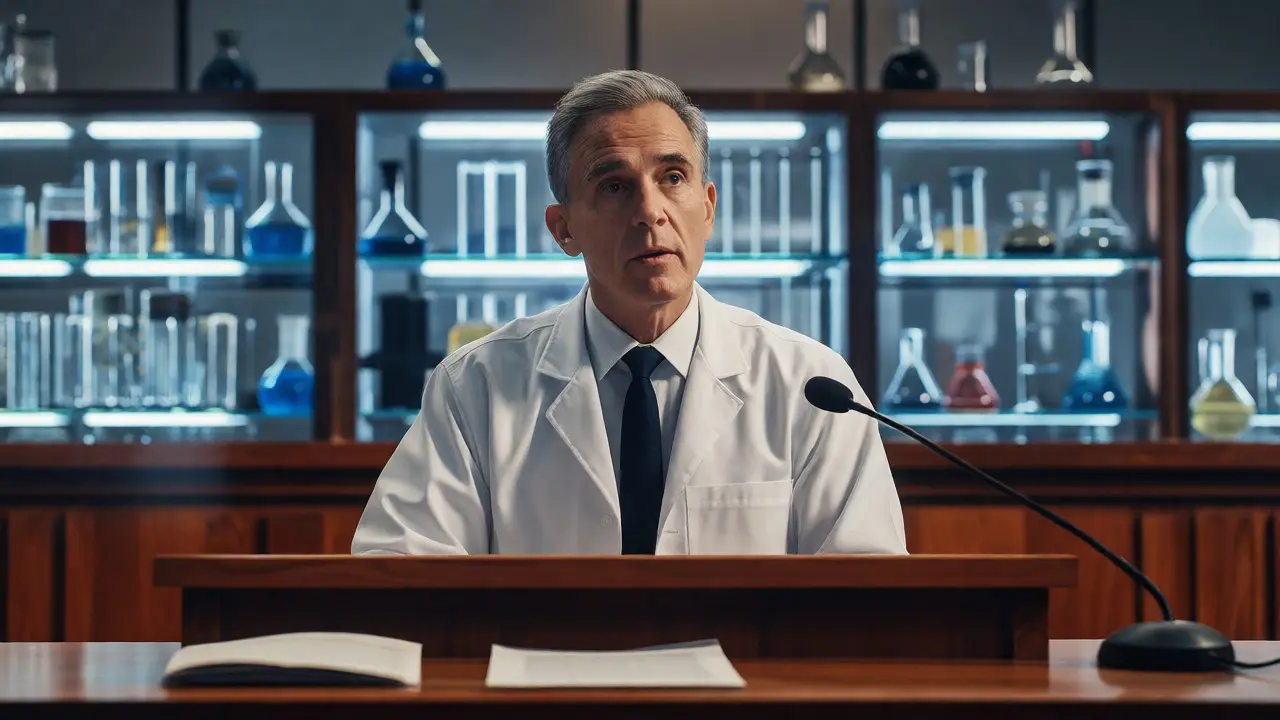
You’ve spent years in the lab. You know your instruments inside out. You’ve published papers. But when you take the stand, your job isn’t just to know science-it’s to stay inside the lines of what that science actually proves. This is the concept of Expert Scope, and it’s where most forensic experts get tripped up.
Juries don’t reject testimony because an expert is wrong. They reject it because the expert went too far. They extrapolated beyond their data. They assumed facts not in evidence. Or they claimed a level of certainty that the Scientific Method simply doesn’t support. If you want your testimony to hold up under the Daubert Standard, you need to master the boundaries of your expertise.
What Actually Counts as Expert Knowledge?
Let’s clear up a common misconception. Being an "expert" doesn’t mean you’re allowed to have opinions on everything related to your field. It means you have specialized knowledge that helps the jury understand evidence or determine a fact in issue. That’s it.
The legal system draws a hard line between two things: facts (what happened) and inferences (what those facts mean). Your job is to explain the inference based on established scientific principles. You are not there to speculate about motives, intent, or ultimate issues unless specifically asked and qualified.
Consider a toxicologist testifying in a drug overdose case. Their scope includes analyzing blood samples, identifying substances, and explaining pharmacokinetics-how the body processes drugs. It does not include stating definitively whether the deceased intended to commit suicide. That’s a conclusion for the jury. The toxicologist provides the scientific context; the jury applies it to the human story.
The Scientific Method as Your Legal Shield
Courts love the Scientific Method because it’s objective. It’s repeatable. It’s falsifiable. When you frame your testimony within this framework, you make yourself bulletproof against challenges regarding reliability.
To stay within scope, every claim you make must trace back to one of these four pillars:
- Hypothesis Testing: Did you formulate a testable question before running the analysis? If you found something by accident, say so. Don’t retroactively build a narrative around random findings.
- Peer Review: Is the method you used accepted in your professional community? Cite specific journals or standards bodies like ASTM International or ISO.
- Error Rates: Do you know the false positive and false negative rates of your technique? Admitting uncertainty shows rigor, not weakness. A 95% confidence interval is stronger than a vague "I’m pretty sure."
- General Acceptance: Would other scientists in your field agree with your methodology? If you’re using a novel technique, you need extra documentation to prove it’s reliable.
If you can’t tie a statement to one of these pillars, you’re stepping outside the scientific method. And if you step outside the method, you risk having your testimony excluded entirely.
Training: The Foundation of Credibility
Your training defines your ceiling. You can’t testify about DNA phenotyping if you’ve only ever done STR profiling. You can’t comment on fire dynamics if you’ve never studied thermodynamics. Courts look at your CV, but they also look at your actual hands-on experience.
Here’s how to audit your own training against your proposed testimony:
- Map Your Certifications: List every certification you hold. Does each one directly relate to the evidence you’re analyzing? If you’re board-certified in clinical chemistry, don’t testify on environmental soil contamination without additional coursework or supervised practice in that area.
- Document Continuing Education: Science moves fast. If your last major update was five years ago, you might be outdated. Keep logs of workshops, webinars, and peer-reviewed articles you’ve read recently. Show the court you’re current.
- Identify Gaps: Be honest about what you don’t know. If a case involves a complex statistical model you haven’t mastered, either learn it properly or bring in a statistician. Bluffing is fatal in cross-examination.
Remember, opposing counsel will dig into your training history. If you claim expertise in latent print analysis but haven’t processed a single case in three years, they’ll highlight that gap. Continuous engagement with your discipline is part of maintaining your scope.

Navigating the Daubert Standard
In federal courts and many states, the Daubert Standard governs admissibility. It gives judges the role of "gatekeeper," ensuring that expert testimony is both relevant and reliable. To pass this gate, your testimony must meet specific criteria.
| Daubert Factor | What the Judge Asks | Your Action Item |
|---|---|---|
| Testability | Can the theory be tested? | Show your experimental design and control groups. |
| Peer Review | Has it been reviewed? | Cite recent publications supporting your method. |
| Error Rate | Is the error rate known? | Provide validation study data for your equipment. |
| Standards | Are there standards controlling operation? | Reference ASTM or ISO protocols explicitly. |
| Acceptance | Is it generally accepted? | Demonstrate consensus in your professional society. |
Notice how none of these factors ask, "Do you believe this?" They ask, "Did you follow the process?" Stay focused on the process. If you stick to the protocol, you stay within scope.
Common Pitfalls That Blow Your Scope
Even seasoned experts fall into traps. Here are the three most common ways experts overstep their bounds, along with how to fix them.
Pitfall 1: The Ultimate Issue Trap
Experts often feel pressured to answer the big questions: "Was it murder?" "Who started the fire?" "Is he guilty?" Unless state law specifically allows it, avoid answering ultimate issues. Instead, reframe. Instead of saying, "The defendant shot himself," say, "The trajectory and powder residue patterns are consistent with a self-inflicted gunshot wound." Let the jury do the final leap.
Pitfall 2: Speculative Extrapolation
You analyzed a sample from Tuesday. Can you speak to Monday’s conditions? Only if you have data. Don’t assume stability. If you didn’t collect baseline data, say so. "Based on the sample collected at 10 AM, the concentration was X. I cannot determine the concentration at 8 AM without additional sampling."
Pitfall 3: Overstating Certainty
Science deals in probabilities, not absolutes. Avoid words like "proven," "certain," or "impossible." Use phrases like "consistent with," "more likely than not," or "excludes the possibility of." Precision builds trust. Hyperbole destroys it.
Practical Checklist for Trial Preparation
Before you walk into that courtroom, run through this checklist. It keeps you anchored in your scientific role.
- [ ] Have I defined my qualifications clearly? (Degrees, certifications, years of experience)
- [ ] Have I identified the exact methods used? (Specific kits, software versions, calibration dates)
- [ ] Have I acknowledged limitations? (Sample degradation, chain of custody gaps, instrument margins of error)
- [ ] Have I avoided legal conclusions? (No "guilty," no "negligent," no "intentional")
- [ ] Have I prepared analogies? (Explain complex concepts using everyday objects, like comparing chromatography to sorting mail)
This prep work ensures you’re ready for cross-examination. When opposing counsel asks, "Isn’t it true that your method has a 5% error rate?" you won’t panic. You’ll say, "Yes, and here’s how we account for that in our confidence intervals." That’s staying in scope.
Beyond the Lab: Communicating Uncertainty
Juries aren’t scientists. They’re regular people trying to make sense of chaos. Your job is translation. But translation requires honesty about what we don’t know.
Think of your testimony like a weather forecast. A meteorologist doesn’t say, "It will rain tomorrow." They say, "There is a 70% chance of precipitation." Why? Because atmospheric models have limits. Similarly, forensic science has limits. Embrace them. When you admit uncertainty, you appear more credible, not less.
Try this phrasing: "The data supports Conclusion A. However, alternative explanations B and C are possible, though less supported by the current evidence." This shows you considered alternatives-a hallmark of good science.
By sticking to the scientific method and respecting the boundaries of your training, you protect your reputation and your testimony. You become a reliable guide for the jury, not a controversial figure they have to dismiss.
What happens if I go outside my expert scope?
If you exceed your scope, the judge may exclude that portion of your testimony. In severe cases, it can lead to a mistrial or sanctions. Opposing counsel will use it to attack your credibility, suggesting you’re biased or unqualified.
Does the Daubert Standard apply to all types of experts?
Daubert primarily applies to scientific, technical, and other specialized knowledge. However, some jurisdictions extend similar reliability requirements to non-scientific experts, such as engineers or accountants, depending on local rules of evidence.
How much continuing education is required to maintain scope?
Requirements vary by certifying body and jurisdiction. Generally, 20-40 hours every few years is common. More importantly, you must engage with current literature and practical applications relevant to your active caseload.
Can I testify about general industry practices if I haven't personally done them?
Yes, but you must qualify it. You can state that "industry standard practice dictates X," provided you cite authoritative sources like textbooks, regulations, or widely accepted guidelines. Clarify that this is based on your review of standards, not personal execution in that specific instance.
Is it okay to use visual aids to explain scientific concepts?
Absolutely. Visual aids like charts, diagrams, and animations help jurors understand complex data. Just ensure the visuals accurately represent the data and don’t exaggerate trends. Misleading graphics can be challenged as prejudicial.