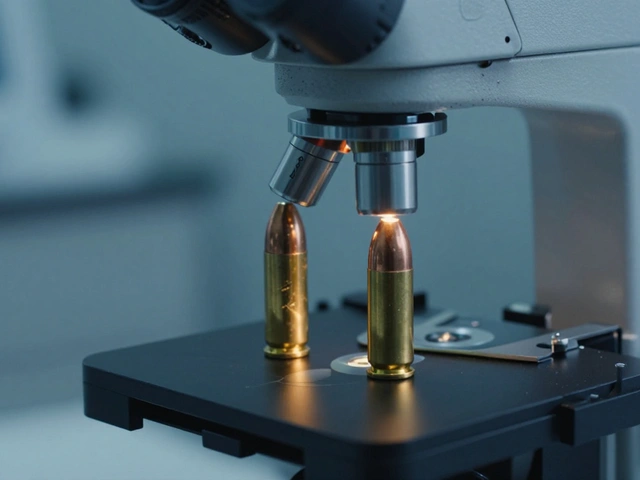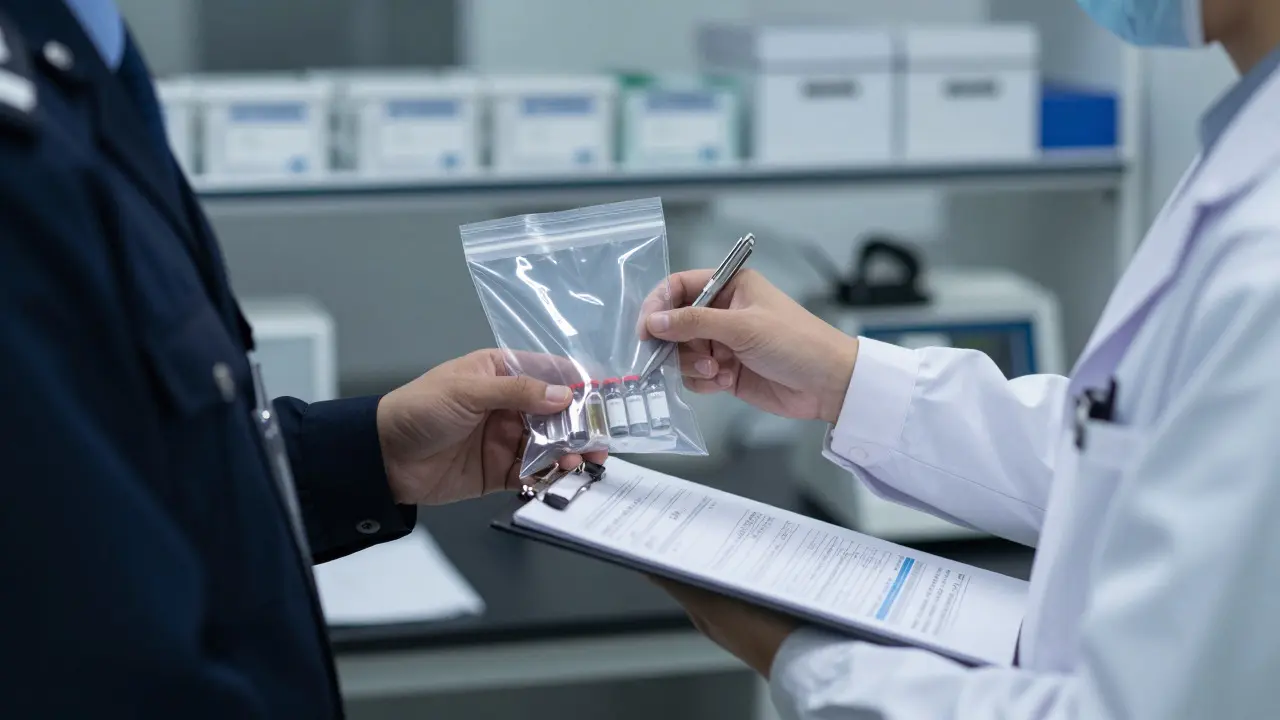
Imagine a jury watching a video where a detective hands a bag of drugs to a lab tech without writing down the time or signing the receipt. In that split second, the entire case can collapse. Evidence transfer is the documented physical movement of physical or digital evidence from one handler to another, ensuring its integrity remains unbroken for legal proceedings. It is not just a bureaucratic step; it is the backbone of chain of custody. If you miss a signature, use the wrong container, or fail to log the temperature, you aren't just making a paperwork error-you are handing the defense attorney a free argument to suppress your findings.
The goal here is simple but demanding: prove that the item in the courtroom is exactly the same as the one found at the scene. To do this, every handoff must be traceable, accountable, and physically secure. Whether you are moving a single fingerprint card or a hard drive, the procedure follows a strict logic designed to eliminate doubt.
Key Takeaways
- Documentation beats memory: Every transfer must be recorded on a standardized form immediately after the handoff, including date, time, location, and signatures of both parties.
- Container integrity matters: The packaging must be appropriate for the evidence type (e.g., paper bags for biologicals, anti-static bags for electronics) and sealed with unique tape labels.
- Digital evidence needs isolation: Hard drives and phones require write-blockers and Faraday bags to prevent data alteration during transport.
- Breaks in the chain are fatal: Unexplained gaps in time or missing handlers allow defense attorneys to argue tampering or contamination.
- Training reduces errors: Most chain-of-custody failures stem from human error, not malice, making regular procedural drills essential for law enforcement and lab staff.
The Anatomy of a Valid Transfer
A valid evidence transfer consists of three simultaneous actions: physical handover, documentation, and sealing. Think of it as a triple-lock system. If one lock fails, the door opens for legal challenges.
First, there is the physical exchange. The receiving handler must inspect the item before accepting it. This isn’t about opening the package; it’s about checking the seal, the label, and the condition of the outer container. If the tape is peeling or the box is crushed, note it immediately. Second, the documentation occurs. Both parties sign the Chain of Custody Form. This document acts as a legal receipt. It must include the full name, badge number or employee ID, and signature of the person giving up control and the person taking it. Third, the item is re-sealed if necessary. If the previous seal was compromised, a new one is applied, and the old seal is kept attached to the file.
Why does this matter? Because in court, the prosecution bears the burden of proving authenticity. If the judge asks, "Who had access to this gun between 2 PM and 4 PM?" and the answer is "We don't know, the log is blank," the weapon might be excluded under rules of evidence like Rule 901 in the Federal Rules of Evidence.
Standard Operating Procedures by Evidence Type
Not all evidence is treated the same way. A wet blood sample has different needs than a dry fingerprint card. Here is how specific types dictate the transfer protocol:
| Evidence Type | Required Container | Critical Transfer Step | Common Error |
|---|---|---|---|
| Biological (Blood, DNA) | Paper Bag (breathable) | Log ambient temperature if sensitive | Using plastic bags causing mold degradation |
| Digital (Hard Drives, Phones) | Faraday Bag + Anti-Static | Verify write-blocker status before handoff | Leaving device powered on during transit |
| Firearms | Cardboard Box with padding | Check action safety and serial number visibility | Forgetting to document ammunition count |
| Documents | Acid-free Folder | Photograph layout before packing | Folding papers which damages fibers |
For biological evidence, the rule is breathable packaging. Plastic traps moisture, leading to bacterial growth that destroys DNA. During transfer, ensure the paper bag is securely closed with evidence tape labeled with the case number. For digital evidence, the risk is invisible. A phone left in a pocket can receive a text message that overwrites metadata. Therefore, the transfer must happen inside a Faraday bag, which blocks radio signals. The handler must confirm the device is off or in airplane mode before sealing it.
Documentation: The Paper Trail That Saves Cases
If it isn't written down, it didn't happen. This is the golden rule of forensics. The Chain of Custody Form is not a suggestion; it is a legal requirement in most jurisdictions. A complete entry includes:
- Date and Time: Use 24-hour format to avoid AM/PM confusion.
- Location: Specific room or vehicle, not just "Station."
- Handler Identity: Full name and unique identifier (badge/ID).
- Reason for Transfer: E.g., "Sent to Lab for Analysis," "Returned to Storage," "Court Presentation."
- Condition Notes: Any visible damage or seal issues.
Handwritten forms are still common, but they introduce legibility risks. Many agencies now use digital logging systems that generate timestamps automatically. However, even with digital logs, a physical signature is often required for court admissibility. The key is consistency. If you switch from paper to digital mid-case, explain the transition in the notes. Discrepancies between the digital log and the physical form create doubt.
Handling Breaks in the Chain
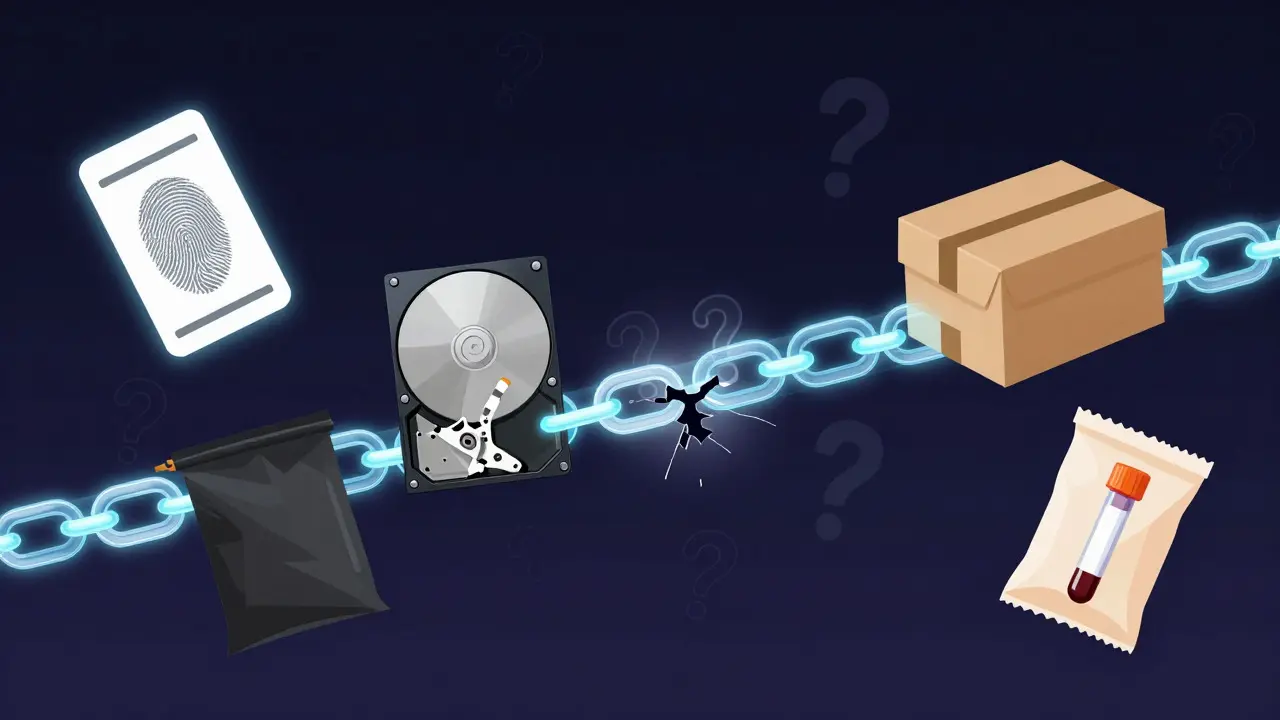
Breaks happen. A detective forgets to sign the form when leaving the precinct. A courier loses a package. When this happens, panic is the enemy. Instead, follow these steps:
- Identify the Gap: Determine exactly when and where the record stops.
- Interview Witnesses: Who saw the item during the gap? Get their statements in writing.
- Create an Affidavit: Have the responsible party sign a sworn statement explaining the lapse.
- Notify Prosecution: Let the DA know early. Surprises in court are worse than known issues.
A minor break, like a missing signature on a routine storage move, can often be cured with an affidavit. A major break, like losing a murder weapon, usually ends the case. The difference lies in the explanation. If you can prove the item was in a locked cabinet for four hours with no access codes changed, the break is curable. If the item was in an unlocked car trunk, it likely isn't.
Best Practices for Digital and Physical Security
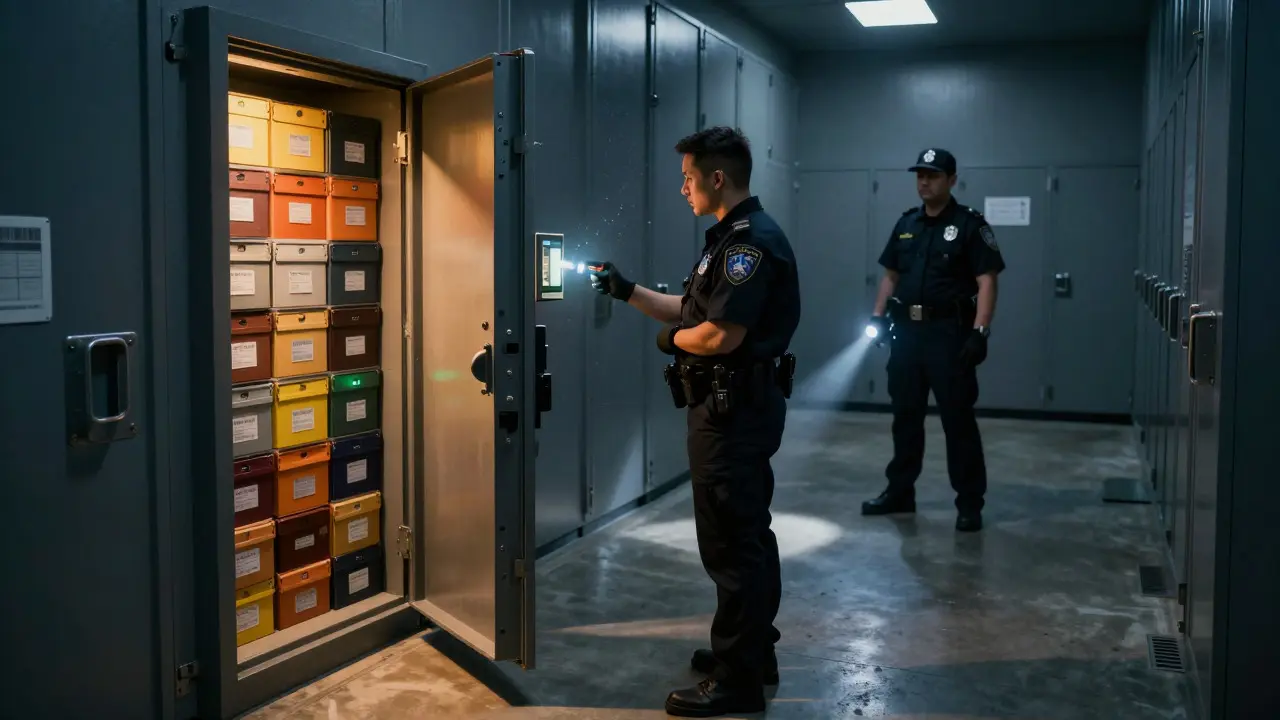
Security isn't just about locking doors; it's about controlling environment. For high-value evidence, consider these enhancements:
- Two-Person Rule: Require two handlers for transfers of firearms or large cash amounts.
- GPS Tracking: Use tagged containers for long-distance transport to provide objective proof of route.
- Temperature Monitoring: For toxicology samples, use data loggers that record temperature fluctuations during transit.
- Unique Barcodes: Scan items in and out of storage to create an immutable audit trail.
These tools don't replace the manual signature, but they add layers of verification. If a barcode scan shows an item entered the lab at 10:05 AM, but the form says 10:30 AM, you have a discrepancy to investigate. Better to catch it now than in cross-examination.
FAQ
What happens if I forget to sign the chain of custody form?
You should correct it immediately if possible. If the transfer already happened, create an affidavit explaining the oversight. The judge may admit the evidence if the explanation is credible and the item's condition is verified, but it weakens your position significantly.
Do I need to photograph evidence during every transfer?
Not always, but it is highly recommended for fragile or easily altered items like documents or small narcotics. Photos provide visual proof of condition at the moment of handoff, supporting your written notes.
Can evidence be transferred verbally without a form?
Technically yes, but it is risky. Verbal transfers rely on memory. Unless witnessed by a third party who signs a later affidavit, verbal-only transfers are difficult to prove in court and often lead to suppression motions.
How long should I keep the chain of custody records?
Keep them for the life of the case plus any appeal period. Typically, this means at least 7-10 years for criminal cases. Some jurisdictions require permanent retention for homicide cases. Check your local agency's policy.
Is a broken seal always a dealbreaker?
No. A broken seal indicates potential tampering, but if you can prove the break occurred during a legitimate inspection (and documented it), it is acceptable. The key is transparency. Hide nothing.