You spent years studying, passing exams, and building your reputation. Then you got certified. Now what? If you think that piece of paper is permanent, you're in for a rude awakening. In the forensic science world, certification maintenance is not optional; it's the price of admission to stay relevant. Whether you work in DNA analysis, toxicology, or crime scene investigation, your credentials have an expiration date. Keeping them active requires ongoing effort, specifically through Continuing Education (CE) credits and formal recertification processes.
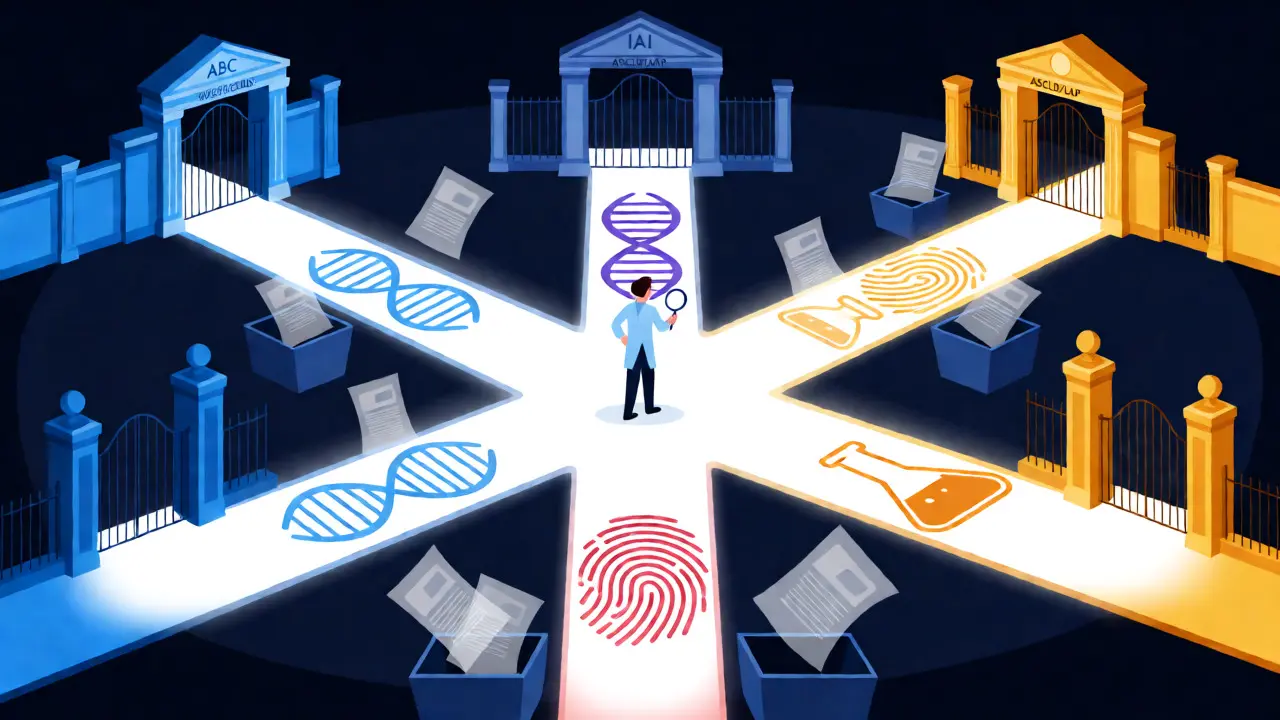
Many professionals underestimate the complexity of this requirement. They assume attending a conference once every few years covers everything. It doesn't. Different boards-like the American Board of Criminalistics (ABC), the International Association for Identification (IAI), or the American Society of Crime Laboratory Directors/Laboratory Accreditation Program (ASCLD/LAP)-have distinct rules. Missing a deadline or miscounting credits can mean losing your status, which impacts your employability and legal standing in court. This guide breaks down exactly how to navigate the maze of CE credits and recertification without burning out.
The Core Concept: Why Certifications Expire
Why do professional certifications expire? It’s not just about keeping money flowing into certifying bodies. Forensic science evolves rapidly. A technique considered gold standard in 2015 might be obsolete or even debunked by 2026. Consider the shift from traditional fingerprint analysis to probabilistic models, or the introduction of next-generation sequencing in DNA labs. If your knowledge base hasn't updated since you passed your initial exam, you’re practicing outdated science.
Recertification ensures competence. Courts rely on expert testimony. If an analyst cannot demonstrate current knowledge, their testimony becomes vulnerable to challenge under Daubert or Frye standards. Maintaining certification signals to judges, juries, and employers that you are committed to scientific rigor. It’s a proactive measure against stagnation.
Understanding Continuing Education (CE) Credits
At the heart of maintenance lies the CE credit. But what actually counts as a credit? Generally, one CE credit equals one hour of structured learning. However, "structured" is the key word here. Watching a random YouTube video about blood spatter usually doesn't count unless it’s part of an accredited course with a quiz or assessment.
Most major forensic boards categorize CE activities into specific types. Understanding these categories helps you plan your year efficiently rather than scrambling at the last minute.
| Activity Type | Description | Typical Credit Value | Verification Needed? |
|---|---|---|---|
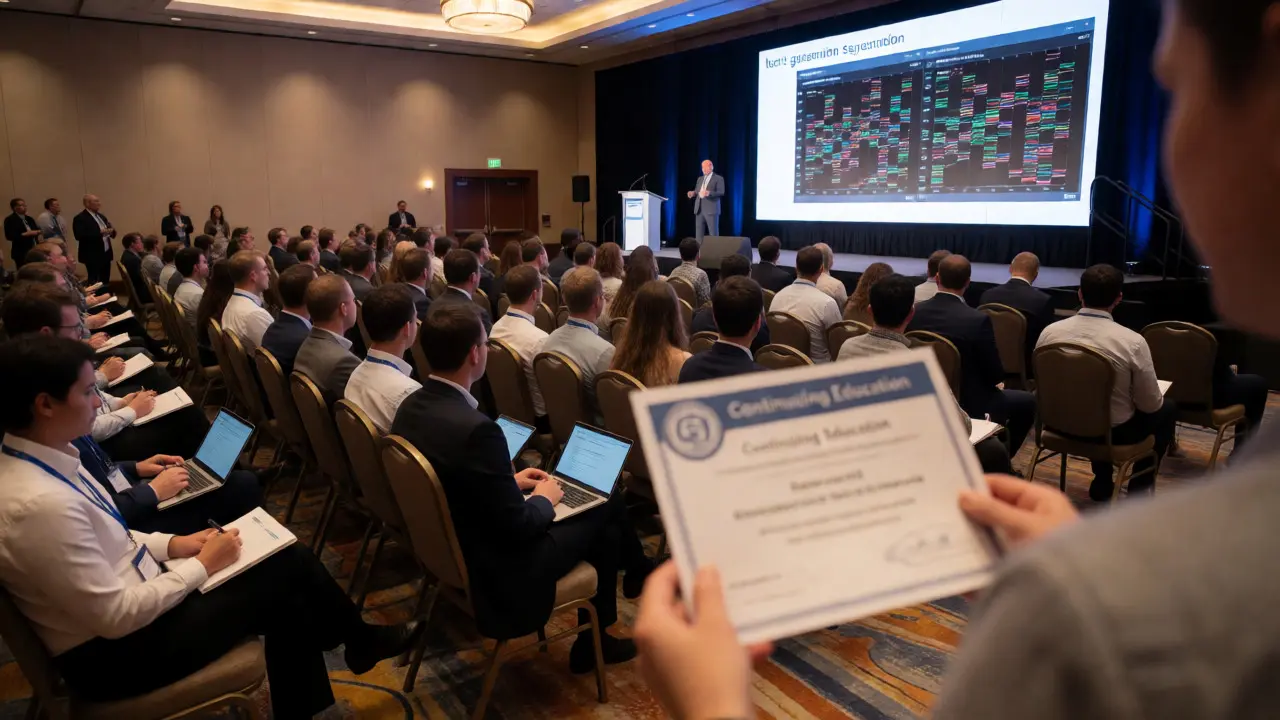
| Conferences & Workshops | Attending sessions at events like AAFS or IAI conferences. | 1 credit per hour | Certificate of Attendance |
| Online Courses | Webinars from providers like SWGDRUG or private vendors. | Varies (often 1-4 hours) | Completion Certificate |
| Publications | Publishing peer-reviewed articles or book chapters. | High value (often 10+ credits) | Copy of Publication |
| Teaching/Training | Instructing others in forensic topics. | Often capped annually | Syllabus + Student Feedback |
| Service | Serving on accreditation panels or committees. | Fixed annual amount | Letter from Organization |
Notice the variation in verification. You cannot simply claim you attended a workshop. You need proof. Keep a digital folder organized by year and activity type. Screenshotting confirmation emails isn't always enough; look for official certificates that list the number of contact hours.
Major Boards and Their Specific Rules
Not all certifications play by the same rules. Let’s look at the big players. If you hold multiple certifications, you might be able to use the same activity for more than one board, but you must check each set of guidelines individually.
The American Board of Criminalistics (ABC) requires Diplomates to earn 30 CE points every five years. Points are weighted differently based on the activity. For example, presenting at a national conference might earn more points than attending a local seminar. The ABC also mandates that a portion of these points come from specific technical areas related to your specialty (e.g., if you’re a Firearm Examiner, some points must relate directly to firearms).
The International Association for Identification (IAI) operates on a different cycle. Certified Latent Print Examiners (CLPEs) and other specialists typically need 100 units over three years. One unit usually equals one hour of instruction. The IAI places heavy emphasis on practical exercises and proficiency testing participation, not just passive listening.
The American Academy of Forensic Sciences (AAFS) offers its own certification programs. While AAFS often hosts the events where you earn credits, their internal certification requirements focus heavily on peer review and publication contributions for advanced levels. Always verify if your employer sponsors these costs, as they can add up quickly.
Strategic Planning: How to Earn Credits Without Burnout
Earning 30 to 100 credits sounds daunting if you view it as a mountain to climb at the end of the cycle. Treat it instead as a drip-feed system. Here’s a realistic approach for a busy forensic scientist.
- Start Early: Don’t wait until month 59 of a 60-month cycle. Aim to earn 20% of your required credits each year.
- Leverage Employer Resources: Many labs offer free internal training days. Ensure these are documented properly so they qualify for external CE credit.
- Mix Online and In-Person: Travel costs money. Use high-quality webinars for routine updates and save conference travel for networking and specialized workshops.
- Document as You Go: Create a spreadsheet immediately after completing an activity. Include the date, provider, topic, and credit value. Back up this file regularly.
A common pitfall is assuming that general science news counts. Reading a journal article is great for your mind, but unless you complete a CME-style quiz associated with it, most boards won’t grant credit. Look for providers that offer "journal clubs" with verified attendance logs.
The Recertification Application Process
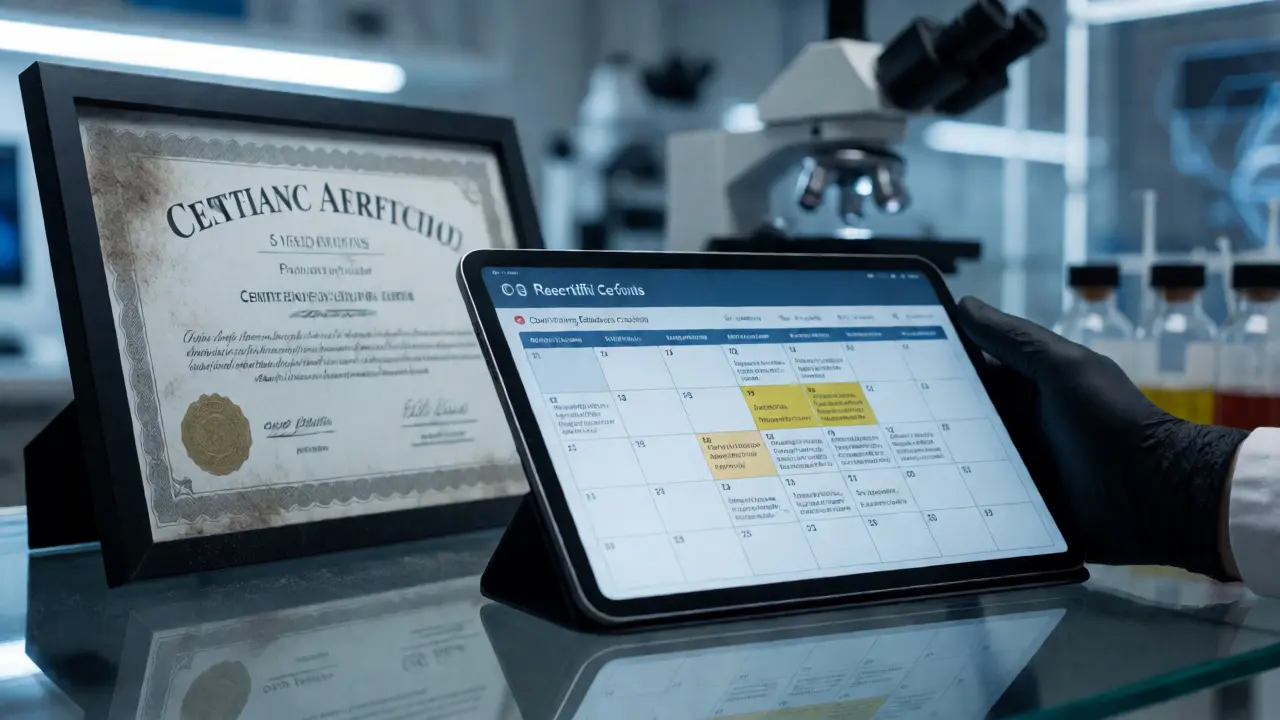
Once you’ve accumulated your credits, you face the application. This isn’t just clicking "submit." Most boards require an audit sample. They will randomly select applicants to prove their claims. If you lose your certificate for a webinar you took two years ago, you fail the audit, regardless of how many credits you technically earned.
Here is the typical workflow:
- Log Activities: Enter all eligible activities into the board’s online portal before the deadline.
- Pay Fees: Recertification fees vary. Expect to pay between $100 and $300 depending on the board and your membership status.
- Submit Documentation: Upload PDFs of certificates. Ensure filenames are clear (e.g., "2025_AAFS_Conference_Cert.pdf").
- Audit Response: If selected, provide original copies or additional proofs within 30 days.
- Renewal Issuance: Upon approval, you receive a new card or digital badge valid for the next cycle.
Missing the deadline is critical. Some boards offer a grace period with a late fee, while others revoke your status entirely. Losing certification can mean stepping back from casework until you re-establish eligibility, which takes time and money.
Costs Involved: Budgeting for Certification Maintenance
Let’s talk numbers. Maintaining certification is an investment. Beyond the direct application fees, consider the hidden costs.
- Conference Registration: $300-$800 per event.
- Travel & Lodging: $500-$1,500 depending on location.
- Online Course Subscriptions: $50-$200 annually for access to libraries like those offered by SWGFAST or similar groups.
- Application Fees: $100-$300 every cycle.
If you pursue multiple certifications, these costs stack. Negotiate with your lab director. Frame it as risk management: maintaining certification protects the lab’s accreditation status and ensures witness credibility. Many labs have professional development budgets specifically for this purpose.
Special Cases: Emeritus Status and Lapsed Certifications
What if you retire? Or what if you missed the deadline by a week? Most boards offer an Emeritus status. This allows retired professionals to keep their title without paying full fees or earning full CE credits. You usually still need to maintain basic good standing, but the burden is lighter.
If you let your certification lapse, you don’t necessarily start from zero. There is often a reinstatement process. This usually involves paying back-fees plus a penalty, and sometimes retaking a portion of the exam or submitting a portfolio of recent work. Do not ignore a lapse; address it immediately. The longer you wait, the harder it becomes to reinstate.
Key Takeaways
- Certification maintenance is mandatory for career longevity in forensics; it proves current competency.
- CE credits must be verifiable; keep detailed records of all activities, including dates and providers.
- Different boards (ABC, IAI, AAFS) have unique point systems and cycles; know yours.
- Plan ahead to avoid last-minute scrambling and audit failures.
- Budget for both direct fees and indirect costs like travel and time off.
How many CE credits do I need for ABC recertification?
The American Board of Criminalistics (ABC) generally requires Diplomates to earn 30 CE points every five years. These points must be distributed across various activity types, with specific minimums for technical content related to your specialty area.
Can I use the same conference for multiple certifications?
Yes, in many cases. If you attend a joint conference or a session recognized by multiple accrediting bodies, you may apply the hours toward different certifications. However, you must ensure the content aligns with the specific technical requirements of each board and keep separate documentation if requested.
What happens if I miss my recertification deadline?
Policies vary by board. Typically, you enter a "lapsed" status. You may be allowed to reinstate by paying a late fee and possibly completing additional remedial education. If too much time passes, you might have to retake the certification exam entirely.
Do online webinars count for CE credits?
Yes, provided they are offered by an approved provider and include a mechanism for verifying attendance and completion, such as a post-test or sign-in sheet. Passive viewing without verification usually does not qualify.
Is there a cost to maintain certification?
Yes. Costs include application/renewal fees (typically $100-$300), plus expenses for acquiring CE credits such as conference registrations, travel, and paid online courses. Employers often cover some or all of these costs.