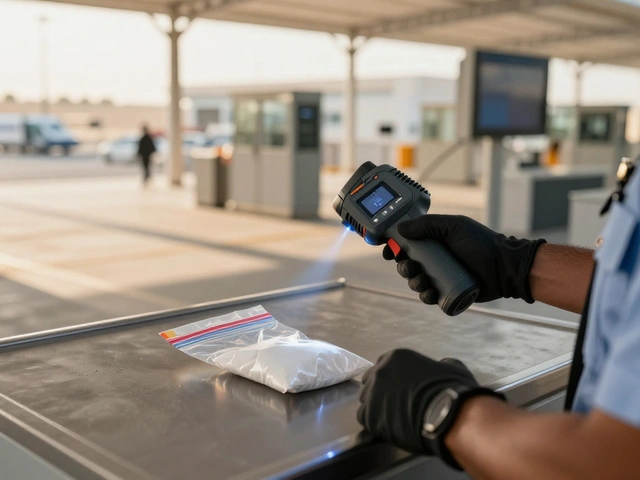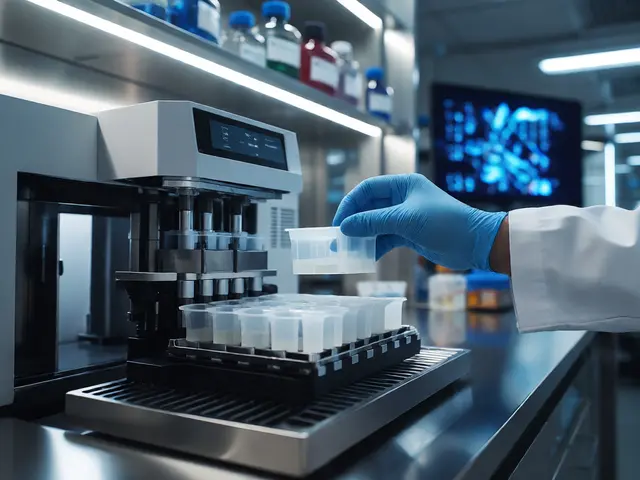
You walk into a courtroom. The air is thick with tension. A jury of twelve people looks at you, waiting for the truth about what was in someone's blood. You have the data. You know that forensic toxicology is the science of detecting drugs and poisons in biological samples. But here is the hard part: translating complex chemistry into plain English that a judge or juror can actually understand. If you fail to explain your findings clearly, even the most accurate lab result becomes useless evidence. This isn't just about being right; it's about being understood.
The Core Challenge of Translating Science for Juries
Most jurors don't have a background in chemistry. They might not know the difference between therapeutic levels and lethal doses. When you present toxicology results, you are bridging a massive gap between technical precision and everyday understanding. Think of it like explaining how a car engine works to someone who has never seen one under the hood. You can’t use jargon like "pharmacokinetics" without immediately defining it. Instead, you talk about how the body processes a substance over time. Your job is to remove the mystery from the science while keeping the accuracy intact.
A common mistake experts make is assuming the jury understands statistical significance. They don't. They care about certainty. Did this person take enough of the drug to affect their driving? Was the alcohol level rising or falling when they were arrested? These are questions of behavior and impact, not just concentration numbers. To answer them, you must connect the biological sample-whether it’s blood, urine, or hair-to real-world actions.
Understanding the Chain of Custody
Before you even discuss what the test found, you have to prove where the sample came from. This is called the chain of custody. It is the documented trail showing who handled the evidence from collection to analysis. If there is a gap in this record, the defense attorney will attack your credibility. They won't argue with your math; they will argue with your paperwork. Did the phlebotomist sign the log? Was the tube stored at the correct temperature? If the chain breaks, the result is often inadmissible, no matter how sophisticated the testing method was.
Jurors understand security. They see crime shows every night. Use that familiarity. Explain that handling evidence is like handling a fragile artifact in a museum. Every touch must be recorded. If you can show a clean, unbroken chain, you build trust before you even open the lab report. This foundational step sets the stage for everything else you say.
Explaining Detection Limits and Quantitation
One of the trickiest concepts to convey is the difference between detection and quantitation. Many people think if a test finds a trace amount of a drug, the person was high. That’s rarely true. Modern instruments, like Gas Chromatography-Mass Spectrometry (GC-MS), are incredibly sensitive. They can detect parts per billion. Just because a machine sees a molecule doesn't mean it had a physiological effect on the human body.
You need to explain the concept of a threshold. Compare it to hearing a whisper in a quiet room versus a loud conversation. The instrument hears the whisper. But did the person hear it? Did it change their behavior? This distinction is critical in cases involving prescription medications or residual exposure. For example, finding a metabolite of cannabis in urine might mean the person smoked days ago, not that they were impaired during the incident. Clarifying this prevents the jury from jumping to incorrect conclusions based solely on a positive screen.

Interpreting Pharmacokinetics Without the Jargon
Pharmacokinetics sounds intimidating, but it simply describes what the body does to a drug. It covers absorption, distribution, metabolism, and excretion. In court, you should frame this as a timeline. When did the person take the substance? How long does it stay in the system? Does it linger in fat tissues or clear quickly through the kidneys?
Consider alcohol. Jurors often believe that if someone blows 0.08% now, they were 0.08% an hour ago. Wrong. Alcohol absorption takes time. If a person drinks shortly before driving, their blood alcohol concentration (BAC) might still be rising. Or, if they drank hours earlier, it might be falling. You have to explain the "rising" vs. "falling" curve. Using simple analogies helps. Imagine filling a bathtub with the drain open. The water level depends on how fast you pour versus how fast it drains. Your testimony explains that balance.
Addressing Common Defenses and Cross-Examination
Defense attorneys are trained to poke holes in scientific testimony. They might claim contamination, mix-ups, or alternative explanations for symptoms. Be ready for these scenarios. If the defense argues that the defendant was exposed to secondhand smoke, you need data on environmental exposure levels. If they claim the medication caused the erratic behavior, you need to compare the detected level against therapeutic ranges.
Never guess. If you don't know, say so. Saying "I cannot determine the exact time of ingestion from this single blood draw" is better than offering a speculative estimate. Credibility is your currency. Once you lose it by overreaching, you lose the jury's trust. Stick to what the data supports. If the margin of error is plus or minus 10%, state it. Honesty about limitations strengthens your position more than pretending to have perfect knowledge.
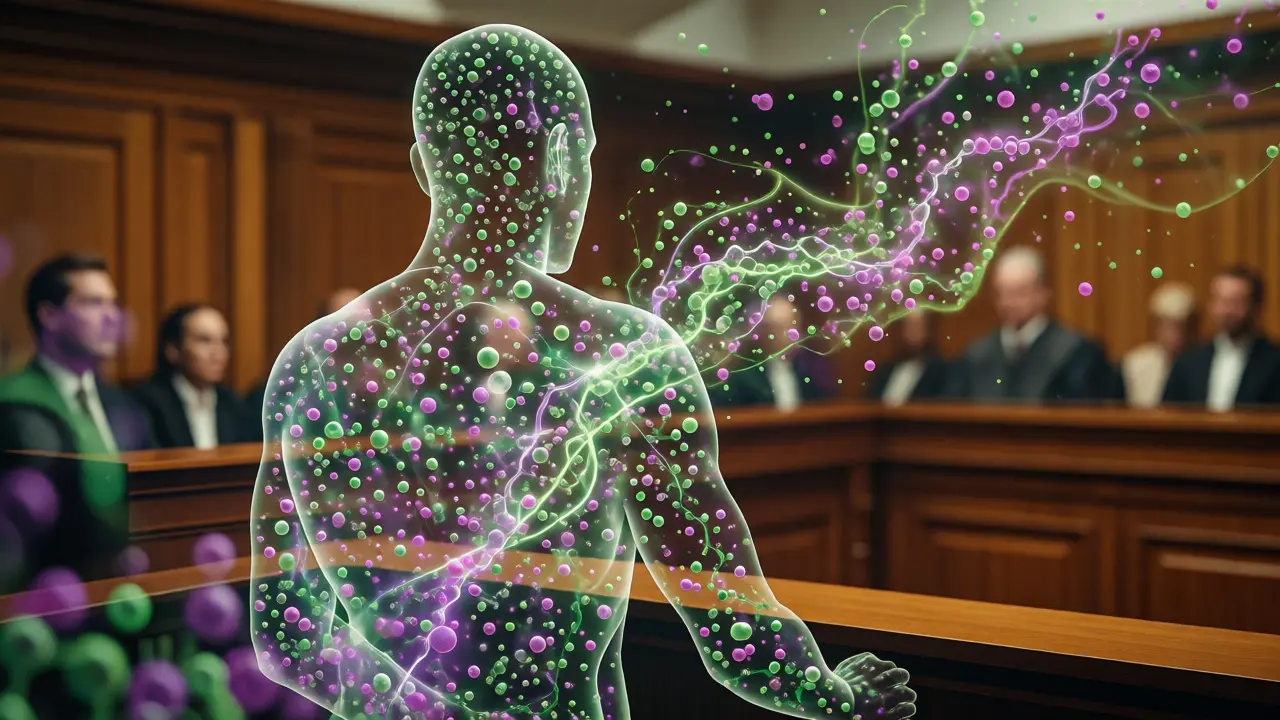
Visualizing Data for Non-Scientists
Numbers on a page are dry. Charts and graphs bring them to life. When presenting lab reports, consider using visual aids that show trends rather than isolated points. A line graph showing BAC over time is far more powerful than a single number. It tells a story. It shows cause and effect.
Keep visuals simple. Avoid cluttered axes or tiny fonts. Highlight the specific value relevant to the case. If the legal limit is 0.08%, mark that line clearly on the chart. Let the jury see exactly where the defendant fell relative to the law. Visuals also help during cross-examination. If a lawyer tries to confuse you with complex hypotheticals, point back to the chart. "Based on this data," you can say, "the conclusion remains the same."
Key Differences Between Screening and Confirmation Tests
Jurors often confuse screening tests with confirmation tests. They think a positive immunoassay means guilt. It doesn't. Immunoassays are quick and cheap, but they can produce false positives due to cross-reactivity. Confirmation tests, like GC-MS or Liquid Chromatography-Tandem Mass Spectrometry (LC-MS/MS), are definitive. They identify the specific molecular structure.
| Feature | Immunoassay (Screening) | GC-MS/LC-MS/MS (Confirmation) |
|---|---|---|
| Speed | Minutes | Hours to Days |
| Cost | Low | High |
| Specificity | Moderate (risk of false positives) | Very High (definitive identification) |
| Legal Weight | Preliminary indicator | Admissible evidence |
Use this table mentally when speaking. Explain that the screening test is like a metal detector at an airport-it alerts you to something potentially dangerous, but it doesn't tell you if it's a gun or a belt buckle. The confirmation test is the physical inspection. Only after that inspection do we have proof.
Preparing for the Stand: Practical Tips
Your demeanor matters as much as your data. Speak slowly. Make eye contact with the jury, not just the lawyer. Avoid defensive body language. If you are asked a question, pause before answering. This gives you time to formulate a precise response and shows the jury you are thinking carefully, not just reacting.
Practice your explanations out loud. Record yourself. Do you sound arrogant? Are you using too many big words? Simplify. Replace "concentration" with "amount," "metabolite" with "breakdown product," and "in vitro" with "in the lab." Remember, you are an educator first, an expert second. Your goal is to empower the jury to make an informed decision, not to impress them with your vocabulary.
What is the difference between qualitative and quantitative toxicology results?
Qualitative results only tell you whether a substance is present (yes or no). Quantitative results tell you exactly how much of the substance is present (e.g., 50 ng/mL). In court, quantitative data is crucial for determining impairment levels, whereas qualitative data might only confirm exposure.
Can hair testing replace blood testing in court?
Not usually for acute impairment cases. Hair testing provides a history of drug use over months, making it excellent for probation monitoring or chronic use cases. However, it cannot pinpoint recent usage or current impairment levels accurately enough for DUI or overdose cases, where blood or urine is preferred.
How do I handle questions about false positives?
Acknowledge that screening tests can have false positives due to cross-reactivity with other medications. Then, emphasize that confirmation testing (like GC-MS) eliminates these errors by identifying the unique molecular fingerprint of the drug. State clearly that your final opinion is based on confirmed results, not preliminary screens.
What if the sample was degraded?
Degradation can alter results, particularly for unstable compounds like cocaine, which breaks down into benzoylecgonine. As an expert, you should review storage conditions. If degradation occurred, you may need to apply correction factors or state that the original concentration could have been higher. Transparency about sample integrity builds credibility.
Do I need to explain the mass spectrometer to the jury?
Only briefly. Describe it as a highly precise scale that weighs molecules. You don't need to explain ionization or magnetic fields unless specifically asked. Focus on what the output means: it identifies the substance with near-certainty. Keep the technical details minimal unless the jury shows interest.