You’ve spent years in the lab. You know your data inside and out. But when you step into that courtroom, your technical precision isn’t enough. The real test is how you talk about it. One slip in wording, one vague answer, or one moment of overconfidence can unravel a case faster than a flawed experiment. Ethical rules for expert witness communications are not just bureaucratic hurdles; they are the guardrails that keep your testimony credible, admissible, and useful to the jury.
Most experts fail not because their science is wrong, but because their communication breaks down under pressure. Did you know that judges exclude nearly half of all proposed expert testimony? It’s true. According to recent analyses of federal court decisions, exclusion rates hover around 40-50% depending on the circuit. Why? Often, it’s because the expert failed to explain their methods clearly enough for a layperson to follow, or worse, they stepped outside their area of expertise. This guide cuts through the legalese. We’ll look at what you actually need to do before, during, and after your testimony to stay within ethical bounds while keeping your impact high.
The Foundation: What Counts as Ethical Communication?
Before we get into tactics, let’s define the core issue. Expert witness ethics revolve around honesty, objectivity, and clarity. Unlike lawyers, who advocate for a client, your job is to assist the trier of fact-the judge or jury-in understanding complex issues. You don’t have a side. You have data.
This distinction trips up many professionals. If you’re hired by the defense, you might feel pressure to support their narrative. But ethically, if your data points toward liability, you must say so. Hiding inconvenient facts isn’t just risky; it’s a violation of professional codes set by organizations like the American Academy of Forensic Sciences (AAFS) and the National Association of Medical Examiners (NAME). These bodies require you to disclose limitations in your analysis. If your sample was contaminated, you say it. If your method has a known error rate, you state it. Silence is often interpreted as deception.
Pre-Trial Prep: Building Your Narrative Without Bias
Your ethical obligations start long before you take the stand. During discovery and depositions, every word you write in reports counts. A common pitfall is using absolute language. Saying "This DNA profile proves identity" is scientifically inaccurate. DNA profiles match with a probability, not certainty. Better phrasing? "The DNA profile obtained from the sample is consistent with the suspect’s reference sample."
Here’s a checklist for your pre-trial report review:
- Check for absolutes: Replace words like "prove," "always," and "never" with "indicate," "consistent with," and "unlikely."
- Define scope limits: Explicitly state what you did NOT analyze. If you didn’t check for secondary transfer, say so.
- Clarify methodology: Ensure your methods align with accepted standards like those from ASTM International or ISO. If you used a novel technique, be prepared to justify its reliability under the Daubert standard.
- Avoid advocacy tone: Read your report aloud. Does it sound like a scientist explaining findings, or a lawyer arguing a point? Cut any adjectives that aren’t descriptive of physical evidence.
Remember, opposing counsel will read your report line by line. They aren’t looking for truth; they’re looking for inconsistency. If your deposition transcript says one thing and your trial testimony says another, even slightly, you lose credibility instantly.
On the Stand: Clarity Over Complexity
Juries are smart, but they aren’t scientists. Your goal is translation, not demonstration. When asked about a complex process, use analogies. Explaining chromatography? Compare it to separating colors in a marker using water on paper. Simple visuals beat dense jargon every time.
One major ethical trap here is "over-explaining." Experts often think more detail equals more authority. Wrong. More detail gives opposing counsel more ammunition. Answer only what is asked. If the question is "Did you find blood?", the answer is "Yes." Don’t add, "And I analyzed the serological properties..." unless asked. Volunteering extra info opens doors for cross-examination you didn’t need to walk through.
Another critical rule: admit when you don’t know. If a question falls outside your expertise, say, "That is outside my field of specialization." Trying to bluff an answer destroys trust. Judges watch this closely. Under the Federal Rules of Evidence, specifically Rule 702, your testimony must be based on sufficient facts or data and reliable principles. Guessing violates this foundation.

Navigating Cross-Examination Traps
Cross-examination is designed to make you look foolish or biased. Ethical communication means staying calm and factual, even when provoked. Here’s how to handle common traps:
| Tactic | Goal of Attorney | Ethical Response Strategy |
|---|---|---|
| Leading Questions | Force a Yes/No answer that distorts context. | Answer directly, then briefly clarify if necessary. "Yes, but only under specific conditions." |
| Hypotheticals | Change variables to break your conclusion. | Stick to the actual facts of the case. "Based on the evidence presented, my conclusion remains unchanged." |
| Technical Jargon | Confuse the jury to undermine confidence. | Translate immediately. Define terms simply without sounding condescending. |
| Fee Disclosure | Suggest bias due to payment. | State fees transparently. "I charge $X per hour for preparation and testimony." Do not apologize for being paid. |
Notice the fee disclosure row. Many experts hesitate to mention money, fearing it looks greedy. But hiding it looks suspicious. Transparency builds trust. If you’re paid hourly, say so. If it’s a flat fee, say that too. Just don’t tie your opinion to the outcome. "I was paid to provide an unbiased assessment, regardless of the verdict."
The Digital Age: Emails and Social Media Footprints
In 2026, your digital footprint is part of your ethical record. Opposing counsel will subpoena your emails, text messages, and social media posts related to the case. Did you joke about the defendant on Twitter? Did you email a colleague saying, "I’m sure he’s guilty"? Those informal comments can contradict your formal testimony.
Keep your communications professional. Avoid speculation in written correspondence. If you discuss a case with peers, document that these were preliminary thoughts, not final conclusions. Remember, an email sent three months ago can be projected on a screen in front of twelve jurors today. Treat every keystroke as if it’s public record.
Post-Testimony Responsibilities
Your ethical duty doesn’t end when you leave the witness box. If new information emerges-say, a peer-reviewed study published last week that contradicts your method-you may have an obligation to notify the retaining attorney. While you don’t control the litigation strategy, failing to disclose material changes in scientific consensus can lead to sanctions later.
Also, protect your confidentiality. Don’t discuss case details publicly until the matter is fully resolved. Jurors notice if experts chat with reporters before the verdict. It suggests you care more about fame than fairness.
Practical Tips for Staying Compliant
To wrap up the practical side, here are three habits that keep most experts safe:
- Record yourself: Practice answering tough questions on video. Watch for filler words like "um" or defensive body language. Confidence comes from preparation, not arrogance.
- Know your error rates: Have exact numbers ready for false positives/negatives in your tests. Vague answers like "very accurate" invite attacks. Specifics like "99.8% accuracy in controlled trials" defend you.
- Review the local rules: Each jurisdiction has nuances. In Oregon, where I practice, judges strictly enforce disclosure deadlines. Missing a deadline can bar your testimony entirely, no matter how good your science is.
Ultimately, ethical communication is about respect-for the court, for the science, and for the people making life-altering decisions based on your words. Keep it simple, keep it honest, and keep it focused on the data.
What happens if an expert witness lies on the stand?
Lying under oath constitutes perjury, which is a criminal offense. Beyond legal penalties, the expert faces professional sanctions, including loss of certification or membership in professional bodies. Courts may also strike their testimony from the record, potentially causing a mistrial or dismissal of claims relying on that evidence.
Can an expert witness express opinions outside their specialty?
Generally, no. Under Rule 702 of the Federal Rules of Evidence, expert testimony must be limited to the expert's specialized knowledge. Offering opinions outside this scope risks exclusion by the judge. For example, a ballistics expert should not offer psychological evaluations of the shooter unless qualified to do so.
How does the Daubert standard affect expert communication?
The Daubert standard requires judges to act as gatekeepers for expert testimony. Experts must demonstrate that their methods are testable, peer-reviewed, and generally accepted. In communication terms, this means you must be able to explain your methodology clearly enough for a non-scientist judge to assess its reliability. Failure to do so leads to exclusion.
Are expert witnesses allowed to use visual aids?
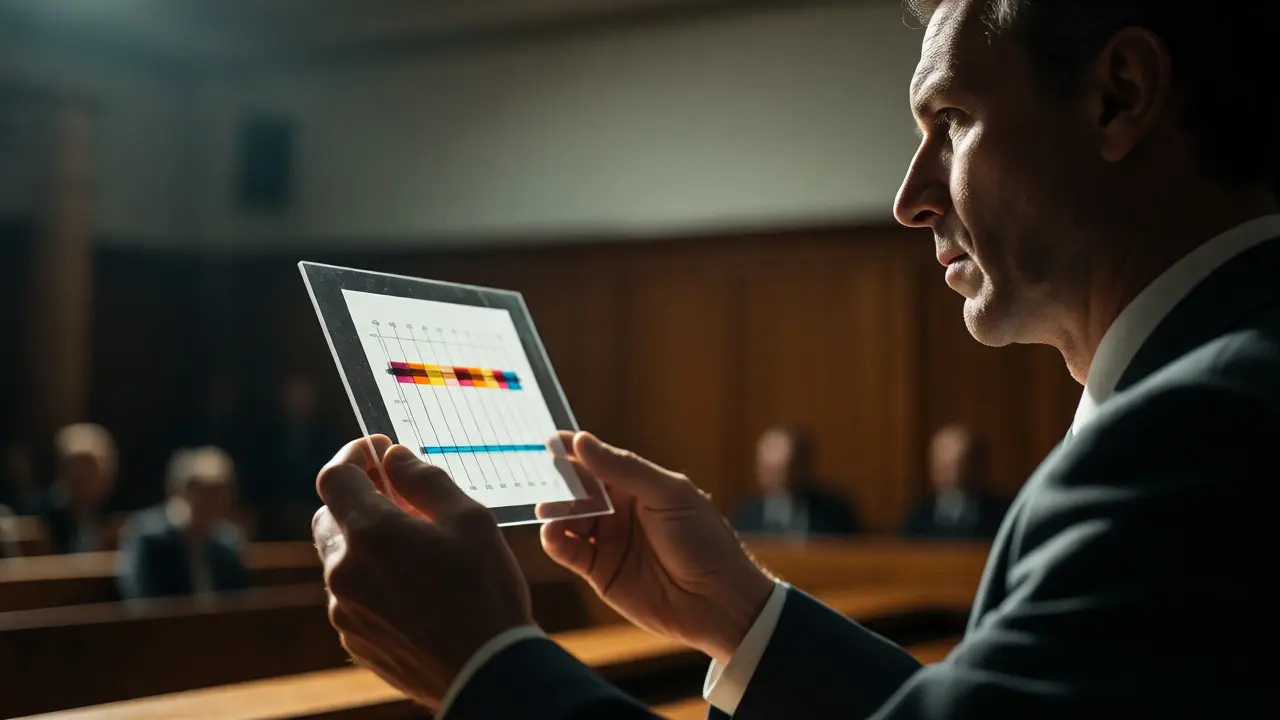
Yes, visual aids like charts, diagrams, and animations are highly encouraged and often essential for clarifying complex data. However, they must be accurate representations of the underlying data. Misleading visuals-such as truncated axes on graphs that exaggerate differences-can be objected to and may damage credibility.
What is the role of the 'Hired Gun' perception?
Juries often view frequent expert witnesses skeptically, labeling them "hired guns." To combat this, experts should emphasize their commitment to objective science rather than client advocacy. Transparent fee structures and clear statements about the independence of their analysis help mitigate this bias.