Imagine a suspect is identified not by DNA or fingerprints, but by a psychologist’s description of their personality. Sounds like a movie plot, right? Yet this happens in real investigations every year. The problem isn’t that Criminal Profiling is useless-it can be incredibly helpful-but that it operates in a gray area where science meets intuition. When we talk about the ethics of criminal profiling, we are really asking: how do we keep this tool from becoming a weapon against the innocent?
Profiling is not magic. It is an investigative technique used by law enforcement to narrow down suspects based on crime scene evidence, victimology, and behavioral patterns. However, because it relies heavily on human interpretation rather than hard physical evidence, it carries a unique set of ethical risks. If a profiler gets it wrong, the consequences can be devastating for both the investigation and the accused.
The Science vs. Art Dilemma
To understand the ethical stakes, you first need to understand what profiling actually is. Criminal profiling, also known as offender profiling or investigative psychology, is a method used to identify the likely characteristics of an unknown perpetrator based on the nature of the crime and the evidence left at the scene. It belongs to the broader field of Forensic Psychology. Unlike fingerprint matching, which is binary (match or no match), profiling is probabilistic. It suggests likelihoods, not certainties.
This distinction is crucial. In court, judges often struggle with how much weight to give a profiler’s testimony. Is it expert opinion or just speculation? The ethical burden falls on the investigator to ensure that the profile is grounded in data, not hunches. When a profile drifts too far into the realm of guesswork, it stops being a scientific aid and starts becoming a narrative device. This is where the line between helpful analysis and dangerous assumption begins to blur.
Bias: The Silent Killer of Objectivity
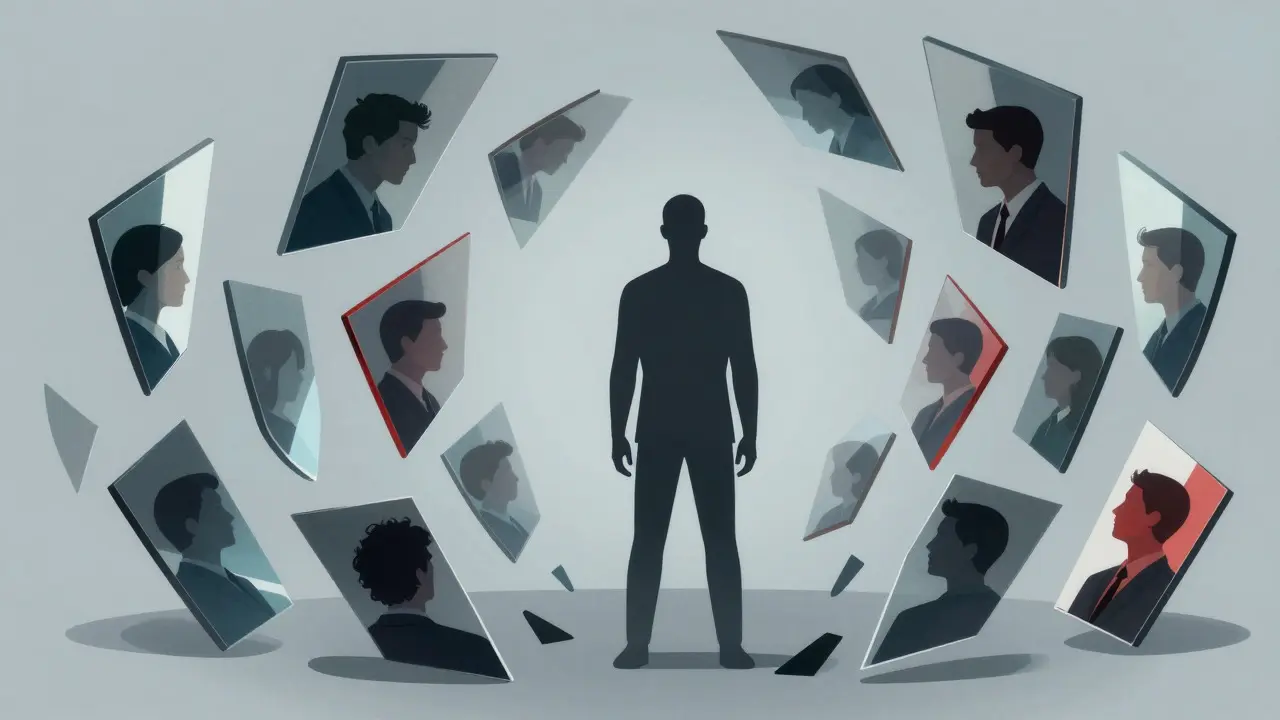
The biggest ethical hurdle in profiling is cognitive bias. Humans are pattern-recognition machines, but we are terrible at ignoring irrelevant patterns. Two major biases plague this field:
- Confirmation Bias: Once a profiler forms an initial theory, they tend to look for evidence that supports it while ignoring evidence that contradicts it. If the early profile says the killer is a local male, investigators might overlook clues pointing to an outsider.
- Stereotyping: Profiles often rely on demographic assumptions. For example, assuming a serial arsonist is male, white, and middle-aged simply because most historical cases fit that mold. This ignores the reality that crime does not respect demographics.
These biases don't just lead to missed suspects; they can lead to wrongful arrests. When a profile describes a suspect who matches a specific racial or socioeconomic stereotype, police resources are disproportionately focused on that group. This creates a feedback loop where underrepresented communities face higher scrutiny without equal evidence. Ethical profiling requires active countermeasures, such as blind reviews or structured analytic techniques, to strip away these unconscious filters.
Accuracy Rates and the Hindsight Problem
How accurate is profiling, really? Studies show mixed results. Some profiles hit the mark on broad traits like age range or gender, but accuracy drops significantly when it comes to specific details like occupation, education level, or exact location. A study published in the journal Psychology, Public Policy, and Law found that while profilers were good at identifying whether a crime was committed by one person or multiple people, they were less reliable in pinpointing specific personal attributes.
There is also the "hindsight bias" issue. After a case is solved, it looks obvious that the profile was correct. But during the active investigation, the same data might have pointed in three different directions. Ethically, we must judge the profile based on the information available *at the time* it was made, not after the fact. If a profiler claims high accuracy, they need to provide transparent data on how often they were wrong, not just how often they were right.
Legal Admissibility and Jury Influence
In many jurisdictions, including the United States, the admissibility of profiling evidence depends on the Daubert standard (or similar rules). This standard asks whether the methodology is scientifically valid and reliably applied. Because profiling lacks a single, universally accepted scientific framework, its admissibility varies by state and even by judge.
The ethical risk here is jury manipulation. Jurors are laypeople. They may view a confident psychologist’s testimony as absolute truth, especially if the profile paints a vivid picture. If the defense doesn’t challenge the methodology effectively, the jury might convict based on a character sketch rather than physical proof. To mitigate this, legal teams must ensure that any profiling evidence is presented with clear caveats about its limitations.
| Feature | Traditional Forensics (DNA/Fingerprints) | Criminal Profiling |
|---|---|---|
| Nature of Data | Physical, objective | Behavioral, interpretive |
| Error Rate | Quantifiable and low (with proper lab protocols) | Variable and difficult to quantify |
| Primary Risk | Contamination or lab error | Cognitive bias and over-reliance |
| Jury Perception | Seen as "hard science" | Seen as "expert insight" (can be misleading) |
| Ethical Focus | Chain of custody and lab quality | Objectivity, transparency, and bias control |

Best Practices for Ethical Application
So, how do we use profiling without falling into the trap? Here are key practices that ethical investigators follow:
- Treat Profiles as Leads, Not Verdicts: A profile should generate hypotheses to test, not conclusions to enforce. Every detail in the profile should be verified against independent evidence.
- Use Multiple Sources: Don’t rely on a single profiler. Cross-reference insights from different analysts or use structured decision-making tools to reduce individual bias.
- Maintain Transparency: Document the reasoning behind every part of the profile. If a conclusion is drawn from a specific piece of evidence, make that link explicit.
- Regular Review: As new evidence comes in, update the profile. If the new evidence contradicts the old profile, discard the old assumptions immediately.
- Training in Cognitive Biases: Investigators and profilers should undergo regular training on how to recognize and mitigate confirmation bias and anchoring effects.
For instance, in a recent cold case review in Oregon, investigators re-examined a decades-old arson profile. The original profile had suggested a young male suspect. By applying modern structured analytic techniques, the team realized the evidence actually pointed toward an older female suspect who had been overlooked due to stereotypical assumptions. The case was reopened, and the correct suspect was eventually identified. This example shows that ethical rigor isn’t just about avoiding mistakes; it’s about correcting them.
The Future of Ethical Profiling
Technology is changing the landscape. Machine learning algorithms are beginning to assist in behavioral analysis by processing large datasets of crime reports. These tools can help remove some human bias by focusing strictly on statistical correlations. However, they bring their own ethical questions: Who owns the data? Are the algorithms biased by historical policing patterns?
As we move forward, the ethical standard will shift from "Is this profiler smart?" to "Is this process robust?" The goal is to create a system where the methodology is auditable, repeatable, and fair. Until then, criminal profiling remains a powerful but fragile tool. It requires constant vigilance to ensure it serves justice, not just convenience.
Is criminal profiling admissible in court?
It depends on the jurisdiction and the judge. In the U.S., it must meet standards like Daubert, requiring the methodology to be scientifically valid and reliably applied. Many courts allow it as expert opinion but caution juries that it is not definitive proof.
What is the most common ethical failure in profiling?
The most common failure is confirmation bias, where investigators ignore evidence that contradicts the initial profile. This can lead to tunnel vision and wrongful accusations.
How accurate are criminal profiles generally?
Accuracy varies. Broad traits like gender or age range are often predicted correctly, but specific details like occupation or exact location are much less reliable. There is no single fixed accuracy rate, as it depends on the quality of the data and the analyst.
Can technology replace human profilers?
Not entirely. Algorithms can help process data and reduce some bias, but interpreting complex human behavior still requires human judgment. The best approach is a hybrid model where technology supports human analysis.
What should a defense attorney do if profiling is used against their client?
They should challenge the methodology. Ask for documentation of the reasoning, check for cognitive biases, and present alternative interpretations of the evidence. Highlighting the lack of physical corroboration is often effective.