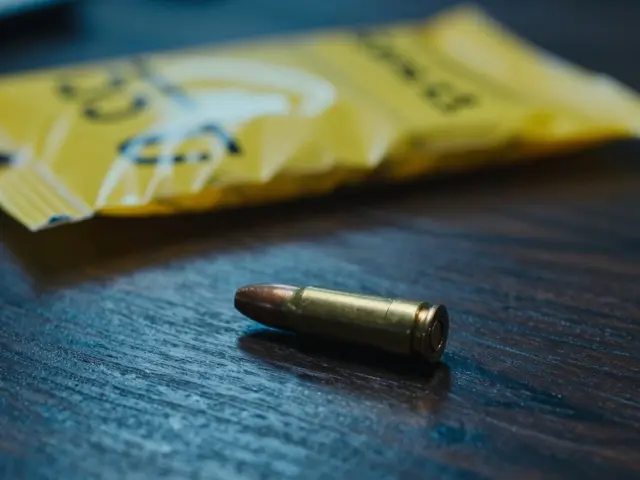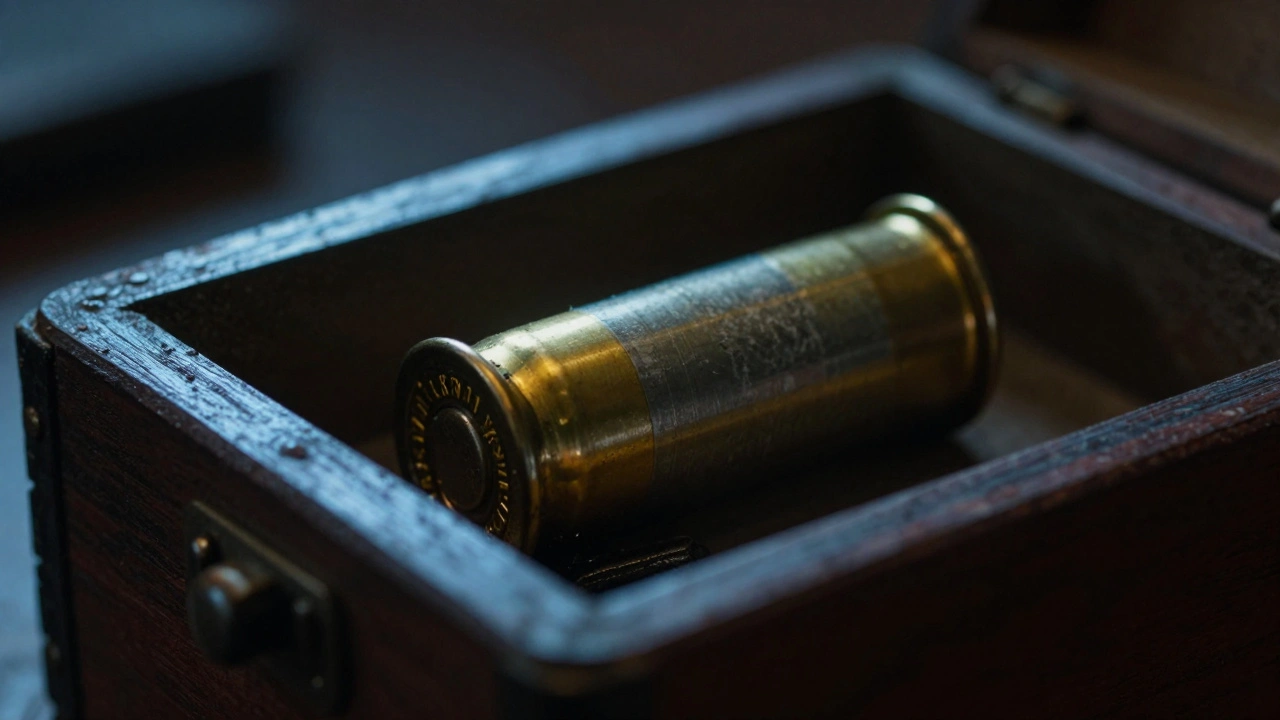
Imagine a crime scene from thirty years ago. A cartridge casing sits in an evidence box, yellowed with age. The original investigation relied on a side-by-side microscope comparison to link that casing to a suspect's gun. Today, we have digital imaging, massive databases, and stricter scientific standards. Does that old match still hold up? For investigators working cold case ballistics, the answer is rarely simple. Re-examining legacy test fires requires navigating a complex landscape of degraded evidence, evolving technology, and shifting scientific consensus.
The stakes are high. Wrongful convictions hinge on outdated forensic claims, while guilty parties walk free because old evidence was never re-evaluated with modern tools. This isn't just about looking at bullets again; it's about understanding how the science of firearm identification has changed since those original tests were fired.
The Science Behind the Markings
To understand why re-examination matters, you first need to know what creates a ballistic fingerprint. When a firearm discharges, several things happen in milliseconds that leave permanent marks on the ammunition.
First, gas pressure forces the base of the cartridge against the breech face of the gun. This creates negative impressions of any scratches or machining marks on that metal surface. Second, the firing pin strikes the primer, leaving its own unique imprint. Third, as the cartridge cycles, the extractor and ejector mechanisms drag across the casing, adding more toolmarks. Finally, if a bullet exits the barrel, the rifling-those spiral grooves inside the barrel-imparts rotational spin and leaves microscopic striations on the projectile itself.
| Evidence Type | Source Component | Characteristic Type | Reliability Factor |
|---|---|---|---|
| Cartridge Casing | Breech Face, Firing Pin, Extractor | Individual (Toolmarks) | High (if preserved) |
| Fired Bullet | Barrel Rifling | Class & Individual | Moderate (deformation affects clarity) |
| Rifling Pattern | Barrel Manufacturing | Class | Low (identifies make/model only) |
It is crucial to distinguish between class characteristics and individual characteristics. Class characteristics tell you the type of gun used-for example, a .45 caliber pistol with right-hand twist rifling. Individual characteristics are the random microscopic imperfections unique to one specific weapon. Cold case re-examinations focus heavily on these individual marks, but their visibility degrades over time due to corrosion, handling, and environmental exposure.
Legacy Test Fires: What Went Wrong?
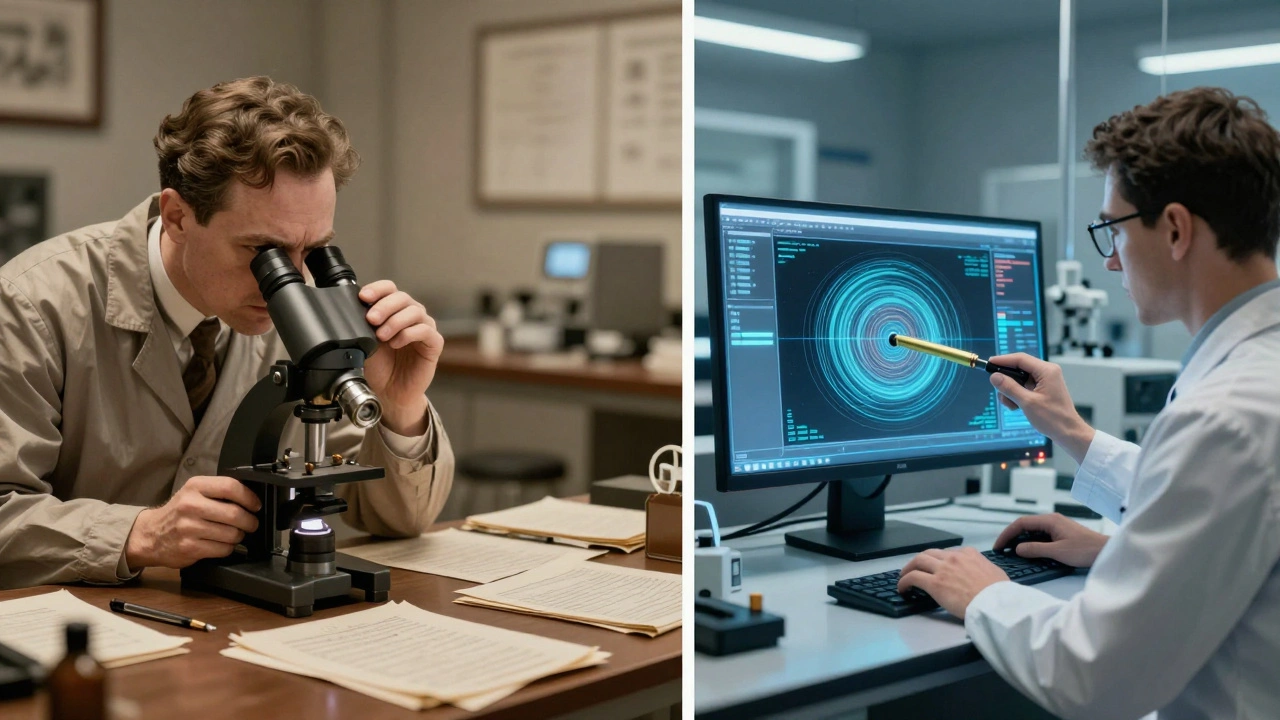
In the mid-20th century, forensic ballistics was less of a hard science and more of an art form practiced by experienced examiners. The standard procedure involved taking a suspect's weapon, firing it into a water tank or sawdust to recover pristine test bullets, and then comparing those to crime scene evidence under a comparison microscope.
This method had significant flaws. First, it was subjective. Examiners relied on pattern recognition and memory. If an examiner believed a suspect was guilty, they might unconsciously force a match where none existed-a phenomenon known as confirmation bias. Second, there were no standardized protocols for determining when a match was "sufficient." One examiner might declare a match based on three matching striations; another might require ten.
Consider the Sacco-Vanzetti case, often cited in forensic history. Examiners matched murder shells to test shells fired from Sacco's automatic pistol, noting identical firing pin imprints and breechblock markings. While this seemed conclusive at the time, modern scrutiny reveals that such conclusions lacked statistical backing. We now know that manufacturing variations can create similar marks on different guns, especially older models with looser tolerances.
Furthermore, legacy test fires often used different ammunition types than those found at the crime scene. Bullet composition, primer hardness, and powder load all affect how marks are transferred. A soft lead bullet might pick up more striations than a copper-jacketed one, leading to false positives or negatives in comparative analysis.
The Digital Revolution: NIBIN and Beyond
The game-changer for cold cases arrived with the National Integrated Ballistic Information Network (NIBIN). Managed by the Bureau of Alcohol, Tobacco, Firearms, and Explosives (ATF), NIBIN digitized the process. Instead of manual microscopy, examiners use the Integrated Ballistic Identification System (IBIS) to scan spent casings and bullets, creating high-resolution digital images of their toolmarks.
NIBIN allows investigators to search millions of records across jurisdictions. It generates "hits"-potential matches-that human examiners then verify. This automation solved two major problems: it removed the reliance on examiner memory for cross-case comparisons, and it connected crimes that occurred years apart or in different cities.
However, NIBIN is not magic. It works best with clear, undamaged casings. In cold cases, evidence may be corroded, dirty, or partially melted. Additionally, NIBIN searches for similarities, not definitive identities. A hit indicates that two pieces of evidence share enough features to warrant further review. It does not prove they came from the same gun without subsequent manual verification.
For legacy cases, integrating old physical evidence into NIBIN requires careful digitization. Examiners must clean and prepare aged casings without altering their surfaces. This process is delicate; aggressive cleaning can erase the very marks needed for identification.
Challenges in Re-examining Old Evidence
Re-opening a cold case brings unique hurdles. The most obvious is the condition of the evidence. Decades of storage can degrade ballistic markers. Rust spots on a breech face impression can obscure critical details. Bullets recovered from bodies may have been deformed by impact or burial conditions, making striation comparison nearly impossible.
Another challenge is the availability of the suspect weapon. If the gun was lost, destroyed, or sold, you cannot fire new test rounds. Without fresh test fires, you are limited to comparing the crime scene evidence against other known samples in databases like NIBIN. This limits the scope of your investigation significantly.
Even when the weapon is available, barrel erosion changes the marks. A gun fired thousands of times will produce different striations than the same gun fired once. Comparing a 1990 test fire to a 2026 test fire from the same gun requires accounting for this wear. Examiners must document the number of rounds fired and note any visible erosion in the barrel.
Finally, there is the issue of chain of custody. In older cases, documentation may be incomplete. Did someone handle the casing with bare hands? Was it stored in a plastic bag that caused chemical reactions? These gaps introduce doubt that defense attorneys will exploit.
Scientific Scrutiny and Legal Standards
The legal landscape for ballistics evidence has shifted dramatically. Courts now demand higher standards of proof. The Daubert Standard, established in 1993, requires expert testimony to be based on scientifically valid methods. This means examiners can no longer simply state, "I see a match." They must explain the methodology, error rates, and peer-reviewed support for their conclusion.
Critics argue that traditional ballistics lacks rigorous statistical validation. Unlike DNA testing, which provides a probability of match (e.g., 1 in a billion), ballistics offers a qualitative assessment. Recent studies suggest that inter-rater reliability-the agreement between different examiners-is lower than previously thought. Two experts might look at the same pair of casings and reach different conclusions.
This skepticism extends to high-profile cases. The JFK assassination ballistics evidence, for instance, has faced intense scrutiny. Organizations like the Association of Firearm and Toolmark Examiners (AFTE) have defended traditional methods, but independent analyses continue to question the certainty of past findings. For cold case investigators, this means presenting ballistics evidence as strong investigative leads rather than irrefutable proof of guilt.
To mitigate risk, modern protocols emphasize corroboration. A ballistic match should be supported by other evidence: witness testimony, digital footprints, or financial records. Relying solely on toolmark identification is increasingly seen as insufficient for securing a conviction.
Best Practices for Cold Case Investigators
If you are tasked with re-examining legacy test fires, follow these steps to ensure credibility and accuracy:
- Audit the Original Evidence: Review all original reports, photos, and notes. Identify what was tested, how, and by whom. Look for inconsistencies or missing data.
- Assess Evidence Condition: Before any testing, evaluate the physical state of casings and bullets. Use non-destructive imaging techniques like 3D scanning to capture surface details without touching the evidence.
- Digitize for NIBIN: Submit clear images to NIBIN. Even if the original case predates the database, adding it now can generate new leads from unrelated crimes.
- Conduct Fresh Test Fires: If the suspect weapon is available, fire new rounds using modern, standardized ammunition. Compare these fresh test fires to both the original crime scene evidence and the legacy test fires.
- Seek Independent Verification: Have a second, uninvolved examiner review the matches. Blind testing reduces bias and strengthens the defensibility of your findings.
- Document Everything: Create a detailed record of every step, including lighting conditions, microscope settings, and decision points. Transparency is key to surviving legal challenges.
Remember, the goal is not just to find a match, but to establish a reliable, reproducible connection. In cold cases, the passage of time amplifies every potential error. Precision and patience are your best tools.
The Future of Forensic Ballistics
Where do we go from here? The field is moving toward greater objectivity. Researchers are developing algorithms that analyze striation patterns using machine learning, reducing human subjectivity. These systems can detect subtle patterns invisible to the naked eye, potentially increasing match accuracy.
Additionally, there is a push for standardized reporting. Instead of vague terms like "consistent with," future guidelines may require probabilistic statements, similar to DNA analysis. This would provide juries with clearer information about the strength of the evidence.
For cold case units, staying current is essential. Training programs must update examiners on the latest technologies and legal standards. Collaboration between labs, law enforcement, and academic researchers will drive further improvements in validation and reliability.
Ultimately, re-examining legacy test fires is about justice. It ensures that convictions stand on solid ground and that innocent people are not held accountable for crimes they did not commit. By combining historical insight with modern science, we can bring closure to decades-old mysteries.
What is a legacy test fire in ballistics?
A legacy test fire refers to ammunition fired from a suspect's weapon during an original investigation, typically decades ago. These test bullets and casings were used for manual microscopic comparison. In cold cases, these old test fires are re-examined using modern digital tools and stricter scientific protocols to verify or challenge initial conclusions.
How does NIBIN help solve cold cases?
The National Integrated Ballistic Information Network (NIBIN) uses the IBIS system to digitally scan and compare ballistic evidence. It connects crime scenes across jurisdictions and time periods by identifying similar toolmarks. For cold cases, uploading old evidence to NIBIN can generate new leads by linking them to recent crimes or other unsolved cases in the database.
Why are old ballistics matches sometimes challenged in court?
Old ballistics matches are challenged because earlier methods were subjective and lacked statistical validation. Examiners relied on visual pattern recognition, which is prone to confirmation bias. Modern courts require scientifically robust evidence under standards like Daubert, demanding transparency in methodology and error rates, which many legacy examinations failed to provide.
Can a bullet be identified if it is damaged or deformed?
Identification becomes difficult if a bullet is severely deformed, as the striations from the barrel rifling may be obscured. However, even partial markings can sometimes be compared using advanced 3D imaging techniques. If too much detail is lost, the bullet may only provide class characteristics (like caliber and rifling direction) rather than individual identification.
What is the difference between class and individual characteristics in ballistics?
Class characteristics identify the type of firearm, such as the caliber, number of rifling lands, and twist direction. These are shared by all guns of the same model. Individual characteristics are unique microscopic marks caused by manufacturing imperfections and wear, allowing a specific bullet or casing to be linked to one particular weapon.