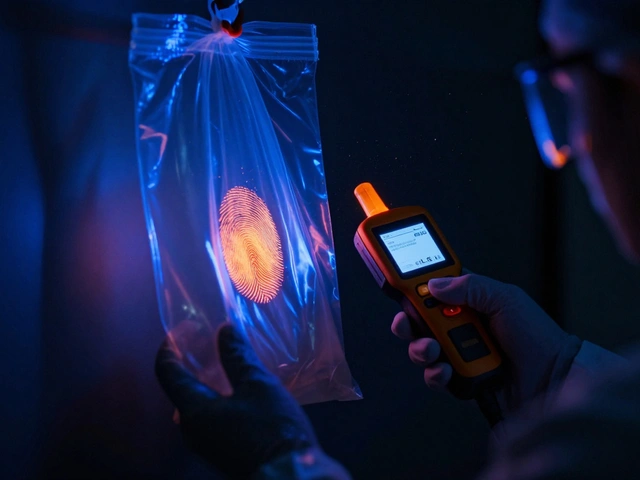
Imagine you’re sitting in a courtroom. The prosecutor slides a report across the table. It says a hair found at the crime scene matches the defendant’s DNA profile with a probability of one in ten billion. The jury looks at you. They don’t know if that number means anything. You do. Or you should. Because DNA evidence isn’t just a test result; it’s a chain of decisions, protocols, and legal hurdles that determine whether that match actually holds up under scrutiny.
For decades, we treated DNA as the "gold standard" of forensic science-unbreakable, infallible, absolute. But courts have learned otherwise. Since the mid-1990s, judges have had to decide not just *if* DNA is reliable, but *how* it was handled, analyzed, and presented. If the lab skipped a step, or if the analyst interpreted a complex mixture incorrectly, that perfect-looking match can collapse into inadmissible noise. Understanding these admissibility requirements is critical for anyone involved in criminal justice, from defense attorneys challenging weak cases to lab technicians ensuring their data survives cross-examination.
The Legal Gatekeepers: Frye vs. Daubert
Before a judge lets any scientific evidence touch the jury, they have to clear two main legal hurdles. Which hurdle applies depends on your jurisdiction, but most U.S. states now use a hybrid or the stricter federal standard.
Frye Standard is a legal test requiring that scientific evidence be generally accepted within its relevant scientific community. This comes from the 1923 case Frye v. United States. It’s simpler: Is this method widely recognized by experts? If yes, it’s admissible. Many states still rely on this for established techniques like STR profiling.
Daubert Standard is a more rigorous judicial gatekeeping rule requiring that expert testimony be both relevant and reliable based on specific factors. Established in Daubert v. Merrell Dow Pharmaceuticals (1993) and adopted federally via Federal Rule of Evidence 702, it asks judges to act as gatekeepers. They must evaluate:
- Whether the theory or technique can be (and has been) tested.
- Whether it has been subjected to peer review and publication.
- The known or potential error rate.
- Standards controlling the technique’s operation.
- General acceptance in the relevant scientific community.
In practice, this means the defense doesn’t just ask, "Is DNA real?" They ask, "Did this specific lab follow the validated protocol for this specific sample type?" If the answer is shaky, the evidence might stay out.
Chain of Custody: The Paper Trail That Saves Cases
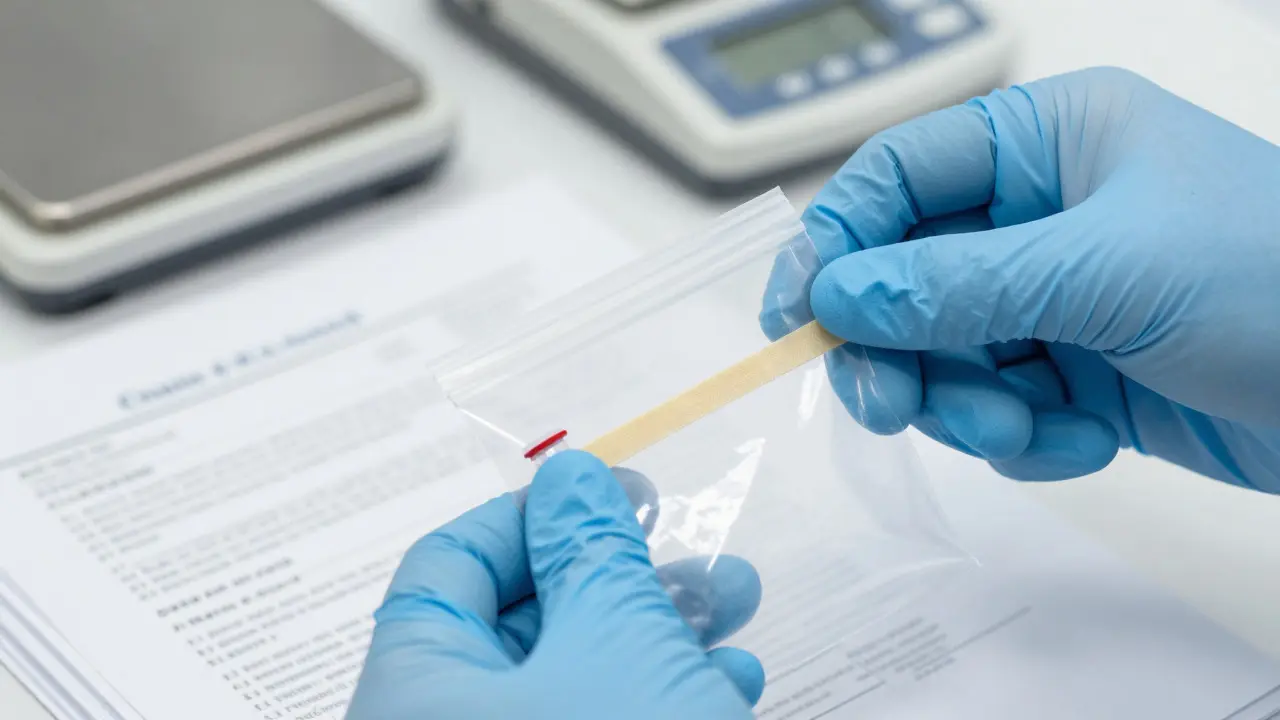
You can have the best DNA analysis in the world, but if the evidence bag was left in a hot car for three days, or if there’s a gap in who held the sample between the crime scene and the lab bench, the whole thing is vulnerable. Chain of Custody is the documented, unbroken sequence of custody, control, transfer, and disposition of physical evidence.
Judges look for continuity. Every person who touched the sample must be accounted for. Every location where it was stored must be logged. If a detective hands a swab to a technician without signing the log, that’s a break in the chain. During trial, opposing counsel will hammer on these gaps. They aren’t trying to prove the DNA is wrong; they’re trying to prove the DNA might have been contaminated, degraded, or swapped.
Key attributes of a solid chain of custody include:
- Documentation: Timestamped logs for every transfer.
- Sealing: Tamper-evident bags with initials over the seal.
- Storage Conditions: Proof that temperature and humidity were controlled, especially for degraded samples.
Lab Accreditation and Quality Control
Courts increasingly look beyond the individual analyst to the institution itself. Does the lab hold accreditation from a recognized body? In the U.S., ANSI/NCSL Laboratory Accreditation Board (ANAB) is an accrediting body that certifies forensic laboratories meet international quality management standards. While not legally mandatory everywhere, ANAB accreditation signals that the lab follows strict protocols for validation, proficiency testing, and equipment calibration.
If a lab hasn’t passed its annual blind proficiency tests, or if they used an instrument that wasn’t calibrated last month, the reliability factor under Daubert takes a hit. Judges want to know that the machine doing the work is telling the truth. This is why Quality Assurance (QA) programs are systematic processes designed to ensure that all laboratory procedures meet specified requirements and produce consistent results.
Interpreting Complex Mixtures: Where Errors Happen
Straightforward single-source DNA profiles are relatively easy to defend. The trouble starts with mixtures. What happens when a victim’s skin cells get mixed with the suspect’s blood on a knife handle? Now you’re dealing with probabilistic genotyping software like STRmix or TrueAllele, which are statistical algorithms used to interpret complex DNA mixtures by calculating likelihood ratios.
These tools are powerful, but they require careful input. The analyst must define the number of contributors, set the peak height thresholds, and account for stochastic effects like dropout (where a genetic marker fails to amplify). If the analyst makes an arbitrary choice about how many people contributed to the DNA, the resulting statistical weight can swing wildly. Courts have excluded DNA evidence when analysts failed to document their assumptions or when the software’s output was presented as fact rather than probability.
| Factor | Single-Source Profile | Mixture Profile |
|---|---|---|
| Complexity | Low; clear peaks for each locus | High; overlapping peaks from multiple contributors |
| Statistical Weight | Random Match Probability (RMP) | Likelihood Ratio (LR) |
| Common Defense Attacks | Contamination, degradation | Analyst bias, arbitrary contributor count, software validation |
| Admissibility Risk | Low if chain of custody is intact | Medium-High; requires robust QA documentation |
The Role of Peer Review and Validation Studies
Under Daubert, judges often ask for validation studies. These are experiments where the lab proves their method works. For example, if a lab uses a new extraction kit for old bones, they need to show that the kit recovers DNA accurately compared to a gold-standard method. Without this, the technique is considered "novel" and faces higher scrutiny.
Peer review matters too. Has the method been published in journals like Journal of Forensic Sciences? Have other labs replicated the results? If a lab is using a proprietary software algorithm that hasn’t been independently verified, the defense can argue that the "black box" nature of the tool makes it unreliable. Transparency is key. Analysts must be able to explain *why* the software produced a certain result, not just *what* the result is.
Practical Steps for Ensuring Admissibility
If you’re working in forensics or litigation, here’s how to keep your DNA evidence safe from exclusion:
- Document Everything: Don’t assume the next person knows what you did. Write down every decision, especially regarding mixture interpretation.
- Validate New Methods: Before putting a new technique into casework, run internal validation studies. Keep the data ready for discovery.
- Train Analysts on Statistics: An analyst who doesn’t understand likelihood ratios will struggle on the stand. Ensure they can explain the math in plain English.
- Audit Chain of Custody Regularly: Random spot-checks of evidence logs catch small errors before they become big problems in court.
- Prepare for Cross-Examination: Anticipate questions about contamination controls, background levels, and alternative explanations for the DNA presence.
The bottom line is that DNA evidence is only as strong as its weakest link. Whether that link is a missing signature on a custody form or an undocumented assumption in a mixture calculation, the law demands proof of rigor. By focusing on process, transparency, and quality control, you turn a potentially fragile piece of evidence into a cornerstone of the case.
What is the difference between Frye and Daubert standards?
The Frye standard focuses on general acceptance in the scientific community, making it easier for well-established methods to pass. The Daubert standard requires judges to actively evaluate reliability factors like error rates and peer review, offering more room for challenge, especially for newer or complex techniques.
Can DNA evidence be excluded if the lab lacks accreditation?
It is possible. While accreditation isn't always legally required, lack of it weakens the argument for reliability under Daubert. Judges may view unaccredited labs as having less rigorous quality control, increasing the risk of exclusion if other flaws are present.
Why are DNA mixtures harder to admit in court?
Mixtures involve subjective decisions about the number of contributors and the weight of different alleles. These interpretations rely on statistical software that can be opaque. If the analyst's assumptions aren't clearly documented and validated, the defense can argue the results are speculative rather than scientific.
What role does chain of custody play in DNA admissibility?
Chain of custody proves the integrity of the sample. If there are gaps in who held the evidence or where it was stored, the defense can argue contamination or substitution. A broken chain doesn't automatically exclude evidence, but it significantly lowers the threshold for successful challenges.
How do judges assess the error rate of DNA testing?
Judges look for published studies or internal validation data that quantify how often the method produces false positives or negatives. For standard STR profiling, error rates are very low. For novel methods or degraded samples, the error rate must be specifically demonstrated for those conditions to satisfy Daubert.