You just finished a high-stakes forensic cleanup or a routine lab experiment, and you’re staring at a bag full of blood-soaked gauze, used needles, and contaminated gloves. It’s tempting to toss it in the regular trash, but that’s a quick way to get fined by regulators or sued if someone gets sick. Biohazard disposal is not just about hygiene; it’s a legal obligation governed by strict federal and state rules. If you are handling materials that could spread infection, you need to know exactly how to package, label, transport, and destroy them before they leave your facility. This guide cuts through the bureaucratic noise. We will look at what counts as biohazardous material, who actually has to follow these rules, and the specific steps you must take to stay compliant with agencies like OSHA and the EPA. Whether you run a small clinic or manage a large laboratory, getting this wrong costs money and reputation. Getting it right keeps everyone safe.
Key Takeaways
- Know Your Waste: Not all dirty items are biohazards. Only regulated medical waste (RMW) requires special handling; general trash does not.
- Segregation is Critical: Mixing sharps with soft waste can lead to punctures and fines. Use rigid, puncture-resistant containers for needles.
- Labeling Matters: Every container must display the universal biohazard symbol and the word "Biohazard" clearly visible from outside.
- Treatment Before Transport: Most liquid and solid wastes must be sterilized (autoclaved or chemically treated) on-site before being moved off-premises.
- Documentation Saves You: Keep manifests and training logs. In an audit, if it isn’t written down, it didn’t happen.
What Actually Counts as Biohazardous Material?
Let’s clear up the biggest misconception first: a bloody bandage from a minor cut might not legally count as regulated medical waste in some jurisdictions, but a culture plate growing bacteria definitely does. The definition hinges on whether the material poses a risk of transmitting infectious agents to humans or animals.
Under the Bloodborne Pathogens Standard (29 CFR 1910.1030), regulated medical waste typically includes:
- Pathological Waste: Human tissues, organs, body parts, and fluids removed during surgery or autopsy.
- Sharps: Needles, syringes with attached needles, scalpel blades, glass pipettes, and broken capillary tubes. These are hazardous because they can puncture skin and inject pathogens directly into the bloodstream.
- Cultures and Stocks: Laboratory waste generated during research involving infectious agents. This includes discarded cultures, stocks, and specimens.
- Isolation Wastes: Discarded items from patients known or suspected to have highly communicable diseases, such as Lassa fever or Ebola.
If you are dealing with animal waste, the Animal Welfare Act and local veterinary guidelines often apply. However, don’t confuse this with household garbage. A coffee cup thrown away in a hospital breakroom is not biohazard waste, even if it was in a medical building. Context matters. Is the item saturated with blood? Does it drip when compressed? If yes, it’s likely RMW.
The Regulatory Landscape: Who is Watching?
You aren’t just answering to one boss. Biohazard compliance involves a patchwork of federal, state, and local authorities. Ignoring any of them can result in heavy penalties.
The Occupational Safety and Health Administration (OSHA) is your primary contact for workplace safety. Their Bloodborne Pathogens Standard dictates how employees handle exposure risks. They require an Exposure Control Plan, annual training, and proper personal protective equipment (PPE). If an employee sticks themselves with a needle because the sharps container was overfilled, OSHA will cite you.
The Environmental Protection Agency (EPA) focuses on the environmental impact. They regulate how waste is transported and disposed of to prevent contamination of soil and water. While the EPA doesn’t strictly define "medical waste," they enforce the Resource Conservation and Recovery Act (RCRA), which classifies certain infectious wastes as hazardous substances.
Then there are state-level departments of health and environmental quality. States like California, New York, and Texas have their own stricter codes. For example, California’s Medical Waste Management Act imposes specific tracking requirements that exceed federal minimums. Always check your local statutes. If your state rule is stricter than the federal rule, you must follow the state rule.
Step-by-Step Disposal Protocol
Compliance isn’t accidental; it’s procedural. Here is the standard workflow for disposing of biohazard materials correctly.
1. Segregation at the Point of Generation
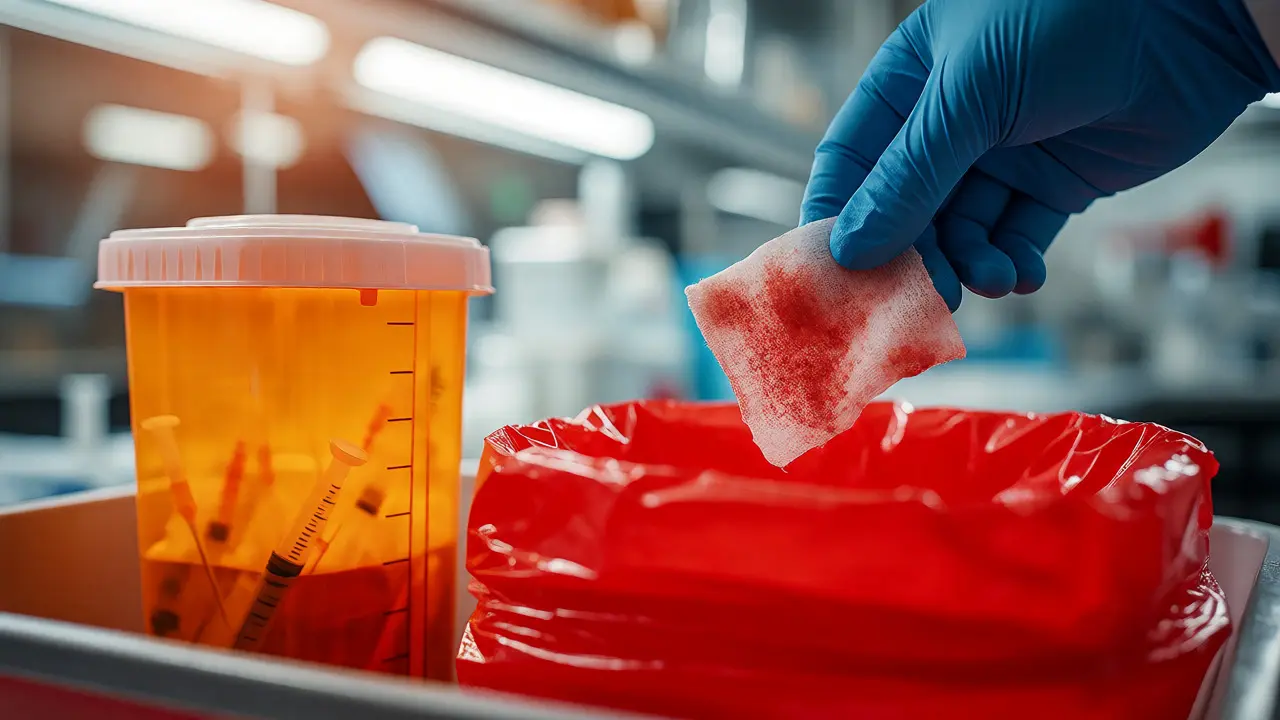
This is where most mistakes happen. Do not mix types of waste. Sharps go in sharps containers. Liquid waste goes in leak-proof secondary containment. Soft waste (gloves, gowns) goes in red bags. Why? Because mixing them creates unnecessary volume of expensive-to-treat waste and increases the risk of injury. If you throw a loose needle into a red bag, it can tear the bag open during transport, spilling contaminated contents onto workers.
2. Proper Containment
Your containers must meet specific physical standards.
- Red Bags: Must be made of plastic thick enough to resist tearing and leaking. They should be lined inside rigid bins to prevent tipping.
- Sharps Containers: Must be rigid, puncture-resistant, leak-proof, and closable for transportation. They cannot be cardboard boxes. Once filled to the fill line (usually 75%), they must be sealed permanently.
- Secondary Containment: If you are transporting a bucket of liquid waste, it needs to sit inside a larger tray to catch spills.
3. Labeling and Marking
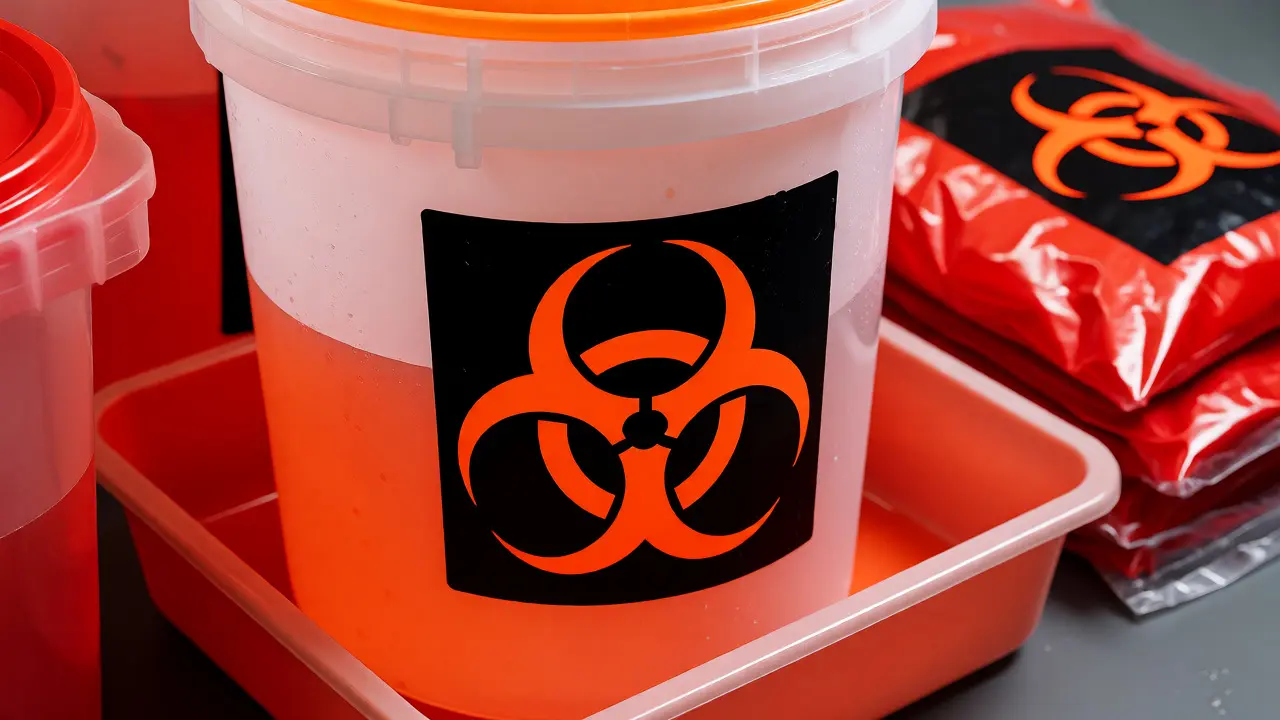
Every container holding regulated medical waste must be labeled with the universal biohazard symbol and the word "Biohazard." The label must be fluorescent orange or orange-red with lettering and symbols in a contrasting color. If the container itself is already red, you still need the symbol. This visual cue warns anyone handling the bag that it contains infectious material.
4. Treatment Methods
In many cases, you cannot simply haul raw biohazard waste to a landfill. It usually requires treatment to render it non-infectious. Common methods include:
| Method | Best For | Mechanism | Verification |
|---|---|---|---|
| Autoclaving | Solid waste, cultures, liquids | Steam under pressure (121°C / 250°F) | Chemical indicator strips and biological indicators (spore tests) |
| Incineration | Pathological waste, pharmaceuticals | High-temperature combustion | Emission monitoring |
| Chemical Disinfection | Liquid spills, surfaces | Bleach (1:10 dilution) or specialized disinfectants | Contact time verification |
| Microwave | Specific lab waste streams | Hydrothermal steam generation | Temperature probes |
Autoclaving is the gold standard for most facilities because it is cost-effective and reliable. However, you must validate the process. Running a weekly spore test ensures your autoclave is actually killing the microbes. If you skip validation, you are guessing, and regulators hate guesses.
5. Transport and Final Disposal
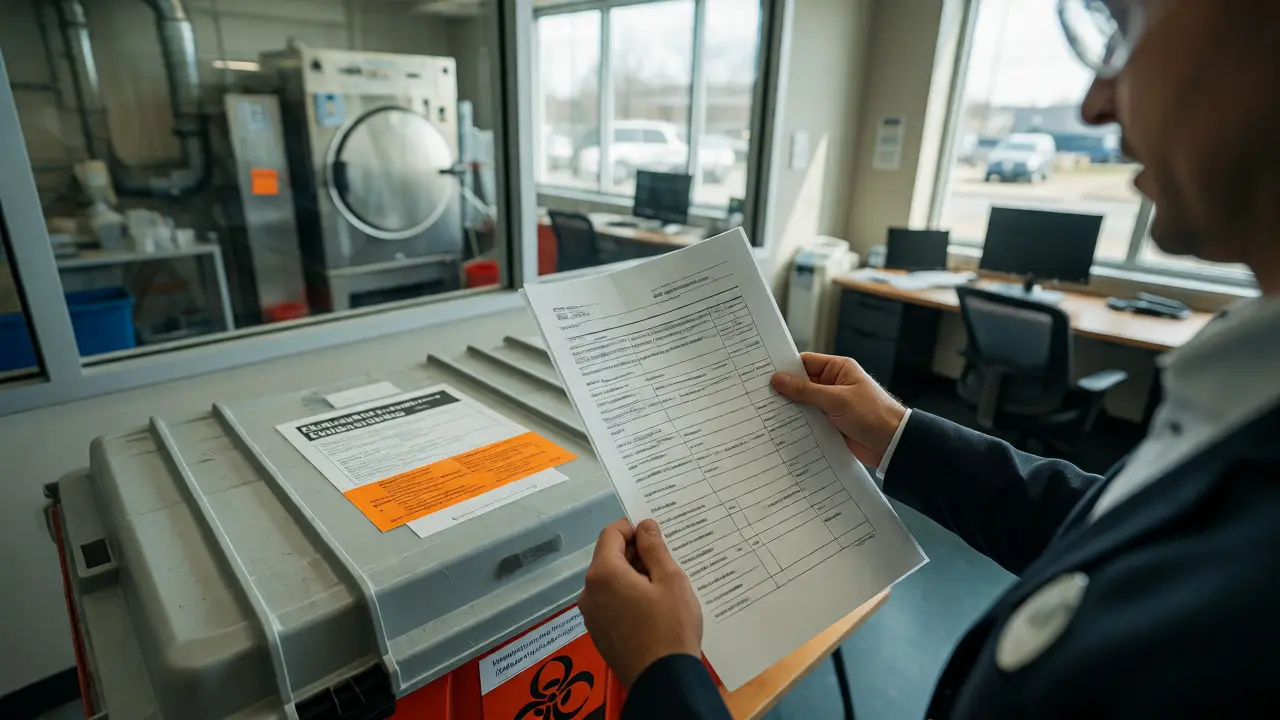
Once treated (or if your facility sends it out untreated to a licensed vendor), the waste moves to a permitted disposal site. You need a contract with a licensed medical waste transporter. They will provide you with a manifest-a document tracking the waste from your door to the final destination. Keep these manifests for at least three years. If a truck overturns and spills your waste, that paper trail proves you did your part.
Pitfalls That Trigger Fines
Auditors love finding easy violations. Avoid these common traps:
- Overfilled Sharps Containers: If you have to push a needle in against resistance, it’s too full. Stop using it immediately.
- Wrong Bag Color: Using black bags for biohazard waste confuses staff and inspectors. Stick to red or orange.
- Missing Labels: An unlabeled red bag looks like laundry. Inspectors assume it’s unmanaged waste.
- Expired Training Records: OSHA requires annual bloodborne pathogen training. If your records show the last session was two years ago, you’re non-compliant.
- Storing Waste Too Long: There are limits on how long you can store untreated waste on-site. In hot climates, this period shrinks significantly to prevent odors and bacterial growth.
Building a Culture of Compliance
Rules on paper don’t stop accidents. People do. Your staff needs to understand why we segregate waste. It’s not just bureaucracy; it’s protecting the cleaning crew, the transport driver, and the landfill worker. When employees see that leadership invests in proper bins, PPE, and training, they are more likely to follow protocol.
Conduct internal audits quarterly. Walk the floor. Look for needles in the wrong bin. Check if labels are peeling off. Ask staff questions. If they can’t explain how to handle a spill, retrain them immediately. Prevention is always cheaper than remediation.
Can I put biohazard waste in regular trash?
Generally, no. Regulated medical waste (RMW) containing blood, bodily fluids, or infectious agents must be segregated and treated separately. Some jurisdictions allow trace amounts of dried blood on items like bandages to go in regular trash, but this varies by location. Always check local regulations. When in doubt, treat it as biohazard.
How often should I replace sharps containers?
You should replace sharps containers when they reach the fill line, typically marked at 75% capacity. Never force additional items into a full container. Additionally, even if not full, containers should be replaced periodically according to manufacturer recommendations or facility policy to ensure structural integrity.
Do I need a permit to dispose of biohazard waste?
Most healthcare facilities and laboratories require a permit or registration with their state health department to generate and dispose of medical waste. Small generators may fall under different thresholds. Contact your state’s Department of Environmental Quality or Health Services to determine your specific licensing requirements.
What happens if I mix chemical and biohazard waste?
Mixing incompatible wastes creates a hazardous mixture that is harder and more expensive to treat. Chemicals can react with biological materials, potentially creating toxic fumes or rendering standard sterilization methods ineffective. Always keep chemical waste (like solvents) separate from infectious biological waste unless specifically approved for co-disposal.
Who is responsible for biohazard disposal costs?
The generator of the waste (the facility producing it) is financially responsible for its proper disposal. This includes purchasing containers, paying for treatment services, and hiring licensed transporters. Employees generally do not pay for disposal, but they are responsible for correct segregation to avoid cross-contamination fees.