When a body arrives at the morgue with strange, pale lesions on the skin, the first question isn't always "how did they die?" It's "was it electricity?" Distinguishing a fatal electric shock from other causes of death can be tricky, especially when the scene is messy or the victim was found in water. But for a forensic pathologist, the body tells a specific story if you know where to look. The key lies in recognizing the unique forensic pathology indicators that separate electrical trauma from thermal burns or chemical exposure.
You don't need a microscope to spot the most obvious signs, but you do need to know what you're looking for. Electrical injuries create distinct patterns on the skin and internal organs that rarely mimic anything else. Let's break down exactly what those signs are and why they matter in determining cause of death.
The Classic Entry and Exit Wounds
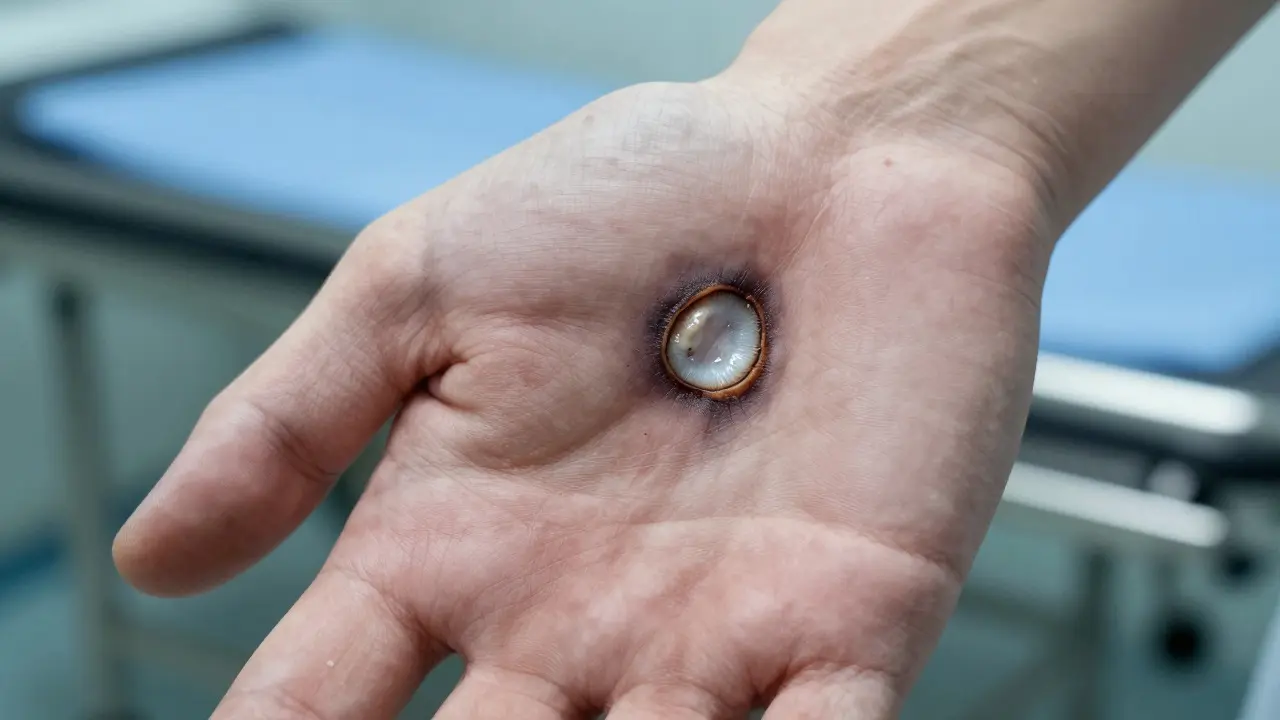
The most reliable external sign of high-voltage electrical injury is the presence of an entry wound and an exit wound. These aren't just random cuts; they are specific points where current entered and left the body. An Entry Burn is a localized lesion at the point where electrical current enters the body, often appearing as a white or grayish discoloration with a charred center. Unlike a standard thermal burn, which blisters and peels, an entry burn is typically dry, leathery, and well-demarcated. It might look like a small crater or a star-shaped mark, depending on the voltage and contact duration.
The exit wound is usually larger and more irregular than the entry site. Because the current disperses as it leaves the body, the tissue damage is less concentrated. You'll often see a darker, reddish-brown color here compared to the paler entry site. In low-voltage cases, such as touching a household outlet, these marks might be subtle or even absent. However, in high-voltage incidents involving power lines or industrial equipment, these wounds are dramatic and unmistakable.
Internal Signs: What Happens Under the Skin
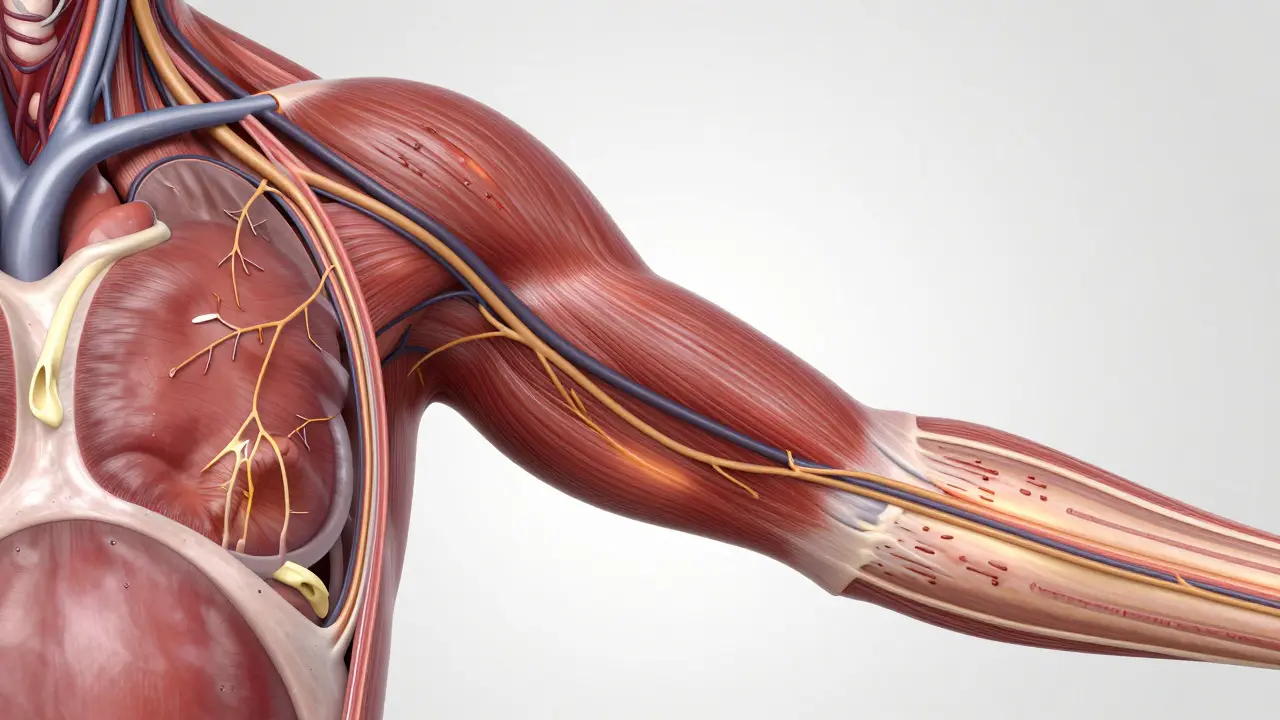
If the external wounds are ambiguous, the internal examination provides clearer answers. Electricity follows the path of least resistance, which means it travels through nerves, blood vessels, and muscles rather than bone or fat. This creates a trail of damage that a pathologist can trace during an autopsy.
- Myocardial Damage: The heart is particularly vulnerable. You might find yellowish-white streaks or necrosis in the heart muscle (myocardium). This damage indicates that the current disrupted the heart's electrical rhythm, leading to cardiac arrest.
- Vascular Disruption: Blood vessels along the path of the current may show intimal tearing or rupture. This can lead to internal bleeding, but the pattern is linear, following the direction of current flow.
- Nerve Fiber Degeneration: Nerves conduct electricity efficiently, so they suffer significant damage. Microscopic examination reveals degeneration of nerve fibers, which supports the diagnosis of electrical injury over other causes of sudden death.
These internal changes don't happen instantly. They develop over minutes to hours after the incident. That's why timing matters. If the victim died immediately, some of these changes might not be fully developed yet, making the diagnosis harder. But if there was any delay before death, the internal signs become much more pronounced.
Distinguishing Electrical Burns from Thermal Burns
One of the biggest challenges in forensic pathology is differentiating between an electrical burn and a simple thermal burn. Both can cause charring and tissue destruction, but their characteristics differ significantly. Here’s a quick comparison to help you tell them apart:
| Feature | Electrical Burn | Thermal Burn |
|---|---|---|
| Appearance | White/gray, dry, leathery, well-demarcated | Red/blistered, moist, irregular edges |
| Pain Sensitivity | Often painless due to nerve destruction | Painful unless deep nerve damage occurs |
| Depth of Damage | Can be deeper than surface appearance suggests | Damage generally matches visible extent |
| Associated Findings | Internal organ damage, muscle necrosis | Usually limited to skin/subcutaneous tissue |
A critical clue is the "iceberg effect." With electrical injuries, the visible surface damage might look minor, but the underlying muscle and organ damage can be extensive. Thermal burns, by contrast, tend to have a more predictable relationship between surface appearance and depth of injury. If you see a small scorch mark on the hand but massive muscle necrosis in the forearm, think electricity.
The Role of Voltage and Current Type
Not all electrical injuries are created equal. The severity depends heavily on two factors: voltage and the type of current (alternating or direct). High-voltage alternating current (AC), like that from power lines, is particularly dangerous because it causes sustained muscle contraction. This can trap a victim against the source, prolonging exposure and increasing damage. Direct current (DC), found in batteries or lightning, tends to cause a single, powerful muscle spasm that throws the victim away from the source, potentially reducing contact time.
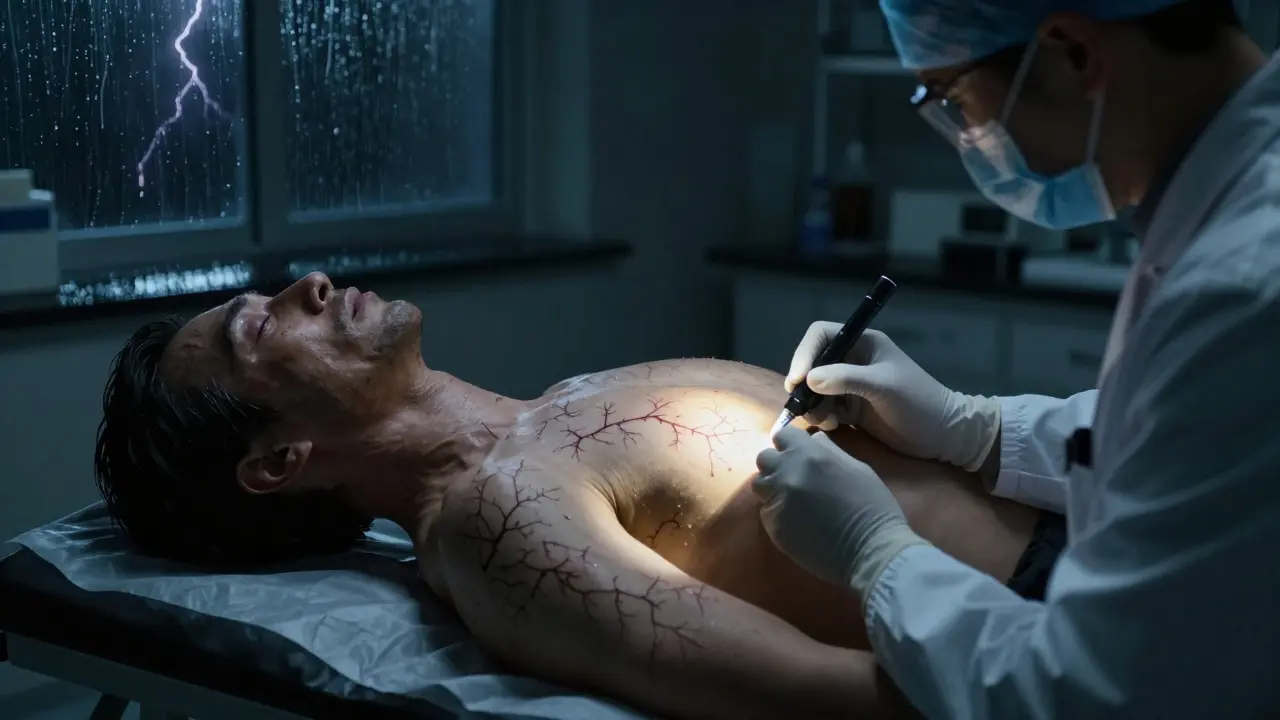
Lightning strikes present a unique forensic challenge. Lightning is high-voltage DC, but it doesn't typically cause the same entry/exit burns as power line accidents. Instead, you might see petechial hemorrhages (tiny blood spots) in the eyes and brain, or Lichtenberg figures-tree-like branching marks on the skin caused by ionization of air around the body. These figures are temporary and fade within hours, so they must be documented quickly at the scene.
Common Pitfalls in Diagnosis
Even experienced pathologists can make mistakes if they overlook certain details. One common error is assuming that the absence of external burns rules out electrical injury. Low-voltage shocks can kill without leaving visible marks, especially if the current passes through vital organs without breaking the skin. Another pitfall is misinterpreting post-mortem artifacts as electrical damage. For example, rigor mortis can sometimes distort tissues in ways that mimic early electrical changes. Always correlate your findings with the scene investigation. Did the victim fall from a height? Were there power lines nearby? Context is everything.
Also, be wary of secondary injuries. A person who falls after being electrocuted will have trauma consistent with a fall, which can obscure the primary cause of death. The pathologist's job is to determine which injury was the initial event. Usually, the electrical injury will be the one that explains the mechanism of the fall or incapacitation.
Documentation and Scene Correlation
Accurate documentation is non-negotiable. Photograph every wound from multiple angles, including close-ups with a scale. Note the exact location, size, color, and texture of each lesion. Record any associated findings, such as soot deposits or hair singeing, which can indicate proximity to an electrical arc. When possible, coordinate with fire investigators or electrical engineers to understand the voltage levels and circuit configurations at the scene. This technical data helps confirm whether the observed injuries are consistent with the reported electrical event.
In summary, identifying electrical injuries requires a systematic approach. Look for the classic entry and exit wounds, examine internal organs for linear damage patterns, and differentiate electrical burns from thermal ones using specific morphological clues. By combining careful autopsy findings with scene context, you can confidently determine the role of electricity in a death.
What is the most reliable sign of high-voltage electrical injury?
The presence of distinct entry and exit wounds, combined with internal damage to the heart and nerves along the path of current flow, is the most reliable indicator. External burns alone are not sufficient for diagnosis.
Can low-voltage electrical shocks leave no visible marks?
Yes. Low-voltage shocks, such as those from household outlets, can cause fatal cardiac arrhythmias without breaking the skin or leaving visible external burns. Internal examination is crucial in these cases.
How do you distinguish an electrical burn from a thermal burn?
Electrical burns are typically dry, leathery, and well-demarcated with a white or grayish color. Thermal burns are often moist, blistered, and have irregular edges. Electrical burns also frequently cause deeper internal damage than is apparent on the surface.
What are Lichtenberg figures?
Lichtenberg figures are tree-like branching marks on the skin caused by lightning strikes. They result from the ionization of air around the body and are temporary, fading within hours. They are a specific sign of lightning injury.
Why is scene investigation important in diagnosing electrical deaths?
Scene investigation helps confirm the voltage levels, type of current, and potential mechanisms of injury. It provides context that correlates with autopsy findings, helping to rule out alternative causes of death and confirm the role of electricity.