
You hand over a USB drive containing the only copy of a suspect’s encrypted diary to your colleague. Two days later, the defense attorney asks who touched it, when, and if anyone read the contents before hashing. If you can’t answer with a timestamped log and a sealed envelope receipt, that diary might as well be a public blog post. Chain of custody is often taught as a simple paper trail-who held what, when, and why-but when dealing with sensitive evidence, it becomes a high-stakes game of confidentiality controls. It’s not just about proving the evidence wasn’t tampered with; it’s about proving nobody peeked.
Most labs treat all evidence with the same level of physical care but vary wildly on information security. A bloody shirt doesn’t have privacy rights in the same way a victim’s medical record does. Yet, under regulations like HIPAA in healthcare or specific state statutes regarding juvenile records, leaking the content of an exhibit can result in fines, dismissed cases, or civil lawsuits. This article breaks down how to layer digital and physical safeguards onto your standard custody procedures so that your evidence remains both intact and secret.
Why Standard Chain of Custody Fails Sensitive Data
The traditional model of chain of custody focuses on integrity. Did the seal break? Was the weight consistent? Did the DNA profile match? These are binary checks. Confidentiality, however, is continuous. Every time a technician opens a folder to scan a document, or a detective views a photo on a shared server, there is a risk of exposure. Standard logs rarely capture "view access," only "physical transfer." If your log says "Evidence Item #45 transferred from Lab Tech A to Analyst B," it doesn’t tell you if Tech A copied the file to a personal thumb drive first.
Consider a case involving sexual assault kits. The physical kit must be secured against contamination, yes. But the biological data extracted from it reveals genetic markers that identify relatives of the suspect. If this data leaks into a public genealogy database prematurely, it can compromise witness safety or taint jury perception. Here, confidentiality controls must operate parallel to integrity checks. You need a system that tracks not just possession, but visibility.
Physical Safeguards for High-Value Exhibits
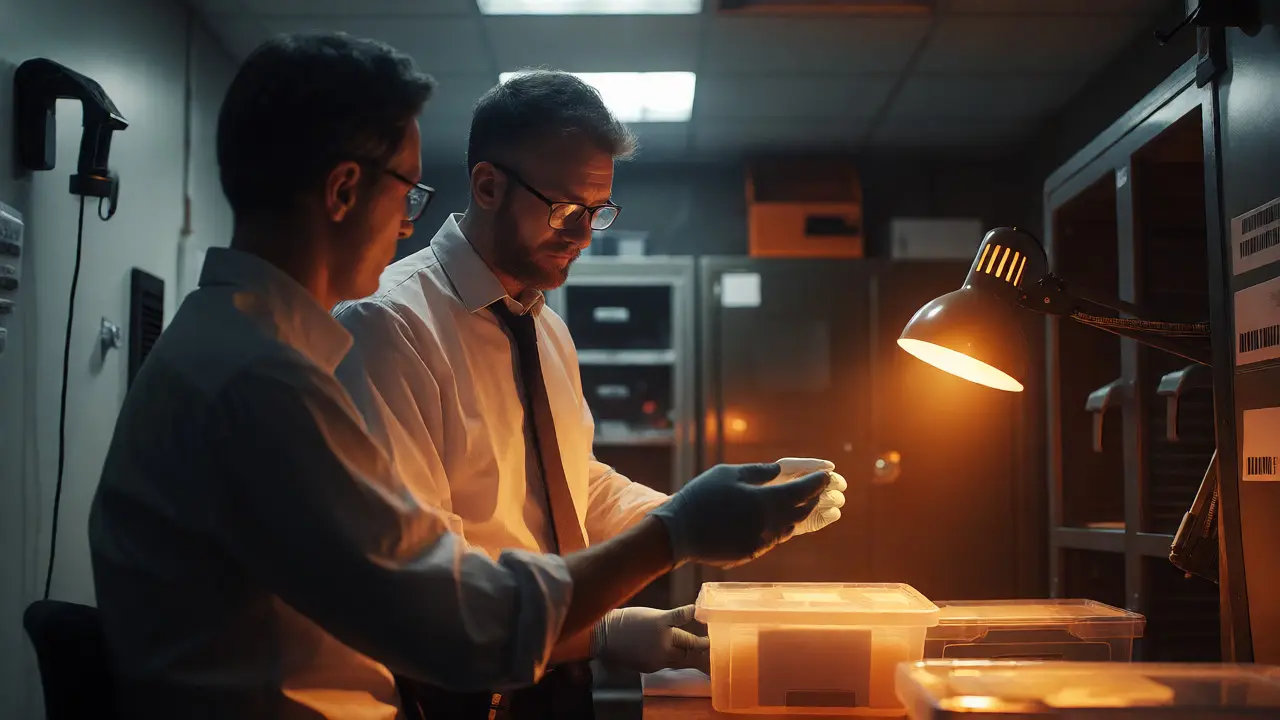
Start with the container itself. For sensitive documents or media, standard manila envelopes are insufficient. Use opaque, tamper-evident bags that prevent visual inspection without breaking the seal. In Portland, where rain is a constant factor, moisture-wicking packaging also protects the medium, but opacity is key for secrecy. Label these containers with unique identifiers that don’t reveal the nature of the content. Instead of "Victim Medical Records - Jane Doe," use "Case 2026-88B, Item 12." This minimizes accidental disclosure in shared storage areas.
- Restricted Access Zones: Designate specific shelves or safes for sensitive items. Only personnel with explicit clearance should hold keys or codes.
- Dual-Custody Sign-offs: For highly sensitive items (e.g., child pornography exhibits), require two signatures for any movement. One person handles the physical move; the other verifies the seal and logs the action immediately.
- Blind Processing: Where possible, process samples without revealing their context to the analyst. Code names can help reduce bias and limit the number of people who know exactly whose data they are handling.

Digital Security Protocols for Electronic Evidence
Digital evidence presents a unique challenge: copying is lossless. A JPEG image looks identical whether it’s on the original hard drive or a backup. Therefore, control shifts from preventing alteration to controlling distribution. When you acquire digital evidence, create a master forensic image using write-blockers. Store this master in a cold storage environment-offline, encrypted, and physically secure. Work only on verified copies.
Encryption is non-negotiable. Use AES-256 encryption for all files at rest and in transit. But here’s the catch: managing the keys. If the password to decrypt a suspect’s phone is written on a sticky note attached to the evidence bag, you’ve defeated the purpose. Use a dedicated Key Management System (KMS) where access to decryption keys is logged separately from file access. This creates two separate audit trails: one for who opened the file, and one for who unlocked it.
| Control Type | Physical Evidence | Digital Evidence |
|---|---|---|
| Primary Risk | Visual inspection, theft, substitution | Unauthorized copying, remote access, metadata leakage |
| Key Control | Tamper-evident seals, locked storage | AES-256 encryption, multi-factor authentication |
| Audit Trail | Paper logbook, camera surveillance | Server logs, access control lists (ACLs), hash verification |
| Failure Mode | Seal broken, item missing | Data exfiltrated, file modified silently |
Access Control and Personnel Training
Technology fails if people bypass it. How many times has a lab tech emailed a PDF of a sensitive report to a colleague because "it was faster"? Each email is a new node in the distribution network, each with its own security vulnerabilities. Implement strict Need-to-Know principles. Not everyone in the forensics department needs to see the face of the victim in the photo. Restrict full-resolution access to senior analysts or those directly working the case.
Training should go beyond "don’t lose the evidence." Conduct scenario-based drills. What do you do if a journalist calls asking about Case X? What if a police officer asks to view the video footage before the formal discovery phase? Establish clear protocols for verbal disclosures versus written releases. Often, a summary is enough for investigative purposes, preserving the raw data’s confidentiality until trial.
Legal Implications of Breaches
If confidentiality controls fail, the consequences extend beyond internal reprimands. Under rules of evidence, such as the Federal Rules of Evidence Rule 901, authentication requires proof that the item is what it claims to be. While this primarily addresses integrity, courts increasingly consider whether improper handling compromised the reliability of the finding. More critically, statutory violations can trigger sanctions. For instance, mishandling protected health information within forensic reports can lead to HIPAA penalties, which range from $100 to $50,000 per violation, depending on negligence levels.
Furthermore, defense attorneys are savvy. If they discover that ten different officers viewed a confidential witness statement without logging it, they may argue that the chain of custody is "broken" by ambiguity. They won’t just ask if the document changed; they’ll ask who had the opportunity to alter it unnoticed. Your documentation must preemptively answer this by showing robust, logged restrictions on access.
Implementing a Hybrid Audit System
To truly protect sensitive evidence, merge your physical and digital logs into a unified audit dashboard. Modern Laboratory Information Management Systems (LIMS) can integrate barcode scanning with user login credentials. When a tech scans a barcoded evidence tag, the system prompts for their PIN and records the exact time. If the item is digital, the LIMS can link the physical tag to the server path, ensuring that accessing the digital file requires a corresponding physical check-out or vice versa.
Regular audits are essential. Quarterly reviews should sample random items from the "high sensitivity" category and verify that the number of access events matches the expected workflow. If a low-priority case shows 50 accesses, investigate why. Is someone curious? Is there a workflow bottleneck causing repeated checks? Identifying patterns helps tighten controls before a breach occurs.
What is the difference between integrity and confidentiality in evidence handling?
Integrity ensures the evidence has not been altered or tampered with, maintaining its authenticity. Confidentiality ensures that the content of the evidence is not accessed or disclosed to unauthorized persons. Both are critical for legal admissibility, especially for sensitive materials like medical records or juvenile files.
How does encryption support chain of custody?
Encryption supports chain of custody by securing digital evidence during storage and transmission. It ensures that even if unauthorized parties gain physical or network access to the device, they cannot view the contents without the correct decryption key. Proper key management and logging of decryption events provide an additional layer of auditability.
Can a breach of confidentiality invalidate evidence?
While a confidentiality breach does not automatically render evidence inadmissible, it can lead to challenges regarding its reliability and authentication. Defense counsel may argue that unrestricted access increased the risk of tampering or bias. In severe cases, particularly involving privileged communications or statutory protections, judges may exclude evidence or impose sanctions.
What tools are best for tracking access to sensitive digital evidence?
Laboratory Information Management Systems (LIMS) integrated with Active Directory or similar identity providers are effective. Additionally, specialized forensic software that logs every user interaction with a case file, combined with server-side access control lists (ACLs), provides comprehensive tracking. Blockchain-based ledgers are emerging as a tool for immutable audit trails.
How should sensitive physical evidence be stored differently?
Sensitive physical evidence should be stored in opaque, tamper-evident containers within restricted-access zones, such as locked safes or secure rooms requiring badge entry. Labels should use case numbers rather than descriptive titles to minimize inadvertent disclosure. Dual-custody procedures are recommended for high-value or highly sensitive items.