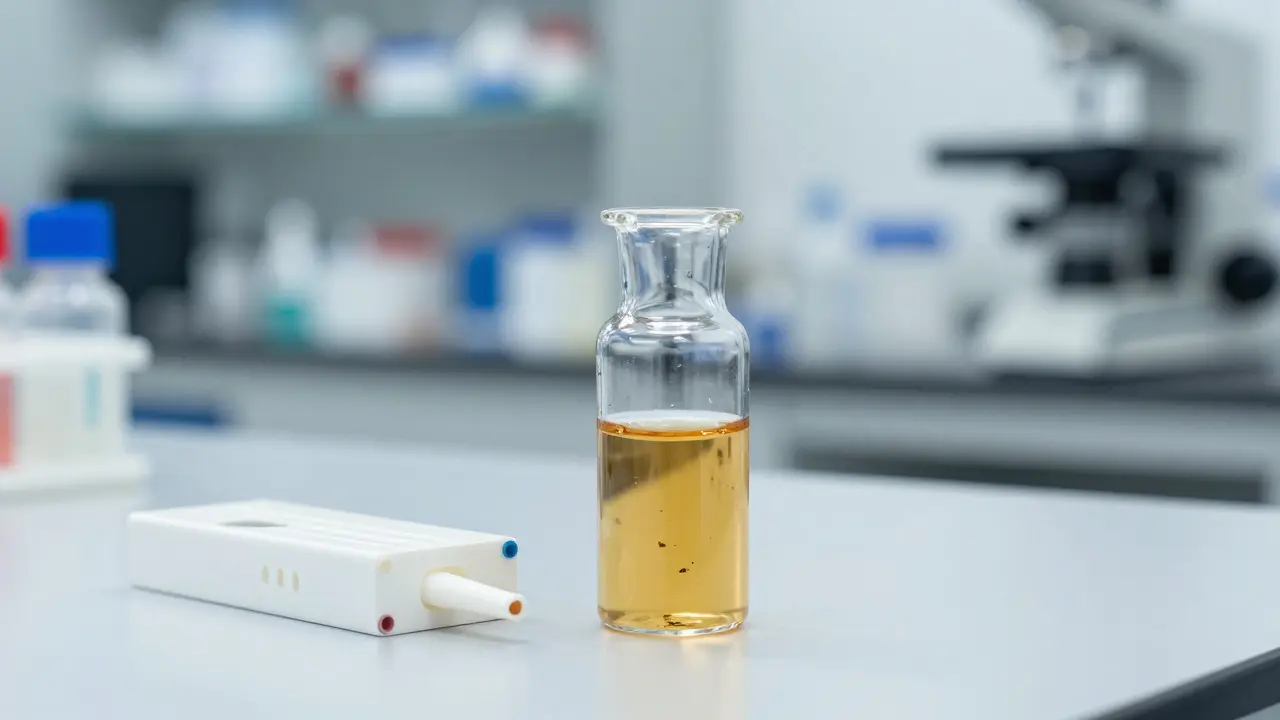
Imagine trying to find a single needle in a haystack that’s been soaked in mud. That is essentially what happens when you analyze a blood or urine sample for drugs without proper preparation. The matrix effects-proteins, salts, and other biological debris-can clog your instruments and skew your results. This is where Solid-Phase Extraction (SPE) comes in. It is the standard technique used in forensic laboratories to isolate target analytes from complex biological fluids before they hit the mass spectrometer.
You might wonder why we don’t just inject the raw sample directly. While direct injection saves time, it often leads to ion suppression, where the background noise drowns out the signal of the drug you’re looking for. SPE acts as a filter, stripping away the junk while keeping the evidence intact. Whether you are working with trace amounts of opioids in hair samples or high concentrations of stimulants in post-mortem blood, understanding how to choose and operate the right SPE method is critical for accurate reporting.
How Solid-Phase Extraction Works
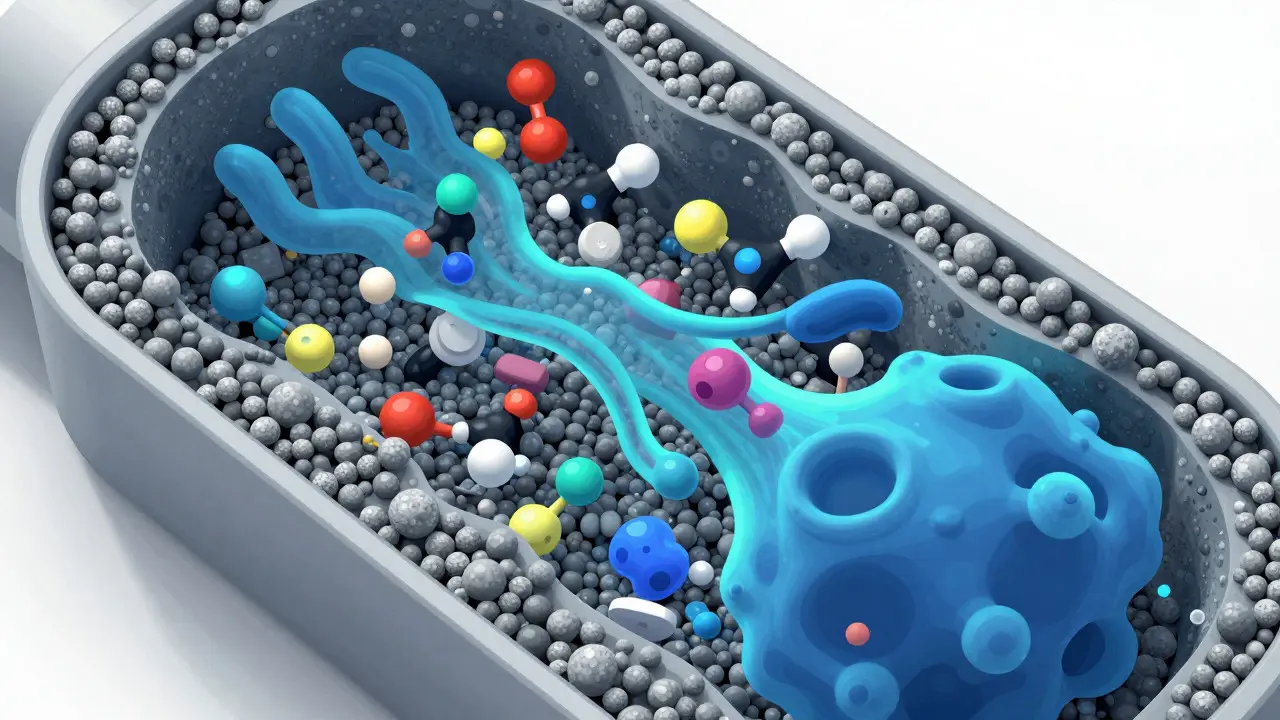
Solid-Phase Extraction relies on partitioning principles similar to liquid-liquid extraction but uses a solid sorbent instead of an immiscible solvent. The process typically involves four distinct steps: conditioning, loading, washing, and elution. First, you condition the cartridge with a solvent to activate the sorbent surface. Next, you load the aqueous sample. The analytes bind to the sorbent based on their chemical properties, while unwanted components pass through. Then, you wash away the remaining impurities with a mild solvent. Finally, you elute the purified analytes using a stronger solvent that breaks the bond between the drug and the sorbent.
The magic lies in the sorbent material. Different sorbents interact with analytes in different ways. For example, reversed-phase sorbents like C18 retain non-polar compounds, while normal-phase sorbents handle polar substances. In drug testing, you will frequently encounter mixed-mode sorbents that combine both hydrophobic and ionic interactions. This dual mechanism allows for better retention of structurally diverse drugs, such as both basic alkaloids and neutral metabolites, in a single step.
Choosing the Right Sorbent Material
Selecting the correct sorbent is not a one-size-fits-all decision. It depends heavily on the polarity and charge state of your target analytes at the pH of your sample buffer. Most illicit drugs are weak bases, meaning they exist as charged ions at physiological pH. If you use a simple reversed-phase C18 cartridge without adjusting the pH, these charged molecules may not bind efficiently.
- C18 (Octadecylsilane): The workhorse of forensic labs. Best for non-polar to moderately polar compounds. Requires pH adjustment above pKa+5 for basic drugs to ensure neutral form binding.
- SCX (Strong Cation Exchange): Specifically designed for basic drugs. The sulfonic acid groups on the sorbent attract positively charged analytes. Excellent for separating basic drugs from neutral impurities.
- Mixed-Mode Anion Exchange: Useful for acidic drugs like barbiturates or salicylates. These analytes carry a negative charge at higher pH levels and bind to the quaternary ammonium groups on the sorbent.
- HILIC (Hydrophilic Interaction Liquid Chromatography) Sorbents: Gaining popularity for highly polar metabolites that resist traditional reversed-phase retention. Materials like zirconia or silica-based HILIC phases retain water-rich molecules effectively.
In practice, many forensic scientists use a two-step SPE approach. For instance, they might first use an SCX cartridge to capture basic opiates, followed by a C18 step to remove any remaining non-basic contaminants. This sequential cleanup significantly improves peak shape and sensitivity in LC-MS/MS analysis.
Optimizing pH and Buffer Conditions
pH control is arguably the most overlooked variable in SPE protocols. If the pH is off, your recovery rates can plummet from 90% to below 40%. For basic drugs like morphine or codeine, you need to raise the pH of the sample buffer to at least 9.0-10.0. At this alkalinity, the amine groups are deprotonated, making the molecules neutral and hydrophobic enough to stick to the C18 or mixed-mode sorbent. Conversely, if you are extracting acidic drugs, you lower the pH to around 3.0-4.0 to protonate the carboxylic acids, preventing them from passing straight through the column.
Buffer selection also matters. Ammonium acetate is a common choice because it provides good buffering capacity without introducing strong acids or bases that could damage certain sorbents. However, avoid phosphate buffers if you plan to use metal-containing sorbents, as phosphates can chelate metals and reduce binding efficiency. Always validate your buffer system with a blank sample run to ensure no interfering peaks appear in your chromatogram.
Common Pitfalls and How to Avoid Them
Even experienced analysts make mistakes with SPE. One frequent error is overloading the cartridge. If you pack too much sample volume onto a small 6mL or 12mL cartridge, the sorbent saturates, and analytes break through into the waste fraction. As a rule of thumb, keep your sample-to-cartridge ratio balanced; if you are dealing with high-concentration samples, dilute them first or use larger capacity columns.
Another issue is poor elution efficiency. Using a solvent that is too weak will leave analytes trapped on the sorbent, leading to low recovery. For C18 cartridges, acetonitrile or methanol is standard, but adding a small percentage of acid or base can help shift the equilibrium. For example, adding 0.1% formic acid to the elution solvent helps release basic drugs more completely. Always perform a spike-and-recovery test during method development to confirm that your elution conditions yield consistent results above 70%.
Comparison of Common SPE Cartridges for Drug Testing
| Cartridge Type | Best For | Typical Recovery Range | Key Advantage | Main Limitation |
|---|---|---|---|---|
| C18 Reversed Phase | Non-polar to moderate polar drugs | 75-95% | High capacity, robust | Poor retention of highly polar or charged species |
| SCX Strong Cation Exchange | Basic alkaloids (opioids, stimulants) | 80-98% | Excellent selectivity for cations | Not suitable for neutral or acidic analytes |
| Mixed-Mode C18-Acidic | Diverse drug classes | 70-90% | Balances hydrophobic and ionic interactions | Can be sensitive to pH fluctuations |
| Anion Exchange | Acidic drugs (barbiturates, benzoates) | 85-95% | Effective for negatively charged analytes | Limited utility for basic drugs |
Notice how the recovery ranges vary. These numbers assume optimal pH and flow rates. In real-world scenarios, matrix complexity can drag these figures down. That is why validation is non-negotiable. You must demonstrate that your SPE method works consistently across different sample types, whether it is fresh whole blood, dried blood spots, or post-mortem liver tissue.
Automation and High-Throughput Considerations
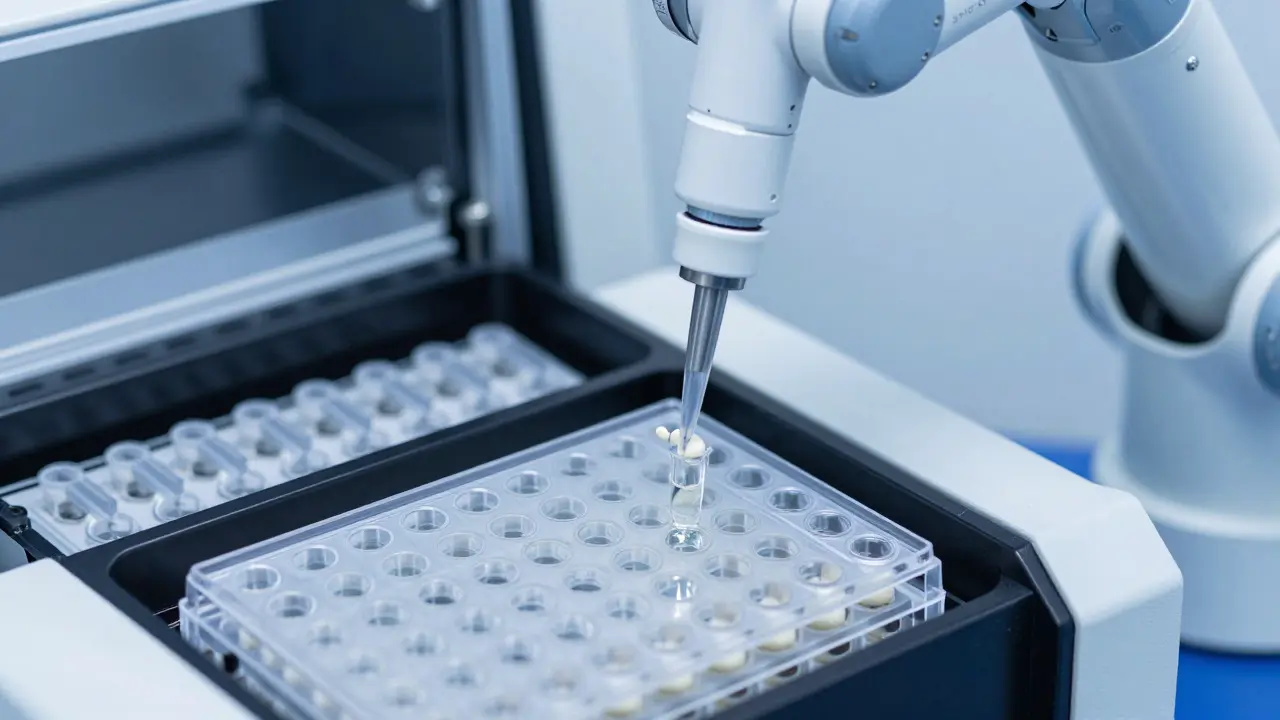
If you are running hundreds of samples a day, manual pipetting becomes a bottleneck and a source of error. Automated SPE systems have become standard in modern toxicology labs. These platforms use robotic arms to transfer liquids between tubes and cartridges, ensuring precise volumes and repeatable timing. Brands like Agilent, PerkinElmer, and Hamilton offer systems that integrate directly with LC-MS/MS workflows.
Automated SPE offers several benefits beyond speed. It reduces human error, which is crucial for chain-of-custody integrity. It also allows for parallel processing, meaning you can prepare multiple batches simultaneously. However, automation requires upfront investment and regular maintenance. Clogging issues can still occur if samples are not filtered properly before loading. Always centrifuge or filter your samples to remove particulate matter that could block the frits in automated cartridges.
Validation Metrics for SPE Methods
Before you put an SPE method into routine use, you need to validate it according to industry guidelines, such as those from the American Association of Forensic Science Directors (AAFS) or FDA bioanalytical guidelines. Key metrics include:
- Accuracy: Measured as percent recovery relative to a spiked standard. Aim for 85-115% for quantitation limits.
- Precision: Expressed as Relative Standard Deviation (RSD). Intra-day precision should be less than 15%, and inter-day precision should be comparable.
- Matrix Effect: Compare the response of analytes extracted from matrix versus pure solvent. Significant ion suppression or enhancement indicates incomplete cleanup.
- Stability: Ensure analytes remain stable in the final eluate under storage conditions (e.g., -20°C) for at least 30 days.
Documenting these parameters protects your lab during court testimony. If a defense attorney challenges your results, having a validated SPE protocol with documented recovery rates and precision data strengthens your credibility.
Frequently Asked Questions
What is the main advantage of SPE over liquid-liquid extraction?
SPE generally offers higher throughput, reduced solvent usage, and easier automation compared to liquid-liquid extraction (LLE). LLE requires careful phase separation and emulsion prevention, which can be time-consuming and difficult to scale up for high-volume labs. SPE cartridges provide a defined surface area for interaction, leading to more consistent recoveries when the method is optimized.
How do I determine the correct pH for my SPE protocol?
Look at the pKa values of your target analytes. For basic drugs, set the pH at least 2 units above the highest pKa to ensure they are uncharged and bind to reversed-phase sorbents. For acidic drugs, set the pH at least 2 units below the lowest pKa to keep them uncharged. Use a pH meter to verify the actual pH of your buffer after mixing, as protein content in biological samples can shift the pH slightly.
Can I reuse SPE cartridges to save costs?
Generally, no. SPE cartridges are designed for single-use applications. Reusing them risks cross-contamination between samples, which is unacceptable in forensic casework. Even if you rinse thoroughly, trace residues can lead to false positives or skewed quantitation. The cost of a cartridge is negligible compared to the cost of invalidating a case due to contamination.
What should I do if my recovery rates are consistently low?
Check three things: pH, elution strength, and sample overload. First, verify that your sample pH is within the optimal range for binding. Second, ensure your elution solvent is strong enough to release the analytes; try increasing the organic solvent percentage. Third, check if you are exceeding the cartridge’s binding capacity. Diluting the sample or using a larger cartridge often resolves these issues.
Is SPE suitable for hair sample analysis?
Yes, but with modifications. Hair samples require extensive pretreatment, including washing with surfactants to remove external contamination. After digestion or extraction, the resulting solution can be cleaned up using SPE. Mixed-mode cartridges are particularly useful here because hair extracts contain a mix of polar and non-polar impurities. The goal is to isolate the drug from the keratin-derived peptides and other structural components.