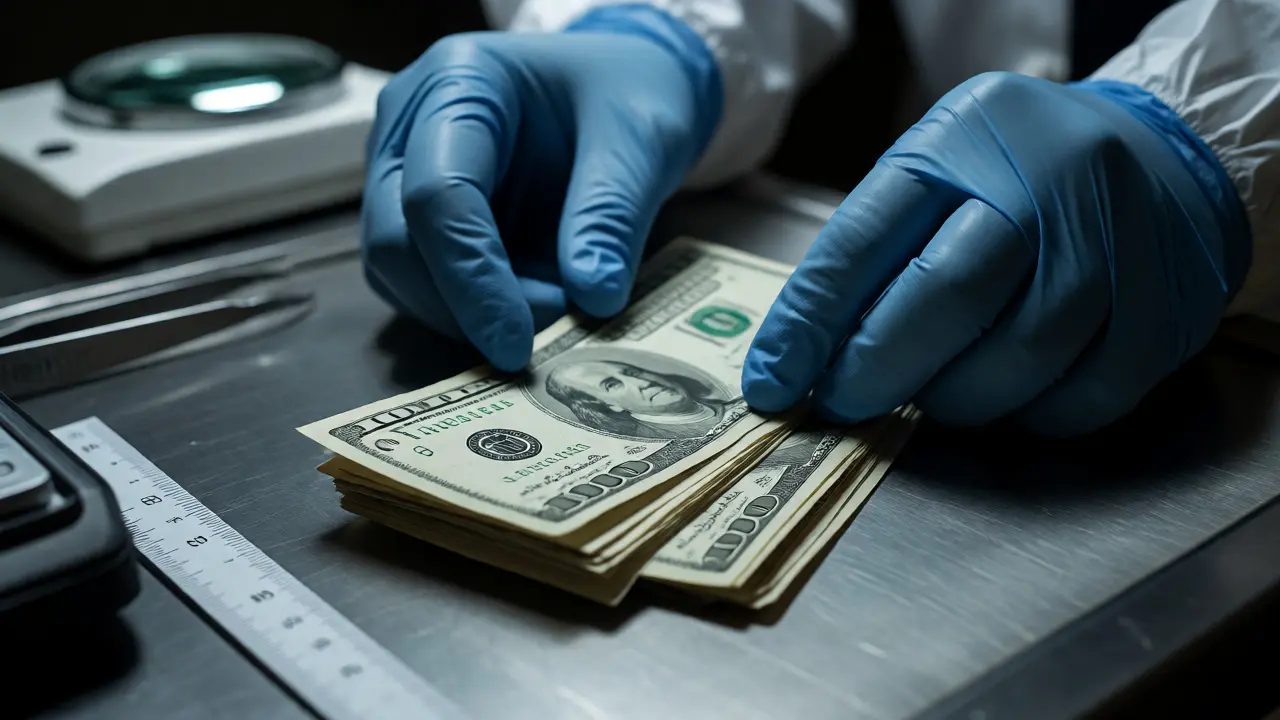
Imagine walking into a crime scene. You see a stack of bills on the kitchen table. Most people think they just count it, bag it, and move on. But for a forensic investigator, that stack isn't just money-it's a narrative. Every bill has a history. Who touched it? Where did it come from? Did it travel through a washing machine or a drug dealer's pocket? Currency is one of the most common yet mishandled pieces of physical evidence in criminal investigations. If you treat it like loose change, you lose the story. If you treat it with forensic rigor, it can convict a suspect.
Why Money Is More Than Just Value
People assume money is fungible. A twenty-dollar bill today is identical to a twenty-dollar bill tomorrow. That’s true economically, but not forensically. Physical currency carries biological and chemical traces. It picks up DNA from sweat and skin cells. It absorbs drugs like cocaine or methamphetamine from the environment. It even holds pollen grains or soil samples from specific geographic locations.
When investigators ignore these traces, they throw away potential leads. Consider a case where a suspect claims he never visited a specific location. If his DNA is found on a bundle of cash seized at that location, his alibi cracks. This makes the handling process critical. You aren't just securing assets; you are preserving biological data.
The Critical First Step: Initial Assessment
Before you touch a single bill, look at the context. How was the money stored? Was it in a safe? A sock? Under a mattress? The packaging itself is evidence. If cash is bundled with rubber bands, those bands might carry fingerprints. If it’s wrapped in newspaper, the date on the paper provides a timeline.
- Photograph in situ: Capture the money exactly as found. Include scale references if possible.
- Note the denomination mix: A pile of mostly $100s suggests different activity than a jar of quarters.
- Check for contamination risks: Is the area wet? Is there visible powder?
Do not separate the money from its container unless necessary. Often, the container (a box, a bag, a briefcase) tells you how the suspect organized their finances. Keep them together until lab analysis dictates otherwise.
Counting Without Destroying Evidence
This is where many rookies fail. They grab the stack and start flipping through pages to get a total. In doing so, they smear latent prints and shed their own DNA onto the bills. The goal is accuracy without alteration.
Use non-destructive counting methods whenever possible. Modern currency counters use ultraviolet light and magnetic sensors to verify authenticity and count bills without heavy friction. However, manual inspection is still required for large seizures to check for counterfeit notes or hidden messages.
If you must handle the bills manually, wear fresh nitrile gloves. Change them frequently. Why? Because your own skin oils degrade over time and can transfer back onto the evidence. Also, avoid using tape to mark bundles directly on the bills. Tape leaves adhesive residue that complicates later fingerprint lifting.
| Method | Pros | Cons | Best For |
|---|---|---|---|
| Manual Counting | Allows visual inspection for counterfeits | High risk of DNA/print contamination | Small amounts, suspected tampering |
| Electronic Counter | Fast, reduces human contact | Can jam on damaged bills, misses subtle marks | Large volumes, clean environments |
| Weighing & Estimating | Zero contact during initial estimate | Inaccurate if bills vary in wear/condition | Rapid inventory assessment |
Packaging: The Chain of Custody Begins Here
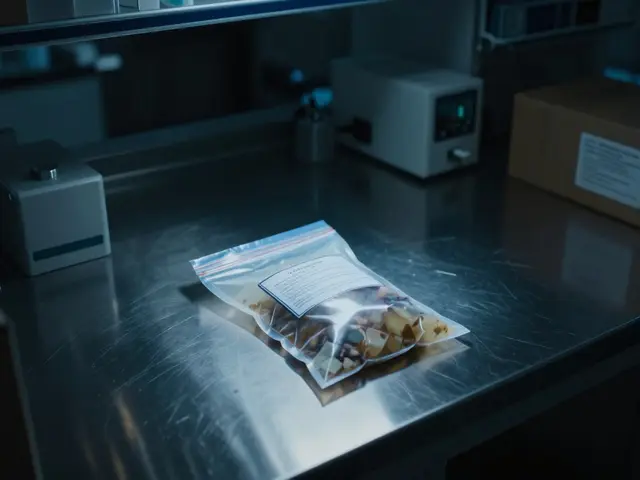
Once counted, the money needs a home. Standard plastic bags are often a mistake. Why? Plastic traps moisture. If the bills were slightly damp when seized, condensation forms inside the bag. This creates a breeding ground for mold, which destroys paper fibers and degrades DNA samples within days.
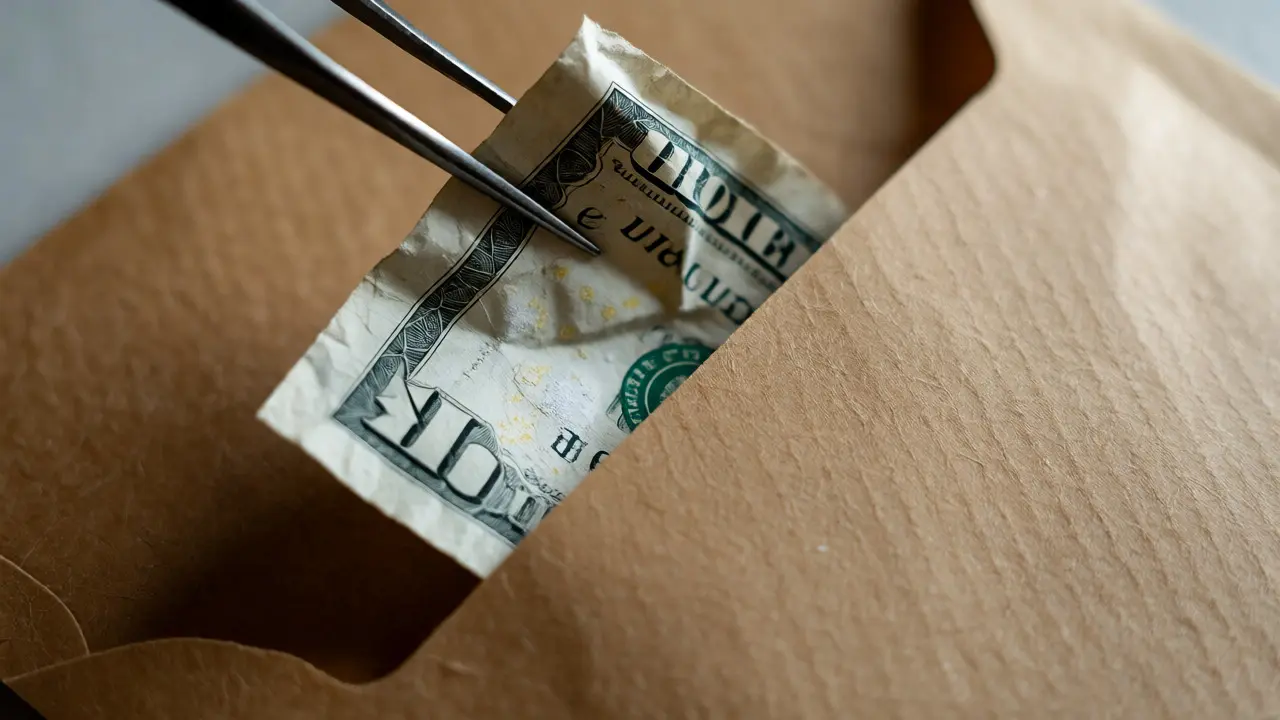
Instead, use breathable paper envelopes or specialized evidence bags with ventilation. Label each package clearly with the case number, date, time, and the initials of the person who packed it. Never write directly on the bills. Use a tag attached with string or place the label on the exterior of the envelope.
For large seizures, break the money down into manageable units. Don’t put $50,000 in one giant bag. Split it into $1,000 bundles. This makes auditing easier and reduces the chance of losing track of individual notes during transport. Each sub-bundle should be sealed separately. If one seal breaks, you know exactly where the breach occurred.
Tracing the Path: Forensic Analysis
Now the money hits the lab. What happens next depends on the investigation’s goals. Are we looking for drugs? Fingerprints? Or just verifying the amount?
Detecting narcotics on currency is surprisingly common. Studies suggest that up to 80% of circulated US dollar bills have trace amounts of cocaine. This doesn't mean every handler was a user; it reflects the prevalence of the drug in circulation. However, high concentrations indicate recent exposure to a source. Labs use mass spectrometry to quantify this. If a suspect’s hands test positive for meth, and the seized cash tests positive for meth, the link strengthens.
Fingerprint recovery on currency is tricky. Paper is porous. Oils soak in quickly. Investigators use cyanoacrylate fuming (super glue vapor) to visualize prints on older bills. For newer, crisp bills, traditional dusting might work. But remember, once you lift a print, you alter the surface. Sequence matters: photograph first, then swab for DNA, then attempt print recovery last.
Serial Numbers and Digital Trails
Every bill has a unique serial number. While you can’t track every transaction, you can match serial numbers to bank deposit slips or ATM logs. This is crucial in fraud cases. If a victim reports stolen cash with specific serial numbers, finding those bills in a suspect’s possession proves direct linkage.
In digital banking eras, cash seems less traceable. Yet, ATMs log withdrawals by denomination and sometimes batch numbers. If a robbery involves a specific roll of $20s, and the bank records show that roll was dispensed at a specific branch ten minutes prior, you have a timestamped connection. Cross-referencing physical serial numbers with electronic banking records bridges the gap between the physical and digital worlds.
Common Pitfalls to Avoid
Even experienced officers make mistakes. The biggest one is assuming the money is "clean." Another is poor documentation. If you don't record the exact state of the money upon receipt, defense attorneys will argue contamination occurred in your custody.
Also, beware of commingling. If you process multiple cases in the same room, ensure no cross-contamination occurs. One stray fiber from Case A can ruin Case B. Always clean surfaces between cases. And never store currency near strong chemicals or extreme temperatures, which can fade ink and weaken paper.
Practical Checklist for Field Officers
- Gear Up: Fresh gloves, mask, and eye protection before touching anything.
- Document Context: Photos of location, storage method, and surrounding items.
- Minimize Contact: Handle bills by edges only. Use tweezers if available.
- Proper Packaging: Paper envelopes preferred over plastic. Seal securely.
- Label Clearly: Case ID, date, time, handler name, and description of contents.
- Transport Safely: Keep evidence cool and dry. Avoid direct sunlight.
FAQ
Does all money have DNA on it?
Yes, virtually all circulated currency contains DNA from previous handlers. However, the quality and quantity vary significantly based on how long the bill has been in circulation and environmental conditions. Newer bills may yield better profiles than heavily worn ones.
Can fingerprints be lifted from old, crumpled bills?
It is difficult but not impossible. Porous surfaces absorb oils, making traditional dusting ineffective. Techniques like cyanoacrylate fuming or ninhydrin treatment are often used for older, crumpled paper currency to reveal latent prints.
Why shouldn't I use plastic bags for cash evidence?
Plastic traps moisture, leading to condensation inside the bag. This humidity promotes mold growth and bacterial activity, which can rapidly degrade both the paper fibers and any biological evidence like DNA present on the bills.
How do serial numbers help in court?
Serial numbers provide a unique identifier for each bill. By matching seized bills to bank withdrawal records or victim-reported stolen cash, prosecutors can establish a direct physical link between the suspect and the specific funds involved in the crime.
Is it safe to handle cash without gloves?
No. Handling cash without gloves introduces your own DNA and oils onto the evidence, potentially contaminating it. It also exposes you to residues like cocaine or other contaminants that may be present on the currency.