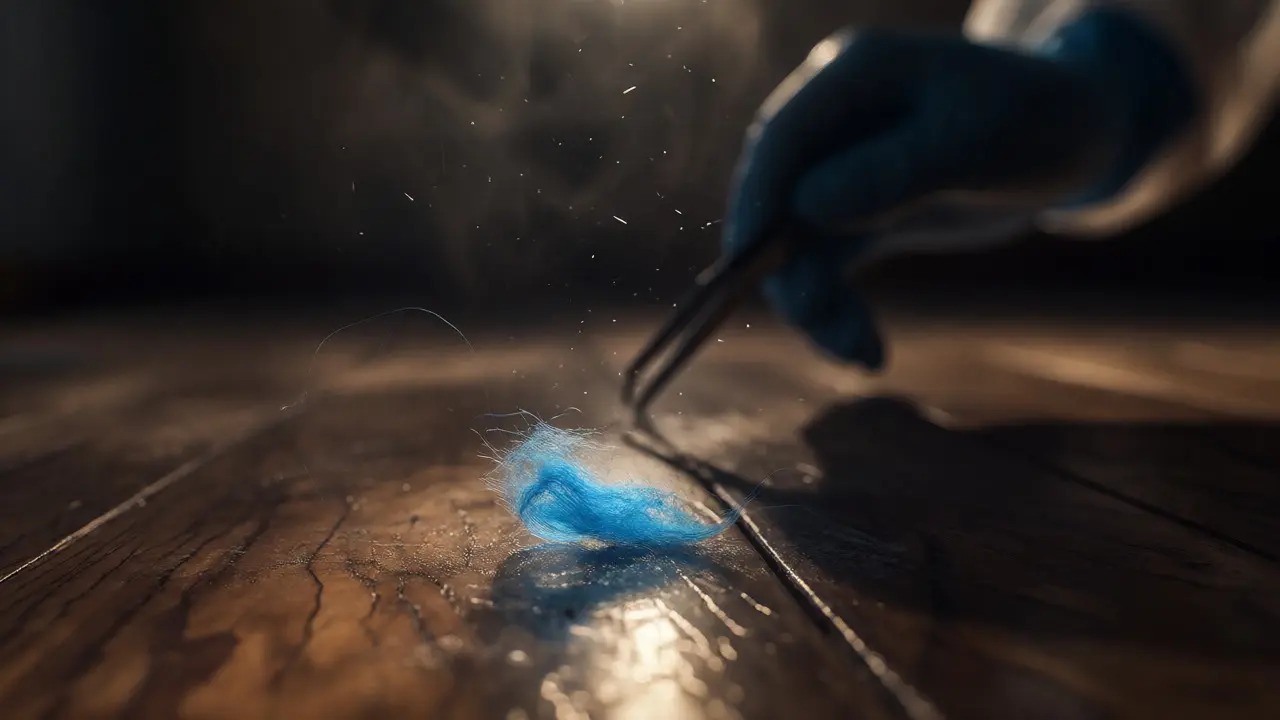
You walk into a room. The air is still. But on the floor, there’s a single blue fiber that wasn’t there yesterday. Or was it? If you pick it up with gloves that touched a suspect’s jacket an hour ago, you haven’t just collected evidence-you’ve created a lie. Cross-contamination is the transfer of foreign material to a sample during collection, handling, or analysis, rendering the original context invalid. It is the silent killer of forensic cases.
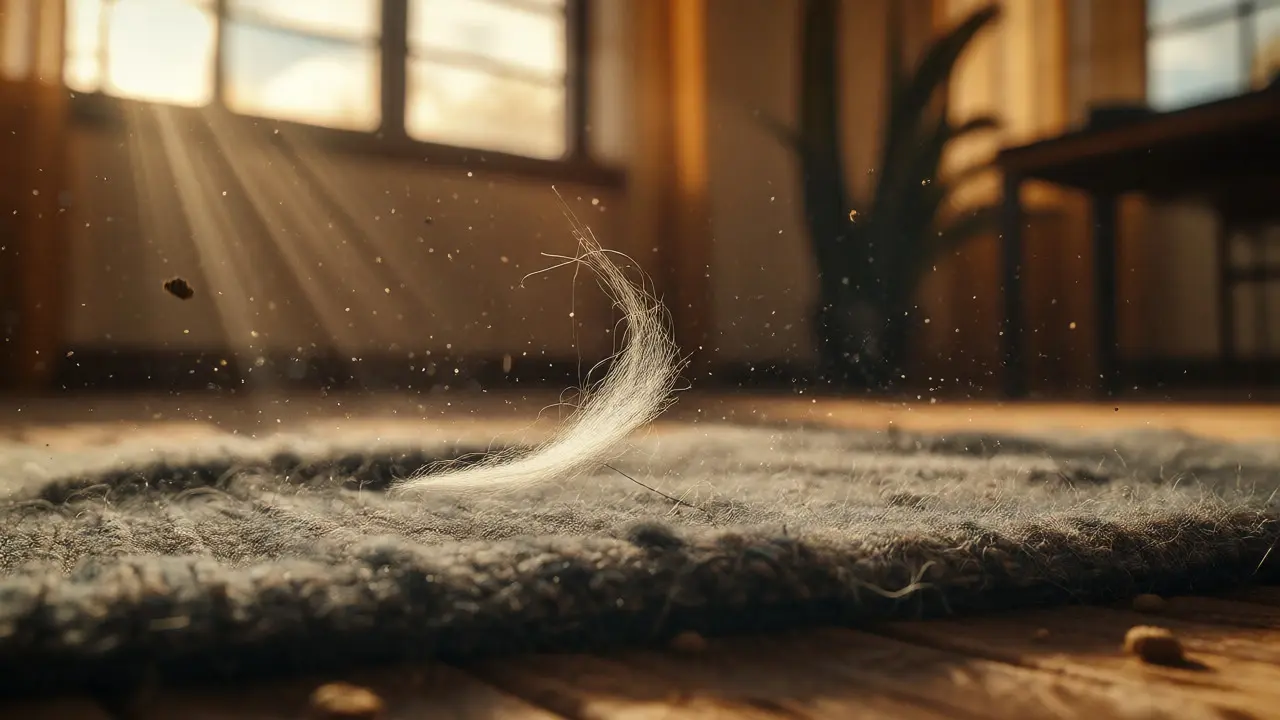
Trace evidence-hair, fibers, glass, pollen, soil-is tiny. That’s its power and its curse. Because these particles are microscopic, they move easily. They stick to clothes, float in dust, and cling to skin. One mistake in the field can turn a solid lead into inadmissible trash. This isn’t about theory; it’s about the physical reality of how dirt moves from point A to point B. Let’s look at where things go wrong and how to stop them.
The Physics of Particle Transfer
Think about static electricity. You rub a balloon on your hair, and it sticks to the wall. Now imagine that balloon is a nylon carpet fiber, and the wall is a victim’s wool sweater. In dry conditions, especially in heated buildings or arid climates like parts of Oregon, static charge acts like a magnet for lightweight trace materials. When you enter a scene, your boots kick up dust. Your jacket brushes against doorframes. Every movement creates a potential transfer event.
The Locard Exchange Principle states that every contact leaves a trace. Cross-contamination is simply the wrong trace ending up in the wrong place. It happens because we forget that our own bodies and equipment are active participants in the scene, not neutral observers. If you’re collecting debris from a car trunk, and you sneeze without covering your mouth, you’ve just added human DNA and saliva droplets to the sample. Did those droplets come from the suspect? Or did they come from you?
Common Vectors of Contamination
It’s rarely one big disaster. Usually, it’s a series of small, unnoticed lapses. Here are the most frequent culprits:
- PPE Failure: Wearing the same gloves while moving from a contaminated area to a clean one. Touching your face or phone with gloved hands.
- Tool Reuse: Using the same tweezers or vacuum nozzle on multiple items without sterilizing between uses.
- Airflow Issues: Collecting light fibers near an open window or HVAC vent, where outdoor pollen mixes with indoor lint.
- Container Breaches: Storing wet evidence in paper bags that leak moisture, allowing mold or bacterial growth that obscures the original trace.
Consider a case involving a hit-and-run. The officer collects paint chips from the victim’s clothing. Later, in the lab, analysts find two types of red paint. One matches the suspect’s truck. The other matches a common primer used by the police department’s fleet vehicles. Did the suspect use primer? Or did the officer’s uniform brush against a patrol car before reaching the scene? Without strict isolation protocols, the defense attorney will argue the latter, and they’ll be right to question it.
Field Protocols to Prevent Transfer
Prevention starts before you even touch the evidence. It begins with how you dress and how you think about your body’s position relative to the source.
Glove Discipline
Gloves are not magic shields. They are barriers that fail if misused. Change gloves immediately after handling any object that could carry foreign material. If you touch your mask, your belt, or your notebook, change your gloves. Better yet, wear double gloves. Remove the outer layer when moving between zones. This simple step reduces hand-to-evidence transfer by over 80% in controlled tests.
Top-Down Collection Strategy
Always work from top to bottom and back to front. Why? Gravity pulls loose particles down. If you collect from the floor first, then stand up and shake out a shirt, dust falls onto your freshly collected samples. Start with high surfaces (shelves, lampshades), move to mid-level furniture, and finish with the floor. This minimizes the chance of disturbing upper layers and depositing them onto lower ones.
Sterilization Between Items
For tools like forceps, scissors, or vacuum tips, you need a rigorous cleaning routine. Wiping with alcohol wipes is often insufficient for removing microscopic fibers. Use a flame sterilizer for metal tools if the environment allows. For non-flammable items, use a dedicated ultrasonic cleaner or replace disposable tips entirely. Never assume a tool is "clean enough." If you can see dust, it’s not clean.
Documentation as Defense
If contamination happens, can you prove it didn’t affect the result? Documentation is your shield. Detailed notes must record exactly what was done, when, and by whom. Include environmental conditions: humidity levels, wind speed outdoors, whether windows were open. These factors influence particle movement.
Photograph everything before you touch it. Show the glove changes. Show the sterile containers being opened. If you’re using a tape lift, photograph the roll number and the date code. This creates a verifiable trail. If a later analysis reveals unexpected fibers, you can check your logs. Did you change tools? Was the area isolated? If yes, you have a strong argument that the finding is genuine. If no, you’re vulnerable.
Lab Handling and Chain of Custody
The risk doesn’t end when the evidence leaves the scene. Labs are busy places with high volumes of samples. Cross-contamination can occur inside the lab if instruments aren’t cleaned properly between runs. Mass spectrometers, microscopes, and centrifuges all harbor residual material from previous tests.
Modern labs use blank controls to monitor this. Before processing real samples, technicians run "blanks"-empty vials or clean substrates through the same procedure. If contaminants appear in the blanks, the batch is flagged. This quality control step is critical. As a collector, you should know if your local lab performs these checks. Ask. If they don’t, your evidence is at higher risk.
| Collection Method | Primary Risk Factor | Mitigation Strategy | Risk Level |
|---|---|---|---|
| Tape Lifting | Adhesive picking up airborne dust | Use fresh roll sections; avoid breathing on tape | Moderate |
| Vacuuming | Residue in hose/nozzle from prior scenes | Use disposable filters; sterilize nozzle | High |
| Swabbing | Saliva or skin cells from collector | Wear mask; use sterile swabs; do not talk | Moderate |
| Manual Pickup | Glove shedding or tool residue | Change gloves frequently; use plastic tweezers | Low-Moderate |
Real-World Consequences
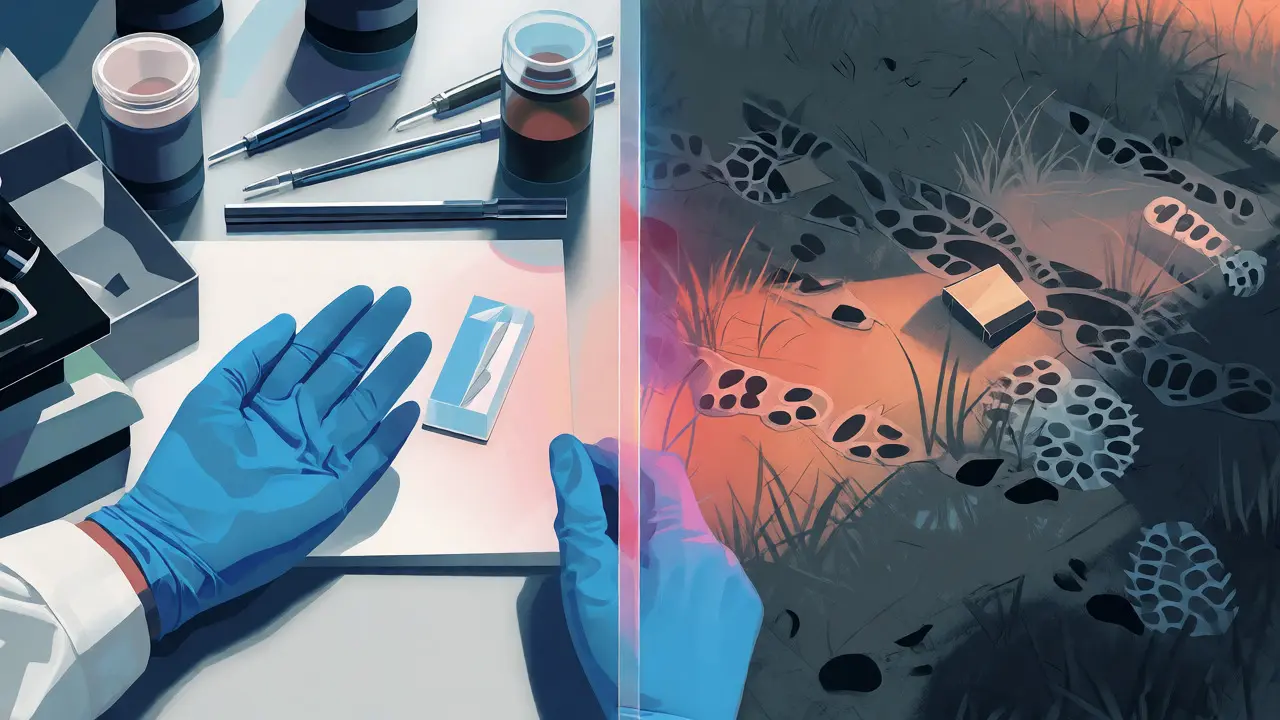
In 2019, a cold case review in Chicago highlighted how cross-contamination nearly overturned a conviction. Hair found on a victim’s jacket matched the suspect. However, the initial responder had worn the same latex gloves while securing the perimeter and then collecting the evidence. Later testing revealed synthetic fibers from the responder’s uniform mixed with the hair. While the hair match held, the defense argued the entire scene was compromised. The jury acquitted based on reasonable doubt about the integrity of the scene.
This isn’t just legal drama. It’s practical physics. Once a fiber is transferred, you can’t un-transfer it. You can’t wash it off the evidence without destroying the original context. Prevention is the only cure.
Checklist for Clean Collection
Before you start collecting, run through this mental checklist:
- Isolate the Area: Have you cordoned off the immediate zone to prevent bystander traffic?
- Dress Correctly: Are you wearing full PPE, including head covers and masks?
- Prepare Tools: Are your tools sterile or new? Do you have spares?
- Plan the Path: Have you mapped your route to avoid stepping on potential evidence?
- Document Conditions: Have you noted weather, lighting, and airflow?
Trace evidence is fragile. It requires respect and rigor. Treat every particle as unique until proven otherwise. By controlling the vectors of transfer, you protect the truth of the scene.
What is the most common cause of cross-contamination in the field?
The most common cause is improper glove usage. Respondents often fail to change gloves between handling different items or touching personal equipment like radios and phones, transferring fibers or DNA from one source to another.
Can cross-contamination be detected in the lab?
Yes, but not always definitively. Labs use blank samples and statistical analysis to identify outliers. If a contaminant matches the responder’s profile or standard lab materials, it can be flagged. However, if the contaminant is generic (like cotton fiber), it may be impossible to distinguish from legitimate evidence.
How does humidity affect trace evidence collection?
Humidity impacts static electricity and adhesion. Low humidity increases static, causing fibers to cling unpredictably to collectors and tools. High humidity can make sticky surfaces tackier, trapping more debris but also making it harder to separate specific particles. Adjusting techniques based on ambient moisture is crucial.
Should I use tape lifts or vacuuming for fibers?
Tape lifts are better for targeted areas where you want to preserve spatial context. Vacuuming is efficient for large areas but risks mixing samples and losing location data. Always prioritize methods that maintain the chain of custody and minimize mixing from unrelated sources.
What is the role of PPE in preventing contamination?
PPE acts as a barrier between the collector’s body and the evidence. Proper PPE includes gloves, masks, gowns, and shoe covers. It prevents the collector’s own hair, skin cells, and clothing fibers from entering the sample. Incorrect PPE use is a leading source of false positives.