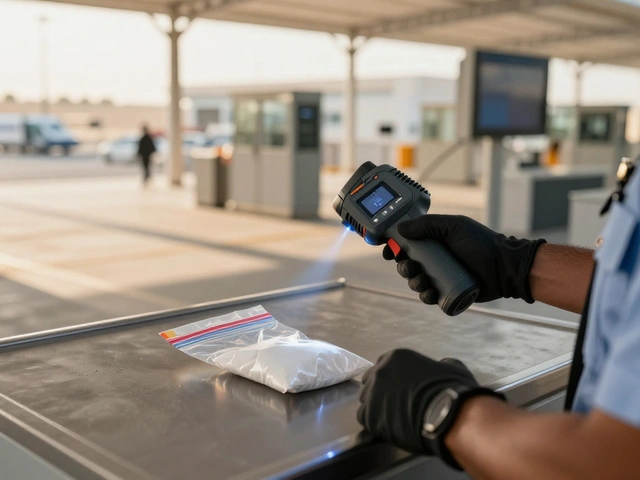
Imagine your brother goes on a backpacking trip through Southeast Asia and stops answering texts. Three weeks later, you’re staring at a blank screen in Portland, wondering if he’s safe or if something worse happened. You call the local police, but they hit a wall: their jurisdiction ends at the state line. The problem isn’t just distance; it’s bureaucracy. When someone vanishes across borders, the search doesn’t just get harder-it gets legally and logistically tangled in a web of different laws, languages, and databases.
This is where international coordination becomes the difference between a cold case and a rescue. It’s not about one hero detective flying out to find someone. It’s about systems talking to each other before the trail goes cold. If you’ve ever wondered how authorities actually track down a missing person in another country, or why some cases resolve quickly while others stall for years, it all comes down to how well these international mechanisms work-or fail to work.
The Legal Maze of Jurisdiction
Here’s the hard truth: police officers have no power outside their home country. A detective from Oregon can’t just walk into a police station in Bangkok and demand access to surveillance footage. They are technically private citizens abroad. This legal barrier is the biggest hurdle in cross-border missing persons cases. Without formal agreements, every request for help requires diplomatic channels, which move at the speed of paperwork, not urgency.
To bypass this, countries rely on Mutual Legal Assistance Treaties (MLATs). These are contracts that allow law enforcement in one country to ask for specific actions-like questioning a witness or searching a hotel room-in another. But MLATs are slow. They were designed for serious crimes like drug trafficking, not necessarily for urgent missing person searches. For time-sensitive cases, police often use faster, informal routes called "police-to-police" cooperation. This relies on personal relationships between detectives and liaison officers stationed in key cities worldwide. If the officer handling your case knows the right contact in London or Tokyo, they might get answers in hours instead of months.
Interpol’s Role Beyond Red Notices
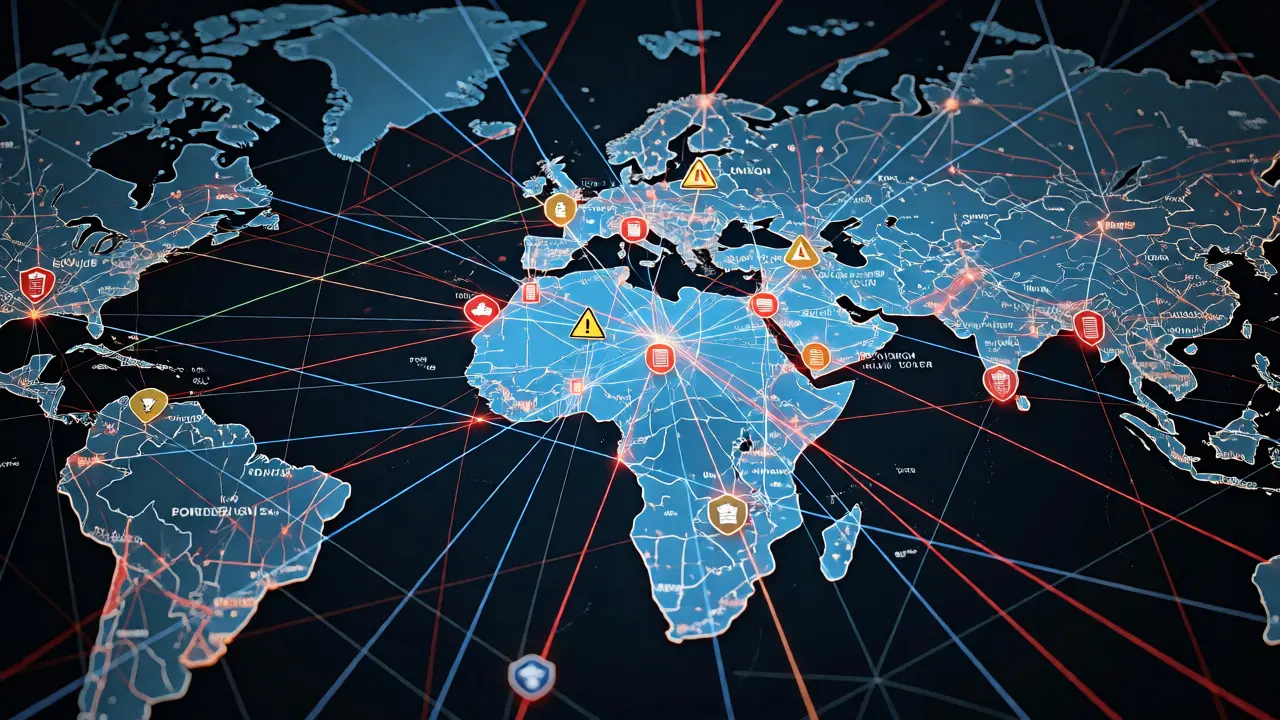
Most people know Interpol for its Red Notices-the alerts issued when a criminal is wanted internationally. But for missing persons, Interpol uses Yellow Notices. A Yellow Notice is an alert circulated to member countries asking them to look for a person whose whereabouts are unknown, particularly minors or vulnerable adults. Unlike Red Notices, which imply a crime has been committed, Yellow Notices are purely informational. They flag the individual in border control databases and local police systems.
However, issuing a Yellow Notice isn’t automatic. It usually requires a formal request from the national central bureau (NCB) of the country where the person went missing. And here’s a common pitfall: a Yellow Notice only helps if the missing person interacts with official systems. If they’re traveling off-grid, using cash, and avoiding airports, the notice won’t trigger an alert. That’s why Interpol also manages the I-24/7 system, a secure communication network that allows investigators to query databases in real-time. This includes checking travel documents against lost or stolen passport lists, which can sometimes reveal if a missing person tried to leave a country under a different name.
Data Standards and Identification Challenges
Even if you locate a body or a detained individual, identifying them across borders is a forensic nightmare. Different countries collect different data points. One nation might prioritize dental records, another DNA profiles, and a third biometric facial recognition. If the data formats don’t match, comparisons become impossible without manual translation and re-entry.
This is where standardization saves lives. Organizations like the International Committee of the Red Cross (ICRC) promote standards for collecting antemortem (before death) and postmortem (after death) data. The goal is interoperability. If a family provides a dental chart in the US, and a hospital in Mexico uploads a matching record, the systems need to speak the same language. Currently, this isn’t always seamless. Many countries still use paper-based records or proprietary digital formats that don’t export easily. Until global data standards are strictly enforced, identification often falls back on traditional methods: fingerprints, DNA, and visual confirmation by family members.
| Mechanism | Primary Use Case | Speed | Legal Binding |
|---|---|---|---|
| Yellow Notice | General missing person alert | Medium (Days) | No (Advisory) |
| Red Notice | Wanted fugitive / Suspect | Fast (Hours) | Yes (Extradition basis) |
| MLAT Request | Evidence gathering / Interviews | Slow (Months) | Yes (Treaty obligation) |
| Liaison Officer | Rapid response / Local intel | Fast (Real-time) | No (Cooperation based) |
The Human Element: Families as Investigators
In many cultures, the burden of investigation falls heavily on the family, especially when local resources are stretched thin. In the US, families often hire private investigators or launch social media campaigns. Internationally, this can be tricky. Publicizing a missing person’s photo globally can lead to false leads or privacy violations in countries with strict data protection laws, like those in the European Union under GDPR.
Families play a crucial role in providing accurate, up-to-date information. A single detail-like a unique scar, a specific piece of jewelry, or a recent change in appearance-can make the difference in a crowd. However, emotional distress often leads to inconsistent reporting. One day the family says the person had short hair; the next, they remember it was long. Coordinators must act as filters, translating emotional narratives into actionable intelligence for foreign counterparts. Tools like the ICRC’s Restoring Family Links program help bridge this gap by offering neutral channels for communication when direct contact fails.

Technology’s Double-Edged Sword
We live in an era of ubiquitous connectivity, yet technology complicates cross-border searches. Smartphones provide location data, but accessing that data requires warrants in the user’s home country and often cooperation from tech giants headquartered in the US. Apple and Google respond to law enforcement requests, but the process varies wildly by region. In some countries, police can pull GPS history instantly; in others, they need a court order that takes weeks.
Furthermore, social media footprints can vanish. If a missing person deletes their accounts or changes passwords, the digital trail disappears. Investigators now use OSINT (Open Source Intelligence) tools to scrape public data, but this is limited to what’s publicly visible. Private messages, encrypted chats, and deleted photos remain locked away unless physical devices are recovered. This creates a paradox: we are more connected than ever, yet easier to lose track of if we choose to disconnect.
Practical Steps for Families and Authorities
If you’re dealing with a cross-border missing person case, waiting for authorities to figure it out isn’t enough. Here’s what needs to happen immediately:
- File a report locally: Ensure the local police file a report and explicitly note the international aspect. Ask them to notify the National Central Bureau of Interpol.
- Contact the embassy: The embassy in the country where the person vanished can issue emergency passports and liaise with local police. They often have better contacts than the home country’s federal agents.
- Gather high-quality visuals: Provide recent, clear photos. Include distinctive features. Avoid old graduation photos if possible.
- Check financial trails: Credit card usage is a strong indicator of location. Banks can sometimes share last transaction locations with law enforcement via MLATs or informal requests.
- Engage NGOs: Groups like the ICRC or specialized missing persons charities can offer logistical support and advocacy that government agencies cannot.
Coordination is messy. It involves phone calls at 3 AM, mistranslated emails, and red tape. But when it works, it cuts through the noise. The key is persistence and understanding that no single agency holds all the keys. It takes a village of lawyers, diplomats, detectives, and families working in tandem to bring someone home.
What is the difference between a Yellow Notice and a Red Notice?
A Yellow Notice is used to seek information on missing persons, particularly minors or vulnerable individuals, and does not imply criminal intent. A Red Notice is a request to locate and provisionally arrest a person pending extradition, typically issued for individuals accused of serious crimes. Yellow Notices are advisory, while Red Notices carry significant legal weight for detention.
Can US police investigate a missing person case in Europe?
US police cannot conduct independent investigations in Europe. They must rely on mutual legal assistance treaties (MLATs) or police-to-police cooperation through liaison officers. Any investigative steps, such as interviewing witnesses or searching premises, must be carried out by local law enforcement in the European country, often guided by requests from US authorities.
How do embassies help in missing person cases?
Embassies assist by contacting local hospitals, prisons, and police stations to check if the citizen is held or treated there. They can issue emergency travel documents if the person is found but lacks a passport. Additionally, consular officers can facilitate communication between the family and local authorities, though they cannot intervene directly in local legal proceedings.
Why is DNA collection important in cross-border cases?
DNA is a universal identifier that transcends language and documentation barriers. If remains are found in a foreign country, DNA samples from immediate family members can be compared against unidentified bodies in local morgues. Standardized DNA databases allow for rapid matches even if visual identification is impossible due to decomposition or lack of personal effects.
Does social media help find missing persons abroad?
Social media can generate tips and spread awareness, but it has limitations. Privacy laws like GDPR in Europe restrict how much data platforms can share with foreign police. Also, viral posts may not reach the specific local community where the person disappeared. Targeted ads and local influencer partnerships are often more effective than broad global campaigns.